UAE Fujairah Abu Dhabi Rail Cargo Corridor Creates New Trade Route Connecting Maritime Gateway With Industrial Heartland

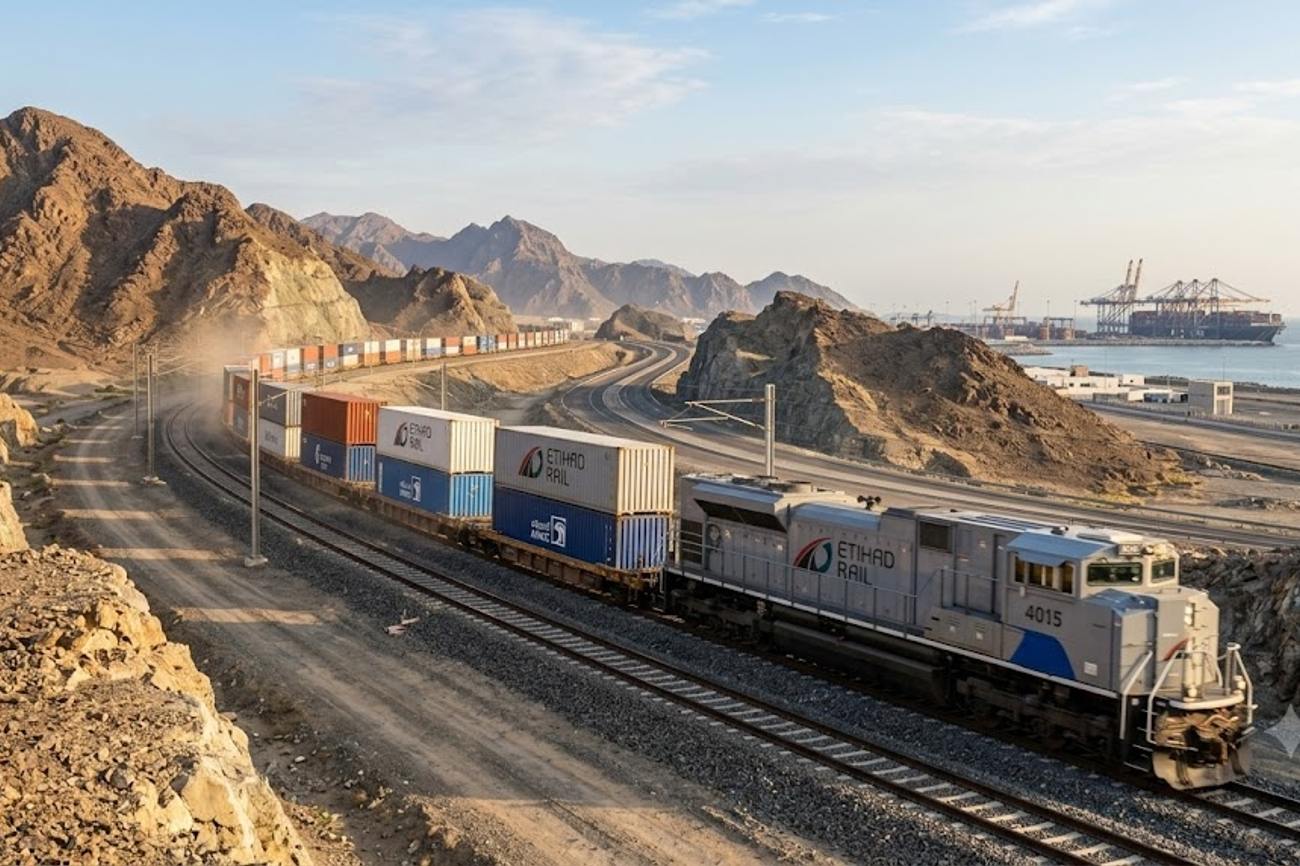
Image generated by AI
The UAE has shifted its logistics reliance from a road-dominant model to a multimodal framework, exemplified by the new 200-kilometre rail corridor connecting Fujairah Terminals to the Industrial City of Abu Dhabi (ICAD). This movement represents a strategic pivot toward "port-to-industry" synchronization, reducing the number of handling stages for international cargo entering the Gulf of Oman.
The Logistics Pivot in Numbers: Fujairah to ICAD
The activation of the rail link between Fujairah Terminals and ICAD is not merely an infrastructure update; it is a data-driven optimization of the UAE's east-west trade axis. By leveraging Etihad Rail’s national freight network, the UAE is now capable of moving high-volume containers over a 200-kilometre distance without the bottlenecks associated with traditional road haulage.
A critical data point in this expansion is the assignment of the UN Location Code (UNLOCODE) "AECAD" to ICAD. In the global shipping industry, a UNLOCODE is the digital DNA of a destination. Previously, ICAD functioned as an industrial zone; with the AECAD designation, it is now a recognized international logistics destination. This allows freight forwarders and shipping lines to book cargo directly to ICAD, bypassing the need for intermediary routing instructions and improving visibility across global supply chain management systems.
The operational flow has been restructured into a six-stage sequence:
- Arrival at Fujairah Terminals.
- Rail transport preparation.
- Etihad Rail inland transit.
- Arrival at ICAD.
- Customs inspection and clearance at the inland gateway.
- Final release to the end-user.
This shift allows for customs-enabled inland cargo transfer, meaning the legal "entry" of goods into the domestic economy can now occur 200 kilometres inland, closer to the actual factories and warehouses, rather than at the congested port perimeter.
Comparative Context: Multimodal Shift and Regional Benchmarks
Historically, the UAE's logistics relied heavily on road transport for the "middle mile"—the journey from the port to the industrial zone. While road transport offers last-mile flexibility, it is subject to traffic volatility and capacity limits. The introduction of rail introduces a predictable, high-volume alternative.
When comparing this to regional logistics trends, the UAE is mirroring a global shift toward "Dry Ports." According to data trends tracked by the World Trade Organization (WTO), the integration of rail and maritime hubs is a primary driver for reducing the "cost to trade" in emerging economies. By linking the Gulf of Oman (Fujairah) to the industrial heart of Abu Dhabi (ICAD), the UAE is effectively creating a land bridge that bypasses the need for coastal road transit.
The following table illustrates the operational shift from the traditional road-centric model to the new rail-integrated model:
| Metric | Traditional Road-Based Model | New Rail-Integrated Model (Fujairah-ICAD) |
|---|---|---|
| Transit Route | Port $\rightarrow$ Road $\rightarrow$ Industrial Zone | Port $\rightarrow$ Rail $\rightarrow$ Inland Gateway (ICAD) |
| Customs Point | Primarily at Port of Entry | Customs-enabled Inland Gateway (AECAD) |
| Volume Capacity | Limited by truck load/fleet size | High-volume dedicated freight trains |
| Scheduling | Variable (Traffic/Road conditions) | Fixed, predictable rail schedules |
| Booking ID | Port-based destination | Direct UNLOCODE (AECAD) booking |
| Handling Steps | Multiple loading/unloading stages | Streamlined port-to-industry link |
This transition aligns with broader industry data from the International Air Transport Association (IATA) and other multimodal bodies that emphasize the "synchromodality" of transport—where the choice of mode is decided in real-time based on data regarding volume, speed, and cost.
Practical Traveler Advisory and Strategic Insights and Business Nomads
While this development is primarily industrial, the ripple effects extend to the "business traveler" and the "nomad lawyer" operating within the GCC. The transformation of ICAD into a globally recognized logistics hub (AECAD) will inevitably lead to an increase in corporate migration and short-term professional assignments to the Abu Dhabi industrial sector.
For those managing supply chains or consulting for firms in the UAE: If you are coordinating logistics for Q3 or Q4, the ability to book directly to AECAD means you can now bypass traditional port-side clearance delays. This reduces the "buffer time" usually required for cargo arrival, allowing for tighter project timelines and leaner inventory management.
For the professional traveler: The expansion of Etihad Rail’s freight network is the precursor to expanded passenger services. As the freight infrastructure stabilizes the economic viability of these routes, we expect to see a corresponding increase in the accessibility of industrial zones. Travelers should monitor the rollout of passenger phases, as this will likely reduce the reliance on rental cars and taxis for accessing the Abu Dhabi industrial periphery.
The UAE's Fujairah Abu Dhabi Rail Cargo Corridor is set to revolutionize trade in the region by connecting the maritime gateway of Fujairah with the industrial heartland of Abu Dhabi, providing a faster and more efficient way to transport goods. According to the National Transport Authority, this new rail cargo corridor will reduce transportation times and costs, making the UAE a more attractive hub for international trade. This development is expected to have a significant impact on the country's economy and trade relationships.
Forward Projection: The Integrated Ecosystem Trajectory
The Fujairah-ICAD link is a modular piece of a larger puzzle. Based on the current trajectory of Etihad Rail and AD Ports Group, the UAE is moving toward a fully integrated transport ecosystem. The data suggests a move toward "Logistics 4.0," where the physical movement of goods is mirrored by a digital twin in the customs and booking systems.
We can project that the success of the AECAD UNLOCODE will lead to similar designations for other industrial clusters across the Emirates. This will likely result in a decrease in heavy truck traffic on national highways, improving road safety and reducing the carbon footprint of inland transit. As the network expands, the UAE will likely see a shift in warehouse placement; companies will move away from port-adjacent land (which is expensive and congested) toward inland rail-adjacent hubs like ICAD, where land is more available and customs are integrated.
The integration of maritime gateways on the East Coast with industrial centers in the West creates a strategic redundancy. If the Arabian Gulf experiences congestion or disruption, the Gulf of Oman route via Fujairah provides a high-capacity alternative that can move goods deep into the interior of the country via rail, ensuring the resilience of the national supply chain.
FAQ: UAE Rail Logistics 2024
Will this rail link reduce the cost of imported goods? Indirectly, yes. By reducing handling steps and providing a high-volume alternative to road transport, businesses can lower their operational overhead. These efficiencies in the supply chain often translate to more competitive pricing for the end consumer.
Is this a good time to invest in warehouses near ICAD? Yes. The assignment of the AECAD UNLOCODE transforms ICAD from a local industrial zone into an international destination. This increased visibility and accessibility make it a prime location for distribution centers.
Which companies benefit most from the Fujairah-ICAD corridor? High-volume manufacturers, bulk importers, and regional distribution firms. Any business that currently relies on multiple truck transfers to move goods from the East Coast to Abu Dhabi will see the most significant gains.
Does this replace road transport in the UAE? No. Rail is designed for high-volume, predictable "middle mile" transit. Road transport remains essential for "last-mile" delivery from the ICAD gateway to the final warehouse or storefront.
The shift from road-dependence to rail-integration is not just an infrastructure win; it is a strategic recalibration of the UAE's position in the global trade flow.
Tags: Etihad Rail, AD Ports Group, AECAD UNLOCODE, UAE Logistics Growth 2024, Fujairah Terminals, Multimodal Freight Trends
Related Travel Guides
- UK Rail Network Introduces BVLOS Drone Response System to Improve Passenger Safety and Emergency Operations
- Sheffield Manchester Airport Direct Trains Could Return Through Northern Powerhouse Rail Bringing Faster North Connectivity
- Rhode Island Reveals Providences Secret Homes Mills and Landmarks This Autumn
This article is for informational purposes. Flight routes, passenger regulations, visa rules, and transit advisories are subject to change by airlines and aviation authorities. Readers are advised to verify schedules and travel documentation with relevant carriers and border agencies before departure.
Related Stories

Amtrak Expands Loyalty Reach With Bilt Partnership Bringing Housing-Based Rewards to Rail Travellers

The World’s Most Beautiful Train Journeys Revealed: Australia’s Ghan Takes Top Spot in 2026 Index