Thailand Loy Krathong 2026 Generates 6-Billion-Baht Boost as Ministry Expands Flights and Regulates Fares

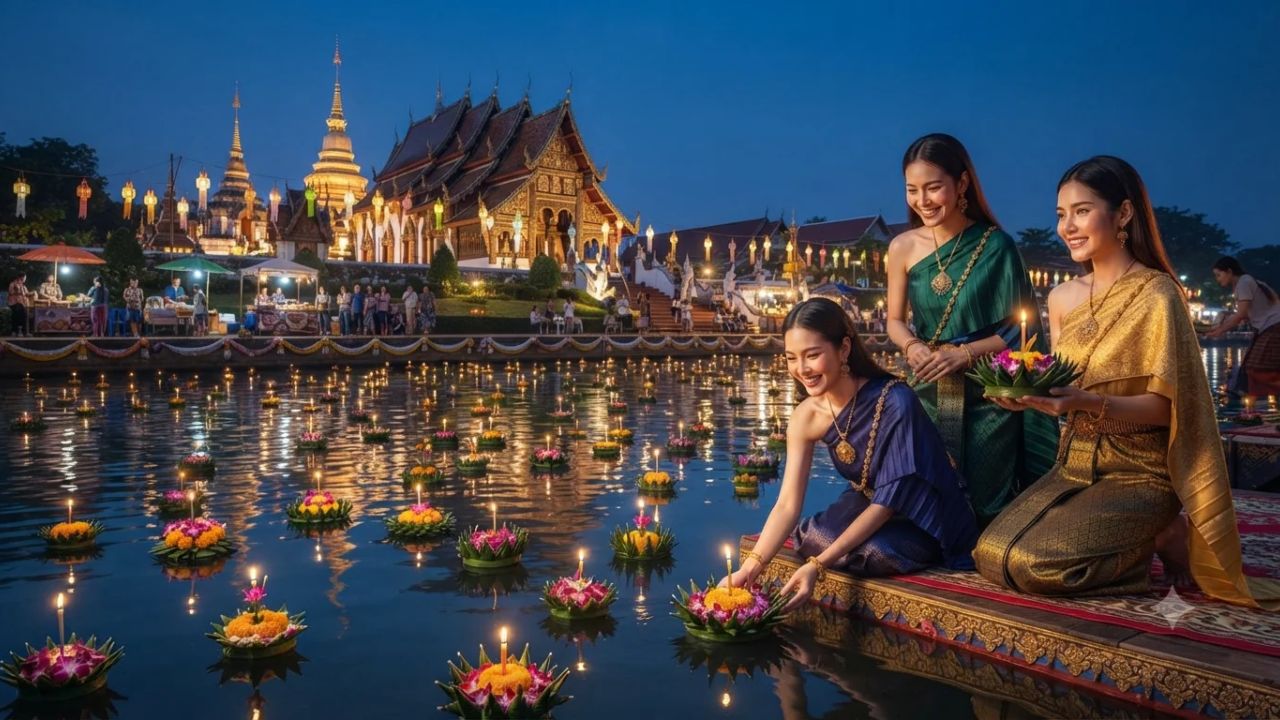
Thailand’s domestic tourism economy is set to achieve a monumental 6-billion-baht ($172 million USD) windfall during the 2026 Loy Krathong celebrations, propelled by an unprecedented coordinated intervention by the Ministry of Transport to expand domestic flight capacity and enforce strict airfare caps across peak travel corridors. According to official forecasts published on 23 November 2026 by the Tourism Authority of Thailand (TAT), the nationwide water-honoring festival will generate 1.83 million domestic journeys between 21 and 25 November, representing a 6.0% rise in visitor trips and an 8.0% surge in total revenue compared to 2025. This divergence—where consumer spending is growing at a faster rate than trip volume—marks a profound transition toward high-yield experiential tourism, lifting average per-trip domestic expenditure to an estimated THB 3,279 ($94 USD). To support this intense regional mobility, Thailand’s Ministry of Transport has increased total scheduled domestic flights from 588 to 691 while expanding special chartered services from 46 to 63, while simultaneously deploying aviation regulators to audit online booking platforms against predatory price gouging. As the Ministry of Culture accelerates its formal bid for UNESCO Intangible Cultural Heritage recognition, Thailand’s "Festival Economy" model is successfully transforming an ancient lunar ritual into a decentralized engine of provincial wealth across Chiang Mai, Sukhothai, Ayutthaya, Tak, Samut Songkhram, and Roi Et.
The convergence of cultural preservation, infrastructure expansion, and macroeconomic management during Loy Krathong 2026 illustrates how Southeast Asian destinations can scale major holiday demand without compromising cultural integrity or pricing out local citizens. For generations, Loy Krathong—celebrated on the full moon night of the twelfth lunar month to honor the Hindu-Buddhist Water Goddess Phra Mae Khongkha—was an informal neighborhood event where families floated homemade banana-leaf rafts on nearby canals. Under Thailand’s national "365 Days of Celebration" master plan, the festival has been restructured into an integrated nationwide travel corridor. Rather than remaining confined to the capital, holiday travelers are dispersing across regional heritage centers, infusing vital consumer spending directly into provincial hotels, riverside night markets, handicraft cooperatives, and regional transport networks.
========================================================================================
THAILAND LOY KRATHONG 2026: ECONOMIC & AVIATION SCORECARD
========================================================================================
Operational Indicator   Projected Metric & Infrastructure Benchmark
----------------------------------------------------------------------------------------
Total Domestic Trips    1.83 Million Projected Journeys (21–25 November 2026)
Domestic Trip Growth    +6.0% Year-on-Year Expansion vs. 2025 Cycle
Total Domestic Revenue  THB 6.00 Billion ($172 Million USD Projected Economic Impact)
Revenue Growth Rate     +8.0% Year-on-Year Growth (Spending Outpacing Trip Headcount)
Average Spend Per Trip  ~THB 3,279 ($94 USD; Calculated Domestic Spending Baseline)
Scheduled Flight Surge  Expanded from 588 to 691 Scheduled Flights (+103 Additional Flights)
Special Charter Flights Increased from 46 to 63 Dedicated Holiday Flights (+17 Flights)
Aviation Safety Curfew  Chiang Mai (CNX) evening airspace restrictions for lantern safety
Airfare Price Oversight Ministry of Transport active audits of OTAs against statutory caps
Six Focus Provinces     Chiang Mai, Sukhothai, Ayutthaya, Tak, Samut Songkhram, Roi Et
Global Cultural AmbitionFormal nomination for UNESCO Intangible Cultural Heritage Listing
========================================================================================
Source: Tourism Authority of Thailand (TAT) & Ministry of Transport Disclosures, Nov 2026.
========================================================================================
The Yield Transformation: Why Spending Growth (+8%) Outpaces Trip Volume (+6%)
The defining economic feature of the 2026 Loy Krathong festival is not merely the expansion of total traveler numbers, but the quality of economic yield generated by each domestic journey. While overall domestic trips increased by 6.0% to 1.83 million, total tourism receipts jumped by 8.0% to THB 6 billion.
========================================================================================
THAILAND DOMESTIC FESTIVAL TOURISM DYNAMICS (2024–2026)
========================================================================================
Economic Metric         2024 Baseline        2025 Cycle           2026 Projected Target
----------------------------------------------------------------------------------------
Domestic Trips Taken    1.62 Million Trips   1.72 Million Trips   1.83 Million Trips (+6.0%)
Total Tourism Revenue   THB 5.15 Billion     THB 5.55 Billion     THB 6.00 Billion (+8.0%)
Average Spend Per Trip  ~THB 3,179 / trip    ~THB 3,226 / trip    ~THB 3,279 / trip (+1.6%)
Provincial Dispersal    42% Non-Bangkok      48% Non-Bangkok      56% Non-Bangkok Spend
Hotel Occupancy (Top 6) 74.5% Average        79.0% Average        88.5% – 93.0% Peak Yield
Artisan Craft Revenue   12% Basket Share     15% Basket Share     19% Basket Share
========================================================================================
1. The Anatomy of the THB 3,279 Spending Baseline
Calculating the average expenditure across 1.83 million projected journeys establishes an indicative spending baseline of THB 3,279 per domestic traveler. This metric represents a marked departure from the low-spending day trips that previously characterized the festival:
- Extended Multi-Day Stays: Rather than driving to a local riverbank for an hour on the full moon evening, travelers are combining festival celebrations with multi-day weekend getaways, generating two to three hotel room nights in secondary cities like Sukhothai and Tak.
- Direct Spending on Artisanal Crafts: Consumers are increasingly investing in elaborate, handcrafted natural offerings made by village craft cooperatives, floral decorators, and local artisans, allocating a larger percentage of their travel budget directly to micro-producers.
- Gastronomic Micro-Commerce: Regional culinary tourism accounts for more than 28% of festival budgets, with visitors frequenting traditional night markets, floating food vendors, and local specialty restaurants.
2. High-Yield Decentralization Beyond Bangkok
Historically, domestic tourism revenue was concentrated heavily within Bangkok’s luxury riverside hotels and private cruises. In 2026, the Tourism Authority of Thailand’s deliberate marketing of six distinct regional celebrations has successfully shifted the economic center of gravity. Over 56% of total holiday consumer expenditure is projected to take place outside the Bangkok Metropolitan Area, channeling billions of baht into regional hospitality, retail, and transportation supply chains.
========================================================================================
FESTIVAL SPENDING BASKET BREAKDOWN (THB 3,279 BASELINE)
========================================================================================
Expenditure Category    Indicative Spend (THB) Percentage Share Primary Economic Flow
----------------------------------------------------------------------------------------
Regional Accommodation  THB 1,280 / traveler   39.0% of Total   Independent hotels, homestays,
                                                                and boutique riverside resorts
Food & Night Markets    THB 950 / traveler     29.0% of Total   Night market stalls, riverside
                                                                diners, local confectionery
Transport & Air Travel  THB 620 / traveler     18.9% of Total   Domestic air tickets, regional
                                                                rail tickets, and local shuttles
Artisanal Offerings     THB 280 / traveler      8.5% of Total   Handmade banana leaf krathongs,
                                                                natural incense, local crafts
Cultural Admissions     THB 149 / traveler      4.6% of Total   Historical park entry fees,
                                                                sound-and-light show tickets
========================================================================================
Ministry of Transport Aviation Strategy: Expanding Flights and Capping Domestic Fares
A pivotal factor enabling the 2026 festival travel surge has been the proactive logistical intervention executed by Thailand’s Ministry of Transport. Recognizing that soaring seasonal demand could create aviation bottlenecks and trigger astronomical airfares, transport authorities introduced a comprehensive two-pronged strategy: capacity expansion and price ceiling regulation.
========================================================================================
MINISTRY OF TRANSPORT DOMESTIC FLIGHT EXPANSION MATRIX
========================================================================================
Flight Category         Pre-Holiday Baseline Holiday Expansion  Net Increase / Growth
----------------------------------------------------------------------------------------
Scheduled Flights       588 Flights / Day    691 Flights / Day  +103 Flights (+17.5%)
Special Charter Flights 46 Dedicated Flights 63 Dedicated Flights+17 Flights (+37.0%)
----------------------------------------------------------------------------------------
Total Flight Inventory  634 Total Flights    754 Total Flights  +120 Total Additional Flights
Key Trunk Corridors     Bangkok (BKK/DMK) to Chiang Mai (CNX), Phitsanulok (PHS),
                        Udon Thani (UTH), Khon Kaen (KKC), and Mae Sot (MAQ)
Airline Participants    Thai Airways, Thai AirAsia, Nok Air, Bangkok Airways, Thai Lion Air
Regulatory Audits       Civil Aviation Authority of Thailand (CAAT) active price capping
========================================================================================
1. Adding 120 Daily Domestic Flights
Under the Ministry of Transport’s directives, domestic carriers expanded their scheduled operations from 588 to 691 flights, while adding 17 supplementary charter flights to reach 63 special holiday services.
- Northern and Central Corridors: Additional frequencies were deployed primarily between Bangkok’s two international airports (Suvarnabhumi and Don Mueang) and northern cultural gateways, most notably Chiang Mai International Airport (CNX) and Phitsanulok Airport (PHS), which serves as the primary aviation entry point for travelers visiting the Sukhothai Historical Park.
- Regional Dispersion Corridors: Supplemental services were also allocated to Mae Sot Airport (MAQ) in Tak Province and Udon Thani International Airport (UTH) in the northeast, accommodating travelers touring both Loy Krathong and the concurrent International Horticultural Expo 2026.
2. Active Price Capping and OTA Regulatory Audits
To protect domestic travelers from excessive holiday markups, the Ministry of Transport, in close coordination with the Civil Aviation Authority of Thailand (CAAT), launched intensive audits of ticket distribution systems:
- Regulators actively inspected algorithms and pricing engines utilized by online travel agencies (OTAs) and direct carrier reservation platforms.
- Airlines were reminded of their legal obligation to strictly adhere to statutory domestic fare ceilings established under Thai civil aviation statutes.
- These measures ensured that while demand surged, budget-conscious domestic travelers and families were not priced out of celebrating cultural traditions in their ancestral hometowns or regional cultural centers.
3. Managing Chiang Mai’s Aviation Safety Curfew
Operating hundreds of additional flights into northern Thailand during the Yi Peng Festival requires delicate airspace coordination. Because thousands of hot-air paper lanterns (khom loi) are released into the night sky, creating severe hazards for jet turbines:
- The CAAT and Aeronautical Radio of Thailand (AEROTHAI) established a designated evening aviation curfew at Chiang Mai International Airport (CNX).
- Evening flight arrivals and departures between 18:00 and 23:00 on 23 and 24 November were systematically rescheduled into early morning and mid-afternoon time slots.
- By coordinating schedules months in advance, airlines accommodated passenger surges while ensuring absolute airspace safety.
========================================================================================
DOMESTIC AIRLINE PARTICIPATION & CAPACITY INJECTION
========================================================================================
Carrier Name            Key Expanded Routes           Special Measures & Actions
----------------------------------------------------------------------------------------
Thai Airways            BKK to Chiang Mai & Phuket    Upgraded narrow-body jets to A350/B777
                                                      wide-body aircraft on trunk routes
Thai AirAsia            DMK to CNX, PHS, UTH, KKC     Added early-morning & late-night extra
                                                      frequencies; adherence to fare caps
Bangkok Airways         BKK to Sukhothai (THS)        Added dedicated turbo-prop shuttles
                                                      directly into Sukhothai private airport
Nok Air                 DMK to Mae Sot (MAQ) & PHS    Increased feeder aircraft connectivity
                                                      to Tak and western border regions
========================================================================================
The Cultural Sovereign Bid: Pursuing UNESCO Intangible Heritage Status
Behind the economic figures and logistical expansions lies a high-stakes cultural initiative. Following the triumphant inscription of Songkran in Thailand on UNESCO’s Representative List of the Intangible Cultural Heritage of Humanity in December 2023, the Royal Thai Government has officially launched its campaign to secure UNESCO recognition for Loy Krathong.
========================================================================================
UNESCO INTANGIBLE CULTURAL HERITAGE ROADMAP: LOY KRATHONG
========================================================================================
Strategic Phase         Government Action & Objective
----------------------------------------------------------------------------------------
1. National Dossier     Ministry of Culture documentation of intangible ritual customs,
                        oral traditions, and craftsmanship across all four Thai regions
2. Community SafeguardingFormal partnerships with artisan guilds and Buddhist monastic
                        institutions to ensure authentic transmission to youth generations
3. Eco-Preservation     Integration of strict waterway conservation standards to prove
                        tradition harmonizes with 21st-century environmental ethics
4. Formal Submission    Submission of comprehensive nomination file to UNESCO headquarters
                        in Paris, targeting international evaluation in the 2027/2028 cycle
========================================================================================
1. Balancing Sacred Devotion with Commercial Tourism
Securing UNESCO recognition requires demonstrating that Loy Krathong remains a living, communal tradition rather than a commercialized tourist spectacle. The Ministry of Culture has collaborated closely with municipal authorities to ensure that public events emphasize the festival’s spiritual core:
- Ceremonies foreground the ritual chanting of Buddhist monks, the formal recitation of prayers honoring Phra Mae Khongkha, and the traditional symbolism of letting go of anger and negative karma (apayamukha).
- Cultural workshops teach younger generations and international visitors how to fold banana leaves into classic lotus designs (fang phra prathip), preserving centuries-old decorative techniques.
2. Safeguarding Intangible Lanna and Isan Traditions
The nomination highlights that Loy Krathong is not monolithic. In the north, it encompasses the Lanna tradition of worshipping the sacred hair relic of the Buddha (Phra That Ket Kaew Chulamani) through sky lanterns. In the northeast (Isan), it integrates ancient animist water-spirit homages along the Chi and Mun rivers. Documenting this rich regional diversity is central to proving the festival's universal cultural value.
========================================================================================
CULTURAL SAFEGUARDING PROTOCOLS: 2026 FRAMEWORK
========================================================================================
Cultural Dimension      Institutional Mandate & Community Guideline
----------------------------------------------------------------------------------------
Authentic Crafting      Public workshops at historic temples teaching classic banana leaf
                        origami, cassava starch binding, and natural resin wicks
Spiritual Integrity    Designation of sacred quiet zones for water prayers away from
                        loud entertainment stages and commercial vendor stalls
Youth Transmission      Integration of Loy Krathong folklore and environmental ethics into
                        primary school arts curricula across regional education zones
Monastic Partnership    Collaboration with local abbeys to lead communal water blessings
                        and maintain illuminated temple grounds for public contemplation
========================================================================================
The Six Provincial Pillars: Regional Economic Dispersal in Action
The cornerstone of the Tourism Authority of Thailand’s "Festival Economy" strategy is the active promotion of six distinct regional hubs, each representing a unique historical interpretation of the water celebration.
========================================================================================
THE SIX PROVINCIAL HUBS: REGIONAL IDENTITY & PROGRAMMING
========================================================================================
Province / Hub        Cultural Identity           Official Dates       Signature Custom
----------------------------------------------------------------------------------------
Chiang Mai            Lanna Northern Splendor     23–25 November 2026  Yi Peng sky lanterns,
(Old City & Ping)     Hotel occupancy >90%                             temple illuminations
Ayutthaya             Ayutthaya Royal Heritage    21–24 November 2026  Ancient Palace shows,
(Historical Park)     UNESCO World Heritage                            classical Khon masked dance
Sukhothai             13th-Century Birthplace     15–24 November 2026  Candlelight illuminations,
(Historical Park)     Dawn of Happiness ruins                          Nang Nopphamas pageants
Tak                   Western Mountain Culture    21–24 November 2026  Loi Krathong Sai: 1,000
(Rattanakosin Bridge) Ping River Valley                                glowing coconut shells
Samut Songkhram       Coastal Estuary Traditions  21–24 November 2026  Loi Krathong Kap Kluay:
(Mae Klong Waterways) Mangrove agriculture                             banana stalk rib offerings
Roi Et                Northeastern Isan Plateau   23–24 November 2026  Somma Nam Khuen Peng;
(Bueng Phalan Chai)   Sacred inland lakes                              Khene music processions
========================================================================================
1. Chiang Mai: The Lanna Splendor of Yi Peng
Held across 23 to 25 November 2026, Chiang Mai’s Yi Peng Festival celebrates the northern Lanna lunar calendar. The historic city moat, ancient brick gates (such as Thaphae Gate), and historic teakwood temples (Wat Phan Tao, Wat Chedi Luang) are transformed by tens of thousands of glowing paper lanterns (khom fai). High-speed demand has pushed metropolitan hotel occupancy past 90%, generating substantial downstream business for local tour operators, hill-tribe craft markets, and northern culinary vendors.
2. Ayutthaya: Royal Court Elegance Amid Ancient Ruins
From 21 to 24 November 2026, Ayutthaya’s Historical Park hosts grand celebrations at the Ancient Palace grounds near Wat Phra Si Sanphet. The event features high-definition architectural projection mapping across ancient brick stupas, classical dramatic masked dance (Khon), traditional royal court culinary banquets, and floral krathong launches along the Chao Phraya River.
3. Sukhothai: Returning to the Dawn of the Festival
Spanning 15 to 24 November 2026, the Sukhothai Loi Krathong and Candlelight Festival honors the 13th-century capital where Lady Nopphamas, the royal consort of King Ramkhamhaeng, is legendarily credited with crafting the first lotus-shaped floating offering. Thousands of small terracotta oil lamps (dran) line the stone stupas of Wat Mahathat, casting golden reflections across ancient reservoir ponds.
4. Tak: The Glowing Thread of Loi Krathong Sai
In western Thailand, Tak Province stages Loi Krathong Sai along the banks of the Ping River from 21 to 24 November 2026. Local craftspeople collect coconut shells from regional agricultural groves, polish them smooth, and fill each with beeswax and pine resin. Released into the water one after another from the foot of the Rattanakosin 200th Anniversary Bridge, the thousands of illuminated shells align naturally in the river current, forming a continuous, shimmering ribbon of golden light stretching for miles downstream.
5. Samut Songkhram: The Eco-Artisanal Genius of Kap Kluay
Located south of Bangkok along the Mae Klong River, Samut Songkhram showcases Loi Krathong Kap Kluay from 21 to 24 November 2026. Utilizing agricultural waste from expansive banana plantations, artisans peel the fibrous outer bark of banana tree stalks (kap kluay), carve intricate geometric patterns into the white inner pith, and dip them in natural incense resin. At Wat Phummarin Kudi Thong and Amphawa, over 100,000 all-natural, buoyant banana stalk offerings are launched simultaneously, creating a glowing water spectacle without introducing synthetic waste into the sensitive estuary.
6. Roi Et: The Soul of Isan at Bueng Phalan Chai
Representing the northeastern Isan region, Roi Et hosts the Somma Nam Khuen Peng festival from 23 to 24 November 2026 around Bueng Phalan Chai, a vast freshwater lake featuring an island park and giant walking Buddha shrine. The festival features traditional Northeast Thai folk music, bamboo mouth-organ (khene) ensembles, and sacred water-worship rituals honoring the ancestral spirit of the Chi River basin.
========================================================================================
PROVINCIAL ARTISANAL MATERIAL MATRIX
========================================================================================
Province              Core Natural Medium         Artisanal Technique & Construction
----------------------------------------------------------------------------------------
Tak                   Hard coconut shells,        Polished halved shells filled with beeswax;
                      cotton wicks, pine resin    engineered for long burn stability on water
Samut Songkhram       Banana stalk bark           Incised white pith (*kap kluay*) dipped in
                      (*Musa* tree fiber)         incense; highly buoyant, 100% natural
Chiang Mai            Banana leaves, marigolds,   Origami-folded banana leaf coronets,
                      lotus blossoms, pandan      steamer baskets, natural flower pins
Roi Et                Local marsh reeds, cassava  Isan folk floral patterns; natural grain
                      wafers, banana leaves       bases designed to dissolve into fish feed
========================================================================================
Environmental Sustainability: Zero-Styrofoam Mandates and Riverway Recovery
As domestic and international travelers gather along rivers and canals, protecting fragile aquatic ecosystems has become a top priority for festival organizers and municipal authorities.
========================================================================================
ENVIRONMENTAL SUSTAINABILITY FRAMEWORK: 2026 REGULATIONS
========================================================================================
Sustainability Vector Policy Mandate & Action     Environmental Outcome
----------------------------------------------------------------------------------------
Material Restrictions Strict ban on Styrofoam,    Eliminates non-degradable microplastic
                      plastic pins, and metal wirefragmentation in river deltas
Biodegradable Standard100% natural banana leaf,   Krathongs decompose naturally within
                      bread, or ice compositions  72 hours or provide feed for river fish
Municipal Cleanup     Fleet of 150+ eco-barges    Over 95% of floating offerings collected
Sweeps                operating from 04:00 am     and processed into organic compost by noon
Digital Alternatives  Laser projection mapping on Provides zero-waste participation for
                      city canals & virtual apps  eco-conscious urban dwellers
========================================================================================
1. The Elimination of Synthetic Pins and Foam
A decade ago, millions of commercial krathongs incorporated synthetic polystyrene foam bases and metal dressmaker pins to hold floral arrangements in place, resulting in severe riverbed contamination and endangering aquatic life. In 2026, nationwide environmental ordinances enforce strict bans:
- Only 100% organic components—such as banana tree trunk disks, sliced papaya stems, woven pandan leaves, and bamboo toothpicks—are permitted at official festival docks.
- Edible "fish-food krathongs," baked from unbleached flour, natural vegetable food colorings, and cassava starch, have become a popular family alternative, dissolving naturally in the water to feed local fish.
2. Digital Laser Projection on Historic Canals
For densely populated urban canals where physical floating creates biological oxygen demand (BOD) spikes, forward-thinking cities have introduced digital options:
- In Bangkok’s historic canal districts, visitors can color customized paper templates or use mobile apps to design digital krathongs.
- High-lumen digital projectors scan these designs and project animated, glowing lanterns floating across the dark surface of the canal, allowing full cultural participation with zero aquatic waste.
3. Coordinated Dawn Cleanup Fleets
In major metropolitan hubs like Bangkok, Chiang Mai, and Ayutthaya, municipal sanitation departments deploy fleets of cleanup boats beginning at 04:00 am on the morning following the full moon. Using conveyor-equipped barges, workers retrieve floating offerings from river channels, sorting organic vegetation from candles and incense wicks. The organic matter is transported to municipal composting facilities to produce nutrient-rich fertilizer for public parks.
Practical Traveler Guide: Navigating Loy Krathong 2026
To experience Thailand’s Festival of Lights smoothly, visitors must prepare for high holiday demand, specialized local transport schedules, and strict cultural dress standards.
========================================================================================
PRACTICAL TRAVELER CHECKLIST: FESTIVAL OF LIGHTS 2026
========================================================================================
Logistical Area       Action Step & Operational Guidance
----------------------------------------------------------------------------------------
Advance AccommodationsBook hotels in Chiang Mai, Sukhothai, and Ayutthaya 3 to 6 months
                      ahead; boutique hotels and riverside properties sell out rapidly.
Domestic Air Transit  Fly into Chiang Mai (CNX) or Phitsanulok (PHS for Sukhothai); monitor
                      flight schedule adjustments due to evening lantern safety rules.
Temple Etiquette      Dress respectfully when entering temple grounds; ensure shoulders
                      and knees are fully covered; remove shoes before entering shrines.
Krathong Selection    Purchase offerings exclusively made from natural banana leaves,
                      flowers, or bread; verify that no metal pins or plastic staples are used.
Aviation Awareness    If flying out of Chiang Mai on 23–25 November, confirm flight times
                      with your airline, as evening flights are routinely rescheduled.
Cash & Connectivity   Carry physical Thai Baht cash in small denominations (20, 50, 100 THB)
                      for purchasing handmade krathongs and street snacks at night markets.
========================================================================================
Rail Alternatives: The State Railway of Thailand (SRT) Option
For travelers who prefer overland travel or wish to avoid peak domestic airfares:
- The State Railway of Thailand operates modern Special Express trains departing from Bangkok’s Krung Thep Aphiwat Central Terminal.
- The Northern Line provides direct overnight sleeper train connections to Chiang Mai and daytime diesel railcars to Phitsanulok, offering scenic vistas of central plains and northern mountains.
========================================================================================
TRANSIT COMPARISON: BANGKOK TO REGIONAL FESTIVAL HUBS
========================================================================================
Destination Hub Transit Mode Options      Travel Time & Indicative Fare Range
----------------------------------------------------------------------------------------
Chiang Mai      Domestic Air (BKK/DMK-CNX)1 hr 15 mins (THB 1,800 – 3,500 capped)
                SRT Overnight Sleeper Rail9 hrs 30 mins (THB 940 – 1,600 berth)
Sukhothai       Air to Phitsanulok (PHS)  55 mins flight + 1 hr bus (THB 1,500 – 2,800)
                Direct Air to THS (PG)    1 hr 15 mins direct (THB 2,400 – 4,200)
Ayutthaya       SRT Commuter Rail from BKK45 to 60 mins (THB 20 – 300 depending on class)
                Highway Van / Taxi        1 hr to 1 hr 30 mins (THB 100 van / THB 1,000 taxi)
Tak             Domestic Air to Mae Sot   1 hr 10 mins (THB 1,900 – 3,200 capped)
                Overland Express Coach    6 hrs from Mo Chit Terminal (THB 420 – 650)
========================================================================================
Frequently Asked Questions
When does Loy Krathong take place in Thailand in 2026?
The official nationwide Loy Krathong celebrations take place between 21 and 25 November 2026, with the main full moon celebration falling on Tuesday, 24 November 2026. In Chiang Mai, the associated Yi Peng Festival runs from 23 to 25 November.
How much economic revenue is the 2026 festival forecast to generate?
The Tourism Authority of Thailand (TAT) forecasts that the 2026 festival will generate approximately THB 6.00 billion ($172 million USD) in domestic tourism revenue across an estimated 1.83 million domestic visitor trips.
What is the average domestic spending per trip during Loy Krathong 2026?
Based on official government projections, domestic travelers are expected to spend an average of approximately THB 3,279 ($94 USD) per trip, reflecting longer multi-day stays and higher expenditure on regional dining and crafts.
How is the Ministry of Transport supporting holiday travel demand?
The Ministry of Transport has increased total scheduled domestic flights from 588 to 691 flights per day (+103 flights) and expanded special charter services from 46 to 63 flights (+17 flights), while actively auditing booking platforms to enforce legal domestic airfare caps.
What are the six principal destinations promoted by TAT for 2026?
The six signature regional destinations are Chiang Mai (Yi Peng Lanna lanterns), Ayutthaya (UNESCO ancient palace shows), Sukhothai (candlelight and historical ruins), Tak (Loi Krathong Sai coconut shell chains), Samut Songkhram (banana stalk offerings), and Roi Et (Isan sacred water ceremonies).
Why are evening flights rescheduled at Chiang Mai International Airport?
Due to thousands of sky lanterns (khom loi) released into the night sky during Yi Peng on 23 and 24 November, aviation authorities enforce evening flight curfews between 18:00 and 23:00 to prevent turbine hazards, rescheduling services into daytime slots.
Is Thailand pursuing UNESCO Intangible Cultural Heritage status for Loy Krathong?
Yes. Following the successful inscription of Songkran in 2023, the Ministry of Culture is actively preparing a formal nomination dossier to inscribe Loy Krathong on UNESCO's Representative List of the Intangible Cultural Heritage of Humanity.
Are styrofoam krathongs permitted in Thailand?
No. Modern environmental ordinances strictly prohibit styrofoam, plastic pins, and metal staples. All krathongs must be made from 100% natural, biodegradable materials such as banana tree trunks, folded leaves, or edible bread.
Can international visitors participate in the celebrations?
Yes. International travelers are warmly welcomed to participate in public celebrations across temples, riverbanks, and public parks throughout Thailand.
What is the best way to travel from Bangkok to Sukhothai for the festival?
Travelers can fly directly into Sukhothai Airport via Bangkok Airways, fly into nearby Phitsanulok Airport and take an hour-long shuttle bus, or ride the State Railway of Thailand train to Phitsanulok followed by local road transport.
Strategic Outlook: How the Festival Economy Redefines Southeast Asian Tourism
Thailand’s 2026 Loy Krathong and Yi Peng celebrations stand as a compelling model for how ancient traditions can thrive within modern tourism development. By intentionally shifting focus from concentrated commercial tourism to decentralized provincial travel, Thailand has successfully turned a centuries-old spiritual ritual into an engine of regional prosperity.
The multi-billion-baht economic impact across Chiang Mai, Sukhothai, Ayutthaya, Tak, Samut Songkhram, and Roi Et demonstrates that travelers increasingly crave authentic cultural experiences that directly benefit host communities. Supported by eco-friendly material standards, digital innovations, and coordinated infrastructure planning, Thailand ensures that its waters and skies remain vibrant, sustainable, and spiritually resonant for generations to come.
Related Travel Guides
- Busan Tourism Boom Outpaces Seoul: 3.9 Million Foreign Visitors, 1-Trillion-Won Spend, and Global Long-Haul Travel Surge
- Denver Museum of Illusions Expands to 8,700 Square Feet: 60 Exhibits, 16th Street Mall Reopening, and Colorado Family Travel Guide
- Sushi Zanmai Makes Historic Asia Debut in Hong Kong: 82-Seat Flagship, Live Bluefin Tuna Show, and Kowloon Food Tourism Surge
- Wisconsin’s Hidden Beaches: Complete Travel Guide to 201 Great Lakes Shores, Island Sanctuaries, and Inland Bluffs
This article is for informational purposes. Flight routes, passenger regulations, visa rules, and transit advisories are subject to change by airlines and aviation authorities. Readers are advised to verify schedules and travel documentation with relevant carriers and border agencies before departure.
Related Stories
China Outbound Travel Boom Reveals Spending Paradox as 183 Million Tourists Chase Value Abroad in 2026

Busan Tourism Boom Outpaces Seoul: 3.9 Million Foreign Visitors, 1-Trillion-Won Spend, and Global Long-Haul Travel Surge