
China Outbound Travel Boom Reveals Spending Paradox as 183 Million Tourists Chase Value Abroad in 2026

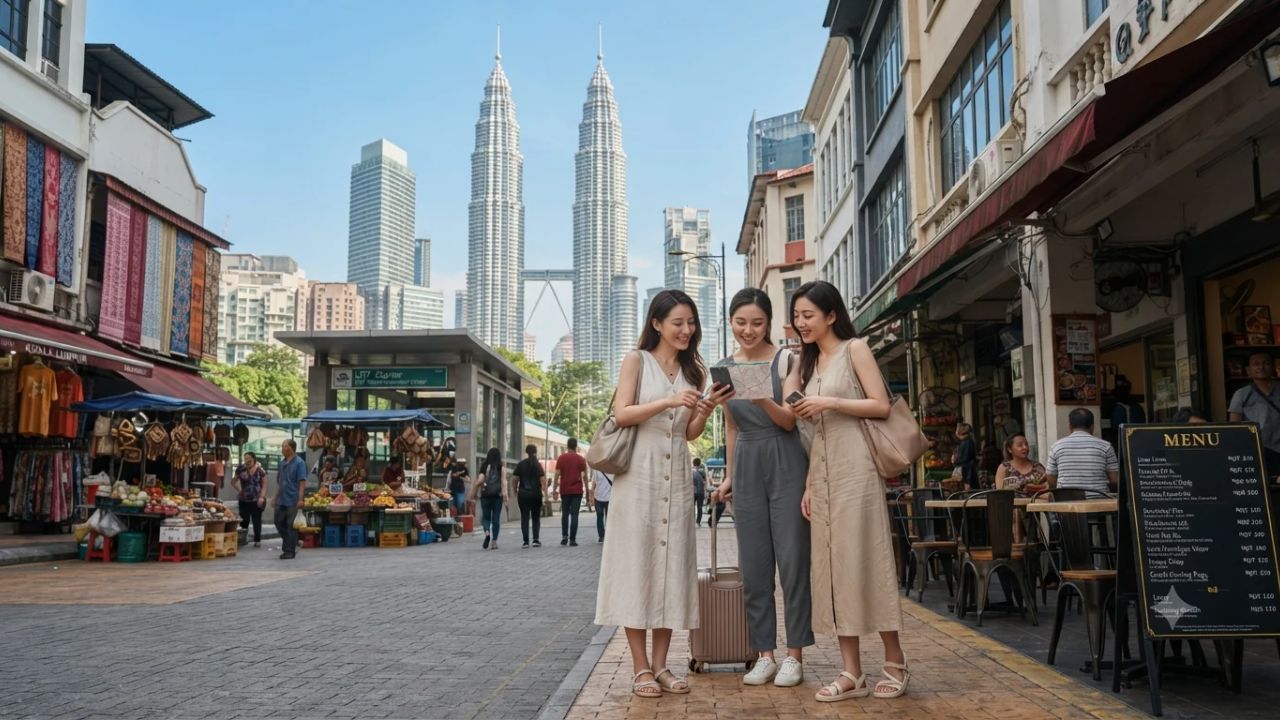
Mainland Chinese travelers are projected to undertake 182.9 million outbound journeys in 2026, representing an 8.9% increase over 2025, yet total overseas spending is set to contract by 4.3% to $242.9 billion as holidaymakers chase greater value abroad. This widening divergence between rising passenger volume and declining international expenditure signals a profound structural shift across the world's most influential source market. Rather than abandoning international journeys, Chinese consumers are redefining their holiday priorities—replacing lavish luxury retail sprees and extended long-haul packages with affordable regional getaways, independent travel itineraries, and price-conscious experiential activities.
According to comprehensive market data released by Singapore-based travel marketing technology firm China Trading Desk, this spending contraction reverses the modest 1% expenditure growth recorded in 2025 and stands in sharp contrast to the aggressive 29% post-reopening rebound observed in 2024. Official figures from China’s State Administration of Foreign Exchange (SAFE) corroborate this transformation, documenting $181.6 billion in cross-border travel expenditure between January and September 2026—a 4.7% decline compared to the corresponding period in 2025. For global airlines, luxury retail conglomerates, hospitality brands, and national tourism boards, the era of relying on raw visitor headcounts as a proxy for tourism revenue has officially ended.
The Spending Paradox: Dissecting 2026 Outbound Metrics
The central reality confronting the global travel industry in 2026 is that increased Chinese cross-border mobility no longer translates automatically into commercial windfalls for traditional luxury hospitality and retail ecosystems. The 182.9 million journeys forecast for 2026 reflect an appetite for exploration that remains culturally embedded among middle-class and affluent households. However, the budget allocated per departure has declined sharply across almost every demographic segment.
CHINA OUTBOUND TOURISM: TRAJECTORY & FINANCIAL SCORECARD
| Key Performance Metric | 2024 Actual | 2025 Actual | 2026 Forecast / YTD |
|---|---|---|---|
| Total Outbound Journeys | 142.3 Million | 167.9 Million | 182.9 Million (+8.9%) |
| Total Outbound Expenditure (USD) | $251.2 Billion | $253.8 Billion | $242.9 Billion (-4.3%) |
| Expenditure Growth YoY (%) | +28.9% | +1.0% | -4.3% |
| Average Spend per Outbound Trip | $1,765 | $1,511 | $1,328 (-12.1%) |
| SAFE Jan-Sep Travel Spend (USD) | $172.4 Billion | $190.5 Billion | $181.6 Billion (-4.7%) |
| Retail Share of Trip Budget (%) | ~38% | ~32% | ~23% |
| Experiences / Food Share (%) | ~26% | ~33% | ~41% |
The underlying data indicates that the average expenditure per outbound journey is expected to fall to approximately $1,328 in 2026, marking a 12.1% reduction from 2025 levels and a steep retreat from pre-pandemic norms when group tour shopping quotas skewed per-capita averages higher. This dynamic illustrates that international travel has transitioned from an exclusive status symbol into a routine lifestyle component, subject to the same strict budgetary scrutiny as domestic household expenses.
SAFE’s cross-border balance of payments figures provide an authoritative baseline for this realignment. Because SAFE tracks all banking, credit card, and digital payment outflows categorized under international travel services—including educational tuition, corporate travel, and medical transit alongside leisure vacations—the 4.7% contraction recorded across the first nine months of 2026 confirms that expenditure pressures are systemic rather than isolated to casual holidaymakers.
OFFICIAL STATE ADMINISTRATION OF FOREIGN EXCHANGE (SAFE) DATA
| Entity / Facility | Delays | Cancellations | Details |
|---|---|---|---|
| Reporting Period | Outbound Spend ($B) | YoY Change (%) | Dominant Outflow Mechanism |
| Q1 2026 (Jan - Mar) | $62.4 Billion | -3.8% | UnionPay, Alipay, WeChat Pay |
| Q2 2026 (Apr - Jun) | $58.9 Billion | -5.1% | Bank Cards & Merchant Settlement |
| Q3 2026 (Jul - Sep) | $60.3 Billion | -5.2% | Cross-border Mobile Transactions |
| 9-Month Cumulative | $181.6 Billion | -4.7% | Broad cross-border travel pool |
Macroeconomic Headwinds and the Rise of Rational Consumption
The divergence between travel volume and tourist spending is directly tied to broader macroeconomic adjustments within mainland China. Chinese consumers are not avoiding overseas travel, but they are organizing their personal balance sheets with heightened conservatism in response to persistent domestic financial pressures.
The primary factor dampening discretionary expenditure is the prolonged adjustment within China's residential property market. For decades, urban real estate represented the core store of household wealth and retirement security for middle-class families. Official data from the National Bureau of Statistics (NBS) reveals that real estate development investment fell by 21.6% year-on-year across the first ten months of 2026. This ongoing asset repricing has produced a pronounced negative wealth effect, prompting households to reduce big-ticket luxury purchases while prioritizing savings reserves.
DOMESTIC MACROECONOMIC INDICATORS INFLUENCING TRAVEL
| Entity / Route | Metrics | Operational Status |
|---|---|---|
| Economic Indicator | 2026 Performance | Behavioral Impact on Outbound Travel |
| NBS Retail Sales Growth (Oct 2026) | +0.4% Year-over-Year | Severe restraint on retail shopping |
| NBS Retail Sales (Jan - Oct 2026) | +1.0% Year-over-Year | Broad consumer spending hesitation |
| Real Estate Investment (Jan - Oct) | -21.6% Contraction | Negative wealth effect among owners |
| Youth Employment & Wage Growth | Moderating growth | Preference for low-cost regional trips |
| Household Savings Rate | Elevated historical | Liquidity retained; budgets capped |
Simultaneously, retail sales figures underscore broader consumer caution. The NBS reported that nationwide retail sales expanded by a modest 0.4% year-on-year in October 2026, with cumulative ten-month expansion hovering at just 1.0%. In this environment, Chinese travelers have embraced what domestic sociological analysts term lǐxìng xiāofèi (rational consumption) and xiāofèi jiàngjí (spending optimization).
Rather than viewing international holidays as occasions for unconstrained indulgence, travelers now approach trip planning as an exercise in value maximization. Travel remains an essential emotional release and educational pursuit, but consumers are actively comparing flight combinations, selecting boutique budget hotels over five-star international flags, and dining at local neighborhood eateries rather than Michelin-starred venues.
Regional Reorientation: Southeast Asia and South Korea Surge
As budget discipline becomes paramount, geographical proximity has emerged as the decisive factor shaping destination selection. Short-haul regional travel across Southeast Asia and East Asia has captured the vast majority of outbound traffic growth, benefiting from lower airfares, minimal time-zone differences, and favorable currency exchange rates.
Southeast Asian nations—particularly Thailand, Malaysia, and Vietnam—have established themselves as prime beneficiaries of this regional focus. These destinations provide a compelling value proposition: tropical climates, accessible luxury resorts priced at a fraction of Western European equivalents, and diverse culinary scenes that align with Chinese dietary preferences.
REGIONAL SHIFT: DESTINATION PERFORMANCE COMPARISON
| Entity / Facility | Delays | Cancellations | Details |
|---|---|---|---|
| Destination | 2026 Performance | YoY Growth Rate | Strategic Growth Drivers |
| South Korea | 5.47 Million (Sep) | +29.2% Surge | K-beauty, youth culture, proximity |
| Thailand | ~3.95 Million (Sep) | Moderate Recovery | Visa-free access, budget wellness |
| Malaysia | ~2.40 Million (Sep) | Strong Expansion | Visa exemption, cultural alignment |
| Vietnam | ~1.85 Million (Sep) | Rapid Acceleration | Cost efficiency, overland access |
| Japan | 3.34 Million (Sep) | -55.5% Collapse | Geopolitics, inflation, yen shift |
| Hong Kong (SAR) | 42.4 Million (Full) | High Volume / Low | High-speed rail day trips, transit |
| Macao (SAR) | 31.7 Million (Full) | Sustained Inflow | Leisure events, regional proximity |
Malaysia has capitalized on its mutual visa-free travel agreement with Beijing, drawing mainland visitors through major gateways in Kuala Lumpur, Penang, and Kota Kinabalu. Its multicultural environment, widespread Chinese linguistic capabilities, and culinary diversity have made it an accessible entry point for first-time outbound travelers and family groups.
Thailand continues to attract millions of independent Chinese holidaymakers, particularly in Bangkok, Phuket, and Chiang Mai. However, the nature of Thai inbound tourism has shifted; group tour buses have largely been replaced by independent travelers (FITs) booking private pool villas through digital platforms, participating in cooking academies, and seeking out niche wellness retreats.
Vietnam has emerged as a rapid-growth market, especially along coastal hubs like Da Nang, Nha Trang, and Phu Quoc. With convenient low-cost flight links and overland border crossings via Guangxi and Yunnan provinces, Vietnam delivers exceptional cost efficiency, appealing to budget-conscious younger travelers and university students.
The Divergent Fortunes of South Korea and Japan
In East Asia, the contrasting trajectories of South Korea and Japan highlight how geopolitical sentiment, pricing transparency, and targeted marketing influence Chinese traveler decisions.
South Korea experienced an extraordinary surge in Chinese arrivals between January and September 2026, welcoming approximately 5.47 million visitors from mainland China—a 29.2% year-on-year increase. South Korea’s resurgence has been fueled by intense demand from Gen Z and millennial travelers captivated by Korean popular culture, K-beauty cosmetics, skincare treatments, and independent urban exploration across Seoul’s Seongsu-dong and Hongdae neighborhoods. The availability of budget-friendly accommodation and targeted promotional shopping vouchers has kept South Korea highly competitive.
Conversely, travel demand for Japan contracted dramatically during the same period. China Trading Desk's research indicates that mainland Chinese arrivals to Japan fell by 55.5% year-on-year to 3.34 million visitors through September 2026. This sharp downturn was driven by a combination of factors: periodic bilateral geopolitical friction, negative public sentiment surrounding coastal environmental controversies, elevated domestic inflation in Japanese metropolitan hotels, and the erosion of Japan's historical duty-free shopping price advantage as luxury brands aligned global retail pricing.
The Evolution of Travel Retail: From Luxury Hauls to Experiential Discovery
For more than a decade, the commercial model of global luxury shopping was anchored by Chinese outbound tour groups. Flagship department stores in Paris, Milan, London, and Tokyo routinely designed operations around Chinese visitors purchasing designer handbags, high-end timepieces, and premium cosmetics in bulk. In 2026, this dynamic has permanently altered.
SHIFT IN CHINESE OUTBOUND SPENDING ALLOCATION
| Entity / Route | Metrics | Operational Status |
|---|---|---|
| Budget Category | 2019 Spending Share | 2026 Spending Share |
| Luxury Retail & Souvenirs | 37.8% of Total Budget | 22.6% of Total Budget |
| Experiential & Local Gastronomy | 16.4% of Total Budget | 28.5% of Total Budget |
| Accommodation (Mid-Scale / Boutique | 21.2% of Total Budget | 22.4% of Total Budget |
| International Flight Transit | 18.5% of Total Budget | 20.1% of Total Budget |
| Sightseeing & Cultural Admissions | 6.1% of Total Budget | 6.4% of Total Budget |
A primary driver of this retail transformation is the maturity of domestic e-commerce infrastructure within mainland China. Platforms such as Tmall Global, JD Worldwide, and Douyin Cross-Border E-Commerce allow Chinese consumers to purchase authenticated international luxury goods, skincare products, and electronics from home at competitive prices, often delivered within 48 hours. The logistical hassle of transporting heavy luggage, queuing at airport customs for VAT tax refunds, and risking warranty complications has diminished the appeal of purchasing overseas luxury staples.
A September 2026 survey conducted by China Trading Desk across 15,135 prospective and active travelers underscored this evolving retail psychology. A growing majority of respondents reported dissatisfaction with conventional airport duty-free shopping, citing inadequate stock of desired product variants, uncompetitive exchange-rate markups, and uninspiring merchandise assortments.
Instead of retail hauls, Chinese travelers are reallocating disposable travel funds toward unique experiential consumption. Expenditure on authentic regional gastronomy, artisanal craft workshops, scuba diving certifications, concert tickets, and private guided historical tours has expanded significantly. Travelers increasingly judge the success of an international holiday by the memories and visual stories they accumulate rather than the shopping bags they bring home.
The Strategic Role of Hong Kong and Macao
The Special Administrative Regions of Hong Kong and Macao occupy a unique structural position within China’s outbound statistical framework. Forecasts from China Trading Desk indicate that mainland Chinese travelers will complete approximately 42.4 million visits to Hong Kong and 31.7 million visits to Macao during 2026, representing more than 40% of all officially counted outbound journeys.
HONG KONG & MACAO: OUTBOUND PROFILE & TRIP DYNAMICS
| Entity / Facility | Delays | Cancellations | Details |
|---|---|---|---|
| Special Region | 2026 Projected Vol. | Primary Transit | Dominant Travel Characteristics |
| Hong Kong SAR | 42.4 Million Trips | High-Speed Rail | Same-day return, cultural events |
| Macao SAR | 31.7 Million Trips | HZMB / Ferry / Land | Entertainment, culinary, weekend |
However, these figures must be contextualized when assessing international travel spending. The vast majority of visits to Hong Kong and Macao originate from adjacent Guangdong province and the wider Greater Bay Area. The operational expansion of the Guangzhou-Shenzhen-Hong Kong Express Rail Link and the Hong Kong-Zhuhai-Macao Bridge (HZMB) allows travelers to visit for day trips, returning home the same evening without booking overnight hotel accommodations.
While Hong Kong attracts substantial numbers of visitors for international concerts, museum exhibitions at the M+ and Palace Museum, and seasonal celebrations such as WinterFest, average retail spending per visitor has declined compared to historical peaks. Similarly, Macao's visitors are increasingly drawn to family-oriented integrated resort entertainment and gastronomy rather than VIP gaming. These high-volume, low-duration journeys significantly dilute overall national outbound spending averages.
Policy Catalysts: Visa Liberalization and Aviation Rebound
The continuing growth in outbound trip volume—even amidst disciplined consumer expenditure—has been made possible by aggressive visa liberalization and the progressive restoration of international commercial aviation capacity.
Over the past two years, China has signed reciprocal visa-exemption treaties with a growing list of international partners, while several key destination governments have unilaterally dropped entry barriers to capture Chinese tourist traffic:
- Southeast Asian Visa-Free Corridor: Mutual visa exemption agreements with Thailand, Malaysia, and Singapore have eliminated visa processing fees, paperwork delays, and embassy appointments. Travelers can plan spontaneous weekend getaways with only a valid passport and an air ticket.
- Central Asia and Middle East: Visa waivers with nations like Kazakhstan, Uzbekistan, and the United Arab Emirates have unlocked new overland and short-haul flight corridors, supporting cultural tourism along the historic Silk Road.
- Simplified European & Regional Visas: While European Schengen visas still require appointments, streamlined multi-entry visa applications have facilitated repeat visits for business and seasoned independent travelers.
POLICY ENABLERS ACCELERATING CROSS-BORDER MOBILITY
| Entity / Route | Metrics | Operational Status |
|---|---|---|
| Policy Enabler | Target Region / Agreement | Direct Impact on Travel Planning |
| Mutual Visa Waiver | Thailand, Malaysia, S'pore | Zero visa friction; spontaneous bookings |
| Central Asian Waivers | Kazakhstan, Uzbekistan | Expansion of Air Silk Road cultural circuits |
| Aviation Restoration | Europe, Middle East, Asia | Increased seat capacity; declining airfares |
| Mobile Payment Accredit | Global Alipay/WeChat Rollout | Eliminates foreign currency exchange fees |
Concurrently, international flight capacity operated by Chinese carriers—including Air China, China Southern Airlines, China Eastern Airlines, and Hainan Airlines—has reached or exceeded 2019 levels across regional Asian routes and expanded significantly into the Middle East and Eastern Europe. The resulting surge in available airline seat kilometers has intensified carrier competition, driving down average international airfares and making outbound travel accessible to budget-conscious households.
Outlook for 2027: Transition Toward Market Stabilization
The structural dynamics observed throughout 2026 indicate that China’s outbound travel sector is navigating a permanent maturation phase rather than a temporary cyclical slump. As the market moves toward 2027, industry analysts project a gradual stabilization in overseas expenditure, though a return to the uninhibited luxury shopping sprees of the 2010s remains highly improbable.
STRATEGIC ACTION PLAN FOR GLOBAL TOURISM OPERATORS
| Category / Entity | Details / Impact |
|---|---|
| Operational Sector | Strategic Adaptation for Chinese Travelers in 2027 |
| Hospitality & Resorts | Unbundle packages; offer flexible cancellation and localized experiences |
| Destination Marketing | Promote independent culture, outdoor adventures, and culinary immersion |
| Retail & Duty-Free | Stock niche regional products unavailable on Chinese domestic e-commerce |
| Payment & Digital Tech | Implement native Alipay and WeChat Pay integration with digital coupons |
| Airline Carriers | Expand point-to-point regional routes catering to short-stay departures |
To remain competitive, international travel businesses must adapt to the behavioral profile of the modern Chinese traveler:
- Focus on Perceived Value Over Prestige: Pricing transparency, bundle discounts, and clear value-for-money propositions will outperform traditional luxury positioning.
- Embrace Digital Ecosystems: Chinese travelers rely heavily on domestic social and booking platforms—such as Xiaohongshu (RED), Douyin, and Fliggy—for authentic user-generated recommendations and transparent pricing comparisons. Destinations must maintain active, engaging presences within these digital channels.
- Integrated Digital Payment Systems: Merchant acceptance of Alipay, WeChat Pay, and UnionPay mobile payments has become an essential baseline expectation, removing friction and foreign exchange calculation hurdles for international visitors.
- Curate Experiential and Nature-Based Itineraries: As the desire for physical goods gives way to the pursuit of authentic life experiences, destinations that offer outdoor adventure, wellness, agricultural immersion, and cultural heritage will capture the highest yields.
China’s outbound travel market has entered an era defined by discernment, flexibility, and value consciousness. By moving past vanity metrics and aligning their strategies with these new consumer realities, global tourism providers can build sustainable, high-yield relationships with the world's most dynamic traveling population.
Frequently Asked Questions (FAQ)
Why is Chinese outbound tourist spending falling despite rising trip numbers?
While outbound journeys will increase by 8.9% to 182.9 million in 2026, total spending is set to fall by 4.3% to $242.9 billion due to domestic economic caution, real estate wealth compression, and a decisive consumer shift away from luxury shopping toward affordable regional and experiential travel.
What do official Chinese government statistics show about travel spending?
China's State Administration of Foreign Exchange (SAFE) reported $181.6 billion in cross-border travel expenditure between January and September 2026, representing a 4.7% contraction compared to the same period in 2025.
Which travel destinations are benefiting most from China's 2026 travel trends?
Nearby Asian destinations offering strong value for money and simplified entry—notably South Korea, Thailand, Malaysia, and Vietnam—have seen substantial increases in Chinese visitor numbers. South Korea alone recorded a 29.2% surge to 5.47 million mainland visitors through September 2026.
Why have Chinese visitor numbers to Japan dropped sharply in 2026?
Mainland Chinese arrivals to Japan fell by 55.5% year-on-year to 3.34 million across the first nine months of 2026, impacted by periodic geopolitical tensions, elevated domestic hotel prices in Japanese cities, and diminished duty-free retail price advantages.
How has Chinese tourist shopping behavior changed abroad?
Chinese tourists are buying fewer luxury goods abroad because domestic cross-border e-commerce platforms offer the same products at home with lower hassle. Travelers are instead directing their budgets toward local gastronomy, wellness, cultural admissions, and outdoor experiences.
What is the spending outlook for China's outbound tourism in 2027?
Overseas travel spending is expected to move toward gradual stabilization in 2027 as airlines and hospitality providers adjust offerings to match the demand for value-oriented, independent, and experiential travel itineraries.
Related Travel Guides
- France Leads European Source Markets as Tunisia Tourism Reaches 9 Million Arrivals
- Italy Issues Poland Travel Advisory Highlighting Eastern Border Security Alerts
- Thailand Foreign Tourist Arrivals Analysis and Winter Season Outlook
- Ghana $1 Billion Tourism Strategy: Conferences and Culture Plan 2027–2030
This article is for informational purposes. Flight routes, passenger regulations, visa rules, and transit advisories are subject to change by airlines and aviation authorities. Readers are advised to verify schedules and travel documentation with relevant carriers and border agencies before departure.
Related Stories

WTTC Tourism Rankings 2026: US, China, and India Lead Global Power Index as New Environmental and Opportunity Benchmarks Unveiled

India Celebrates Destination of the Year 2027 Honour as Hotel Association of India Champions Global Tourism Expansion