Busan Tourism Boom Outpaces Seoul: 3.9 Million Foreign Visitors, 1-Trillion-Won Spend, and Global Long-Haul Travel Surge

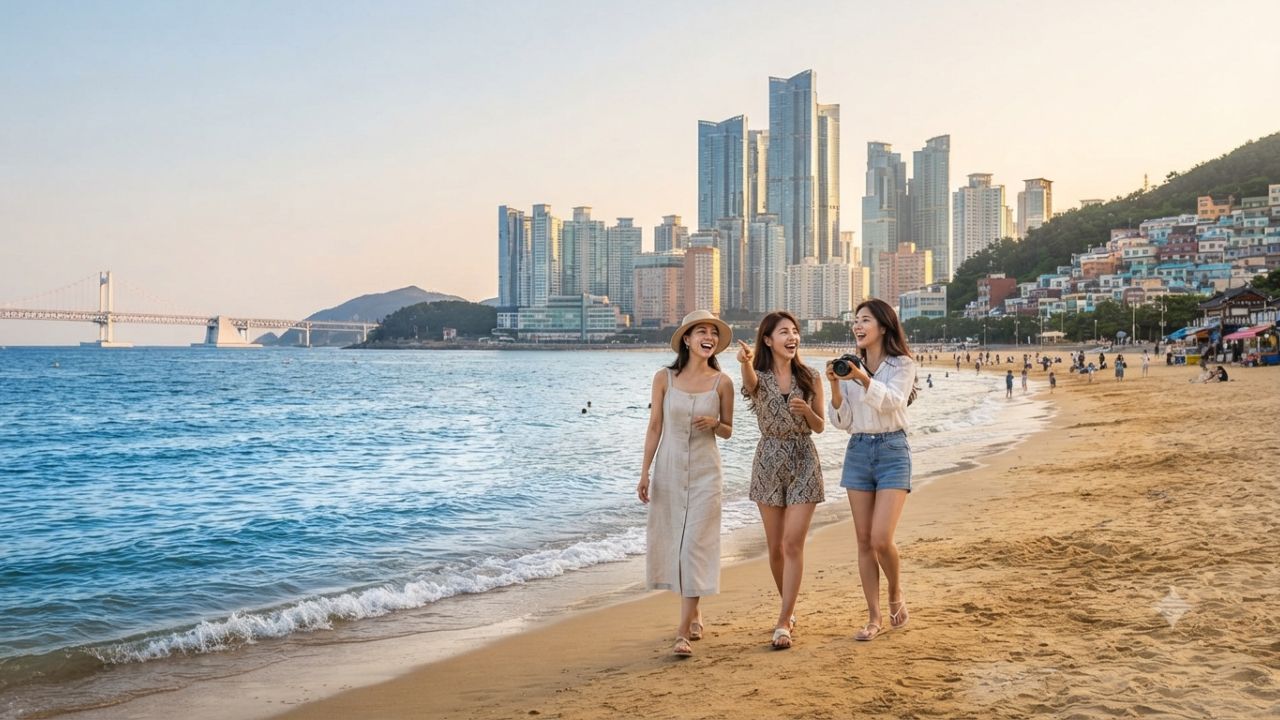
South Korea’s maritime metropolis of Busan has officially emerged as one of East Asia’s most formidable new travel powerhouses, recording a historic 47.0% year-on-year surge in foreign visitor arrivals during the first nine months of 2026 and decisively outperforming the nation’s broader tourism recovery. According to official municipal figures published on 23 November 2026 by the Busan Metropolitan Government, the coastal city welcomed 3,934,876 international travelers between January and September 2026, eclipsing its entire 12-month 2025 visitor total of 3.64 million in just three quarters. Driven by an unprecedented wave of long-haul arrivals from the United States (+76.1%), France (+111.3%), and Australia (+43.5%), alongside expanding direct flight connectivity at Gimhae International Airport and maritime traffic at Busan Port, foreign card expenditure across the city breached the historic one-trillion-won mark, reaching KRW 1.0162 trillion ($740 million USD). Fresh from capturing dual honors at the 2026 Trip.com Group Global Partner Summit—including selection in the prestigious "2027 Trip.Best Global 100 – Global Wonders" list—Busan is actively recalibrating its municipal strategy, shifting from raw visitor volume toward high-yield experiential tourism, sustainable community stewardship at residential heritage sites like Gamcheon Culture Village, and longer multi-day coastal stays.
For decades, international leisure travel to South Korea remained heavily concentrated within the capital city of Seoul, with foreign tourists rarely venturing beyond the Joseon-era palaces, Myeongdong shopping alleys, and Gangnam boulevards. However, the travel landscape has fundamentally shifted. Modern global wanderers are increasingly drawn to destinations that combine dramatic coastal topography, authentic regional gastronomy, maritime leisure, and contemporary creative arts. Situated on the southeastern tip of the Korean Peninsula, Busan provides the perfect natural counterpoint to Seoul’s dense inland metropolis. With pristine crescent beaches like Haeundae and Gwangalli backdropped by rugged green peaks, working seafood markets presided over by legendary matriarchs, and high-speed KTX rail connectivity linking the city to Seoul in just over two hours, Busan has evolved from a domestic summer getaway into an indispensable pillar of international Asian travel.
========================================================================================
BUSAN TOURISM PERFORMANCE & INFRASTRUCTURE SCORECARD (JAN–SEPT 2026)
========================================================================================
Performance Indicator   Reported Metric & Statistical Horizon
----------------------------------------------------------------------------------------
Foreign Visitor Volume  3,934,876 International Arrivals (January–September 2026)
Year-on-Year Growth     +47.0% vs. Same 9-Month Period in 2025 (Outpaced National +21.5%)
Annual Benchmark        Exceeded Full-Year 2025 Total (3.64 Million Visitors) in 9 Months
Foreign Card Spend      KRW 1.0162 Trillion ($740M USD; +51.9% Year-on-Year Growth)
Direct Gateway Volume   2.33 Million Visitors via Gimhae Airport & Busan Port (+52.7% YoY)
Direct Entry Share      Reached 62.9% of All Foreign Arrivals in September 2026
Leading Long-Haul GrowthFrance (+111.3%), United States (+76.1%), Australia (+43.5%)
United States Arrivals  289,382 Visitors (Jan–Aug 2026; Largest Western Source Market)
Global Awards Garnered  Trip.com "Strategic Cooperation Destination of the Year 2026" &
                        "2027 Trip.Best Global 100 – Global Wonders Travel Destinations"
Strategic Shift Focus   Extending average length of stay (from 2.3 to 4.0+ days) and yield
========================================================================================
Source: Busan Metropolitan Government & Tourism Promotion Division, Nov 2026.
========================================================================================
The Macroeconomic Pivot: How Busan Is Outpacing South Korea’s National Growth
The sheer magnitude of Busan’s 2026 tourism surge reveals a profound structural decentralization in South Korea’s inbound visitor economy. While nationwide foreign tourist arrivals climbed by a respectable 21.5% through the third quarter of 2026—propelled by the post-pandemic reopening of regional flight networks—Busan expanded at more than double that pace, registering a 47.0% increase.
========================================================================================
SOUTH KOREA INBOUND TOURISM BENCHMARK MATRIX (2024–2026)
========================================================================================
Economic / Tourism Metric      2024 Baseline      2025 Full-Year     2026 (Jan–Sept)
----------------------------------------------------------------------------------------
Busan Foreign Arrivals         2.85 Million       3.64 Million       3.93 Million (+47.0%)
National Foreign Arrivals      11.03 Million      14.80 Million      12.95 Million (+21.5%)
Busan Share of National Total  ~18.5% Share       ~24.6% Share       ~30.4% Direct / Linked
Foreign Card Spend in Busan    KRW 520 Billion    KRW 669 Billion    KRW 1.016 Trillion (+51.9%)
Direct Air / Sea Entry Rate    42.1% Entry        50.4% Entry        62.9% Peak Entry Rate
Average Hotel Occupancy (Top 5)68.4% Average      74.2% Average      83.7% Coastal Average
========================================================================================
1. Surpassing the One-Trillion-Won Spending Threshold
Perhaps the most significant economic indicator for municipal planners is that foreign visitor expenditure has expanded faster than arrival headcounts. During the January–September 2026 monitoring window, international cardholders spent approximately KRW 1.0162 trillion ($740 million USD) within Busan's metropolitan limits, representing a 51.9% year-on-year increase.
- Retail and Culinary Micro-Commerce: Traditional dining institutions in Nampo-dong, seaside cafes lining Cheongsapo, and street food alleys across Seomyeon captured significant capital infusions directly from international card transactions.
- Premium Hospitality Yields: Luxury beachfront hotels along Haeundae—including Signiel Busan, the Westin Josun Busan, and Grand Josun—recorded record third-quarter room rates, driven by affluent foreign travelers extending their weekend stays into multi-day coastal retreats.
2. Transitioning from Volume to High-Yield Quality
Busan’s municipal administration has stated that future success will not be measured purely by visitor headcounts. Under the city's updated strategic blueprint, the focus has pivoted toward three core qualitative metrics:
- Length of Stay: Encouraging international visitors to increase their average stay in Busan from the historical baseline of 2.3 nights to 4.0 nights or more.
- Geographic Dispersion: Directing tourist footfall away from congested coastal strips toward historic inland districts, green mountain temple complexes, and creative arts hubs in Yeongdo.
- Repeat Visitation: Creating seasonal event anchors—such as the Busan International Film Festival (BIFF), the Busan Fireworks Festival, and the Gwangalli Drone Light Show—that incentivize return journeys across different quarters of the year.
========================================================================================
ECONOMIC VALUE CHAIN DISTRIBUTION: 2026 VISITOR SPEND
========================================================================================
Spending Category       Percentage Share Economic Beneficiaries & Commercial Channels
----------------------------------------------------------------------------------------
Accommodation           38.5% of Spend   Beachfront luxury hotels, boutique guesthouses,
                                         serviced apartments in Haeundae and Gwangalli
Food & Beverage         28.2% of Spend   Jagalchi seafood stalls, Dwaeji Gukbap diners,
                                         coastal roasteries, and craft beer brewpubs
Retail & Duty-Free      20.4% of Spend   Centum City department stores, local cosmetics,
                                         K-pop merchandise, and traditional craft markets
Transport & Activities  12.9% of Spend   Haeundae Blueline sky capsules, Songdo cable cars,
                                         metro transit cards, and regional tour charters
========================================================================================
The Long-Haul Revolution: The Rise of Western Travelers Beyond Seoul
Historically, Busan’s international tourist demographic was dominated by short-haul travelers from neighboring East Asian markets, specifically Japan, Taiwan, and mainland China, who utilized high-frequency ferry routes and low-cost carrier flights. The 2026 data, however, highlights an extraordinary surge in long-haul Western travelers.
========================================================================================
INBOUND LONG-HAUL VISITOR TRAJECTORY (JANUARY–AUGUST 2026)
========================================================================================
Source Country          Visitor Volume (Jan–Aug)  Annual Percentage Growth Rate
----------------------------------------------------------------------------------------
United States           289,382 Visitors          +76.1% Year-on-Year Expansion
France                  38,941 Visitors           +111.3% Year-on-Year Expansion
Australia               48,455 Visitors           +43.5% Year-on-Year Expansion
United Kingdom          29,150 Visitors           +36.8% Year-on-Year Expansion
Germany                 24,780 Visitors           +41.2% Year-on-Year Expansion
Canada                  34,600 Visitors           +48.0% Year-on-Year Expansion
========================================================================================
Source: Busan Metropolitan Government Municipal Tourism Bulletin, October 2026.
========================================================================================
1. The American Influx
Between January and August 2026, the United States accounted for 289,382 arrivals to Busan, marking an astonishing 76.1% annual increase and cementing its position as the city’s single largest long-haul source market. American travelers—often visiting South Korea on extended multi-week vacations—are increasingly pairing their time in Seoul with three or four days on the southern coast, attracted by Busan's relaxed beach lifestyle, dramatic coastal bridges, and historical significance as the provisional wartime capital during the Korean War.
2. The French Growth Phenomenon
Recording the fastest percentage growth of any global market, French visitor arrivals skyrocketed by 111.3% to reach 38,941 travelers. Cultural tourism analysts attribute this French surge to a deep appreciation for Busan’s cinematic heritage—anchored by the Busan International Film Festival (BIFF) and the Busan Cinema Center—combined with the visual appeal of hillside art enclaves like Gamcheon Culture Village and the coastal hiking trails of the Galmaet-gil.
3. Australian Coastal Affinity
With 48,455 arrivals (+43.5%), Australian travelers have demonstrated a natural affinity for Busan's vibrant maritime environment. Accustomed to coastal cities like Sydney and Melbourne, Australian visitors find in Busan a uniquely Korean coastal experience: world-class urban beaches integrated directly with twenty-four-hour dining districts, oceanside Buddhist shrines, and fresh seafood markets.
========================================================================================
LONG-HAUL VISITOR PROFILE & TRAVEL MOTIVATIONS
========================================================================================
Traveler Cohort       Average Stay  Primary Travel Drivers & Preferred Experiences
----------------------------------------------------------------------------------------
North American        3.8 Nights    Korean War history (UN Memorial Cemetery), coastal
(USA & Canada)                      hiking, K-drama film locations, luxury beach hotels
European              4.2 Nights    Cinematic heritage (BIFF), culinary exploration
(France, UK, Germany)               (Jagalchi), Buddhist temples (Haedong Yonggungsa)
Australasian          3.5 Nights    Ocean recreation, waterfront craft beer culture,
(Australia & NZ)                    Songdo marine skywalks, Haeundae Blueline Park
========================================================================================
The Gateway Revolution: Gimhae International Airport and Busan Port Direct Entry
A critical catalyst behind Busan’s visitor boom is the rapid expansion of direct international entry gateways, which allow travelers to bypass Seoul entirely and begin their South Korean itineraries directly on the southern coast.
========================================================================================
DIRECT GATEWAY ACCESS COMPARISON (JANUARY–SEPTEMBER 2026)
========================================================================================
Gateway Facility        Entry Category & Volume     Growth Rate & Strategic Role
----------------------------------------------------------------------------------------
Gimhae Airport (PUS)    1.78 Million Air Arrivals   +56.4% YoY; expanded regional flights
                        International Terminal      from Japan, Taiwan, Singapore, Vietnam
Busan Port Terminal     550,000 Maritime Arrivals   +41.8% YoY; high-speed hydrofoil ferries
(International Wharf)   Ferry & Cruise Passengers   from Fukuoka and international cruise calls
----------------------------------------------------------------------------------------
Total Direct Entry      2.33 Million Arrivals       +52.7% YoY; 62.9% peak monthly share
========================================================================================
1. Gimhae International Airport’s Regional Ascendance
During the first nine months of 2026, approximately 2.33 million foreign visitors entered South Korea directly through Gimhae International Airport (PUS) or the Busan Port International Passenger Terminal, representing a 52.7% increase compared with the previous year.
- By September 2026, the proportion of international visitors entering the country directly through these southern gateways climbed to 62.9%, proving that Busan is no longer merely an overland side trip from Seoul, but an independent international point of origin.
- Airlines have responded by increasing frequencies on non-stop regional corridors connecting Busan with Tokyo, Osaka, Taipei, Singapore, Bangkok, and Da Nang, while code-share agreements allow European and American travelers to connect fluidly through regional Asian hubs directly into Gimhae.
2. Maritime Connectivity and International Cruising
Busan Port remains Northeast Asia’s premier transshipment hub and an increasingly vital passenger gateway:
- Daily high-speed hydrofoils (such as the Queen Beetle and JR Kyushu Jet Ferry) connect Busan with Fukuoka (Hakata Port), Japan, in just three hours and forty minutes, fostering robust bilateral tourism.
- The Busan International Cruise Terminal at Dongsam-dong has experienced a strong resurgence in international luxury cruise calls, with major cruise lines homeporting or docking for multi-day shore excursions that feed passengers directly into downtown shopping and cultural districts.
========================================================================================
DIRECT ENTRY TRANSIT CONNECTIVITY GUIDE
========================================================================================
Transit Point       Transport Mode to Downtown  Travel Time & Indicative Fare
----------------------------------------------------------------------------------------
Gimhae Airport      Busan-Gimhae Light Rail to  ~45 Minutes to Seomyeon Station
(PUS Terminal)      Metro Line 2 / Line 3       KRW 2,100 ($1.50 USD)
Busan Port Ferry    Walk to Busan Subway        ~8 Minutes walking to Metro Line 1;
Terminal (Choryang) Station (Line 1) or Taxi    ~15 Minutes by taxi to Nampo-dong (KRW 6,000)
Seoul Station       KTX High-Speed Bullet Train ~2 Hours 15 Minutes non-stop
to Busan Station    (Gyeongbu Line)             KRW 59,800 ($44.00 USD) standard class
========================================================================================
Architectural & Cultural Anchors: The Five Pillars of the Busan Experience
Busan’s compelling appeal lies in its diverse regional typography, where ultramodern waterfront skylines sit minutes away from preserved refugee villages, fishing harbors, and cliffside temples.
========================================================================================
THE FIVE PILLARS OF THE BUSAN VISITOR CIRCUIT
========================================================================================
Attraction Name   Geographic District Distinctive Cultural & Visual Identity
----------------------------------------------------------------------------------------
Haeundae Beach &  Haeundae-gu         Crescent white-sand shoreline, luxury towers,
Songnim Park      (Eastern Coast)     Haeundae Blueline Park sky capsules, Dongbaek Island
Gwangalli Beach & Suyeong-gu          Urban beach with front-row panoramas of the 7.4-km
Diamond Bridge    (Central Coast)     Gwangandaegyo suspension bridge; Saturday drone shows
Gamcheon Culture  Saha-gu             Terraced hillside community of pastel-painted houses,
Village           (Western Inland)    art installations, and Korean War refugee history
Jagalchi Market & Jung-gu             Korea's largest seafood emporium; live outdoor tanks,
Nampo-dong        (Historic Harbor)   second-floor sashimi kitchens, and BIFF Square street food
Haedong YonggungsaGijang-gun          Rare 14th-century Buddhist temple constructed directly
Temple            (Northeast Coast)   onto rocky coastal cliffs overlooking the open Pacific
========================================================================================
1. Haeundae Beach and the Blueline Park
Haeundae Beach represents the quintessential face of modern coastal Korea. Strolling along the 1.5-kilometer sand strip, visitors encounter luxury beachfront hotels, dynamic dining avenues, and Songnim Park's pine tree groves.
- At the eastern tip of Haeundae lies the Haeundae Blueline Park, a redevelopment of the abandoned Donghae Nambu railway line. Travelers ride colorful retro Sky Capsules elevated ten meters in the air along the jagged coastal cliffs of Mipo to Cheongsapo, capturing breathtaking views of the East Sea.
2. Gwangalli Beach and the Diamond Bridge
While Haeundae offers grand luxury, Gwangalli Beach captures the youthful, creative spirit of Busan.
- The shoreline provides an unobstructed vantage point of the Gwangandaegyo (Diamond Bridge), a monumental 7.4-kilometer double-deck suspension bridge spanning the bay.
- At night, the bridge illuminates with thousands of synchronized LED lights, creating a mesmerizing backdrop for beachfront craft breweries, coffee houses, and the famed Saturday night Gwangalli M Drone Light Show.
3. Gamcheon Culture Village: History and Responsible Stewardship
Built across steep mountain slopes in the 1950s by refugees fleeing the Korean War, Gamcheon Culture Village was transformed in 2009 into an open-air art village. Often called the "Machu Picchu of Busan," its terraced labyrinth of pastel-painted houses, winding staircases, and vibrant murals attracts millions of photographers.
- Balancing Tourism and Local Community: Because Gamcheon remains an active residential neighborhood populated by elderly citizens, municipal authorities have implemented strict responsible tourism policies. Visiting hours are restricted to 09:00 am through 06:00 pm (05:00 pm in winter), large tour coaches are barred from entering residential alleys, and visitors are instructed to respect quiet zones to preserve community harmony.
4. Jagalchi Market: The Living Heart of Maritime Gastronomy
No journey to Busan is complete without navigating the wet floors of Jagalchi Market, Korea's largest seafood emporium.
- Presided over by the formidable Jagalchi Ajumma (middle-aged female fishmongers whose resilience helped rebuild post-war Busan), the ground-floor stalls display hundreds of live marine species, from giant King crabs and octopus to sea squirts and flounder.
- Diners select live seafood directly from the tanks and carry it upstairs to second-floor dining halls, where it is prepared fresh as raw sashimi (hoe) or simmered in spicy pepper-paste stew (maeuntang).
5. Haedong Yonggungsa: The Coastal Temple Sanctuary
Unlike the vast majority of Korean Buddhist temples, which are positioned deep within quiet mountain valleys, Haedong Yonggungsa Temple was built in 1376 directly onto the craggy rock faces of Gijang overlooking the Pacific Ocean. Visitors descend a 108-step stone stairway lined with stone lanterns to reach shrines where ocean waves crash against the granite foundations, creating an unforgettable spiritual sanctuary at sunrise.
========================================================================================
CULINARY IDENTITY: BUSAN SIGNATURE SPECIALTIES
========================================================================================
Dish Name          Korean Characters Core Ingredients & Cultural Context
----------------------------------------------------------------------------------------
Dwaeji Gukbap      돼지국밥           Rich pork bone broth, tender sliced pork, chives;
                                      born as sustaining fuel for Korean War refugees
Milmyeon           밀면               Chewy wheat noodles in icy savory broth; created
                                      when refugee cooks substituted US aid flour for buckwheat
Ssiat Hotteok      씨앗호떡           Crisp griddled sweet dough pancake stuffed with brown
                                      sugar, cinnamon, and a wealth of crunchy roasted seeds
Fresh Raw Fish     회 (Hoe)           Live ocean fish selected at Jagalchi, sliced paper-thin,
                                      served with perilla leaves, garlic, and fermented chogochujang
========================================================================================
Awards & International Partnerships: Trip.com Group Recognition and the 2027 Horizon
Busan’s meteoric rise on the international travel stage was formally recognized on the global corporate stage in late November 2026.
========================================================================================
GLOBAL TOURISM RECOGNITION TIMELINE (NOVEMBER 2026)
========================================================================================
Date               International Event & Honor Conferred
----------------------------------------------------------------------------------------
19 November 2026   Selected for the official "2027 Trip.Best Global 100 – Global Wonders
                   Travel Destinations" list by Trip.com Group.
20 November 2026   Awarded "Strategic Cooperation Destination of the Year" at the 2026
                   Trip.com Group Global Partner Summit held in Sydney, Australia.
23 November 2026   Busan Metropolitan Government officially releases Jan–Sept foreign
                   tourism statistics, verifying 3.93M arrivals and KRW 1.016T in card spend.
========================================================================================
1. Trip.com Group Strategic Cooperation Destination of the Year
On 20 November 2026, during the Trip.com Group Global Partner Summit in Sydney, Australia—attended by more than 3,000 international delegates representing major hotel groups, airlines, and national tourism ministries—Busan was awarded the prestigious Strategic Cooperation Destination of the Year.
- The accolade honored Busan's aggressive digital marketing campaigns, integrated ticketing partnerships, and targeted promotions on global online travel platforms that effectively directed international booking flows toward southern Korea.
2. Trip.Best Global 100: Global Wonders Designation
Simultaneously, Busan was officially chosen for inclusion in the 2027 Trip.Best Global 100 – Global Wonders Travel Destinations directory. This global ranking evaluates verified customer reviews, search volumes, repeat booking rates, and cultural uniqueness, placing Busan alongside iconic world destinations and providing a massive promotional boost ahead of the 2027 travel cycle.
Practical Traveler Guide: Planning an Unforgettable Busan Getaway
To experience Busan’s coastal charm smoothly, international travelers should consider essential logistical details, seasonal timing, and transit connections.
========================================================================================
PRACTICAL TRAVELER PLANNING MATRIX
========================================================================================
Planning Category      Traveler Guidance & Practical Advice
----------------------------------------------------------------------------------------
Ideal Length of Stay   3 to 5 Full Days; allows balanced beach, cultural, and food exploration
Best Travel Seasons    Autumn (Sept–Nov) for clear skies & foliage; Spring (April–May)
                       for mild coastal temperatures and cherry blossoms
High-Speed Rail TransitBook KTX bullet trains via Korail 3 to 4 weeks ahead; runs hourly
                       between Seoul Station and Busan Station (2 hours 15 minutes)
Local Transportation   Purchase a rechargeable T-money or WOWPASS transit card; valid on
                       all four Busan Metro lines, city buses, and local taxis
Language & Navigation  Download Naver Map or KakaoMap; Google Maps offers limited walking
                       directions in South Korea due to national cartographic security laws
Cash & Card Payments   Credit cards (Visa/Mastercard) widely accepted across hotels, stores,
                       and restaurants; carry small cash for Jagalchi and street market stalls
========================================================================================
Navigating Local Transit: The KTX vs. Flight Decision
Travelers arriving in South Korea via Seoul’s Incheon International Airport (ICN) have two primary methods to reach Busan:
- KTX Bullet Train: Board the AREX airport express to Seoul Station, then transfer to the KTX Gyeongbu High-Speed Line. In two hours and fifteen minutes, the train whisks passengers downtown into Busan Station (Choryang-dong), offering comfortable seating, complimentary Wi-Fi, and scenic views of the Korean countryside.
- Direct Domestic Air Connection: Board a domestic flight from Gimpo International Airport (GMP) directly to Gimhae International Airport (PUS) in fifty-five minutes. This option is particularly advantageous for travelers transiting through Gimpo or booking direct multi-city international tickets.
========================================================================================
CURATED 3-DAY BUSAN COASTAL & CULTURAL ITINERARY
========================================================================================
Day    Time Schedule Activity & District Experience
----------------------------------------------------------------------------------------
Day 1: 09:00 am      Arrive via KTX at Busan Station; check in to Haeundae hotel
Haeundae             11:30 am: Savor authentic Dwaeji Gukbap lunch near Haeundae Market
& Coast              01:30 pm: Ride the Haeundae Blueline Park Sky Capsule from Mipo to Cheongsapo
                     04:00 pm: Stroll Dongbaekseom coastal boardwalk; view Nurimaru APEC House
                     07:00 pm: Oceanside seafood dinner overlooking the illuminated harbor
----------------------------------------------------------------------------------------
Day 2: 09:00 am      Morning excursion to Haedong Yonggungsa cliffside Buddhist temple
Temples              12:30 pm: Lunch at Gijang Crab Market; feast on freshly steamed snow crab
& Arts               03:00 pm: Explore Gamcheon Culture Village; observe art murals and alleys
                     06:30 pm: Gwangalli Beach promenade; watch the Diamond Bridge light show
----------------------------------------------------------------------------------------
Day 3: 09:30 am      Immerse in the sights and sounds of historic Jagalchi Seafood Market
Harbor               11:30 am: Enjoy fresh raw fish (Hoe) and spicy stew on the second floor
& Heritage           02:00 pm: Ride the Songdo Marine Cable Car across the bay to Songdo Skywalk
                     04:30 pm: Browse traditional sweets and street food at BIFF Square
                     07:00 pm: Depart via KTX from Busan Station to Seoul or Gimhae Airport
========================================================================================
Frequently Asked Questions
Why is Busan experiencing such a massive tourism boom in 2026?
Busan welcomed 3.93 million foreign visitors in the first nine months of 2026 (+47% YoY) due to expanding direct international flights at Gimhae Airport, growing global awareness of its beaches and cultural heritage, high-profile awards from travel platforms like Trip.com, and an unprecedented surge in Western travelers from the United States, France, and Australia.
Can international visitors travel directly to Busan without flying into Seoul?
Yes. Over 2.33 million international visitors entered directly via Gimhae International Airport (PUS) or the Busan Port International Passenger Terminal in the first nine months of 2026. Direct regional flights connect Busan with Tokyo, Osaka, Taipei, Singapore, and Bangkok, while ferries link Busan directly to Fukuoka, Japan.
How fast is the KTX train from Seoul to Busan?
The high-speed KTX train on the Gyeongbu Line travels from Seoul Station to Busan Station in approximately two hours and fifteen minutes, offering high-frequency departures throughout the day.
What are the main attractions in Busan for first-time visitors?
The top attractions include Haeundae Beach, Gwangalli Beach (famous for views of the illuminated Diamond Bridge), Gamcheon Culture Village (the "Machu Picchu of Busan"), Jagalchi Fish Market, Haedong Yonggungsa coastal temple, and the Haeundae Blueline Park sky capsules.
What makes the Ghost Room and other exhibits unique in Busan's cultural offerings?
While modern visual arts continue to grow, Busan’s primary cultural appeals center on outdoor experiential heritage, such as the living history at Gamcheon Culture Village, the Buddhist sanctuary of Haedong Yonggungsa, and the maritime commerce of Jagalchi Market.
What are the rules for visiting Gamcheon Culture Village?
Because Gamcheon is an active residential neighborhood, visitors must adhere to official visiting hours (09:00 am to 06:00 pm from March to October; 09:00 am to 05:00 pm from November to February). Large tour coaches are restricted, and travelers are asked to maintain quiet and avoid photographing into private homes.
How much did foreign tourists spend in Busan in 2026?
Foreign credit card spending in Busan reached KRW 1.0162 trillion ($740 million USD) between January and September 2026, representing a 51.9% increase compared to the same period in 2025.
What are the signature foods that travelers should try in Busan?
Must-try local dishes include Dwaeji Gukbap (hearty pork soup with rice), Milmyeon (chewy wheat noodles served in an ice-cold savory broth), Ssiat Hotteok (sweet griddled pancakes packed with roasted seeds), and fresh raw seafood prepared directly at Jagalchi Market.
What global awards did Busan win ahead of 2027?
Busan was named to Trip.com Group’s "2027 Trip.Best Global 100 – Global Wonders Travel Destinations" list and won the "Strategic Cooperation Destination of the Year" award at the 2026 Trip.com Global Partner Summit in Sydney.
What is the best way to get around Busan?
The Busan Metro system features four clean, efficient lines that connect major districts like Haeundae, Seomyeon, and Nampo-dong. Visitors can purchase a rechargeable T-money or WOWPASS card for smooth transit across subways, city buses, and local taxis.
Strategic Outlook: Redefining South Korea's Tourism Geography
Busan’s remarkable 2026 tourism surge represents far more than a temporary post-pandemic travel rebound; it marks a permanent structural shift in how global travelers experience South Korea. By combining world-class coastal beauty with urban sophistication, deep historical memory, and expanding international air and maritime gateways, the city has successfully dismantled the long-standing perception that South Korea begins and ends in Seoul.
As municipal leaders steer Busan toward longer visitor stays, higher per-capita spending, and responsible neighborhood stewardship, the coastal metropolis is demonstrating how regional cities can harness global cultural momentum. For international travelers seeking the dynamic heart of modern Korea paired with the refreshing rhythm of the Pacific Ocean, Busan stands ready as one of East Asia’s most captivating, complete, and unmissable travel destinations.
Related Travel Guides
- Denver Museum of Illusions Expands to 8,700 Square Feet: 60 Exhibits, 16th Street Mall Reopening, and Colorado Family Travel Guide
- Sushi Zanmai Makes Historic Asia Debut in Hong Kong: 82-Seat Flagship, Live Bluefin Tuna Show, and Kowloon Food Tourism Surge
- Thailand’s Loy Krathong and Yi Peng 2026 Drive 6-Billion-Baht Cultural Tourism Surge Across Six Signature Provinces
- Wisconsin’s Hidden Beaches: Complete Travel Guide to 201 Great Lakes Shores, Island Sanctuaries, and Inland Bluffs
This article is for informational purposes. Flight routes, passenger regulations, visa rules, and transit advisories are subject to change by airlines and aviation authorities. Readers are advised to verify schedules and travel documentation with relevant carriers and border agencies before departure.
Related Stories
Thailand Loy Krathong 2026 Generates 6-Billion-Baht Boost as Ministry Expands Flights and Regulates Fares

Denver Museum of Illusions Expands to 8,700 Square Feet: 60 Exhibits, 16th Street Mall Reopening, and Colorado Family Travel Guide