Denver Museum of Illusions Expands to 8,700 Square Feet: 60 Exhibits, 16th Street Mall Reopening, and Colorado Family Travel Guide

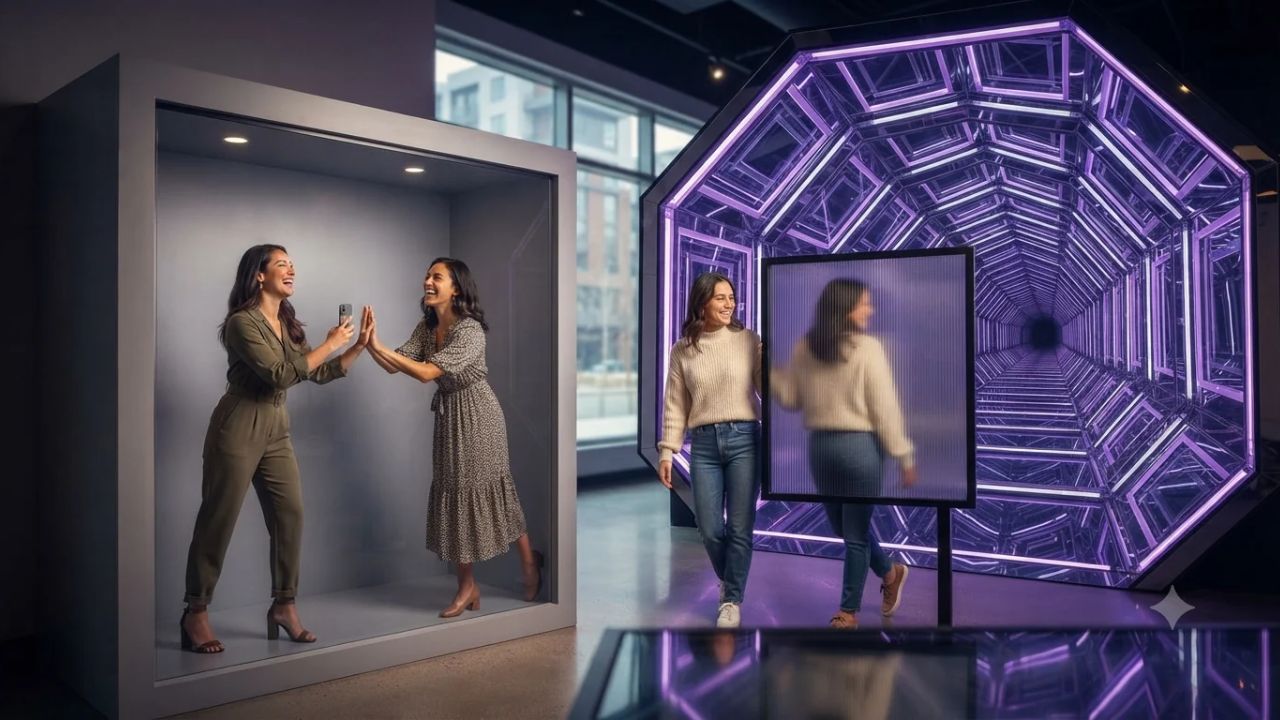
Downtown Denver’s cultural and experiential tourism landscape is set for a substantial transformation in December 2026 as the Denver Museum of Illusions prepares to reopen its doors following a comprehensive 12-week architectural redevelopment that has expanded the venue to nearly two and a half times its original footprint. Situated at 951 16th Street Mall at the corner of Curtis Street, the popular indoor attraction has grown from its initial 3,500-square-foot baseline to nearly 8,700 square feet, increasing its permanent collection from 40 to 60 interactive installations. Having already welcomed more than 473,000 visitors since its September 2023 debut, the renovated museum introduces 20 brand-new perceptual exhibits—headlined by the mind-bending "Ghost Room" and the lenticular-powered "Vanishing Act"—alongside a dedicated private Event Area, extended weekend operating hours until 10:00 pm, and a limited-time 50% reopening presale promotion using code OPEN50 for bookings finalized prior to 3 December 2026. Positioned along Denver’s newly revitalized 16th Street pedestrian transit corridor, the expanded museum blends cognitive neuroscience, geometry, and participatory photography, providing families, school excursions, and holiday travelers with a premier weather-independent edutainment destination in the Mile High City.
The resurgence of experiential "edutainment" represents one of the fastest-growing sectors in global urban tourism. Modern travelers, particularly multigenerational families and digital storytellers, increasingly gravitate toward attractions that offer hands-on engagement rather than passive observation behind velvet ropes. Since its inception in Zagreb, Croatia in 2015, the global Museum of Illusions franchise has demonstrated that human visual perception—specifically the biological mechanisms by which the brain decodes light, depth, shadow, and perspective—serves as universal entertainment. In Colorado, where outdoor recreation in the Rocky Mountains often dominates travel itineraries, having high-caliber, indoor downtown cultural anchors provides essential balance for winter travelers facing fluctuating mountain weather. As the Mile High City completes its extensive multi-million-dollar modernization of the historic 16th Street Mall, the return of an expanded Museum of Illusions reinforces downtown Denver’s vitality as a walkable, family-friendly urban center.
========================================================================================
DENVER MUSEUM OF ILLUSIONS: EXPANSION & OPERATIONAL SCORECARD
========================================================================================
Operational Parameter   Renovation Metric & Operational Specification
----------------------------------------------------------------------------------------
Attraction Name         Museum of Illusions Denver
Street Address          951 16th Street Mall (Corner of 16th & Curtis Streets), Denver, CO 80202
Original Footprint      Approximately 3,500 Square Feet (Opened September 2023)
Expanded Footprint      Nearly 8,700 Square Feet (2.5x Increase / +5,200 Sq Ft)
Total Exhibit Inventory 60 Interactive Installations (Increased from 40; +50% Growth)
New Featured Exhibits   Ghost Room (Glass hug illusion), Vanishing Act (Lenticular disappearance)
Historical Attendance   Over 473,000 Verified Visits Recorded (Sept 2023 – Sept 2026)
Renovation Window       12 Weeks (Commenced 8 September 2026; Reopening December 2026)
New Facility Addition   Dedicated Event Area for private parties, birthdays & corporate rentals
Regular Operating Hours Sun–Thu: 10:00 am – 09:00 pm | Fri–Sat: 10:00 am – 10:00 pm
Child Admission Tier    Starting at $24.00 USD (Ages 5–12; Children 4 & under enter free)
Reopening Promotion     50% Presale Discount with Code: OPEN50 (Bookings before 3 Dec 2026)
Public Transit Access   RTD Free MallRide (Curtis St Stop); Light Rail (16th & Stout / California)
Regional Rail Link      Denver Union Station (0.7 miles / 14-min walk or 6-min MallRide)
========================================================================================
Source: Museum of Illusions Denver Official Renovation Filings & Public Communications, Nov 2026.
========================================================================================
The Renovation Anatomy: Scaling from 3,500 to Nearly 8,700 Square Feet
The physical transformation of the Denver Museum of Illusions addresses one of the primary constraints common to successful city-center experiential venues: guest circulation and spatial pacing. Between September 2023 and late summer 2026, the attraction operated within a compact 3,500-square-foot retail envelope. While highly praised for the quality of its exhibits, peak weekend demand often led to crowded viewing angles and queuing for signature photo points.
========================================================================================
SPATIAL ALLOCATION MATRIX: PRE-VS. POST-RENOVATION
========================================================================================
Metric / Zone           Pre-Renovation (2023–2026)  Post-Renovation (Dec 2026+) Variance
----------------------------------------------------------------------------------------
Gross Usable Area       ~3,500 sq ft                ~8,700 sq ft                +148.6%
Interactive Exhibits    40 Installations            60 Installations            +50.0%
Dedicated Event Room    None (Shared Floor Space)   Fully Private Suite         New Addition
Average Gallery Width   8 – 10 Feet Corridors       14 – 18 Feet Open Flow      +75.0%
Recommended Visit Time  40 – 45 Minutes             55 – 70 Minutes             +33.3%
Peak Guest Comfort Cap  ~65 Persons Simultaneous    ~150 Persons Simultaneous   +130.8%
Sensory Bypass Paths    Limited Corridor Detours    Engineered Alternate Flow   Full Integration
========================================================================================
1. Architectural Redevelopment Overview
Beginning on 8 September 2026, construction crews undertook a 12-week structural overhaul of the historic commercial property at 951 16th Street Mall. By annexing adjacent commercial square footage, project engineers expanded the facility to approximately 8,700 square feet. This expansion provided:
- Expanded Gallery Corridors: Wider viewing thoroughfares that allow photographers to set up distance shots without impeding general foot traffic.
- Improved Acoustical Damping: Advanced ceiling baffles that reduce sound reverberation, creating a more comfortable sensory environment for children and neurodivergent visitors.
- Engineered Lighting Precision: Calibrated directional spotlights and anti-glare museum-grade fixtures essential for capturing high-fidelity optical effects on smartphone cameras.
2. The Dedicated Event Area
A key commercial addition of the expansion is a purpose-built private Event Area. In the original 3,500-square-foot footprint, the museum could not accommodate private birthday parties, school field trip debriefs, or corporate team-building functions without closing sections of the exhibition floor. The newly created private suite provides:
- Dedicated catering staging and banquet seating for up to 40 seated guests.
- Audio-visual presentation equipment for corporate seminars, STEM workshops, and scientific presentations on cognitive perception.
- Direct private access to the main gallery floors, allowing event attendees to transition smoothly between private hospitality and interactive exhibit exploration.
========================================================================================
EVENT AREA PROGRAMMING CAPABILITIES
========================================================================================
Event Category        Target Audience             Curated Offering & Infrastructure
----------------------------------------------------------------------------------------
Youth Birthdays       Ages 6 to 14                Dedicated host, private cake & gift room,
                                                  scavenger hunt illusion challenges
School STEM Trips     Elementary & Middle Schools Guided cognitive science tours, visual
                                                  perception worksheets, physics demonstrations
Corporate Socials     Tech & Regional Businesses  Evening cocktail access, team puzzle trials,
                                                  unconventional group photography backdrops
Private Buyouts       VIP & Community Receptions  Full 8,700-sq-ft private venue exclusivity,
                                                  curated catering, custom lighting palettes
========================================================================================
The New Exhibit Showcase: Exploring the 20 Fresh Optical Installations
The expansion increases the museum’s total exhibit collection from 40 to 60 installations, introducing 20 exhibits previously tested at flagship locations such as Sacramento and San Francisco, while custom-fabricating several setups specifically for Denver's unique architectural layout.
========================================================================================
MUSEUM OF ILLUSIONS EXHIBIT TYPOLOGY & MECHANICS
========================================================================================
Exhibit Name      Scientific Phenomenon        Mechanics & Visitor Interaction
----------------------------------------------------------------------------------------
Ghost Room        Partial Reflection /         Two visitors sit on opposite sides of a
(New Headline)    Beam-Splitting Optics        semi-reflective glass pane; attempting to hug
                                               produces a phantom "pass-through" illusion
Vanishing Act     Lenticular Refraction /      Participants step behind a structured micro-lens
(New Headline)    Viewing Angle Disparity      screen; moving viewing angles causes the person
                                               to visually disappear and reappear
Ames Room         Forced Perspective Geometry  Trapezoidal room construction creates false
(Core Classic)    & Retinal Angle Distortion   monocular depth, making one person look giant
                                               and an adjacent partner look miniature
Vortex Tunnel     Vestibular-Ocular Mismatch   A rotating illuminated cylindrical drum causes
(Core Classic)    & Visually Induced Motion    the brain to perceive physical tipping while
                                               standing on a completely stationary catwalk
Tilted Room       Proprioceptive Confusion     Constructed on a precise 25-degree incline;
(Core Classic)    & Gravitational Cue Conflict visual cues override vestibular balance,
                                               allowing visitors to pose at impossible angles
Infinity Room     Multiple Specular Reflection Mirrored walls, floor, and ceiling with LED
(Core Classic)    & Infinite Depth Illusion    arrays create the visual perception of standing
                                               in boundless, star-like three-dimensional space
========================================================================================
1. Ghost Room: The Science of Partial Reflection
Among the most anticipated additions is the Ghost Room, an exhibit rooted in the classic optical principle known in theatrical history as "Pepper’s Ghost."
- The Setup: Two visitors sit facing one another on opposite sides of a specially coated beam-splitting glass partition.
- The Illusion: The lighting levels on each side of the glass are calibrated with precision. When both participants reach out toward each other in a hugging or high-five motion, the semi-reflective surface reflects one participant's image while transmitting the other's. To the eyes of an outside observer—and in captured photographs—their arms and hands appear to pass right through each other's solid bodies like transparent specters.
- The Brain’s Response: The visual cortex attempts to reconcile two conflicting signals: the tactile awareness of physical solid mass versus the visual input of intersecting limbs. The result is an engaging demonstration of how easily visual perception can override logical reasoning.
2. Vanishing Act: The Precision of Lenticular Refraction
The second major headline exhibit is the Vanishing Act, an installation that explores the boundaries of directional light manipulation.
- The Setup: The attraction utilizes an oversized vertical panel surfaced with an array of microscopic lenticular cylindrical lenses.
- The Illusion: When a visitor stands behind the screen, the lenses refract incoming light rays away from the viewer’s focal point at specific angles. An observer standing at the designated sweet spot sees the background pattern continuous and unbroken, while the person standing behind the barrier completely disappears from sight.
- The Video Potential: As the participant shifts their weight or steps sideways by just a few inches, they suddenly materialize back into view. The installation is engineered specifically for short-form video capture, enabling guests to record dramatic disappearance and reappearance clips without special digital effects or video editing software.
========================================================================================
PHOTOGRAPHY & CONTENT CREATION GUIDANCE MATRIX
========================================================================================
Exhibit Name      Optimal Camera Angle        Smartphone Lens Setting & Lighting Advice
----------------------------------------------------------------------------------------
Ghost Room        Side profile at eye level   Standard 1x Lens; disable flash to avoid
                  perpendicular to glass      surface glare on the beam-splitting partition
Vanishing Act     Head-on from yellow floor   Wide-angle (0.5x or 1x); record in 4K/60fps
                  marker (~8 feet distance)   video while subject shifts laterally
Ames Room         Shoot through dedicated     Standard 1x; keep camera strictly level;
                  peep-hole aperture          do not tilt vertical axis
Tilted Room       Align camera frame with     Rotate camera 25 degrees so walls appear
                  doorframe or floor line     perpendicular; creates true gravity defiance
Infinity Room     Low angle facing corner     0.5x Ultra-wide lens; utilize Night Mode
                  reflection intersection     for optimal dynamic range against dark mirrors
========================================================================================
Edutainment & Cognitive Science: Why the Human Brain Falls for Optical Tricks
While the Museum of Illusions functions as an entertaining leisure destination, its underlying foundation is anchored in cognitive psychology, neurology, and the physics of light. The exhibits are designed as tangible physical demonstrations of how the human brain interprets the outside world.
========================================================================================
COGNITIVE SENSORY PATHWAYS IN OPTICAL PERCEPTION
========================================================================================
Stage Processed         Neurological Region          Function & Illusion Susceptibility
----------------------------------------------------------------------------------------
1. Retinal Reception    Photoreceptors (Rods/Cones)  Captures 2D inverted light patterns;
                                                     limited by focal length & blind spots
2. Early Visual Cortex  Primary Visual Cortex (V1)   Processes orientation, edges, spatial
                                                     frequency, and basic contrast gradients
3. Depth Integration    Dorsal Stream ("Where")      Calculates stereoscopic binocular disparity
                                                     and motion parallax; fooled by Ames Room
4. Object Recognition   Ventral Stream ("What")      Identifies shapes, faces, and known forms;
                                                     creates phantom shapes in stereograms
5. Vestibular Alignment Cerebellum & Inner Ear       Maintains physical balance; completely
                                                     disrupted by Vortex Tunnel visual rotation
========================================================================================
1. The Fallibility of Monocular Depth Cues
Human depth perception relies on two distinct mechanisms: binocular cues (which require both eyes to measure the slight difference between retinal images) and monocular cues (which can be perceived with a single eye, including relative size, linear perspective, interposition, and texture gradients).
- In exhibits like the Ames Room, the architect deliberately constructs a trapezoidal space with non-parallel walls, an angled floor, and sloping ceilings. When viewed through a designated monocular peep-hole, the brain automatically applies its lifelong assumption that rooms are rectilinear with 90-degree corners.
- Consequently, when two individuals of identical height stand in opposite corners of the room, the brain refuses to alter its perception of the room’s shape; instead, it forces the perception that one individual has grown into a giant while the other has shrunk into a child.
2. Sensory Conflict in the Vortex Tunnel
The Vortex Tunnel illustrates an intense neurological conflict between visual and vestibular sensory inputs.
- Visitors walk across a completely stable, level steel bridge that remains 100% stationary. Surrounding the walkway is a continuously spinning cylinder painted with swirling neon patterns.
- As the eyes track the rotating cylinder, the visual cortex signals that the body is tipping and tumbling. However, the vestibular system in the inner ear detects no physical tilt.
- The brain struggles to resolve this disagreement, resulting in an involuntary sensation of vertigo, physical leaning, and sudden bursts of laughter as guests grip the handrails despite standing on solid, unmoving ground.
Downtown Denver & 16th Street Mall Context: Urban Revival and Transit Connectivity
The timing of the Museum of Illusions’ grand reopening aligns with one of the most consequential urban revitalization projects in Colorado’s history: the comprehensive reconstruction of downtown Denver's iconic 16th Street Mall.
========================================================================================
DOWNTOWN DENVER CULTURAL & ENTERTAINMENT COMPASS
========================================================================================
District Anchor       Distance / Walking Time     Key Cultural Highlights
----------------------------------------------------------------------------------------
Denver Pavilions      0.2 Miles (4-min walk)      Multi-level outdoor retail, movie theater,
(16th & Glenarm)                                  bowling, fast-casual and sit-down dining
Denver Performing     0.4 Miles (8-min walk)      Second-largest performing arts center in the
Arts Complex (DPAC)                               USA (Boettcher Concert Hall, Buell Theatre)
Colorado Convention   0.3 Miles (6-min walk)      Major trade events, home of the famous
Center (Big Blue Bear)                            40-foot "I See What You Mean" blue bear statue
Larimer Square        0.5 Miles (10-min walk)     Denver's oldest historic commercial block;
                                                  Victorian brick architecture, fine dining
Denver Union Station  0.7 Miles (14-min walk or   Grand 1914 Beaux-Arts transit terminal,
(LoDo Historic Hub)   6-min Free MallRide)        boutique hotel, craft bars, Amtrak, RTD trains
Denver Art Museum     0.8 Miles (16-min walk or   World-renowned architecture by Daniel Libeskind
(Golden Triangle)     8-min transit ride)         and Gio Ponti; indigenous and Western art
========================================================================================
1. The Revitalized 16th Street Pedestrian Corridor
Originally designed in 1982 by master architect I.M. Pei, the 1.25-mile-long 16th Street Mall serves as the spine of downtown Denver. Over the past three years, the City and County of Denver, alongside the Downtown Denver Partnership and RTD, have executed a massive $150+ million modernization program.
- The project has reconstructed the iconic red, white, and gray granite pavers into a durable, slip-resistant surface.
- Transit lanes for the zero-emission RTD Free MallRide buses have been relocated to the center of the street, expanding pedestrian sidewalks by up to 10 feet.
- For visitors to the Museum of Illusions at 16th and Curtis, this means stepping out into a brand-new, tree-lined pedestrian boulevard filled with outdoor cafe seating, public art installations, and enhanced lighting.
2. A Curated 1-Day Downtown Denver Family Itinerary
Combining the Museum of Illusions with nearby attractions provides a rich, walkable urban excursion that highlights Denver's cultural depth without requiring a rental car.
========================================================================================
1-DAY WALKABLE DOWNTOWN DENVER FAMILY ITINERARY
========================================================================================
Time Schedule Activity Location & Planning Details
----------------------------------------------------------------------------------------
09:00 am      Breakfast at Denver Union Station
              Enjoy fresh pastries and artisanal coffee inside the historic Great Hall;
              admire the 1914 Beaux-Arts architecture and vibrant morning atmosphere.
10:15 am      Board the RTD Free MallRide
              Catch the complimentary zero-fare shuttle outside Union Station; ride six
              minutes up 16th Street directly to the Curtis Street stop.
10:30 am      Denver Museum of Illusions (951 16th Street Mall)
              Explore the 8,700-sq-ft expanded galleries; photograph Ghost Room and
              Vanishing Act; challenge family members in the Ames Room (60–75 mins).
12:15 pm      Lunch at Denver Pavilions or Larimer Square
              Walk three blocks to Denver Pavilions for family-friendly dining, or stroll
              ten minutes to historic Larimer Square for Colorado farm-to-table cuisine.
02:00 pm      Colorado Convention Center & The Big Blue Bear
              Walk two blocks to 14th and California Streets; photograph the whimsical
              40-foot-tall blue bear peering inside the glass facade.
03:30 pm      Denver Art Museum or Meow Wolf Denver
              Take a short transit ride to the Denver Art Museum's iconic Hamilton Building,
              or board the light rail to explore Meow Wolf's "Convergence Station."
06:30 pm      Dinner & Evening Stroll along 16th Street Mall
              Dine at a vibrant downtown eatery; enjoy the illuminated trees and festive
              evening holiday lights along the pedestrian mall.
========================================================================================
Practical Visitor Guide: Tickets, Hours, Logistics, and Accessibility
Visiting the expanded Denver Museum of Illusions requires basic advance planning to take full advantage of promotional pricing, avoid peak-hour crowds, and ensure a comfortable experience for all party members.
========================================================================================
PRACTICAL VISITOR PLANNING MATRIX
========================================================================================
Visitor Dimension      Operational Guideline & Practical Recommendation
----------------------------------------------------------------------------------------
Exact Physical Address 951 16th Street Mall, Denver, Colorado 80202 (Corner of 16th & Curtis)
Standard Ticket PricingChild admission starts at $24.00 USD; adult pricing varies by time tier.
                       Annual memberships available for local Colorado residents.
Reopening Promotion    Code: OPEN50 yields a 50% discount on eligible online tickets
                       booked prior to 3 December 2026. Cannot combine with other discounts.
Operating Hours        Sunday through Thursday: 10:00 am to 09:00 pm
                       Friday and Saturday: 10:00 am to 10:00 pm (Extended weekend access)
Recommended Duration   Plan for 55 to 70 minutes for a relaxed, unhurried walkthrough.
Child Policy           Children aged 12 and under must be accompanied by a paying adult.
Accessibility Standards100% ADA compliant; wheelchair and mobility scooter accessible.
                       Service animals with official identification welcome.
Sensory Considerations Features slanted flooring, dynamic LED illumination, and rotating
                       visuals. Guests sensitive to motion or flashing lights can bypass exhibits.
Parking Facilities     Independence Plaza Garage (16th & Curtis), Denver Pavilions Garage
                       (16th & Welton), and 16th Street Center Parking Garage nearby.
========================================================================================
1. Navigating Operating Hours and the OPEN50 Promotion
The museum’s extended operating schedule offers substantial flexibility for both daytime family travelers and evening entertainment seekers.
- Operating until 9:00 pm Sunday through Thursday and until 10:00 pm on Friday and Saturday, the venue serves as an appealing after-dinner activity following meals in LoDo or theater performances at the Denver Performing Arts Complex.
- Maximizing the Reopening Presale: Visitors planning a December or holiday visit should utilize the official promotional code OPEN50 during online booking before 3 December 2026. This promotion cuts qualifying ticket prices in half, representing substantial savings for families and group bookings.
2. Transportation & Parking Solutions
- By Light Rail & Commuter Rail: Arrive at Denver Union Station via the RTD A-Line directly from Denver International Airport (DEN) in 37 minutes. From Union Station, transfer directly to the zero-fare RTD Free MallRide bus, which stops at Curtis Street directly opposite the museum’s front entrance. Alternatively, ride RTD light rail lines D, F, or H to the 16th & Stout or 16th & California stations, both located within one block of the venue.
- By Automobile: For drivers arriving via Interstate 25, take Exit 210A toward Colfax Avenue or Exit 212B toward downtown. Secure covered parking is available at the Independence Plaza Garage (accessible from Curtis Street between 16th and 17th Streets) or the Denver Pavilions Garage (accessible from Welton Street). Metered street parking on Curtis and Champa Streets is strictly enforced with 2-hour limits.
3. Accessibility & Sensory Accommodations
The Denver Museum of Illusions has prioritized accessibility throughout its nearly 8,700-square-foot expansion:
- All gallery pathways, doorways, and restrooms comply with the Americans with Disabilities Act (ADA). Ramps provide access across multi-level installations.
- Sensory Bypass Engineering: The museum recognizes that installations like the Vortex Tunnel and Tilted Room can trigger sensory overload or motion sickness for individuals with vestibular conditions, inner-ear sensitivities, or vertigo. Every high-intensity exhibit features a clearly marked, flat bypass corridor allowing visitors to remain with their group without entering the disorienting space.
- Staff members are stationed throughout the galleries to assist with camera angles, guide visitors through bypass routes, and provide explanations of the visual science at play.
Frequently Asked Questions
When does the expanded Denver Museum of Illusions reopen?
The renovated and expanded museum is scheduled to reopen in December 2026. Visitors should verify the exact daily opening dates and hours on the official booking platform prior to arrival.
How much larger is the renovated Denver Museum of Illusions?
The attraction has expanded from approximately 3,500 square feet to nearly 8,700 square feet, representing an increase of roughly 5,200 square feet—approximately two and a half times its original size.
How many exhibits does the museum offer now?
The museum now features 60 interactive installations, adding 20 brand-new exhibits to its previous collection of 40.
What are the headline new attractions at the expanded museum?
The two premier new exhibits are the Ghost Room (where visitors appear to pass their hands through each other using partial reflection glass) and the Vanishing Act (where a lenticular screen makes participants visually disappear and reappear depending on viewing angles).
Where is the museum located in Denver?
The museum is situated at 951 16th Street Mall, at the corner of 16th Street and Curtis Street, in the heart of downtown Denver, Colorado 80202.
What are the museum's operating hours?
The expanded hours are 10:00 am to 9:00 pm Sunday through Thursday, and 10:00 am to 10:00 pm on Friday and Saturday.
How much does admission cost, and is there a reopening discount?
Children’s tickets start at $24.00 USD. Under the reopening presale promotion, guests can use the code OPEN50 during online booking prior to 3 December 2026 to receive a 50% discount on eligible tickets.
How long does a typical visit take?
Visitors typically spend between 55 and 70 minutes exploring the expanded 60-exhibit collection, taking photographs, and experiencing the interactive rooms.
Is the Museum of Illusions accessible for wheelchairs and strollers?
Yes. The entire facility is ADA-compliant and fully accessible for wheelchairs and mobility scooters. Service animals are welcome. Guests sensitive to motion or optical illusions can bypass intense exhibits like the Vortex Tunnel via designated flat walkways.
What transit options are best for reaching the museum?
Visitors can ride the complimentary RTD Free MallRide shuttle along 16th Street directly to the Curtis Street stop. The museum is also accessible via RTD Light Rail (16th & Stout / California stations) and sits just a short ride from Denver Union Station.
Strategic Outlook: Experiential Attractions Anchoring City-Center Tourism
The major expansion of the Denver Museum of Illusions highlights a broader national trend in urban tourism: the critical role of interactive, family-focused experiential venues in revitalizing downtown business districts. As post-pandemic urban centers reimagine themselves beyond traditional office commuter hubs, high-density experiential attractions create vital reasons for residents and regional travelers to visit, dine, and stay downtown.
By scaling its facility to nearly 8,700 square feet, incorporating cognitive science into accessible entertainment, and adding dedicated private event infrastructure, the Museum of Illusions positions itself as an enduring cornerstone of the revitalized 16th Street Mall corridor. For visitors exploring Denver in winter 2026 and beyond, the museum delivers an engaging, weather-proof experience where visual art, human biology, and pure wonder intersect.
Related Travel Guides
- Sushi Zanmai Makes Historic Asia Debut in Hong Kong: 82-Seat Flagship, Live Bluefin Tuna Show, and Kowloon Food Tourism Surge
- Thailand’s Loy Krathong and Yi Peng 2026 Drive 6-Billion-Baht Cultural Tourism Surge Across Six Signature Provinces
- Wisconsin’s Hidden Beaches: Complete Travel Guide to 201 Great Lakes Shores, Island Sanctuaries, and Inland Bluffs
- Asia’s Winter Tourism Boom: How Hokkaido, Seoul, Xinjiang, and Central Asia Are Redefining Cold-Weather Travel
This article is for informational purposes. Flight routes, passenger regulations, visa rules, and transit advisories are subject to change by airlines and aviation authorities. Readers are advised to verify schedules and travel documentation with relevant carriers and border agencies before departure.
Related Stories

Thailand Loy Krathong 2026 Generates 6-Billion-Baht Boost as Ministry Expands Flights and Regulates Fares
Busan Tourism Boom Outpaces Seoul: 3.9 Million Foreign Visitors, 1-Trillion-Won Spend, and Global Long-Haul Travel Surge