
Tasmania Tourism Strategy: Sustainable Growth & Smart Clusters
Tasmania's tourism strategy inspires sustainable growth through smart regional connections, offering a model for Australian visitor economies. Read our guide.

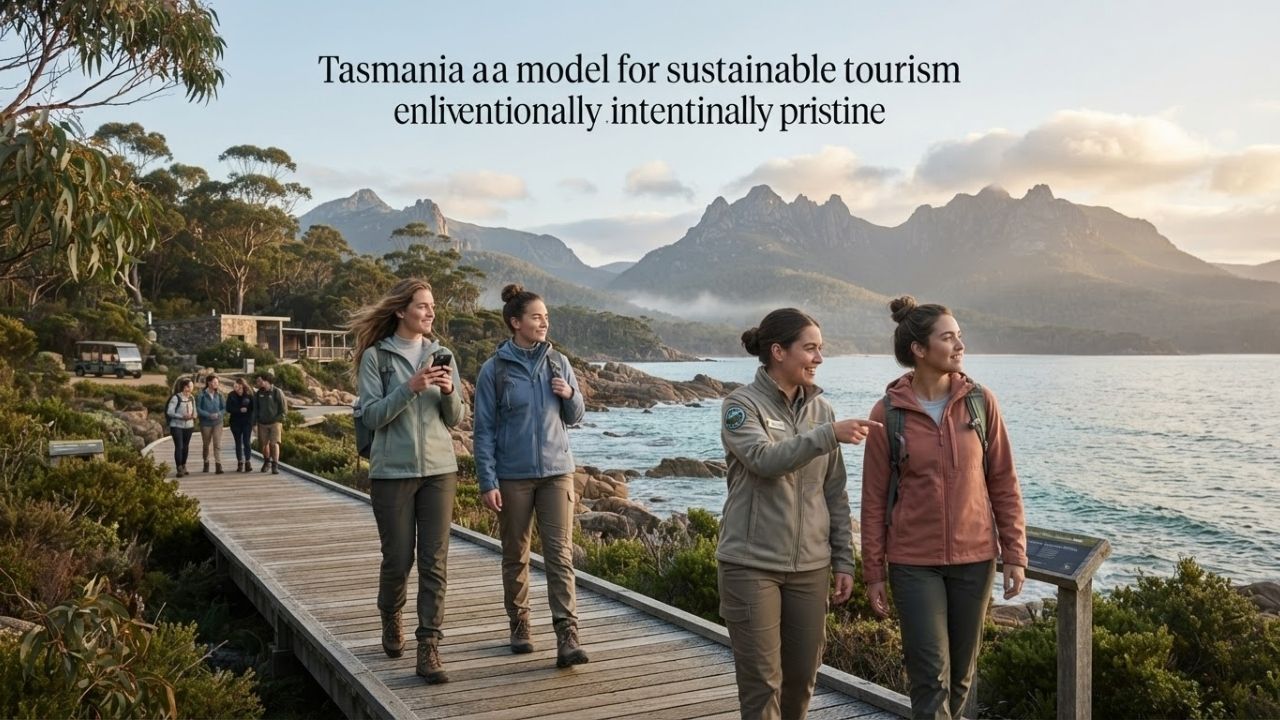
Image generated by AI
Tasmania's tourism strategy is driving a shift toward sustainable growth, using smart destination connections to balance visitor distribution and preserve the island's pristine environment. By focusing on high-quality regional experiences rather than mass arrivals, the state offers a model for connected tourism ecosystems.
The Ecosystem Model: Lessons from Cergy-Pontoise
Modern destination planning is moving away from isolated attractions in favor of integrated ecosystems. A notable urban planning example is the Grand Centre – Cœur d’agglo project in Cergy-Pontoise, near Paris.
Spanning 120 hectares, the development integrates housing, universities, transport, and green spaces to create a balanced urban center. For the global tourism industry, the lesson is clear: a successful destination requires a connected network of transport, lodging, culture, and nature, rather than reliance on a single landmark.
This collaborative approach is shaping how Australian states structure their visitor economies.
Australian States Develop Connected Networks
Several Australian regions are applying cluster strategies to distribute travelers and revenue across cities and rural communities:
Queensland's Integrated Clusters
Queensland has built a connected network linking urban centers, coastal regions, and wilderness zones. The state recorded approximately $49 billion in tourism consumption during 2024–25, with strong growth in regional areas.
Brisbane serves as a hub for business and events, the Gold Coast targets international leisure travel, and the Great Barrier Reef provides nature tourism. The upcoming Brisbane 2032 Olympic and Paralympic Games will support this network by funding transport and lodging infrastructure across multiple regions.
New South Wales and Regional Balance
New South Wales remains the country's largest tourism economy, recording $61.9 billion in visitor expenditure in the year ending March 2026.
While Sydney remains the primary international entry point, the state is investing in regional connectivity. The NSW Visitor Economy Strategy 2035 aims to increase regional visitor shares by improving aviation links, expanding local accommodation, and promoting events outside the state capital.
Victoria's Culture and Nature Links
Victoria integrates education, sports events, and arts programs to extend visitor stays. The state recorded approximately $51.4 billion in tourism consumption during 2024–25. Melbourne serves as the cultural center, while regional Victoria offers nature trails, historical towns, and culinary itineraries, showing how different economic sectors can support one another.
Tasmania's Quality and Identity Strategy
Tasmania demonstrates how smaller destinations can compete globally. The island state recorded $3.8 billion in tourism expenditure in the year ending March 2026.
Rather than chasing volume, Tourism Tasmania focuses on high-value, low-impact travel. By highlighting wilderness preservation, boutique local producers, and cultural authenticity, the state protects its regional character while generating steady economic returns.
| Australian State | Tourism Consumption / Spend | Key Strategy / Milestone | Primary Regional Link |
|---|---|---|---|
| New South Wales | $61.9 billion (Year ending March 2026) | NSW Visitor Economy Strategy 2035 | Connecting Sydney with rural heritage spots |
| Victoria | $51.4 billion (2024–25) | Sector-linked events and culture | Alpine trails, wineries, and coastal drives |
| Queensland | $49.0 billion (2024–25) | Brisbane 2032 Olympic preparations | Distributing reef and beach traffic inland |
| Tasmania | $3.8 billion (Year ending March 2026) | Eco-focused regional preservation | Cradle Mountain and Freycinet national parks |
Western and South Australia Models
Western Australia and South Australia are developing distinct approaches. Western Australia offers unique environments like the Kimberley and the Coral Coast, but its large geographical size makes network integration challenging. South Australia uses a more compact structure, linking Adelaide's food and festival scene with regional wine and heritage trails.
Local Insider Secrets for Savvy Holiday Travelers
To travel sustainably and navigate these regional networks, keep these tips in mind:
- Holiday National Parks Pass: If visiting multiple Tasmanian parks (like Cradle Mountain or Freycinet), buy the "Holiday National Parks Pass" from the Tasmania Parks and Wildlife Service. It covers vehicle entry for two months and is cheaper than buying single-day passes.
- Cradle Mountain Shuttle Etiquette: Private cars are restricted on the road to Dove Lake during peak shuttle hours. Take the hybrid shuttle bus from the visitor center, and always yield to wildlife on the road.
- Cergy-Pontoise Rail Zone: Cergy-Pontoise is accessible from central Paris via the RER A train. Ensure you purchase a ticket that covers Zone 5, as standard city metro tickets only cover Zone 1.
- Moreton Bay Bugs in Queensland: Try local Moreton Bay bugs (a flathead lobster) at fish markets in Brisbane, supporting local commercial fisheries.
- Adelaide Hills Wine Transit: Skip car rentals when touring the Adelaide Hills wine region. Use the local public bus network (Adelaide Metro) to reach historic towns like Hahndorf sustainably.
Sustainable Travel and Environmental Stewardship
Connected tourism planning reduces the environmental footprint of travel by preventing over-tourism in capital cities. Travelers can support regional ecosystems by staying in First Nations-owned lodges, buying fresh produce from community markets, and choosing low-emission transport.
In Tasmania, the focus on sustainable growth relies on visitor cooperation. Hikers are encouraged to clean their boots at wash stations to prevent the spread of root rot (Phytophthora cinnamomi), stay on designated boardwalks, and support local conservation efforts that protect the state's wilderness settings.
Related Travel Guides
BC Indigenous Tourism: Cultural and Wilderness Travel 2026
Edmonton City Escape: Festivals, Wildlife & River Valley Wonders
Tasmania Sustainable Tourism Guide: Vistas, Wildlife & Tips, According to Reddit
Disclaimer
This article is for informational and educational purposes only. It does not constitute legal, financial, or professional advice. While we strive to provide accurate and up-to-date information, travel policies, regulations, and conditions change rapidly. Always verify information with official sources before making travel decisions. Nomad Lawyer makes no representations about the accuracy, reliability, completeness, or suitability of the information provided. Readers should consult qualified professionals for advice specific to their circumstances. The views expressed in this article are those of the author and do not necessarily reflect the views of Nomad Lawyer.
Raushan Kumar
Founder & Lead Developer
Full-stack developer with 11+ years of experience and a passionate traveller. Raushan built Nomad Lawyer from the ground up with a vision to create the best travel and law experience on the web.
Learn more about our team →