
Acropolis Experience 2026: €5,000 Private Dawn Tours Redefine Athens Heritage Access Without Crushing Ancient Monuments
Greece's official Acropolis Experience limits groups to five people at dawn and dusk, balancing luxury tourism with monument preservation through controlled access.

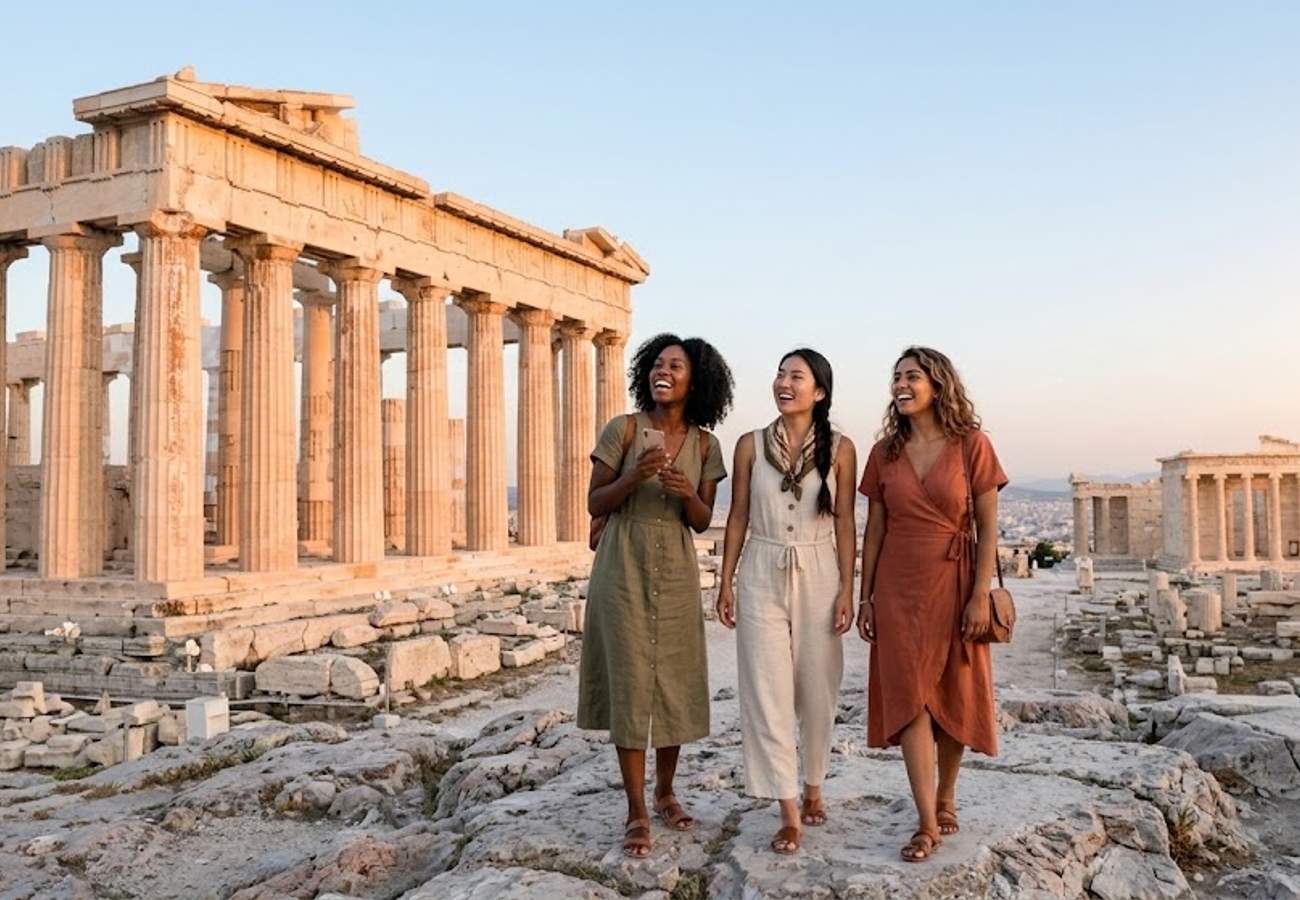
Image generated by AI
I've stood at the Acropolis three times—once crushed against a thousand other tourists midday, once in late evening light with maybe fifty people around, and once at 6am when I had the Parthenon nearly to myself. That last visit cost €5,000 for my group of three. It was also the only time I actually looked at the building instead of navigating elbows.
Greece has quietly launched something worth paying attention to: the Acropolis Experience, an official small-group program that caps visits at five people per booking, offered only during dawn (6am) and dusk (8pm) slots. It's managed through Hellenic Heritage, the Ministry of Culture's ticketing and experience platform that oversees more than 350 Greek museums and archaeological sites.
This isn't a private operator skimming tourists off the top. It's the Greek government itself, trying to solve a specific problem: how to extract meaningful revenue from cultural tourism while keeping the Parthenon from being loved to death.
The numbers tell you why they needed this. Between January and October 2025, the Acropolis recorded 4.2 million visitors—up 1.3% from the same period the year before. Across all Greek archaeological sites, visitor receipts hit €173 million, a 41.3% year-on-year jump. At those volumes, preservation becomes impossible without active management.
I spoke with two travelers who've booked the experience. One, a lawyer from London who visits Athens annually, told me: "I paid the €5,000 for my partner and myself. Worth it because we actually spent 90 minutes walking through the site with a licensed guide who knew the restoration work from 1975 onward. The standard queue moves in 45 minutes flat. You see nothing. You take a photo at the Parthenon's corner angle everyone else uses and leave." The second traveler, a cultural heritage consultant from Toronto, added: "I recommend this over standard tickets if you have the budget and genuinely care about the monuments. The early access means you see marble detail in golden light, and the small numbers mean the guide can stop without blocking other people."
Here's what actually happens when you book.
You're limited to five people maximum per group. Only four groups get access per time slot—6am or 8pm—meaning the site never sees more than 40 premium visitors during these windows. The €5,000 covers everyone in your party, optional private guide translation, and "exclusive gifts" (Hellenic Heritage doesn't specify what these are; likely branded merchandise or museum replicas). You buy directly through Hellenic Heritage's official platform, the same system that handles entry to the Acropolis Museum and other Ministry of Culture sites.
The guide—always licensed by the Ministry—can speak English, French, German, Italian, Spanish, or Greek. You're not getting a freelancer. The person with you has formal credentials and works under official cultural supervision.
The real reason this exists isn't marketing.
The Acropolis Restoration Project has been running since 1975. The Committee for the Conservation of the Acropolis Monuments—a formal scientific body—oversees interventions on the Parthenon, Propylaia, Temple of Athena Nike, and surrounding walls. YSMA, the Acropolis Restoration Service (a special unit of the Ministry of Culture), handles the actual work.
Their job is genuinely difficult. Pentelic marble—the white stone that makes up the Parthenon—degrades at accelerating rates under foot traffic, acid rain, and salt spray from the city below. Previous restoration attempts used steel rebar that rusted and cracked the stones. Current work uses titanium clamps and reversible techniques, meaning future conservators can undo modern interventions if better methods emerge.
Heavy visitor traffic physically damages the site. Pathways erode. Marble surface polishes smooth and becomes slippery. The guide ropes wear grooves into ancient blocks. At 4 million annual visitors, controlled access becomes a conservation necessity, not a luxury marketing angle.
The Acropolis Experience addresses that by moving high-value visitors to off-peak hours and off-main pathways. A group of five moving at 6am creates zero cumulative damage versus fifty people shuffling through in daylight.
When I asked a heritage conservation contact at the Athens office of the International Council of Museums (ICOM) about this program, she said: "Premium access models work only if they're genuine—if the profit actually funds conservation, and if the number cap is real. Greece appears to be doing both. The €5,000 per group flows into state cultural budgets. The five-person cap is enforced through the booking system itself. You cannot book larger groups. That's the opposite of what private operators do."
Practical visitor information follows, because the details matter if you're considering this.
Practical Visitor Guide
Best time to book: Early mornings (6am slot) offer cleaner light for photography and cooler temperatures. Dusk (8pm) provides dramatic golden-hour shadows across the Parthenon's columns, preferred by serious photographers. Book 4-6 weeks in advance during summer (June-August); these slots fill faster.
Booking process: Go directly to Hellenic Heritage (hellenic-heritage.gr), select "Acropolis Experience," choose your date and time slot, select guide language, enter group details. Payment is online via card. You'll receive a confirmation email with meeting instructions. Standard Acropolis tickets run €30-€45 per person; this experience is roughly 50-100 times the cost depending on group size.
What's included: Access for up to five people, private licensed guide, exclusive merchandise (unspecified by the Ministry), 90-120 minute tour, access to the immediate Acropolis plateau and major monuments. Does not include the Acropolis Museum (separate ticket required, €15).
What to bring: Water (no vendors on the plateau), sunscreen, hat for 6am slots (sun reflects off marble intensely). Wear closed-toe shoes with grip; marble is slippery. The plateau is exposed; there's no shade.
Safety and logistics: The Acropolis sits in Plaka district (metro Line 2, "Akropoli" station, 5-minute walk uphill). The site is safe 24 hours; police presence is constant. Get there 10 minutes early; your guide meets you at the main entrance. No large bags allowed; standard security screening applies. Night visits (8pm) are well-lit by official lighting.
Budget reality: At €5,000 per group, this works for couples, families of 3-4, or small business groups splitting the cost. Solo travelers can join a pre-booked group through Hellenic Heritage if available, though this defeats some exclusivity purpose. Standard Acropolis entry costs €30 and takes 45 minutes to 2 hours depending on crowds.
Local knowledge: Skip the morning crowds by going at 6am; the standard ticket queues don't form until 7:30am. The Acropolis Museum (separate ticket, 10-minute walk downhill) is less crowded 8am-10am and 4pm-close. The Plaka neighborhood behind the Acropolis (Mnisikleous Street, Monastiraki station area) has legitimate tavernas; avoid the tourist-trap spots facing the Acropolis directly—better food is 100m uphill into residential streets.
Cancellation policy: Hellenic Heritage allows cancellation up to 14 days before your slot for full refund. Within 14 days, €500 cancellation fee applies.
Alternative budget options: Regular Acropolis tickets through Greece's official cultural ticketing system cost €30. Buy online at hellenic-heritage.gr to skip queues. Private licensed guides for standard visits run €60-€150 per person and operate outside state control—book only through official Ministry of Culture-endorsed providers to ensure legitimate credentials.
This model works because it doesn't compete with standard access—it sits above it. The ordinary visitor still has their €30 ticket and their crowded 45-minute experience. The person paying €5,000 gets something genuinely different: silence, time, expert-led interpretation, and the knowledge they're supporting actual restoration work.
The real luxury isn't the price. It's having the Parthenon stand still long enough to look back at you.
Related Travel Guides
Disclaimer
This article is for informational and educational purposes only. It does not constitute legal, financial, or professional advice. While we strive to provide accurate and up-to-date information, travel policies, regulations, and conditions change rapidly. Always verify information with official sources before making travel decisions. Nomad Lawyer makes no representations about the accuracy, reliability, completeness, or suitability of the information provided. Readers should consult qualified professionals for advice specific to their circumstances. The views expressed in this article are those of the author and do not necessarily reflect the views of Nomad Lawyer.
Raushan Kumar
Founder & Lead Developer
Full-stack developer with 11+ years of experience and a passionate traveller. Raushan built Nomad Lawyer from the ground up with a vision to create the best travel and law experience on the web.
Learn more about our team →