Melbourne Airport Unveils AU$500 Million T2 Baggage Upgrade: Traveler Guide 2026

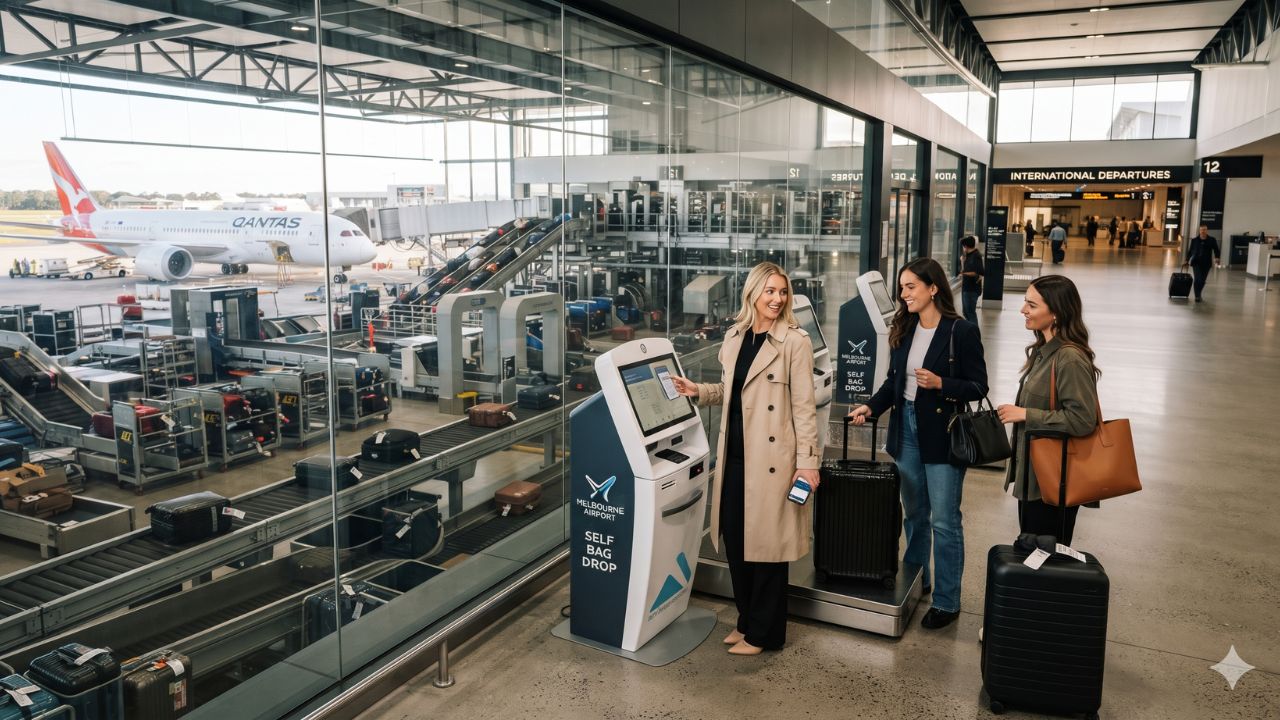
Beneath the international departure halls of Tullamarine, a high-speed transit network stretching across 3.5 to 3.6 kilometres now propels checked suitcases at a verified 99.5% tracking accuracy, processing over 4,000 bags every hour. Melbourne Airport has officially commissioned its AU$500 million baggage handling overhaul within Terminal 2 (T2). By replacing conventional friction conveyor belts with individual radio-frequency identification (RFID) smart totes, Victoria's primary aviation gateway has doubled luggage throughput while laying groundwork for an 18-hour early bag drop service.
For international travelers flying out of Victoria, this technological investment targets lost luggage and long check-in queues. Operating as a centerpiece of Melbourne Airport's T2 Next programme, the installation connects check-in counters directly to secure apron loading bays. The network places every suitcase inside its own dedicated carrier, pairing automated routing with human inspection stations to maintain steady reliability across peak travel waves.
Inside Melbourne Airport's AU$500 Million T2 Next Baggage Overhaul
Melbourne Airport operates as Australia's primary 24-hour curfew-free international hub, handling dense transoceanic traffic to Asia, Europe, and the Americas. In October 2025, the airport recorded more than one million international passengers in a single month. That record volume stretched older mechanical sorting lines that processed approximately 1,800 bags per hour.
The newly operational AU$500 million upgrade eliminates sorting slowdowns by elevating capacity to more than 4,000 bags per hour. When passengers drop suitcases at international counters, digital cameras scan each bag and pair its dimensions with an individual wheeled carrier. Every tote carries an RFID chip communicating constantly with sensors along 3.5 to 3.6 kilometres of subterranean transit rails.
Luggage security is simultaneously upgraded via integrated three-dimensional screening technology. High-speed volumetric imaging equipment generates detailed 3D views of baggage contents without slowing transit speeds, complying with strict aviation security mandates set by the Australian Department of Home Affairs. When a tag reads irregularly, automated diverters send the tote to a dedicated investigation area where staff resolve tracking exceptions.
This project forms part of an expansive long-term strategy. In February 2026, airport management announced plans for an additional AU$4.5 billion international terminal expansion. That future initiative includes five new international aircraft gates, expanded check-in areas, and larger baggage reclaim halls. Up-to-date terminal maps and flight statuses are available via the Melbourne Airport Official Portal.
What Makes Individual RFID Tote Architecture Different
Traditional airport conveyors transport bags loosely along rubber belts where soft fabrics can snag, handles catch on edges, and paper barcode tags tear. When barcode labels twist away from fixed optical readers, bags are delayed or miss connecting flights.
Melbourne Airport's tote architecture places each suitcase in a dedicated rigid carrier. Because luggage never touches conveyor walls, loose straps and fragile duffels move undamaged. Radio waves transmit data from the carrier's RFID chip directly to network receivers, registering bags accurately without requiring line-of-sight scanning.
The installation also incorporates an automated baggage storage facility accommodating more than 1,400 suitcases simultaneously. Rather than rushing bags directly onto open aprons hours before departure, the automated vault securely stores early arrivals and releases them when ground crews begin container loading.
Starting in 2027, this vault will support an early baggage drop service allowing eligible passengers to check bags up to 18 hours prior to flight departure. Travelers can drop heavy luggage in the morning, travel back into Melbourne unencumbered, and return directly to security screening before evening flights.
Melbourne Airport Baggage Infrastructure: System Metrics Comparison
The Terminal 2 upgrade marks a significant generational shift in ground operations. The comparison table below highlights key operational differences between legacy baggage lines, the new T2 Next system, and future planned works.
| Operational Metric | Legacy Baggage Setup | Upgraded T2 Next System | Planned Terminal Expansion |
|---|---|---|---|
| Hourly Processing Volume | ~1,800 bags per hour | >4,000 bags per hour | Maintained across peak waves |
| Luggage Conveyance Method | Loose rubber belts | Individual RFID smart totes | Smart totes across all new zones |
| Tracking Precision Rate | Optical barcode dependent | 99.5% RFID verified accuracy | Unified multi-terminal tracking |
| Network Track Length | Segmented conveyor runs | 3.5 to 3.6 kilometres | Connected to 5 new international gates |
| Buffer Storage Capacity | Immediate flight staging only | >1,400 suitcases in automated vault | Scaled automated holding vaults |
| Early Bag Drop Window | 3 hours prior to departure | Preparation for early service | Up to 18 hours prior (from 2027) |
| Screening Technology | Conventional 2D x-ray | Advanced 3D volumetric imaging | Next-generation computed tomography |
| Capital Investment Value | Historical asset base | AU$500 million | AU$4.5 billion (announced Feb 2026) |
Visitor Insider Tips: T2 Departures, SkyBus Timing, and Early Bag Drop
To make international departures from Tullamarine as stress-free as possible, keep these local operational tips in mind:
- Navigate Morning and Evening Flight Banks: Terminal 2 experiences heavy departure surges between 8:00 AM and 11:30 AM (transpacific and Southeast Asian services) and between 9:00 PM and 1:00 AM (European and overnight Asian flights). Arriving three hours before scheduled international departure remains recommended.
- Factor Freeway Traffic into SkyBus Trips: The SkyBus Melbourne City Express runs every 10 to 15 minutes between Southern Cross Station and Tullamarine. The journey typically takes 30 to 40 minutes, but weekday morning traffic (7:30 AM to 9:30 AM) along the Tullamarine Freeway can add 20 to 25 minutes of road delay.
- Plan a City Layover with 18-Hour Bag Drop: From 2027, travelers using participating airlines can drop bags up to 18 hours early. Check in early, catch the SkyBus into the city to explore laneway dining or riverside galleries, and return at night ready to proceed straight through boarding security.
- Keep Carry-On Liquids Organized: While checked bags benefit from automated 3D scanners, carry-on screening checkpoints still restrict liquids, aerosols, and gels to containers of 100ml or less packed in one clear resealable bag. Keep electronics and power banks easily accessible.
- Regional Travel Research: For travelers exploring beyond Melbourne into the Yarra Valley or Great Ocean Road, regional transit advice and park access guides are available through Visit Victoria.
Cultural and Environmental Context: Kulin Nation Country and Apron Decarbonization
Melbourne Airport is situated on the rolling plains of Tullamarine, ancestral lands of the Wurundjeri Woi-wurrung people of the Kulin Nation. As international passenger traffic surpasses one million travelers monthly, infrastructure expansion must balance passenger capacity with environmental impact.
Replacing fleets of diesel baggage tractors with subterranean electric tote tracks provides immediate environmental gains. In traditional operations, diesel tugs idle on the tarmac awaiting flight loads, producing exhaust fumes and greenhouse gas emissions. The subterranean 3.5 to 3.6-kilometre electric rail network transports bags cleanly beneath the apron, reducing fuel burn and improving ramp air quality.
High 99.5% tracking accuracy also prevents baggage mishandling. Misrouted luggage frequently requires dedicated courier repatriation flights on secondary carriers, producing avoidable aviation carbon emissions. Reliable single-attempt baggage routing optimizes aircraft hold capacity and supports sustainable airport operations.
FAQ: Visiting Melbourne and Navigating T2 Baggage 2026–2027
How does Melbourne Airport track checked bags with RFID?
Suitcases are placed into individual plastic totes carrying RFID chips. Sensors along 3.5 to 3.6 kilometres of subterranean tracks monitor each tote with 99.5% accuracy.
When will the 18-hour early bag drop begin at Melbourne Airport?
Melbourne Airport plans to introduce the 18-hour early baggage drop in 2027 for eligible passengers traveling with participating international airlines.
What is the processing capacity of the new T2 baggage system?
The upgraded system processes more than 4,000 bags per hour, more than doubling the previous infrastructure capacity of approximately 1,800 bags per hour.
What is the fastest public transit option to Melbourne Airport?
The SkyBus Melbourne City Express connects Southern Cross Station to Tullamarine terminals every 10 to 15 minutes, with standard travel times of 30 to 40 minutes.
By replacing tangled conveyor belts with precision tote intelligence, Melbourne Airport transforms the start of every international journey across Victoria.
Related Travel Guides
This article is for informational purposes. Flight routes, passenger regulations, visa rules, and transit advisories are subject to change by airlines and aviation authorities. Readers are advised to verify schedules and travel documentation with relevant carriers and border agencies before departure.
Related Stories
US Sanctions on Iranian Airlines: Impact on Türkiye and India Travel Industry Guide 2026
Fifth-Freedom Flight Guide: Luxury Wide-Body Cabins on Regional Routes at Local Fares