
Delta Airlines Boeing 737-800 Flight DL2876 Diverts to Cincinnati: What Triggered the Unexpected Return from Salt Lake City
Delta Airlines Flight DL2876 unexpectedly diverted back to Cincinnati after departing for Salt Lake City on June 9, 2026. Flight tracking data reveals the Boeing 737-800 spent 1 hour 45 minutes airborne before returning safely.

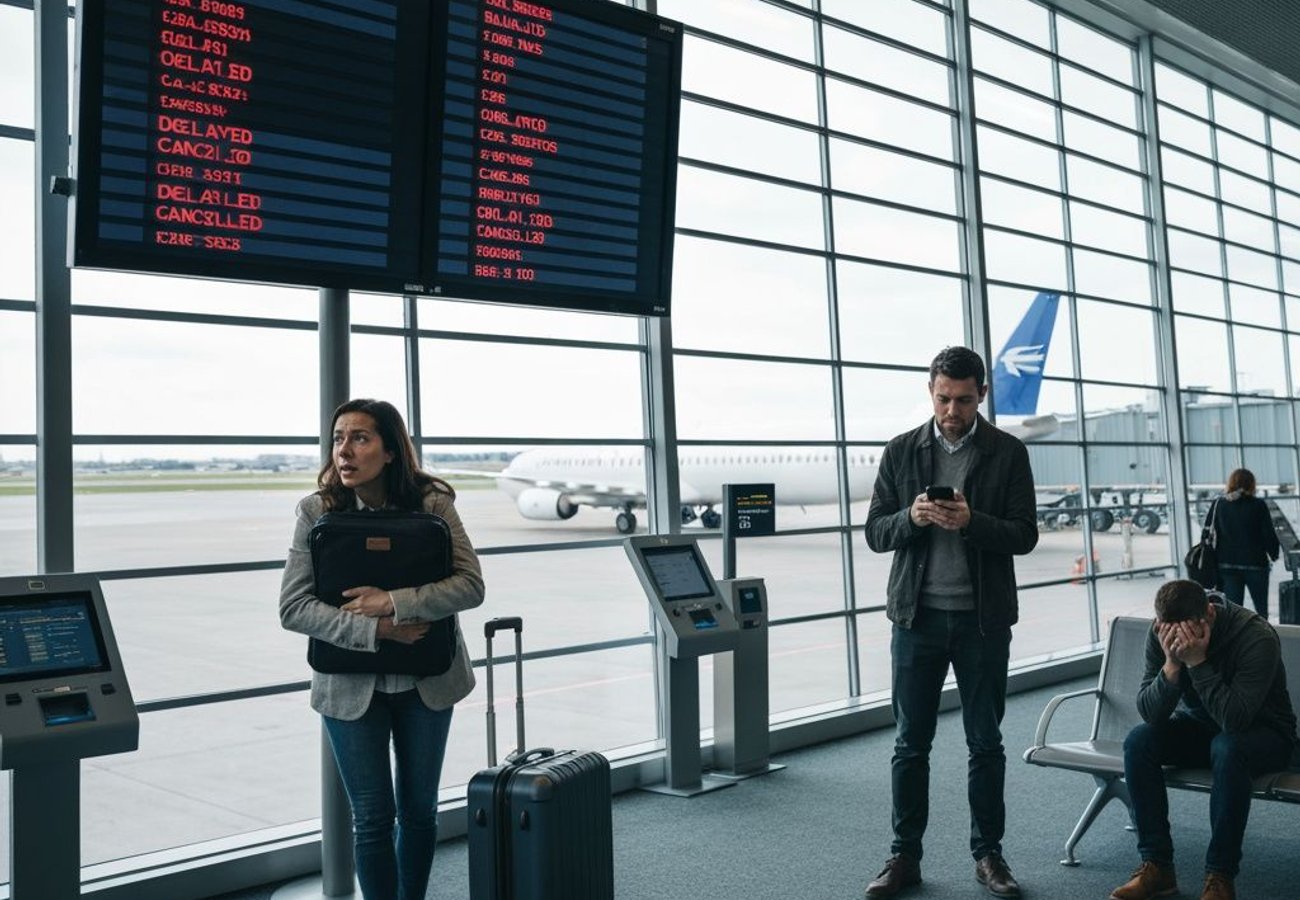
Image generated by AI
The Unexpected Turn: Delta Flight DL2876 Returns to Cincinnati
On June 9, 2026, something unusual unfolded in the skies above the Ohio Valley. Delta Airlines Flight DL2876, a Boeing 737-800 aircraft registered N3738B, departed Cincinnati/Northern Kentucky International Airport (CVG) at approximately 7:06 a.m. EDT bound for Salt Lake City International Airport (SLC). What should have been a routine westbound journey became anything but routine when the flight crew made the decision to return the aircraft to its departure airport just one hour and forty-five minutes after takeoff.
The diversion has sparked immediate attention across aviation forums and social media platforms, with passengers and industry observers demanding clarity on what prompted the unexpected return. At this stage, Delta Airlines has not publicly disclosed the precise reason behind the decision to return Flight DL2876 to Cincinnati, leaving many questions unanswered.
Reddit: "Diversion on a 737 to SLC from Cincinnati? That's roughly a 2-hour flight. Something had to be serious enough to turn back immediately." — r/aviation
Understanding Why Aircraft Return to Departure Airports
In modern commercial aviation, an unscheduled return to a departure airport is neither unprecedented nor necessarily indicative of a catastrophic emergency. Flight crews face a variety of operational scenarios that may warrant a conservative decision to discontinue the scheduled flight and conduct additional assessments on the ground.
Common reasons for aircraft diversions include:
- Technical indications flagged by onboard systems
- Maintenance concerns identified during flight
- Weather-related complications
- Crew-related operational matters
- Precautionary procedures requiring further inspection
- System malfunctions detected mid-flight
The aviation industry's safety culture prioritizes early intervention over schedule adherence. When pilots or systems detect anything requiring additional evaluation, crews are trained and authorized to make the safest operational decision, even if it disrupts passenger schedules.
Flight tracking platforms like FlightAware and Flightradar24 confirmed that N3738B deviated from its planned routing to Salt Lake City and instead returned to Cincinnati. These records show the aircraft executed a controlled descent and landing, with no emergency procedures activated.
Flight Data: A Timeline of the Diversion
According to available flight tracking records, the timeline of Delta Flight DL2876 unfolded as follows:
Departure: The Boeing 737-800 pushed back from Gate B1 at Cincinnati/Northern Kentucky International Airport and became airborne shortly after its scheduled 7:06 a.m. EDT departure time.
Flight Duration: The aircraft remained airborne for approximately one hour and forty-five minutes, suggesting the crew made the decision to return relatively early in what would have been a longer transcontinental flight.
Return and Landing: The aircraft landed safely back at CVG at approximately 8:51 a.m. EDT. Flight data indicates the return was completed under normal operational control with no emergency declarations or extraordinary procedures required.
The aircraft remained intact and controllable throughout the entire diversion, suggesting the situation, while requiring immediate attention, did not pose an acute threat to the airworthiness of the aircraft.
What Happens After a Diversion: The Inspection Process
When an aircraft returns unexpectedly to its departure airport, a rigorous assessment protocol immediately begins. Delta Airlines' maintenance teams, engineering specialists, and operational personnel conduct a comprehensive review of:
- Aircraft maintenance logs and historical data
- Flight crew reports detailing observations during flight
- Onboard system diagnostics and warning indicators
- Aircraft performance parameters
- Weather and operational conditions at time of incident
This systematic approach ensures full compliance with Federal Aviation Administration (FAA) regulations and Delta's internal safety protocols. Engineers examine every aspect of the aircraft's systems before it is released back into revenue service.
Passengers affected by the diversion typically face rebooking on alternative flights, aircraft substitutions, or revised departure schedules. Delta Airlines generally works to minimize passenger inconvenience while maintaining its unwavering commitment to operational safety.
The Role of Crew Judgment in Aviation Safety
What makes this situation particularly noteworthy is what it reveals about modern aviation decision-making. The flight crew's choice to return Flight DL2876 to Cincinnati demonstrates the industry's established safety philosophy: act early, verify thoroughly, and prioritize caution over convenience.
This approach has been instrumental in aviation's remarkable safety record. Rather than continuing a flight when minor concerns exist, crews are empowered to ground an aircraft for inspection. What appears as an inconvenience to passengers represents a critical layer of protection in the aviation system.
Anup Kumar Keshan, Founder and Editor-in-Chief of Travel And Tour World, observed that unexpected diversions underscore the aviation industry's unwavering focus on safety. He emphasized that while passengers may experience delays, such precautionary actions demonstrate how airlines and flight crews consistently prioritize safety above schedule commitments.
The Transparency Question
As of the latest reports, Delta Airlines has not publicly issued a detailed statement explaining the specific technical or operational reason behind Flight DL2876's diversion. This lack of transparency has generated speculation within aviation communities.
Industry observers note that airlines typically provide passenger-facing updates while withholding technical details pending completion of internal investigations. The full story behind this diversion may take days or weeks to emerge, depending on the complexity of the findings and Delta's communication strategy.
For passengers booked on the affected flight, the priority remains rebooking and alternative travel arrangements. For the broader aviation community, the diversion serves as a reminder that even routine flights carry embedded safety protocols designed to activate instantly when needed.
The skies remain among the safest places on Earth—and incidents like Delta Flight DL2876 prove why.
Related Travel Guides
Disclaimer
This article is for informational and educational purposes only. It does not constitute legal, financial, or professional advice. While we strive to provide accurate and up-to-date information, travel policies, regulations, and conditions change rapidly. Always verify information with official sources before making travel decisions. Nomad Lawyer makes no representations about the accuracy, reliability, completeness, or suitability of the information provided. Readers should consult qualified professionals for advice specific to their circumstances. The views expressed in this article are those of the author and do not necessarily reflect the views of Nomad Lawyer.
Kunal K Choudhary
Co-Founder & Contributor
A passionate traveller and tech enthusiast. Kunal contributes to the vision and growth of Nomad Lawyer, bringing fresh perspectives and driving the community forward.
Learn more about our team →