Japan Implements New Tax Refund Rules 2026: Tourists Must Pay Upfront and Pass Exit Checks

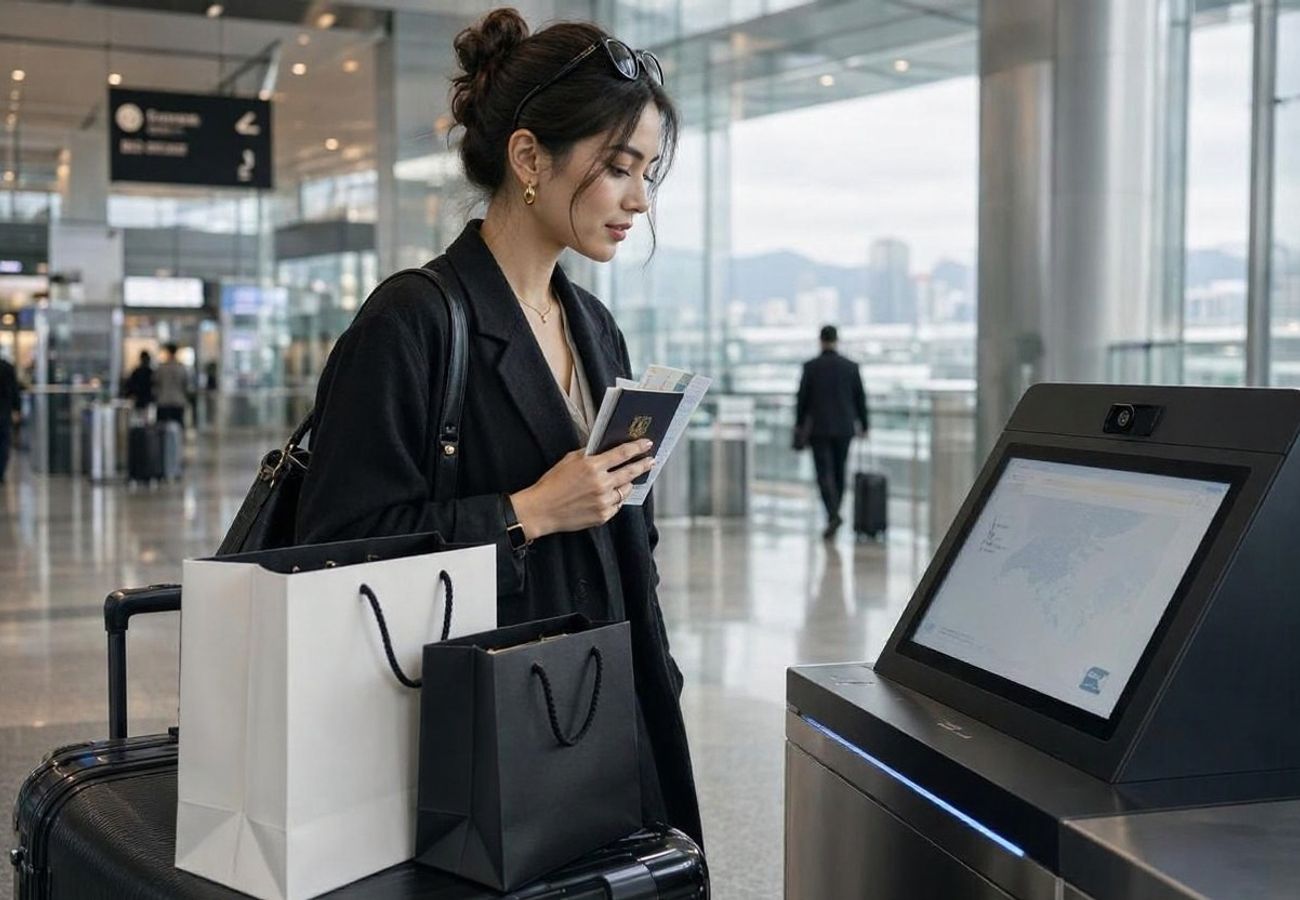
Image generated by AI
¥610.9 billion in shopping expenditures accounted for a significant portion of Japan's visitor economy between July and September 2026, highlighting the massive scale of retail spending that is now subject to a rigorous new tax recovery system. As of November 1, 2026, the Japanese government has officially transitioned from an "immediate discount" model to a "pay-first, claim-later" system. This shift forces international travelers to fund the consumption tax at the point of sale and successfully pass a customs audit upon departure to unlock their savings.
The Shift to Post-Departure Repayment
The transition is the culmination of the fiscal 2025 tax reform, moving away from the previous arrangement where eligible tourists could bypass the consumption tax during the transaction. Under the new mandate, the tax is paid in full at the register. The refund is only triggered after the Japan Customs authority confirms that the qualifying goods are physically leaving the country.
This procedural change is specifically designed to combat "domestic leakage"—the practice of tourists purchasing goods tax-free and subsequently reselling them within Japan for a profit. By shifting the burden of proof to the point of exit, the government ensures that the tax exemption is granted only to goods that actually exit the jurisdiction.
Revised Shopping and Customs Framework
The new system removes several previous restrictions while adding strict logistical requirements. Most notably, the ¥500,000 ceiling on consumables and the requirement for special sealed packaging have been abolished. However, the core eligibility threshold remains: purchases must total at least ¥5,000 (pre-tax) at a single shop on the same calendar day.
The following table outlines the current operational requirements for travelers seeking tax recovery:
| Requirement Component | Verified Regulation | Impact on Traveler |
|---|---|---|
| Spending Threshold | Minimum ¥5,000 pre-tax per shop/day | Must track daily spend per retailer |
| Customs Window | Confirmation required within 90 days of purchase | Purchases must be exported within 3 months |
| Verification Timing | Must occur before baggage check-in | Goods must be accessible for inspection |
| Exclusions | Gold/platinum bullion and coins | These items never qualify for refunds |
| Documentation | Passport and Temporary Visitor status | Required for all digital and physical claims |
Expert Analysis: The Financial and Logistical Friction
For the modern nomad or high-spending tourist, the direct consequence of this reform is a temporary increase in the cost of travel. Because repayments are no longer instantaneous, travelers must have the liquidity to cover the 10% consumption tax upfront on all high-value items.
The pricing pressure here is not just about the initial cost, but the uncertainty of the repayment method. Unlike the old system, there is no universal guarantee of immediate cash repayment at the airport. Depending on the retailer or the third-party provider, refunds may be issued via bank transfers, mobile apps, or credit card reversals. This introduces a "float" period where the traveler's capital is held by the Japanese government or a private provider.
Furthermore, the logistical risk has increased. If a traveler checks their bags before visiting the customs kiosk, they may be unable to produce the goods for inspection. According to official guidance, if a single item from a transaction is missing or cannot be verified, the entire associated transaction may be denied for a refund. This creates a high-stakes environment at the departure terminal, where insufficient time for customs checks could lead to the total loss of the tax benefit.
Key Takeaways
- Upfront Payment: You must pay the full consumption tax at the time of purchase; discounts are no longer applied at the register.
- Exit Verification: You must visit a customs kiosk before checking your luggage to verify that goods are leaving Japan.
- 90-Day Limit: All qualifying purchases must be confirmed by customs within 90 days of the purchase date.
- No More Sealed Bags: The previous requirement for "consumables" to be sealed in special packaging has ended, though goods must still be exported.
- Digital Options: Travelers with Temporary Visitor status can use designated customs Wi-Fi at major hubs like Narita, Haneda, and Kansai to streamline the process.
FAQ: Japan Tax Refunds 2026
Do I need to keep my items in sealed bags? No. The special packaging requirement for consumables has ended. However, you must still possess the items upon departure to receive the refund.
When should I visit the customs kiosk at the airport? You must complete the customs confirmation process before you check in any baggage that contains the qualifying purchases.
Can I get my refund in cash at the airport? Not necessarily. Repayment methods vary by shop and provider; they may use credit card refunds, apps, or bank transfers.
What happens if I lose one item from my shopping list? If a qualifying item is missing during the exit check, customs may deny the refund for the entire transaction associated with that item.
The cost of shopping in Japan now carries a mandatory waiting period and a strict exit audit.
Related Travel Guides
This article is for informational purposes. Flight routes, passenger regulations, visa rules, and transit advisories are subject to change by airlines and aviation authorities. Readers are advised to verify schedules and travel documentation with relevant carriers and border agencies before departure.
Related Stories

Germany and UK Lead Europe as Business Travel Spending Hits €404 Billion in 2026

Global Tourism Spending to Hit US$1.8 Trillion in 2026 as International Arrivals Reach 1.57 Billion