
Taiwan Warns Travellers Over Mainland China Risks as New Border Checks Expand Digital Device Inspections: Cybersecurity Protocols for Cross-Strait Travel

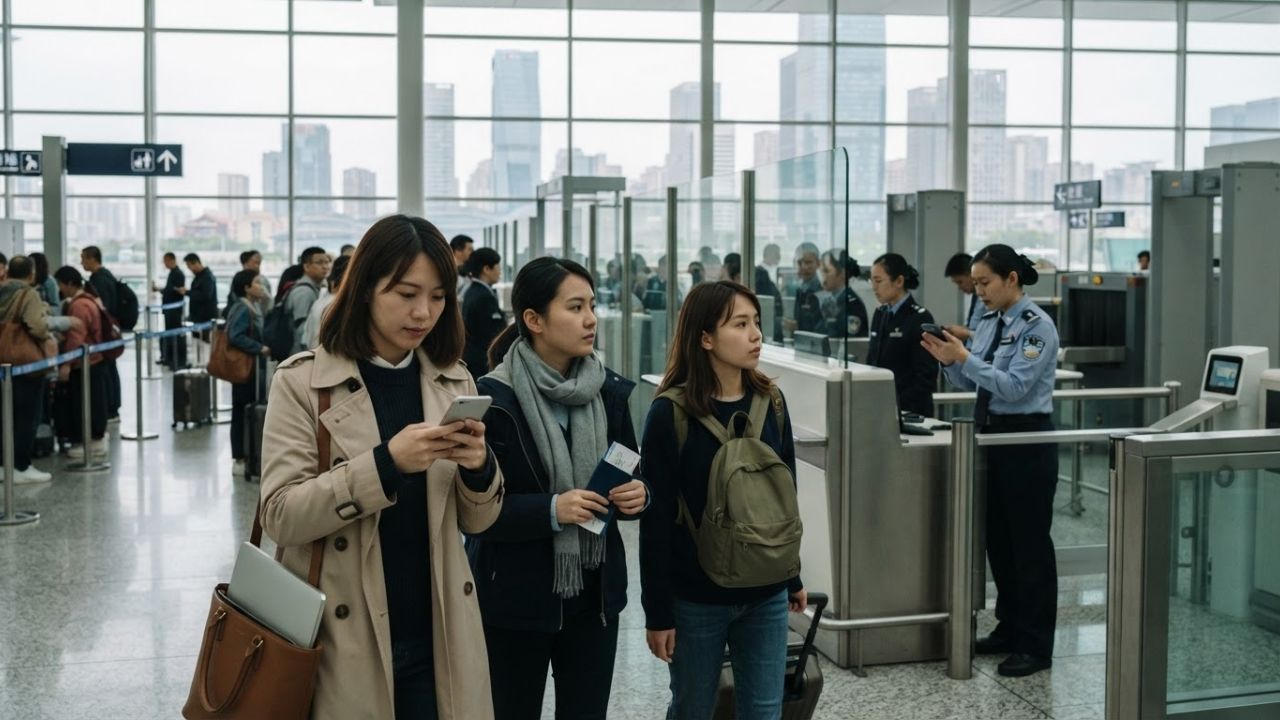
Taiwan has reinforced its Orange Travel Alert for mainland China, Hong Kong, and Macau following expanded border inspection powers that permit Chinese authorities to examine smartphones, laptops, and digital storage devices carried by incoming passengers. As cross-strait business, academic, and family travel encounters unprecedented cybersecurity scrutiny, the Taiwanese Cabinet, National Security Council, Mainland Affairs Council, and Ministry of Economic Affairs have issued comprehensive digital defense advisories targeting semiconductor engineers, public servants, religious visitors, and ordinary tourists.
Announced on September 14, 2026, the updated guidance addresses growing anxiety over personal data sovereignty, corporate intellectual property, online speech archives, and private correspondence across international frontiers. The escalating border measures and intensified legal enforcement have altered the operational environment across the Taiwan Strait, transforming standard customs screening into a complex digital checkpoint. While commercial aviation and ferry links between Taiwan and mainland destinations remain operational, government authorities urge citizens and international travelers alike to reassess travel necessity and prepare rigorous technical precautions before departure.
The heightened advisory directly affects multinational corporations, technology manufacturers, commercial airlines, regional tour operators, and travel management companies. Under the revised enforcement scope, customs officers and state security personnel possess broad administrative latitude to review digital equipment carried by incoming travelers. Because contemporary travelers rely on smartphones and portable computers for hotel check-ins, transit passes, cashless payments, corporate workflows, and social interaction, the prospect of arbitrary hardware and software searches has introduced profound operational friction into East Asian regional travel.
The Local Trend Revealed: Expanding Border Scrutiny and Digital Device Inspections
The primary challenge confronting travelers to mainland China is the institutional codification of digital device inspections at ports of entry. Chinese regulatory updates and administrative guidelines empower border officials to conduct on-the-spot reviews of smartphones, laptops, external hard drives, and cloud-linked devices. At major international aviation gateways—including Shanghai Pudong (PVG), Beijing Capital (PEK), Guangzhou Baiyun (CAN), Xiamen Gaoqi (XMN), and Chengdu Tianfu (TFU)—as well as land and sea crossings connecting Hong Kong, Macau, and the mainland, security personnel can request device passwords, inspect communication histories, and examine installed applications.
For independent tourists and cultural visitors, device examinations create severe privacy concerns. Personal devices hold private text threads, geo-tagged photography, bank records, and years of social media engagement. For corporate travelers, the implications are even more severe. Laptops and mobile workstations often contain proprietary source code, confidential client rosters, sensitive research blueprints, and direct virtual private network (VPN) tunnels into corporate enterprise servers. Under broad interpretations of state secrets and counter-espionage laws, data that appears standard in commercial tech hubs can be classified as sensitive by border inspectors.
Taiwanese authorities emphasize that border inspection is no longer restricted to physical luggage, printed customs declarations, or passport stamps. Digital devices and the personal data ecosystems embedded within them have become primary subjects of border administration. This shift aligns with a wider international pattern where border security increasingly centers on data control, network surveillance, and algorithmic screening. For passengers boarding flights at Taipei Songshan (TSA) or Taoyuan International (TPE), packing for a trip now requires technical digital sanitation alongside conventional packing.
Taiwan Maintains Orange Travel Alert for Mainland China, Hong Kong, and Macau
Taiwan's Mainland Affairs Council (MAC) continues to classify travel across mainland China, Hong Kong, and Macau under an Orange Travel Alert. Positioned as the second-highest tier in Taiwan's four-stage travel advisory system, an Orange Alert officially recommends that citizens avoid non-essential travel due to elevated safety, legal, and operational risks. The warning falls just below a Red Alert, which advises complete travel prohibition and immediate evacuation.
While the Orange Alert does not prohibit travel—allowing citizens to visit family, conduct business, attend university, or pursue specialized cultural exchanges—it establishes a clear governmental position regarding legal vulnerabilities. The advisory highlights that travelers may encounter administrative detention, arbitrary questioning, or exit bans without immediate consular transparency or timely legal notification.
To mitigate operational blind spots, the Taiwanese Cabinet has urged all outbound travelers to utilize the Mainland Affairs Council's official Dynamic Travel Registration Platform. By logging flight numbers, detailed itineraries, hotel accommodations, and emergency contact channels prior to departure, travelers establish an administrative record that allows the Straits Exchange Foundation (SEF) and regional liaison desks to provide rapid emergency assistance if administrative difficulties arise during transit.
| Travel Risk Dimension | Impact on Cross-Strait Travelers | Operational Mitigation Strategy |
|---|---|---|
| Electronic Device Screening | Smartphones, tablets, and laptops face discretionary customs inspection | Carry clean, dedicated travel devices stripped of archived history |
| Corporate & Technical Data | Proprietary blueprints, research files, and patents risk seizure or review | Revoke direct corporate server access and store data on secured cloud systems |
| Social Media & Speech Archives | Historical posts or political commentary can trigger administrative inquiry | Audit app profiles; avoid active political debates on public forums |
| Strategic Industry Employment | Tech engineers, researchers, and government workers face targeted questioning | Request corporate legal briefings; secure official organizational clearance |
| Emergency Liaison Support | Absence of formal bilateral consular treaties restricts immediate legal intervention | Register itinerary with the Mainland Affairs Council prior to departure |
High-Scrutiny Categories: Semiconductors, Civil Service, and Strategic Sectors
Taiwanese administrative agencies have identified distinct demographic groups that face elevated scrutiny when arriving at mainland entry ports. Foremost among these are public sector workers, civil servants, and military personnel. Individuals affiliated with police departments, judicial organs, municipal administrative bodies, and emergency services face focused questioning regarding their public responsibilities, administrative hierarchies, and civic systems.
Inquiries frequently target civil administration and infrastructure knowledge, including:
- Critical energy and electrical grid infrastructure planning
- Regional municipal emergency response systems and medical mobilization
- Civil defense communications networks and backup command facilities
- Public air-raid shelter architecture and spatial distribution plans
- Strategic municipal supply distribution and logistics reserves
For these travelers, routine cross-strait visits carry the risk of extended interrogation regarding administrative procedures. As a result, Taiwan's Ministry of Civil Service and relevant ministries have instituted strict reporting and pre-clearance rules for active public employees contemplating travel to mainland jurisdictions.
Parallel concerns surround Taiwan's semiconductor and advanced manufacturing workforce. As the premier global producer of high-end microchips, Taiwan possesses specialized human capital in semiconductor fabrication, artificial intelligence hardware, quantum computing, advanced materials science, and defense-related microelectronics. Personnel employed by major foundries, design houses, and testing facilities are viewed by border authorities as custodians of strategic technical intelligence. Engineers, supply chain coordinators, and executive leadership crossing the border face heightened scrutiny regarding their corporate affiliations, intellectual property assets, and organizational partners.
Beyond technical and governmental sectors, religious leaders and non-profit organizers have also been placed on elevated alert categories. Religious observance within mainland China is subject to rigorous state administration, particularly regarding groups that operate outside officially registered bodies like the Three-Self Patriotic Movement or state-sanctioned Buddhist and Taoist associations. Taiwanese nationals participating in private missionary initiatives, unapproved scriptural study assemblies, baptisms, or grassroots cross-border religious gatherings face risk of detention or deportation.
Similarly, independent scholars, cultural journalists, and active online commentators who have shared public political commentary on digital platforms encounter elevated border scrutiny. Given the expansive scope of revised counter-espionage and national security statutes, past social media posts or published academic papers may be scrutinized by border agents during electronic device inspections.
Corporate Digital Defense: Temporary Devices and Network Sanitization
The evolving regulatory environment has compelled multinational corporations, financial institutions, and tech conglomerates operating across East Asia to enact rigorous travel cybersecurity protocols. Corporate security directors are replacing traditional travel practices with hardened device policies to safeguard corporate networks and sensitive intellectual property.
Prominent risk-mitigation measures implemented by corporate travel departments include:
- Deployment of Clean "Burner" Devices: Corporations increasingly supply traveling employees with clean loaner laptops and factory-reset mobile phones. These devices carry only essential operating system software, approved transit apps, and temporary travel accounts. All internal documents, corporate emails, personal photo libraries, and sensitive client databases are removed before the traveler arrives at the airport.
- Restricted Remote Network Architecture: Direct VPN connections to corporate local area networks (LANs) and enterprise resource planning (ERP) databases are disabled during the duration of the trip. Employees who need to access specific files must use multi-factor authorization tokens and temporary browser-based portals that prevent data from being saved directly onto device hard drives.
- Rigorous Data Sanitization and Removal: Corporate security teams instruct employees to audit their mobile devices prior to travel, clearing browser caches, deleting conversational messaging histories on apps like LINE and WhatsApp, and removing unapproved social media platforms.
- Structured Employee Training and Crisis Protocols: Organizations provide structured pre-trip training regarding border inspection procedures, legal rights during customs interviews, and clear instructions to decline signed statements in the absence of corporate legal representation.
Cultural & Environmental Value: Navigating Heritage Ties Amid Modern Geopolitics
Despite rising political friction and regulatory hurdles, the cultural bonds uniting communities across the Taiwan Strait run deep. For centuries, maritime trade, ancestral lineage, and spiritual traditions have connected coastal Taiwan with Fujian, Guangdong, and Zhejiang provinces. The shared devotion to Mazu, the Goddess of the Sea, represents one of the most vibrant cultural bridges in the region. Thousands of pilgrims from Taiwanese temples—such as the historic Dajia Jenn Lann Temple in Taichung—regularly participate in spiritual journeys to the ancestral Mazu shrine on Meizhou Island in Putian, Fujian.
For cultural travelers, family historians, and traditional pilgrims, the preservation of these cultural exchanges remains paramount. These journeys support regional community heritage, sustaining traditional artisans, incense makers, folk musicians, and temple restoration guilds on both sides of the strait. Cultural expeditions often navigate the traditional "Mini Three Links" ferry corridors connecting Taiwan's offshore islands of Kinmen and Matsu with the mainland ports of Xiamen, Quanzhou, and Mawei. These maritime routes offer intimate glimpses into regional Minnan architecture, stone carving heritage, and shared dialect traditions.
For the traveler, the real impact is learning how to navigate these rich heritage links with heightened situational awareness. Protecting cross-strait cultural exchange requires a mindful approach: decoupling spiritual and familial engagement from administrative controversy. By focusing travel on direct community interactions, village craft preservation, and eco-conscious rural homestays, travelers help sustain local livelihoods without becoming entangled in state security apparatuses. Respectful cultural engagement honors ancestral heritage while maintaining absolute compliance with local civil regulations.
Visitor Insider Tips: Practical Digital Hygiene and Border Protocols
Navigating cross-strait transit under updated security conditions demands meticulous preparation and local knowledge. Whether you are traveling for business, family heritage, or specialized cultural exploration, follow these practical insider tips:
- Register with the Mainland Affairs Council Dynamic Platform: Before arriving at the airport, log your comprehensive itinerary on the official MAC portal (
mac.gov.tw). Keep the 24-hour emergency assistance hotline for the Straits Exchange Foundation (+886-2-2533-9995) written on a physical paper card stored in your wallet, ensuring access even if your mobile phone is confiscated or powered down. - Implement Passcode-Only Device Security: Modern biometric unlock mechanisms—such as facial recognition and fingerprint scanners—can be compelled by border authorities during customs screening. Before landing at your destination, switch your smartphone settings to require a complex alphanumeric passcode (at least eight digits) and disable FaceID or fingerprint unlock.
- Use Physical Travel SIMs or International Roaming: Avoid purchasing unverified local SIM cards from informal vendors at transit hubs. Use international data roaming packages provided by reputable carriers or purchase registered travel eSIM profiles. Roaming data routes traffic through home server gateways, maintaining encrypted transit without exposing personal data to localized public Wi-Fi networks.
- Eliminate Unauthorized VPN Applications: While virtual private networks are essential tools for accessing global web services, possessing unapproved or commercial VPN software on a mobile phone during a device search can raise suspicion at border checkpoints. Use corporate-authorized connectivity solutions or enterprise roaming networks rather than consumer-grade circumvention apps.
- Carry Hard Copies of Travel Documents: Keep printed physical copies of your round-trip flight confirmations, hotel reservations, business invitation letters, and visa authorizations (such as the Mainland Travel Permit for Taiwan Residents, known colloquially as the Taibaozheng). Relying exclusively on mobile screen displays during customs checks invites border agents to handle your unlocked personal phone.
- Off-Peak Transit Gateways: To minimize customs bottlenecks, consider utilizing secondary transit routes. While Shanghai Pudong (PVG) and Beijing Capital (PEK) handle massive passenger volumes with intensive screening protocols, secondary air and maritime hubs—such as Xiamen Gaoqi (XMN) or the Kinmen-Xiamen ferry terminal at Wutong—often provide more streamlined processing for family and cultural travelers.
- Local Dining and Cultural Etiquette: When exploring cross-strait culinary traditions in Fujian or Guangdong, support independent family-run eateries specializing in Minnan oyster omelets, Shacha noodles, and Chaozhou braised specialties. When dining in local business or family settings, maintain polite conversational etiquette by focusing on gastronomy, historical architecture, and regional arts while avoiding discussions of cross-strait political disputes.
Tourism Outlook: Cross-Strait Aviation, Economic Realities, and Border Policy
The long-term trajectory of cross-strait travel reflects an intricate balance between economic interdependence and national security vigilance. Commercial aviation networks between Taiwan and mainland China have undergone significant restructuring over recent years. While direct flights between Taipei, Kaohsiung, and primary mainland commercial hubs have resumed to support business travel and family connections, passenger volumes remain below historic peaks as corporate travelers adopt remote collaboration tools and reroute investments.
Airlines, corporate travel managers, and hospitality operators must now operate within an environment where cybersecurity protocols are as essential as visa compliance. For business travelers, traveling light no longer applies merely to carry-on baggage; it dictates traveling with minimal digital footprints. The modern international border is no longer delineated solely by barbed wire and customs gates, but by network firewalls, encrypted storage partitions, and database queries.
As travel advisories evolve and border inspection practices become institutionalized, travelers who prepare methodically, safeguard their private data, and maintain respectful cultural engagement will continue to bridge regional divides. Navigating cross-strait travel in 2026 requires understanding that digital privacy is the foundational passport of modern international exploration.
Related Travel Guides
- Thailand Overhauls Tourist Visa Policy: 60-Day Entry Ends for 21 Countries as Digital e-Visa Rules Begin September 15, 2026
- Shanghai Inbound Tourism Surge: International Travel Growth and Transit Policy 2026
- Eastar Jet Launches Daily Busan-Hong Kong Route: Direct Flights Boost South Korea’s Coastal Tourism
Disclaimer
This article is for informational and educational purposes only. It does not constitute legal, financial, or professional advice. While we strive to provide accurate and up-to-date information, travel policies, regulations, and conditions change rapidly. Always verify information with official sources before making travel decisions. Nomad Lawyer makes no representations about the accuracy, reliability, completeness, or suitability of the information provided. Readers should consult qualified professionals for advice specific to their circumstances. The views expressed in this article are those of the author and do not necessarily reflect the views of Nomad Lawyer.
Raushan Kumar
Founder & Lead Developer
Full-stack developer with 11+ years of experience and a passionate traveller. Raushan built Nomad Lawyer from the ground up with a vision to create the best travel and law experience on the web.
Learn more about our team →