
Thailand Overhauls Tourist Visa Policy: 60-Day Entry Ends for 21 Countries as Digital e-Visa Rules Begin September 15, 2026

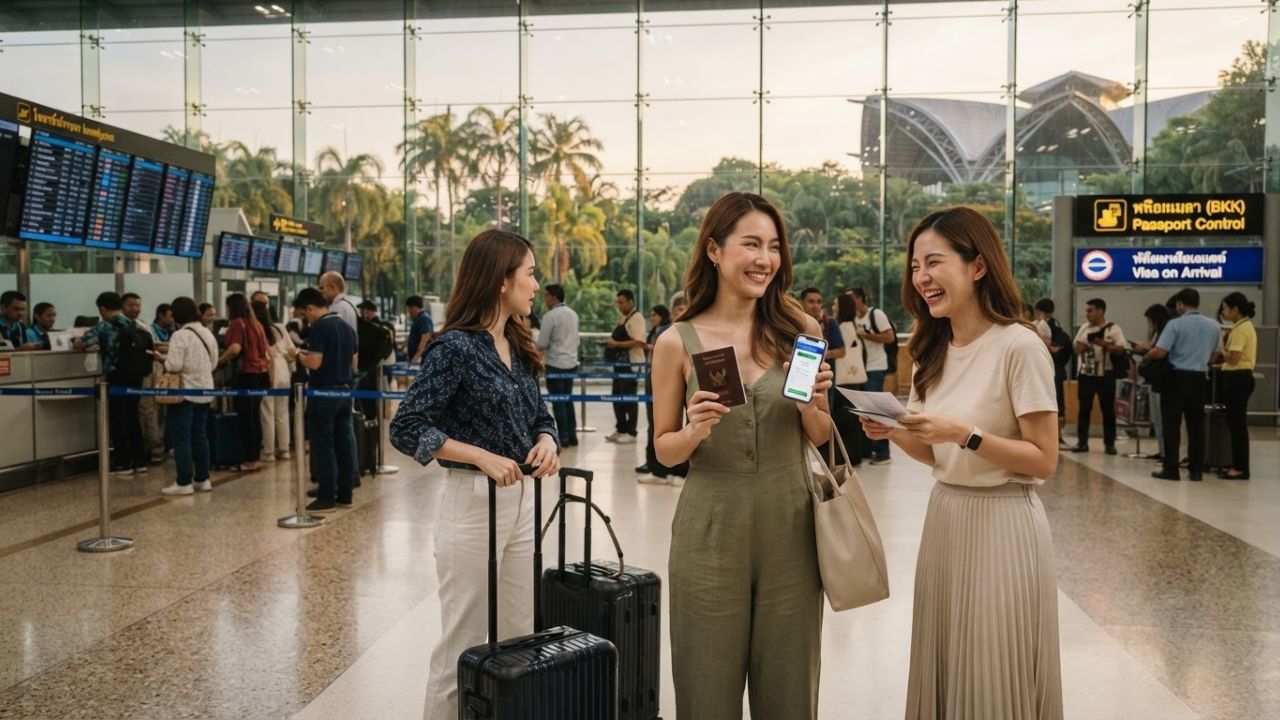
Enacting the most significant recalibration of its border policy since 2024, Thailand will end its universal 60-day visa exemption scheme on September 15, 2026, removing 21 nationalities—including travelers from Mexico, Jamaica, Colombia, Morocco, and Uzbekistan—from visa-free tourist entry while reducing standard exemption stays for remaining eligible countries to 30 days. The policy overhaul marks a decisive transition from post-pandemic open-door tourism toward a calibrated, digital border-management architecture that requires affected passport holders to obtain approved electronic visas prior to boarding commercial flights to Bangkok, Phuket, or Chiang Mai.
Until 11:59 PM on September 14, 2026, ordinary passport holders from 93 countries and territories can continue to enter the kingdom without a prior visa for stays of up to 60 days. However, beginning September 15, the visa-free roster contracts to 60 countries and territories, with permitted stays reduced to 30 days. As the Ministry of Foreign Affairs (MFA) expands its centralized Thai e-Visa platform to process applications online, international travelers must navigate updated documentation timelines, mandatory digital arrival declarations, and stricter financial proof requirements.
The Local Trend Revealed: Tightening Borders While Expanding Digital Gateways
The decision to scale back the expansive 60-day visa exemption reflects an ongoing policy balancing act by the Royal Thai Government. While the 2024 expansion succeeded in driving record visitor numbers into primary tourism hubs, immigration authorities identified growing challenges regarding visa runs, unauthorized employment, and extended overstays.
The September 15, 2026 regulatory framework introduces three foundational changes:
- Removal of 21 Nationalities from Visa Exemption: Citizens of 21 nations will no longer receive automatic entry stamps upon arrival. The affected countries are Albania, Andorra, Colombia, Cuba, Dominica, Dominican Republic, Ecuador, Guatemala, Jamaica, Kosovo, Mexico, Monaco, Morocco, Panama, Papua New Guinea, San Marino, Sri Lanka, Tonga, Trinidad and Tobago, Uruguay, and Uzbekistan.
- Reduction from 60 Days to 30 Days for Remaining Exempt Nations: The 60 nations and territories retaining unilateral visa-free access will see their permitted initial stay halved from 60 days to 30 days, re-establishing the standard pre-2024 tourist timeline.
- Bilateral Exceptions and New Bilateral Accords: Nationalities covered by separate bilateral visa waivers remain unaffected. Passport holders from China, Hong Kong, Kazakhstan, Laos, Macao, Mongolia, Russia, and Vietnam will continue to enter under their respective bilateral treaties. Additionally, Mauritius enters a distinct short-term exemption allowing stays of up to 15 days.
The transition hinges strictly on the traveler’s physical date of arrival. Passengers arriving at Thai international airports or land borders on or before September 14, 2026, will still receive a 60-day entry stamp. Those landing from September 15 onwards will be subject to the new restrictions, while visitors already inside the kingdom retain their granted duration of stay.
The Digital e-Visa Platform: How Affected Travelers Apply
For travelers from Mexico, Jamaica, Colombia, and the other 18 affected nations, losing visa-free access does not require traveling to an overseas Thai embassy in person. The Ministry of Foreign Affairs has expanded its official electronic visa platform (thaievisa.go.th) to process single-entry and multiple-entry tourist visas digitally:
Step-by-Step e-Visa Application Protocol
- Online Registration: Travelers create an individual profile on the official Thai e-Visa portal, selecting their nationality and the specific Thai diplomatic mission holding jurisdiction over their current country of residence.
- Document Upload Requirements: Applicants must upload high-resolution digital scans of their passport biographical page (valid for at least six months from the planned date of arrival), a recent passport photograph taken against a plain white background, confirmed round-trip airline flight bookings, and confirmed hotel reservations or proof of accommodation covering their initial stay.
- Financial Verification: The platform requires proof of adequate financial resources, typically demonstrated through recent bank statements showing a minimum balance equivalent to 20,000 THB per solo traveler or 40,000 THB per traveling family.
- Electronic Issuance: Once the application is vetted and the visa fee is paid online, an official e-Visa approval confirmation is delivered via email. Travelers must print a physical copy of this document to present to airline check-in counters and immigration officers upon arrival.
Standard processing times range from 5 to 15 business days depending on seasonal application volumes. Travel specialists advise submitting applications at least four weeks prior to scheduled departure dates.
Tourist Visa Categories: Single-Entry Versus Multiple-Entry Options
Former visa-free travelers planning extended explorations of Thailand can choose between two primary tourist visa classifications:
- Single-Entry Tourist Visa (TR): Allows a continuous stay of up to 60 days from the date of arrival. Once inside Thailand, visitors can apply for a one-time 30-day extension at any local immigration office (paying the standard 1,900 THB government fee), yielding a total continuous stay of 90 days. The visa must be used within its 90-day validity window from issuance.
- Multiple-Entry Tourist Visa (METV): Designed for frequent travelers and regional explorers using Bangkok as a hub to visit neighboring Cambodia, Laos, or Vietnam. The METV is valid for six months, permitting unlimited entries with each stay lasting up to 60 days. Proof of higher financial balances (typically 200,000 THB maintained over six months) and employment verification are mandatory.
Mandatory Digital Arrival Card: Universal Enforcement at Border Checkpoints
A critical requirement accompanying the visa shake-up is the universal enforcement of the Thailand Digital Arrival Card.
Replacing the historic blue-and-white paper TM6 arrival form, the Digital Arrival Card is an electronic declaration that must be completed online by every incoming foreign traveler prior to passing through immigration control, regardless of nationality, visa exemption status, or possession of a diplomatic passport:
- Pre-Arrival Registration: Travelers access the official immigration digital portal within three days of departure to enter personal information, flight details, passport numbers, and their intended address in Thailand.
- QR Code Verification: Upon submission, an electronic confirmation QR code is generated. Airlines cross-reference this verification during airport check-in, and immigration automated e-gates or counter officers scan the electronic record upon landing.
- Streamlined Airport Transit: Completing the digital declaration in advance prevents bottlenecks at Suvarnabhumi Airport (BKK), Don Mueang Airport (DMK), and Phuket International Airport (HKT), allowing automated biometric e-gates to process passengers in under 45 seconds.
Cultural & Environmental Value: Promoting Dispersed, Low-Impact Travel
The recalibration of Thailand's entry framework aligns with a broader national campaign led by the Tourism Authority of Thailand (TAT) to shift the focus from runaway visitor volume to high-value, sustainable exploration:
Dispersing Visitors Beyond Primary Hotspots
- The "Hidden Gems" Initiative (Muang Rong): Thailand is actively steering international travelers beyond crowded resort corridors in Phuket, Pattaya, and central Bangkok toward secondary heritage provinces such as Nan, Lampang, Sukhothai, and Phatthalung. These tranquil destinations preserve authentic Lanna and Siamese architecture, traditional pottery villages, and slow-paced living.
- Relieving Environmental Pressure: Coastal ecosystems—including Maya Bay in the Phi Phi Islands and the coral reefs of the Similan National Park—operate under seasonal closures and strict daily visitor caps to allow marine biodiversity to regenerate. Calibrating visa durations helps control over-tourism in sensitive island reserves.
- Supporting Community-Based Tourism (CBT): Directing conscious travelers to rural homestays and community cooperatives ensures that tourist spending flows directly to local farming families, organic fruit growers, and traditional weaving collectives rather than multinational hotel chains.
Visitor Insider Tips: Navigating Thai Entry and Cultural Etiquette
To ensure a stress-free journey under the updated immigration rules, incorporate these practical recommendations into your travel planning:
Border Crossing and Arrival Logistics
- Check Your Exemption Status Before Booking: If your passport is issued by one of the 21 affected nations (such as Mexico, Jamaica, or Colombia), do not board your flight without an approved e-Visa printout. Airlines strictly deny boarding to passengers lacking valid entry documentation.
- Carry Physical Proof of Onward Travel: Regardless of visa status, Thai immigration officers frequently spot-check travelers for proof of confirmed onward or return travel departing Thailand within the permitted stay period (30 days for exempt travelers, 60 days for tourist visa holders).
- Maintain Cash Reserves in Baht: While credit cards and mobile QR payments are widespread in cities, immigration officials retain discretionary authority to request visual proof of living funds (20,000 THB in cash or foreign currency equivalent). Keep emergency cash accessible in your carry-on bag.
Cultural Protocol for the Conscious Explorer
- The Sacred "Wai" Greeting: Greet locals by placing your palms together at chest level in a prayer-like gesture (wai) accompanied by a slight bow. It communicates deep respect, humility, and warmth.
- Temple Etiquette and Attire: When entering revered Buddhist sanctuaries such as Wat Phra Kaew (Temple of the Emerald Buddha) or Wat Pho in Bangkok, dress conservatively. Cover shoulders, wear pants or long skirts covering the knees, and remove footwear before stepping into temple viharns. Never touch the top of someone’s head or point your feet toward Buddha statues or ordained monks.
- Practicing "Jai Yen" (Cool Heart): Thai culture places paramount importance on emotional self-control and harmonious interactions. Public anger, shouting, or aggressive confrontation will cause immediate loss of face and resolve nothing. Approach travel delays, negotiations, and administrative inquiries with a calm smile and polite demeanor.
Authentic Flavors of Thailand: Essential Regional Gastronomy
Experiencing Thailand’s culinary soul requires stepping away from westernized tourist strips and embracing regional street markets, riverside shacks, and family-run shophouses:
Four Iconic Regional Dishes
- Authentic Tom Yum Goong (Central Plains): A vibrant, hot and sour soup balancing lemongrass, bruised galangal roots, fresh kaffir lime leaves, and bird's eye chilies with sweet freshwater river prawns, straw mushrooms, and a spoonful of roasted chili jam (nam prik pao), finished with evaporated milk for a velvety body.
- Pad Kra Pao Moo Saap (Bangkok Street Staple): Coarsely minced pork stir-fried over intense wok heat with fresh Thai holy basil (bai kra pao), crushed garlic, and sliced fiery chilies, served over fragrant jasmine rice and topped with a crispy-edged fried egg (kai dao) with a runny yolk.
- Som Tum Thai (Isan Specialty): Crisp green papaya shredded into fine ribbons and pounded in a clay mortar with roasted peanuts, dried shrimp, garlic, cherry tomatoes, yard-long beans, lime juice, palm sugar, and fish sauce, creating a harmonious symphony of sweet, sour, salty, and spicy notes.
- Khao Niew Mamuang (Mango Sticky Rice): Sweet glutinous rice infused with rich coconut milk and pandan leaves, served warm alongside sliced, perfectly ripe golden Nam Dok Mai mangoes, drizzled with salty coconut cream and sprinkled with toasted yellow mung beans.
Tourism Outlook: Sustainable Border Modernization
Thailand’s transition away from the temporary 60-day visa-free regime marks a mature evolution in the kingdom’s tourism governance. By coupling targeted visa requirements with a user-friendly digital e-Visa platform and mandatory electronic arrival screening, Thailand is constructing a modern, secure, and predictable border framework for the decades ahead.
For travelers from Mexico, Jamaica, and across the globe, the updated regulations require a few minutes of advance preparation, but the timeless reward remains unchanged: golden temple spires glowing against tropical sunsets, warm hospitality, and the peerless cultural wonder of the Land of Smiles.
Related Travel Guides
Disclaimer
This article is for informational and educational purposes only. It does not constitute legal, financial, or professional advice. While we strive to provide accurate and up-to-date information, travel policies, regulations, and conditions change rapidly. Always verify information with official sources before making travel decisions. Nomad Lawyer makes no representations about the accuracy, reliability, completeness, or suitability of the information provided. Readers should consult qualified professionals for advice specific to their circumstances. The views expressed in this article are those of the author and do not necessarily reflect the views of Nomad Lawyer.
Raushan Kumar
Founder & Lead Developer
Full-stack developer with 11+ years of experience and a passionate traveller. Raushan built Nomad Lawyer from the ground up with a vision to create the best travel and law experience on the web.
Learn more about our team →