
Shanghai Inbound Tourism Surges Past 6.19 Million Visitors: US, UK, and Asian Travelers Fuel 30% International Growth

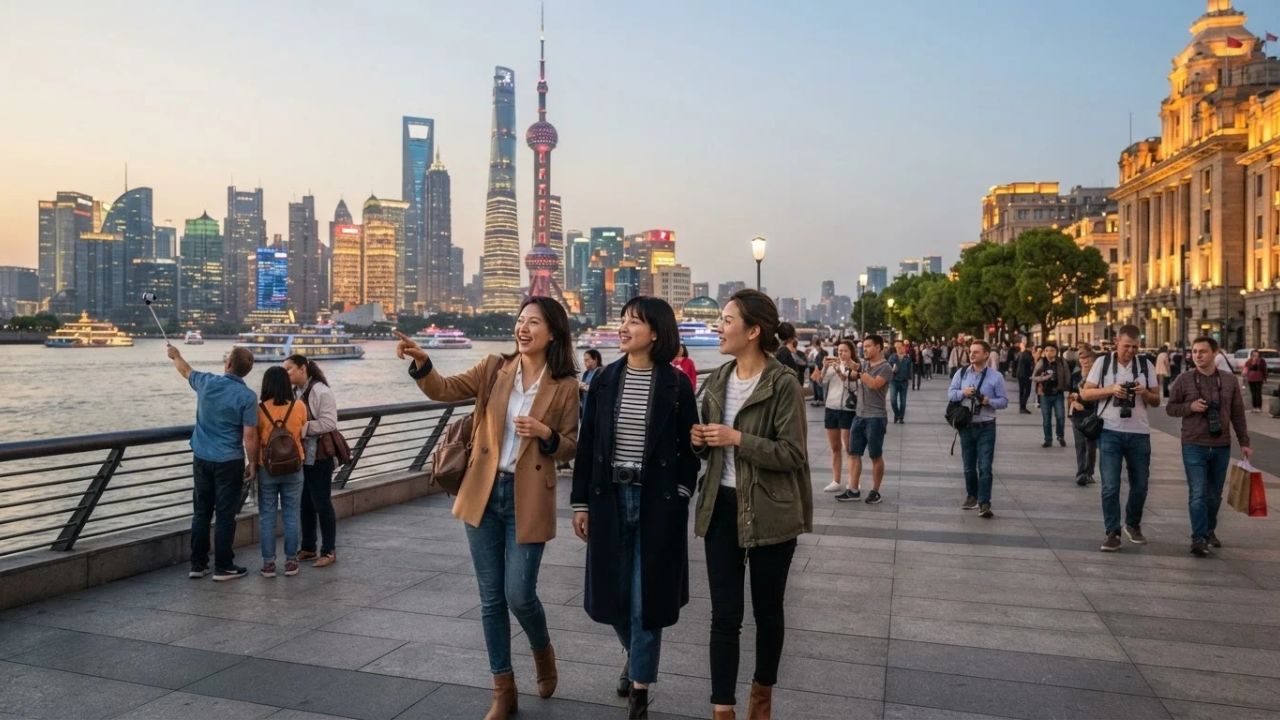
Shanghai welcomed 6.1868 million international inbound visitors between January and July 2026—a 27.9% year-on-year surge—with foreign arrivals jumping 30.0% to 4.8058 million as visa-free policies, expanded flight routes, and digital payment integrations draw global travelers back to China’s premier metropolis. Official data from the Shanghai Municipal Administration of Culture and Tourism reveals that international demand is outpacing the city’s broader domestic market, generating RMB543.326 billion in cultural and tourism consumption during the first half of the year across 313 million total visits.
The international resurgence is driven by a balanced combination of regional Asian travelers and accelerating long-haul markets. While South Korea, Russia, the United States, Thailand, and Malaysia stand as Shanghai's top five foreign source markets—bolstered by 5.0215 million overnight foreign stays in the first half of 2026 (up 31.19%)—surging arrivals from Canada (up 54.79%), the United Kingdom (up 45.51%), Australia (up 43.26%), and Indonesia (up 81.52%) demonstrate that Western and Oceanic explorers are embracing the city's blend of futuristic architecture, historic Art Deco riverfronts, and refined culinary arts.
The Local Trend Revealed: Strategic Liberalization and Multi-Continental Inbound Demand
The rapid rebound of Shanghai’s inbound tourism represents the successful convergence of China’s national visa-free transit frameworks with local municipal hospitality modernization. In July 2026 alone, Shanghai processed 872,000 inbound visitors (up 28.1% year-on-year), including 654,300 foreign passport holders—an increase of 32.3% over July 2025. In addition to foreign entries, the city recorded 433,000 arrivals from Hong Kong and Macao and 948,000 from Taiwan between January and July.
Data from the first five months of 2026 outlines the geographic depth of this global influx:
- The Regional Asian Anchors: South Korea led foreign arrivals with approximately 447,500 visitors (following 909,100 in 2025), while Thailand contributed 243,700 (513,700 in 2025) and Malaysia supplied 222,100 (471,500 in 2025). Seamless regional short-haul flights and reciprocal visa exemptions have turned Shanghai into a favored weekend leisure and shopping gateway for Southeast and East Asian urbanites.
- The Trans-Pacific Long-Haul Rebound: The United States delivered around 252,300 visitors between January and May 2026 (building on 541,200 in 2025), maintaining an annual growth trajectory above 30%. Australian arrivals grew by 43.26% and Canadian visits expanded by 54.79%, signaling strong appetite for transpacific exploration.
- The Eurasian Surge: Russia emerged as Shanghai’s most explosive growth market, providing roughly 291,900 visitors from January to May and recording an extraordinary 132.05% year-on-year surge across the first half of 2026. Simultaneously, the United Kingdom recorded a 45.51% increase, proving that European travelers are returning in numbers unseen since 2019.
This multi-market expansion supported 59.558 million accommodation guests across Shanghai's hotel sector during the first half of 2026 (up 7.5%), proving that international visitors are dispersing widely across boutique heritage properties, riverside business hotels, and luxury international towers.
Cultural & Environmental Value: Shikumen Heritage and World-Leading Electric Transit
Beyond statistical milestones, Shanghai’s tourism revival demonstrates how high-density urban environments can balance rapid modernization with cultural preservation and green infrastructure:
Adaptive Reuse of Historic Shikumen Architecture
Rather than demolishing historic neighborhoods to make way for glass skyscrapers, municipal planners and conservation architects have led the adaptive restoration of Shikumen (stone-warehouse gate) architecture:
- Xintiandi and Tianzifang: These pedestrianized compounds preserve late-19th and early-20th-century lane houses (lilong), which combine Western neoclassical brick facades with traditional Jiangnan courtyard layouts. Today, these historic alleys house independent tea houses, design studios, and contemporary art galleries, protecting Shanghai’s distinct residential architectural identity.
- The Bund (Waitan) Heritage Corridor: Stretching along the western bank of the Huangpu River, the Bund’s 52 historic European-style buildings—dating from the 1920s and 1930s—are strictly conserved under municipal heritage ordinances, providing visitors with a living museum of global Art Deco and Beaux-Arts architecture.
Zero-Emission Public Mobility
Shanghai operates the world’s most extensive rapid rail transit network, encompassing more than 800 kilometers of electrified track across 20 metro lines. International travelers can traverse the entire municipality—from Pudong International Airport (PVG) to Hongqiao Railway Station (SHA)—swiftly and affordably on zero-emission electric subway trains and the magnetic levitation (Maglev) train, eliminating the need for fossil-fuel highway taxis. Furthermore, tens of thousands of shared electric bicycles and electric city buses ensure that inner-city travel produces a minimal carbon footprint.
Visitor Insider Tips: Navigating Modern Shanghai with Ease
Visiting Shanghai in 2026 is smoother and more accessible than ever, provided travelers take advantage of recent technological updates and local customs:
Frictionless Mobile Payments and Digital Navigation
- Link Foreign Credit Cards to Alipay and WeChat Pay: The historical friction of digital payments in China has been resolved. International visitors can download Alipay or WeChat and link their international Visa, Mastercard, or American Express credit cards directly without needing a Chinese domestic bank account. This enables seamless payment at street-food stalls, metro turnstiles, high-speed rail counters, and convenience stores.
- The "Shanghai Pass" Multi-Modal Transit Card: For travelers who prefer a physical card, purchase the tourist-focused Shanghai Pass upon arrival at Pudong or Hongqiao airports. This stored-value contactless card can be tapped on subways, city buses, Huangpu River ferries, and at major tourist attractions like Shanghai Tower and the Yu Garden.
- Digital Maps and VPN Connectivity: Standard Google services remain restricted across domestic cellular networks in mainland China. Ensure you install a certified international eSIM with built-in data roaming (which bypasses local firewall restrictions) before landing, and download bilingual mapping applications like Apple Maps or Amap (Gaode) for real-time transit routing.
Seasonal Timing and Golden Week Warnings
- The Autumn Sweet Spot (September to November): Autumn brings crisp, sunny days with daytime temperatures averaging 65°F to 75°F (18°C to 24°C), low rainfall, and the peak harvest of legendary Yangcheng Lake hairy crabs. Spring (late March to mid-May) provides another pleasant window with blooming cherry blossoms in Gucun Park.
- Avoid National Golden Weeks: Strictly avoid traveling during the National Day Golden Week (October 1 to 7) and the Spring Festival (Lunar New Year), when hundreds of millions of domestic holidaymakers fill train stations, airports, and heritage sites across China.
Under-the-Radar Urban Gems
- The Former French Concession Tree-Lined Avenues: Wander the quiet residential shaded sidewalks of Fuxing Road, Wukang Road, and Anfu Road beneath arching London plane trees. Explore historic garden villas once occupied by revolutionary figures, tucked-away specialty coffee roasteries, and quiet vinyl record boutiques.
- Duoyun Books on the 52nd Floor: Located inside the monumental Shanghai Tower in Lujiazui, this soaring bookstore perches 239 meters above the city. Sip pour-over coffee while browsing books in a minimalist cloud-like interior with floor-to-ceiling vistas overlooking the Bund and the Huangpu River.
- Morning Strolls in Fuxing Park: Visit this 1909 French-style park at 07:00 AM to observe traditional Shanghainese neighborhood life: retirees practicing elegant Tai Chi, calligraphers painting ephemeral water characters on stone pathways, and ballroom dancers practicing under the morning sun.
Shanghainese Gastronomy: Savoring Jiangnan Flavors and Street Comforts
Shanghai’s culinary tradition (Benbang cai) is famous for its sweet-savory balance, rich dark soy reductions, and delicate freshwater river seafood:
Iconic Street Delicacies
- Authentic Nanxiang Xiaolongbao: The definitive culinary rite of passage. These delicate steamed soup dumplings are filled with seasoned minced pork and a rich, gelatin-rich broth that melts into boiling liquid inside thin, pleated dough skins. Eat them carefully: lift the dumpling by its top pleat onto a ceramic spoon, nibble a small hole in the side to release the steam, sip the savory broth, then dip the dumpling in aged Chinkiang black vinegar with slivers of fresh ginger.
- Crispy Shengjianbao: Thicker, yeast-leavened buns filled with pork and scalding broth, pan-fried in giant cast-iron skillets until the bottoms turn into a crackling, golden-brown crust, garnished with toasted sesame seeds and chopped scallions.
- Scallion Oil Noodles (Congyou Banmian): A minimalist masterpiece. Fresh wheat noodles are tossed in a fragrant, dark sauce created by slow-frying fresh spring scallions in oil until caramelized and crisp, blended with dark soy sauce and a pinch of sugar.
Classic Regional Fare
- Shanghainese Red-Braised Pork Belly (Hongshao Rou): Tender cubes of succulent pork belly braised with Shaoxing rice wine, dark soy sauce, and crystalline rock sugar until the meat becomes fork-tender and coated in a glistening, mahogany glaze.
- Seasonal Yangcheng Lake Hairy Crab (Dazha Xie): Highly prized during October and November, these sweet freshwater crabs are steamed whole with ginger and perilla leaves, then dipped in warmed sweet vinegar to highlight the rich, golden roe and tender claw meat.
Tourism Outlook: Reaffirming Shanghai as a Global Gateway
With international arrivals exceeding 6.18 million in the first seven months of 2026, Shanghai is demonstrating that open borders, modern digital infrastructure, and cultural storytelling form an unbeatable tourism formula. As global travelers seek sophisticated destinations that offer both futuristic dynamism and deep cultural heritage, Shanghai provides a safe, welcoming, and endlessly fascinating window into modern China.
By embracing diverse international visitor markets—from neighboring Northeast and Southeast Asia to long-haul travelers across North America, Europe, and Australia—Shanghai continues to redefine what an international 21st-century metropolis can be. In this historic port city where the historic Huangpu River reflects both 19th-century stone customs houses and soaring 21st-century towers, the future of global travel has decisively arrived.
Related Travel Guides
- Thailand and Uzbekistan Lead Asian Tourism Realignment: Visa Liberalization, Transit Corridors, and Silk Road Connectivity
- United Airlines Expands Global Reach: San Francisco to Sapporo Nonstop Headlines Major 2026 International Push
- Australian Travel Surges to Record 12.71 Million Departures: Bali, Japan, and New Zealand Dominate Post-Pandemic Escapes
Disclaimer
This article is for informational and educational purposes only. It does not constitute legal, financial, or professional advice. While we strive to provide accurate and up-to-date information, travel policies, regulations, and conditions change rapidly. Always verify information with official sources before making travel decisions. Nomad Lawyer makes no representations about the accuracy, reliability, completeness, or suitability of the information provided. Readers should consult qualified professionals for advice specific to their circumstances. The views expressed in this article are those of the author and do not necessarily reflect the views of Nomad Lawyer.
Raushan Kumar
Founder & Lead Developer
Full-stack developer with 11+ years of experience and a passionate traveller. Raushan built Nomad Lawyer from the ground up with a vision to create the best travel and law experience on the web.
Learn more about our team →