
Sydney Airport Tower Shutdown Plan Raises Travel Concerns as Australia Heads Into Peak Tourism Season
Sydney Airport Tower Shutdown Plan Raises Travel Concerns as Australia Heads Into Peak Tourism Season

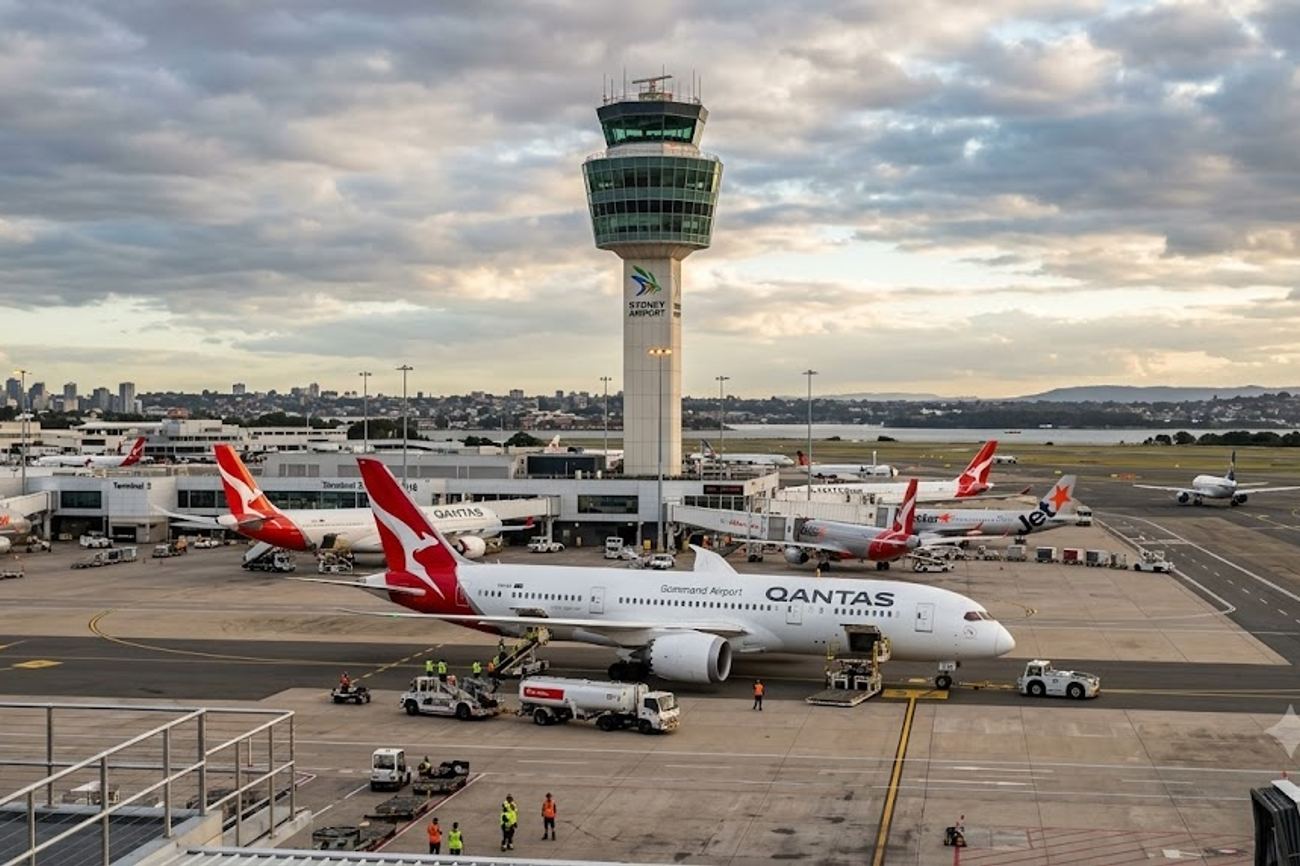
Image generated by AI
Sydney Airport handled 42.54 million passengers in 2025, a 2.7 per cent increase over 2024, yet this growth is now colliding with a critical labor deficit in air traffic control. The reported proposal to shut down the Sydney Airport control tower during overnight hours is not a sign of declining demand, but a desperate strategic pivot to mitigate staffing shortages that have already triggered thousands of flight cancellations and delays. As the busiest international gateway in Australia, Sydney is currently attempting to balance record-breaking passenger volumes against a shrinking pool of available air traffic controllers.
The Operational Crisis in Numbers
The instability at Sydney Kingsford Smith Airport is a direct result of a gap between infrastructure capacity and human capital. On 11 September 2026, this friction point became evident when a shortage of controllers forced immediate traffic-flow restrictions. The data from that single day is telling: 14 inbound flights were cancelled and delays surged past the one-hour mark. This was not a systemic failure of the airport's physical assets, but a failure of staffing levels to meet operational demand.
The stakes for the current quarter are exceptionally high. Between 21 September and 11 October 2026, airport forecasts indicate a volume of 2.67 million passengers. The pressure on the air traffic control (ATC) system will peak on 1 October for international arrivals and 2 October for domestic movements. When Airservices Australia reduces traffic levels to protect safety, the resulting "capacity reduction" creates a ripple effect. A single delayed arrival does not just affect one aircraft; it disrupts airline rotations, compromises connecting services, and invalidates downstream tourism logistics including hotel transfers and cruise departures.
To counter this, Airservices Australia has implemented several recovery measures over the last 18 months:
- The endorsement of 8 new Sydney tower controllers.
- The installation of a new Sydney Tower simulator to accelerate training.
- The creation of a larger standby pool to reduce reliance on overtime and stabilize rosters.
Despite these efforts, the proposal reported on 17 September 2026 to close the tower overnight suggests that current recruitment and training speeds are not keeping pace with the recovery of global travel demand.
Comparative Market Context: Growth vs. Stability
The tension in Sydney is highlighted by the disparity between passenger growth and operational reliability. While the International Air Transport Association (IATA) has tracked a global return to pre-pandemic capacity, Sydney's growth has been particularly aggressive in key Asian markets.
The fourth quarter of 2025 serves as the benchmark for this surge. During that period, Sydney Airport managed 11.41 million passengers, with international traffic hitting a record 4.62 million—a 5.9 per cent increase year-over-year. The growth is not uniform across all regions, but is heavily concentrated in high-volume corridors.
| Market Segment (Q4 2025) | Year-over-Year Growth | Total International Passengers (Q4) |
|---|---|---|
| South Korean Passport Holders | +15.3% | Part of 4.62 Million |
| Chinese Passport Holders | +12.2% | Part of 4.62 Million |
| Japanese Passport Holders | +8.3% | Part of 4.62 Million |
| United Kingdom Passport Holders | +7.4% | Part of 4.62 Million |
| Overall International Traffic | +5.9% | 4.62 Million |
When comparing these figures to the broader economic impact, the fragility of the ATC system becomes a macro-economic risk. Data from Destination NSW and Tourism Research Australia indicates that in the year ending March 2026, Sydney hosted 67.5 million visitors who spent $34.7 billion. Of this, domestic tourism contributed 63.6 million visitors and $20.8 billion in spending. Any systemic instability at the primary gateway threatens a multi-billion dollar revenue stream.
Practical Traveler Advisory and Strategic Insights
For the individual traveler, the data suggests that "scheduled" arrival and departure times at Sydney Airport are currently less reliable than historical norms. The staffing constraints at Airservices Australia mean that capacity can be throttled without warning to maintain safety.
Actionable Booking Advice:
- Buffer Your Connections: If you are transiting through Sydney to a domestic destination or an international onward flight, a minimum connection time (MCT) of 3-4 hours is now highly recommended. The 11 September disruptions prove that a single ATC shortage can trigger immediate cancellations of inbound flights.
- Avoid Peak-Day Transitions: With peaks forecasted for 1 October (International) and 2 October (Domestic), avoid scheduling tight transfers or high-stakes appointments (such as cruise departures) within 24 hours of these dates.
- Monitor Flight Status Early: Because capacity reductions often happen in real-time based on controller availability, check flight status 6-12 hours before departure.
- Travel Insurance is Mandatory: Ensure your policy covers "travel delay" specifically for ATC or staffing issues, as the current volatility in Sydney increases the probability of a claim.
Forward Projection: The Reliability Gap
The trajectory of Sydney's aviation sector indicates a widening "reliability gap." While the physical infrastructure and airline seat capacity are expanding—evidenced by the 2.7 per cent increase to 42.54 million passengers in 2025—the human infrastructure is lagging.
If the proposed overnight tower closure is implemented, it may provide temporary relief by allowing Airservices Australia to redeploy controllers to peak daytime hours. However, this is a tactical fix for a strategic problem. According to Statista, global aviation staffing shortages are a systemic trend, but Sydney's position as a primary hub makes it more susceptible to "cascading failures."
We expect to see a continued trend of "capacity throttling" during the 2026 holiday seasons. Until the standby pool of controllers is fully scaled and the new simulator training graduates a significant cohort of certified staff, the risk of delays will remain elevated regardless of how many aircraft airlines add to the schedule.
FAQ: Sydney Airport ATC Trends 2026
Will flight prices increase due to these staffing shortages? Directly, no. However, if airlines face increased operational costs due to delays and disrupted rotations, these costs are typically passed to the consumer over time through higher base fares.
Is it a good time to book travel to Sydney in Q4? Yes, but with caution. Demand is record-high, particularly from Asia. Book your flights, but build significant time buffers into your itinerary to account for potential ATC-related delays.
Which airlines are most affected by the controller shortages? All carriers operating out of Sydney are affected, as ATC restrictions apply to the airport's total arrival and departure rates, regardless of the airline's individual staffing levels.
Does the tower closure mean the airport is shutting down? No. The proposal concerns overnight hours (typically 11pm to 6am), a period already governed by a statutory curfew. Daytime operations will continue as normal, though they remain subject to staffing-related capacity limits.
Reliability is the new luxury in global aviation; at Sydney Airport, the data shows that seats are plentiful, but the people to move them are not.
Related Travel Guides
- Australia Travel Demand Rises as Qantas and Jetstar Add Thousands of Seats for AFL Grand Final Rush
- Hong Kong Airlines Supports Five-Year Plan as Carrier Targets Stronger Routes, Smart Travel and Aviation Growth
- IndiGo Raises Passenger Charges in India as Travellers Pay More for Infant Travel, Baggage and Priority Services
Disclaimer
This article is for informational and educational purposes only. It does not constitute legal, financial, or professional advice. While we strive to provide accurate and up-to-date information, travel policies, regulations, and conditions change rapidly. Always verify information with official sources before making travel decisions. Nomad Lawyer makes no representations about the accuracy, reliability, completeness, or suitability of the information provided. Readers should consult qualified professionals for advice specific to their circumstances. The views expressed in this article are those of the author and do not necessarily reflect the views of Nomad Lawyer.
Raushan Kumar
Founder & Lead Developer
Full-stack developer with 11+ years of experience and a passionate traveller. Raushan built Nomad Lawyer from the ground up with a vision to create the best travel and law experience on the web.
Learn more about our team →