
IndiGo Raises Passenger Charges in India as Travellers Pay More for Infant Travel, Baggage and Priority Services
IndiGo Raises Passenger Charges in India as Travellers Pay More for Infant Travel, Baggage and Priority Services

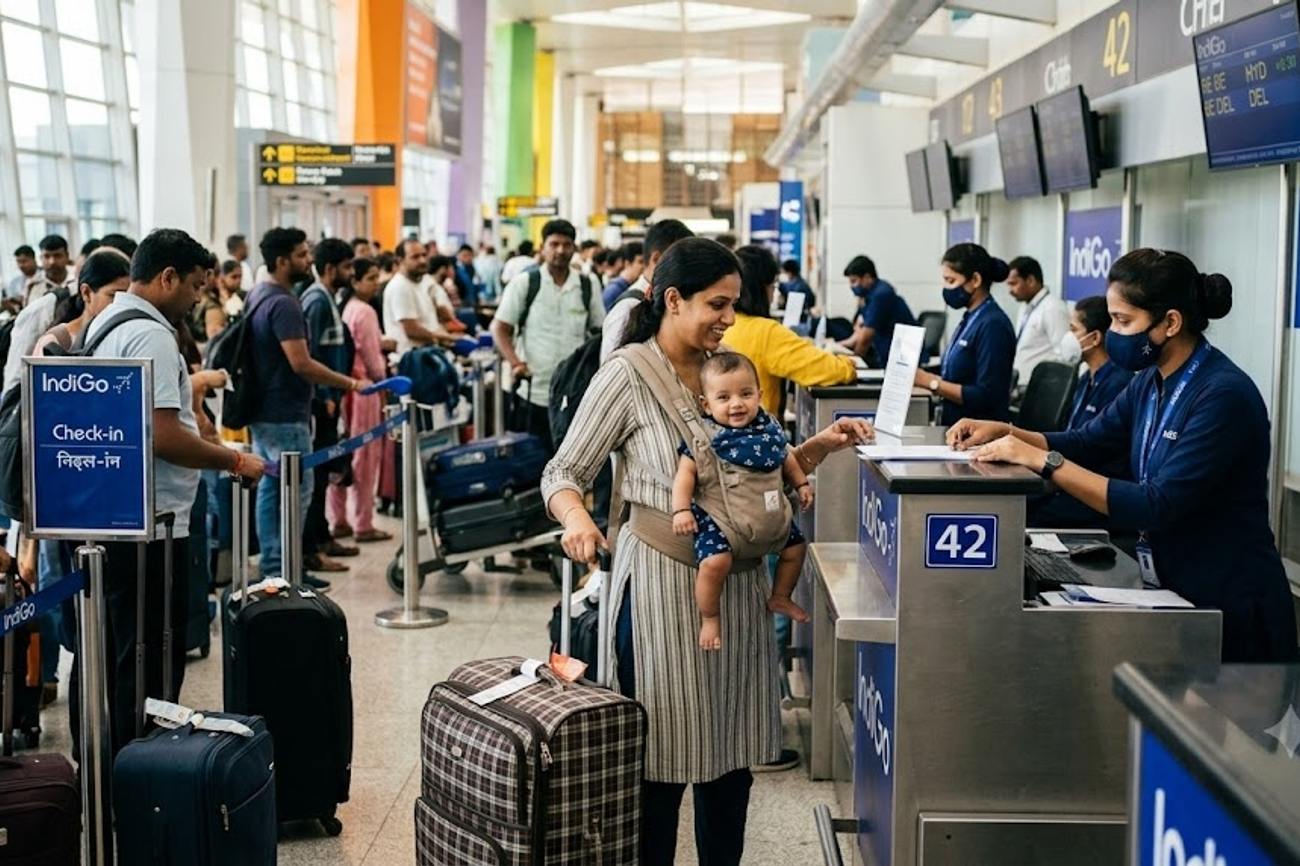
Image generated by AI
A ₹1,000 increase in domestic infant travel fees marks a significant shift in the ancillary pricing strategy of India's largest carrier. This adjustment, coupled with a rise in excess baggage rates to ₹800 per kilogram, signals a broader trend where the "headline fare" becomes an increasingly unreliable metric for calculating the actual cost of air travel.
The Mechanics of Ancillary Revenue Shifts
The recent pricing adjustments by IndiGo do not target the base airfare, which remains unchanged for the standard passenger. Instead, the airline has recalibrated its "unbundled" services—the optional add-ons that passengers select to customize their experience. In the low-cost carrier (LCC) business model, this strategy allows the airline to maintain competitive base prices in search engines while recovering margins through supplementary fees.
For the millions of passengers navigating India's domestic network, these changes transform the booking process from a simple ticket purchase into a complex cost-benefit analysis. The shift is particularly acute for specific demographics: families with young children, heavy packers, and business travelers who rely on expedited airport processing. By increasing the cost of these essential "extras," the airline effectively raises the floor price for any traveler who cannot fit their journey into the most basic, stripped-down service tier.
Breakdown of Revised Service Costs
The financial impact of these changes is most visible when comparing previous rates against the current structure. The following data outlines the precise increases across five key service categories:
| Service Category | Previous Charge | Updated Charge | Net Increase |
|---|---|---|---|
| Infant Travel Fee (Domestic) | ₹2,000 | ₹3,000 | +₹1,000 |
| Excess Baggage (per kg) | ₹700 | ₹800 | +₹100 |
| Priority Check-in & Boarding | ₹450 | ₹650 | +₹200 |
| Travel Certificate | ₹200 | ₹300 | +₹100 |
| Unaccompanied Minor Service | ₹5,000 | ₹5,999 | +₹999 |
The most aggressive hike is seen in the Unaccompanied Minor service and the infant travel fee, both of which see increases nearing or exceeding 20%. For a family traveling with two infants, the infant fees alone now total ₹6,000 per sector, a significant jump that occurs before a single adult ticket or kilogram of luggage is accounted for.
Expert Analysis: The "Hidden" Cost of Unbundling
For travelers booking these routes, the direct consequence is the erosion of price transparency. When an airline increases ancillary fees while keeping base fares steady, they are essentially shifting the cost of operations onto the most "inelastic" customers—those who have no choice but to pay for the service, such as parents of infants or passengers with medical equipment requiring extra baggage.
The pricing pressure this creates means that the competitive gap between LCCs and full-service carriers may narrow for certain passenger profiles. If a traveler requires priority boarding, extra luggage, and infant services, the cumulative "add-on" cost may eventually rival the price difference of a premium airline that includes these amenities in the base fare.
Furthermore, the increase in excess baggage fees to ₹800 per kg serves as a nudge toward prepaid baggage bundles. Airlines utilize these incremental hikes to discourage airport-counter payments, which are administratively expensive, and push passengers toward digital pre-purchases. This allows the airline to better predict weight loads and optimize fuel calculations, while simultaneously securing revenue before the passenger even arrives at the terminal.
IndiGo has implemented updated pricing structures for ancillary services, including increased fees for infant travel, excess baggage, and priority boarding. Passengers are encouraged to review the latest IndiGo official fare rules to manage their booking costs and avoid unexpected charges at the airport.
From a regulatory perspective, this aligns with global trends tracked by the International Air Transport Association (IATA), where ancillary revenue has become a primary driver of profitability in an era of volatile fuel prices and thin margins. By targeting specific services rather than the general fare, IndiGo can maintain its market share in the budget segment while increasing the average revenue per passenger.
Key Takeaways
- Infant Costs: Domestic travel for children aged three days to two years now costs ₹3,000 per sector, requiring parents to budget an additional ₹1,000 per child.
- Baggage Penalties: Every kilogram over the allowed limit now carries a ₹800 charge, making prepaid baggage options a financial necessity for heavy packers.
- Expedited Travel: Priority check-in and boarding have seen a 44% increase, rising from ₹450 to ₹650.
- Specialized Care: The cost for unaccompanied minors has risen to ₹5,999, adding nearly ₹1,000 to the previous service fee.
- Booking Strategy: Total journey cost now deviates significantly from the advertised fare; a full audit of ancillary needs is required before confirming any booking.
FAQ: IndiGo Passenger Charges 2024
Do these price increases apply to the basic flight ticket? No. The base airfare remains unchanged. These increases only apply to optional supplementary services such as excess baggage, infant fees, and priority boarding.
What are the rules for infants flying with IndiGo? Infants (above three days and up to two years) must be accompanied by an adult, with a limit of one infant per adult. They do not receive a separate seat and require valid age proof.
How can I avoid paying the higher excess baggage fees at the airport? Passengers should check for prepaid baggage options during the booking process or via the app, as airport-counter rates are typically the most expensive way to handle extra luggage.
Is priority check-in and boarding mandatory for all passengers? No, these are optional services. Passengers who do not wish to pay the revised ₹650 fee can continue to use the standard check-in and boarding procedures at no extra cost.
The era of the "cheap flight" is being replaced by the era of the "customized fare," where the true cost of travel is hidden in the checkboxes.
Tags: IndiGo, India Domestic Aviation, Ancillary Pricing 2024, Indian Air Travel Costs, LCC Revenue Models
Related Travel Guides
Disclaimer
This article is for informational and educational purposes only. It does not constitute legal, financial, or professional advice. While we strive to provide accurate and up-to-date information, travel policies, regulations, and conditions change rapidly. Always verify information with official sources before making travel decisions. Nomad Lawyer makes no representations about the accuracy, reliability, completeness, or suitability of the information provided. Readers should consult qualified professionals for advice specific to their circumstances. The views expressed in this article are those of the author and do not necessarily reflect the views of Nomad Lawyer.
Raushan Kumar
Founder & Lead Developer
Full-stack developer with 11+ years of experience and a passionate traveller. Raushan built Nomad Lawyer from the ground up with a vision to create the best travel and law experience on the web.
Learn more about our team →