Seattle-Tacoma and US Hubs Revolutionize Terminals: Guest Passes, Craft Dining, and Post-Security Retail Guide 2026


At Seattle-Tacoma International Airport, hundreds of visitors walk through TSA checkpoints each morning without a boarding pass, heading straight to Concourse C for local microbrews and fresh Dungeness crab. What once seemed impossible under strict post-2001 security protocols has become one of the most innovative shifts across American aviation. Forward-thinking hub terminals across the United States have launched guest pass initiatives for non-ticketed visitors, transforming transit gates into civic gathering spots where families share unhurried farewell meals, remote workers set up laptops with tarmac views, and local aviation fans browse regional outposts.
This evolution marks a creative rethinking of airport facilities. Major hubs including Seattle-Tacoma (SEA), Orlando International (MCO), San Diego International (SAN), and Detroit Metropolitan Wayne County (DTW)—alongside new pilots like Gateside by TSA PreCheck—are proving that terminals can serve as regional culinary and cultural attractions.
Beyond Boarding Passes: The Rise of Airport Visitor Programs
For more than two decades, airport checkpoints stood as firm boundaries separating passengers from non-travelers. Saying goodbye meant lingering outside glass doors at departures drop-off, while airport concessions served only ticketed travelers. Today, modern digital verification and vetted screening workflows have reconnected communities with air terminals without compromising security rules administered by the Transportation Security Administration.
The visitor pass model relies on automated municipal airport systems working in coordination with federal oversight. The SEA Visitor Pass in Washington and the Experience MCO Visitor Pass in Central Florida led this movement. Guests apply online between 1 and 7 days ahead, submitting their legal full name, date of birth, and gender for automated screening against federal passenger lists. Upon approval, guests receive a digital QR pass on their smartphone.
Similar programs have taken root across the country. Southern California guests use the SAN Pass at San Diego International Airport, while Michigan visitors access the McNamara and Evans terminals with the DTW Destination Pass in Detroit. The Gateside by TSA PreCheck pilot tests expedited access for vetted visitors visiting airport conference rooms and meeting spaces.
Entry rules remain firmly structured. Passes specify scheduled entry periods, and visitors must show matching government photo identification, such as a state REAL ID or passport. Non-ticketed guests undergo identical physical screening to ticketed travelers, including bag X-rays and imaging scanners.
Inside the Hubs: Regional Culture and Dining Beyond Security
The appeal of these programs lies in how hubs showcase regional character instead of generic chains. At Seattle-Tacoma, Concourse C and the North Satellite showcase Pacific Northwest culture. Massive windows frame airfield operations against Mount Rainier, while local taps pour regional IPAs alongside fresh oysters and Puget Sound clam chowder. Acoustic musicians perform under the Port of Seattle live music initiative, adding local warmth to the terminal floor.
At Orlando International Airport, Terminal C functions as an airy conservatory with native palms and digital kinetic displays portraying Florida waterways. Using an Experience MCO pass, grandparents and relatives can accompany young flyers directly to gates, share lunch at Southern-style kitchens, and browse Florida confectionery shops before flights depart.
At San Diego International Airport, the SAN Pass opens access to bayside views along Terminal 2. Visitors watch jetliners depart toward the Pacific Ocean while enjoying Baja-style tacos and craft ales from local breweries. In the Midwest, Detroit Metro Airport delights visitors with its indoor red ExpressTram skimming beneath the McNamara concourse, an illuminated underground light tunnel connecting Concourses A, B, and C, and a choreographed water feature, offering a relaxed afternoon exploring regional Michigan delicacies.
Terminal Retail as Civic Plazas: The Economics of Airside Access
Airports are capital-intensive operations seeking dependable income beyond fluctuating airline schedules. Aeronautical revenues like landing fees and aircraft parking charges remain subject to carrier shifts. Today, non-aeronautical streams—such as restaurants, retail shops, and terminal services—generate over 40% of total airport revenue, up from 31% a decade ago.
Welcoming non-ticketed guests provides valuable foot traffic during off-peak periods. Operating data shows visitor pass initiatives increase airside foot traffic by +4% to +9% and boost off-peak concession sales by +12% to +18%.
| Airport Facility & Program | Advance Application Window | Daily Entry Quota | Average Visitor Spend | Key Cultural & Terminal Features |
|---|---|---|---|---|
| Seattle-Tacoma (SEA) SEA Visitor Pass |
1 to 7 Days | Dynamic capacity cap | $28 to $42 USD | Pacific Northwest craft beer bars, artisan oyster dining, live Pacific Northwest music stages |
| Orlando International (MCO) Experience MCO Visitor Pass |
1 to 7 Days | Dynamic capacity cap | $28 to $42 USD | Terminal C palm atrium, high-definition digital kinetic art walls, regional Florida citrus confections |
| San Diego International (SAN) SAN Pass |
1 to 7 Days | Timed daily slots | $28 to $42 USD | Coastal outdoor observation decks, Baja-inspired taquerias, craft brewery taprooms |
| Detroit Metro (DTW) DTW Destination Pass |
1 to 7 Days | Timed daily slots | $28 to $42 USD | Indoor express tram transit, choreographed water fountain installations, Michigan artisan goods |
Visitor monitoring shows an average dwell time of 2.5 hours. During their stay, non-ticketed guests spend between $28 and $42 USD per person on dining, artisan gifts, and specialty goods. Over holiday weekends, pass quotas routinely hit fill rates above 85%, confirming strong local demand for terminal dining.
Navigating Security Protocols: 7-Day Windows, REAL ID, and 3-1-1 Liquid Rules
Accessing airside facilities without a flight ticket requires following standard security guidelines. Visitors should apply early via official portals such as the Port of Seattle - SEA Airport or Orlando International Airport. Reservations open 1 to 7 days before entry and fill quickly during holidays.
The most frequent complication involves liquids. Many visitors mistakenly believe non-flying status exempts them from checkpoint rules. TSA screeners enforce the 3-1-1 liquids rule on all visitors: liquids, gels, and pastes must be in containers of 3.4 ounces (100 ml) or less inside a clear quart-sized bag. Outside coffees and large bottles are prohibited.
Keep these practical rules in mind before heading to the terminal:
- Submit your request 1 to 7 days prior to visiting; same-day walk-up access is rarely accommodated.
- Bring a compliant identification document such as a REAL ID driver license or valid passport; photos on smartphones are not accepted.
- Observe the TSA 3-1-1 liquids rule; full-sized liquids cannot clear security checkpoints.
- Avoid oversized bags; non-flyers should carry only small daypacks, laptop sleeves, or handbags.
- Inquire about parking validation, as select airports offer fee discounts when dining at participating airside restaurants.
- Plan visits between 10:30 AM and 2:00 PM or after 7:30 PM to avoid morning departure peaks.
Dynamic Capacity Throttles and Airport Revenue Resilience
To protect flight passengers, airport operators use automated capacity throttles. Queue management sensors monitor security line waiting times, airline delay banks, and security alert levels. If checkpoint lines back up during unexpected flight delays, guest pass entries pause automatically until checkpoint wait times drop to normal ranges.
This controlled approach gives airport retailers a predictable audience while protecting core flight operations. By creating welcoming spaces that blend local flavors with aviation sightlines, airports are turning transit hubs into community destinations.
Frequently Asked Questions: Airport Visitor Passes
How far in advance must I apply for an airport guest pass?
You must submit an application between 1 and 7 days before your visit. Daily quotas fill quickly during holiday weekends.
Do TSA liquid restrictions apply if I do not have a flight ticket?
Yes. Every non-ticketed visitor undergoes standard TSA screening. Liquids, aerosols, and gels must measure 3.4 ounces (100 ml) or less within a clear quart bag.
Can I accompany an unaccompanied minor or elderly relative directly to the gate?
Yes. Approved visitor pass holders can walk family members through security straight to departure gates and wait together until boarding starts.
What identification documents are required at the checkpoint?
You must present an original government-issued photo ID matching your application, such as a state REAL ID driver license or valid passport.
Transforming transit corridors into community hubs, airport visitor programs allow guests to experience local dining, live entertainment, and runway views without ever booking an airline seat.
Related Travel Guides
This article is for informational purposes. Flight routes, passenger regulations, visa rules, and transit advisories are subject to change by airlines and aviation authorities. Readers are advised to verify schedules and travel documentation with relevant carriers and border agencies before departure.
Related Stories
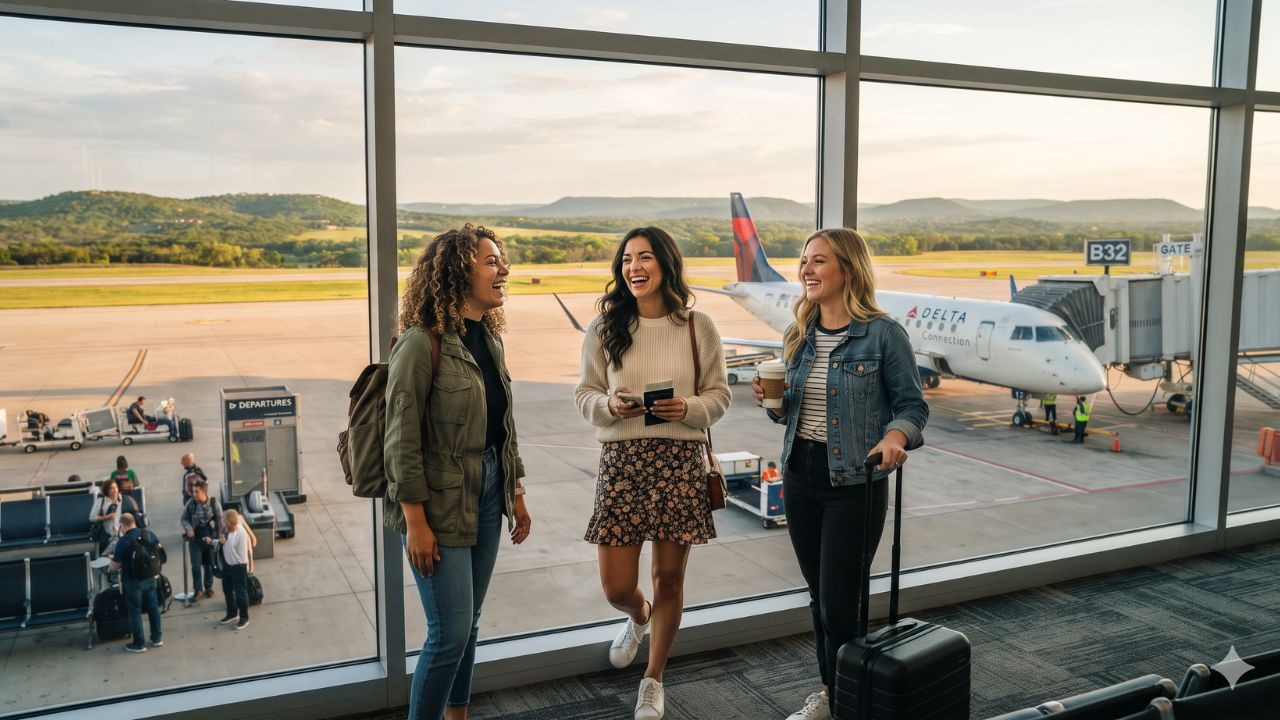
Austin to Northwest Arkansas Nonstop Flights: Delta Connects Texas Tech with Ozarks Culture and Outdoor Trails 2027

Air New Zealand Wins World's Best Airline 2026: Skynest Pods, Inflight Honors, and Aotearoa Travel Guide