Switzerland Follows Austria as Interlaken and Innsbruck Battle for Europe’s Ultimate Winter Adventure Travel Holiday

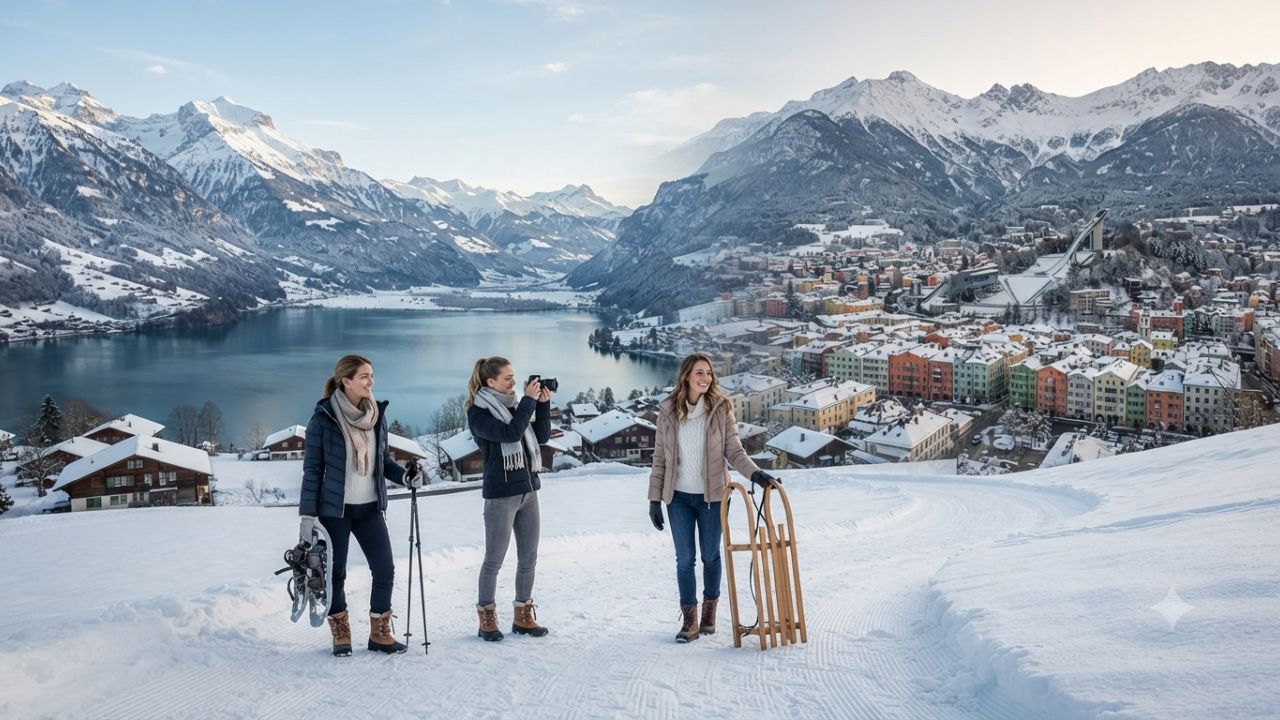
Image generated by AI
As European winter travel expands beyond traditional downhill skiing, Interlaken in Switzerland and Innsbruck in Austria are competing for leadership in multi-activity Alpine tourism. Official records reveal Austria generated 74.27 million winter overnight stays while Switzerland tallied 43.9 million annual hotel nights, underlining a massive structural demand for non-ski mountain outdoor experiences.
[INNSBRUCK, Austria, Oct 7, 2026] — With 74.27 million winter overnight stays recorded across Austria and 43.9 million annual hotel nights logged in Switzerland, a decisive shift is reshaping Alpine tourism across Central Europe. Winter vacationers are increasingly bypassing conventional ski-only packages in favor of broader outdoor adventure itineraries. At the forefront of this transformation, Interlaken in the Bernese Oberland and Innsbruck in Tyrol are offering two contrasting models for cold-weather mountain getaways.
Alpine Tourism Shifts Toward Multi-Activity Winter Experiences
While both destinations feature world-class mountain terrain, their operational frameworks serve distinct traveler profiles. Interlaken operates as a multi-hub nature sanctuary surrounded by Alpine lakes and high-altitude hiking trails, whereas Innsbruck functions as an urban sports hub with immediate access to high-altitude toboggan runs, Nordic skiing, and international transport links.
Market intelligence indicates that vacationers no longer measure Alpine value strictly by vertical ski drops. Modern travelers prioritize transport accessibility, regional transit passes, winter walking networks, and unconventional cold-weather activities such as glacier-fed lake kayaking and architectural sightseeing.
| Feature / Metric | Interlaken (Switzerland) | Innsbruck (Austria) |
|---|---|---|
| Country | Switzerland | Austria |
| Regional Setting | Bernese Oberland | Tyrol |
| Core Winter Appeal | Mountains, lakes, and mixed adventure | Alpine sport and city access |
| Non-Ski Strengths | Hiking, cycling, kayaking | Tobogganing, cross-country skiing, sightseeing |
| Holiday Style | Nature-led multi-activity trip | Sport-led Alpine city break |
Interlaken Leverages Bernese Oberland Scenery and Lake Thun Networks
Positioned between Lake Thun and Lake Brienz, Interlaken anchors the broader Holiday Region Interlaken within Switzerland’s Bernese Oberland. The destination expands the definition of a winter getaway by integrating water sports, snowshoeing, paragliding, and high-altitude sightseeing alongside traditional downhill skiing.
A prime example is the Niederhorn, which reaches an elevation of approximately 1,950 meters. The peak combines groomed ski slopes, winter walking routes, and dedicated sledging tracks featuring direct vantage points over Lake Thun and the Bernese Alps. This multi-tiered infrastructure ensures visitors maintain full activity options regardless of fluctuating snow cover at lower elevations.
| Interlaken Feature | Verified Information |
|---|---|
| Main Region | Bernese Oberland |
| Major Lakes | Lake Thun and Lake Brienz |
| Niederhorn Elevation | About 1,950 metres |
| Winter Activities | Skiing, hiking, sledging, snowshoeing, kayaking |
| Travel Positioning | Multi-activity Swiss Alpine destination |
Swiss Winter Trail Infrastructure Opens 220 Kilometers of Alpine Routes
To cater to non-skiers, local tourism authorities maintain an extensive network of 220 kilometers of winter walking paths across the Interlaken region. These groomed trails wind through mountain passes, alpine forests, traditional villages, and lakeside paths, making high-altitude landscapes accessible without specialized alpine ski gear.
In Aeschi, roughly 12 kilometers of prepared winter paths offer panoramic vistas toward Lake Thun and the distinct pyramid peak of the Niesen. Nearby, the mountain village of Habkern provides secluded walking trails through preserved Swiss landscapes. This extensive trail network appeals to mixed-ability travel groups, families, and outdoor photographers looking for low-impact mountain recreation.
| Winter Hiking Element | Interlaken Details |
|---|---|
| Regional Winter Network | 220 km |
| Aeschi Prepared Trails | Around 12 km |
| Landscapes | Mountains, forests, villages, and lake views |
| Suitable For | Mixed-ability winter visitors |
| Main Advantage | Activity possible without downhill skiing |
Lake Brienz Kayaking and Winter Cycling Diversify Swiss Adventure Products
Interlaken further sets itself apart from standard ski resorts through cold-season water sports. Official tourism operators confirm that guided winter kayaking runs regularly on Lake Brienz. Operating between November and April, operators like Hightide Kayak School outfit participants in thermal dry suits for half-day excursions across mirror-like waters surrounded by snow-covered peaks.
On land, winter cycling provides another non-ski itinerary option. Guided providers such as Yellow Velo operate 2.5-hour winter bicycle tours navigating through Interlaken, Unterseen, and Bönigen. These distinct offerings reinforce Interlaken's position as a year-round outdoor sports hub rather than a seasonal transit zone.
| Activity | Current Official Information |
|---|---|
| Winter Kayaking | Lake Brienz |
| Typical Format | Guided half-day experience |
| Seasonal Operation | November–April |
| Protective Equipment | Warm dry suit |
| Winter Cycling | 2.5-hour guided Interlaken route |
Innsbruck Blends Architectural Heritage With High-Altitude Austrian Sports
Innsbruck approaches Alpine tourism through a completely different structural design. As the provincial capital of Tyrol, the city integrates urban cultural assets, international rail hubs, and historic architecture directly with mountain sports facilities. Visitors can transition from urban dining and imperial palaces to high-altitude ski areas within minutes.
An iconic focal point of this hybrid identity is the Bergisel Ski Jump. Designed by renowned architect Zaha Hadid, the facility serves a dual purpose as a world-class FIS ski jumping venue and a tourist landmark complete with a 360-degree panoramic viewing deck and restaurant.
| Innsbruck Feature | Verified Information |
|---|---|
| Region | Tyrol |
| Destination Type | Alpine city |
| Winter Focus | Skiing and multi-sport recreation |
| Landmark | Bergisel Ski Jump |
| Added Appeal | Culture, architecture, and mountain access |
Tyrol Toboggan Runs and Nordic Skiing Expand Austrian Recreation Data
Beyond downhill slopes, the Innsbruck region hosts extensive alternative winter sports infrastructure. Official Tyrolean tourism data highlights the Kühtai toboggan track as the highest floodlit run in Tyrol, beginning at an altitude of approximately 2,020 meters. The 1.4-kilometer circuit requires an uphill walk of roughly 45 minutes and remains illuminated until 10:30 PM for night tobogganing.
Nordic sports infrastructure is equally developed, with almost 40 cross-country trails maintained across the Innsbruck municipality. In Rinn, the Panoramaloipe delivers 6.4 kilometers of trails reaching a high point of 928 meters, while the adjacent Golfloipe spans 5.7 kilometers with dual classic and skate-skiing tracks.
| Winter Sport | Innsbruck Information |
|---|---|
| Kühtai Toboggan Elevation | Approx. 2,020 m |
| Toboggan Route | 1.4 km |
| Approximate Ascent | 45 minutes |
| Night Operation | Floodlit until 10:30 pm |
| Cross-Country Offer | Almost 40 trails |
Innsbruck Airport Flight Schedules Provide Direct European Market Access
Transport logistics represent a significant point of comparison between the two destinations. Innsbruck features its own commercial gateway, Innsbruck Airport, which handles approximately 50 airlines over the course of a full year.
Flight tracking data and published airline timetables for the winter 2026/27 season confirm direct air services linking Innsbruck with major European origin markets, including London Gatwick, London Heathrow, Amsterdam, Vienna, and Düsseldorf. On the ground, Austrian Federal Railways (ÖBB) operates direct Railjet Xpress (RJX) train services connecting Innsbruck to Vienna on an hourly frequency.
| Transport Factor | Innsbruck |
|---|---|
| Local Airport | Yes |
| Airlines Handled Annually | Around 50 |
| London Links (Winter 2026/27) | Gatwick and Heathrow listed |
| Vienna Rail Frequency | Direct RJX every hour |
| Main Advantage | Direct city-to-Alps connectivity |
Swiss Federal Railways SBB Connects Interlaken to Major Air Hubs
Although Interlaken lacks a commercial airport inside its municipality, Swiss infrastructure minimizes travel friction through synchronized rail schedules. Swiss Federal Railways (SBB) runs direct long-distance trains from Interlaken Ost to Zürich, Bern, Basel, and Zürich Airport.
The direct SBB IC81 intercity line connects Interlaken Ost directly with Bern, Zürich Hauptbahnhof, and Zürich Airport terminals. Furthermore, SBB air-rail ticketing agreements for 2026 allow travelers to check baggage through from Grindelwald and Interlaken directly toward Zürich Airport, ensuring car-free accessibility for international visitors.
| Transport Factor | Interlaken |
|---|---|
| Local Commercial Airport | No |
| Direct Zürich HB Service | Yes |
| Direct Zürich Airport Connection | Yes |
| Direct Bern Connection | Yes |
| Key Strength | Integrated Swiss rail network |
Switzerland Hospitality Metrics Underline Interlaken Economic Footprint
National tourism data published by Switzerland’s Federal Statistical Office reveals that Swiss hotels logged 43.9 million overnight stays in 2025. Interlaken consistently secured its position among the nation's top ten hotel communes, accounting for approximately 0.9 million overnight stays over the twelve-month period.
Swiss hotels recorded a nationwide room occupancy rate of 56.8 percent, driven by 21.1 million domestic overnight stays alongside steady demand from international travelers across North America, Europe, and Asia. The average national hotel length of stay held firm at 2.0 nights.
| Swiss Tourism Indicator | 2025 Figure |
|---|---|
| Hotel Overnight Stays | 43.9 million |
| Interlaken Hotel Nights | Approx. 0.9 million |
| National Room Occupancy | 56.8% |
| Domestic Hotel Nights | 21.1 million |
| Average Hotel Stay | 2.0 nights |
Tyrol Winter Overnight Numbers Highlight Austria Mass Tourism Volume
Austria enters the winter competition backed by massive tourism volume. Statistics Austria recorded 74.27 million total overnight stays during the 2025/26 winter season, representing a notable year-over-year increase across 21.35 million total arrivals nationwide.
Tyrol served as the primary growth engine, capturing 26.87 million overnight stays and 6.28 million guest arrivals. Together, Tyrol and Salzburg accounted for over half of all winter overnights in Austria. International visitors comprised the vast majority of Austrian winter hotel demand, generating 57.56 million overnight stays.
| Austria Winter Tourism Indicator | 2025/26 Figure |
|---|---|
| National Overnight Stays | 74.27 million |
| National Arrivals | 21.35 million |
| Tyrol Overnight Stays | 26.87 million |
| Tyrol Arrivals | 6.28 million |
| Non-Resident Overnight Stays | 57.56 million |
Economic Impact Analysis of Multi-Sport Alpine Tourism Infrastructure
The comparative data illustrates how winter tourism revenue models are evolving beyond ski lift ticket sales. Destinations that invest in diverse infrastructure—such as floodlit tobogganing, winter walking networks, urban cultural centers, and seamless train connections—demonstrate greater resilience against variable snowfall patterns.
While ski operations remain a primary revenue driver, non-ski outdoor activities expand visitor demographics to include non-skiing companions, senior travelers, and adventure sports enthusiasts, maximizing hotel occupancy and local hospitality spending across both Swiss and Austrian regions.
Why This Matters: What It Means for Traveler Logistics and Itineraries
For the traveler, this head-to-head comparison changes how an Alpine winter vacation is booked and experienced:
- For non-skiers and mixed-ability groups: Interlaken provides a far superior alternative if members of your travel party do not ski. With 220 km of winter trails, Lake Brienz kayaking in thermal dry suits, and 2.5-hour cycling tours, full multi-day itineraries can be enjoyed without ever stepping on a ski slope.
- For short-break and city-break travelers: Innsbruck delivers unmatched logistical convenience. Having an international airport minutes from the city center handled by 50 airlines, combined with hourly ÖBB Railjet trains and urban dining alongside Zaha Hadid's Bergisel Ski Jump, makes it ideal for 3-to-4-day trips combining ski sports with museum culture.
- From a logistical and budget perspective: Interlaken relies heavily on Swiss SBB rail passes and air-rail luggage transfer systems, making car-free travel across the Bernese Oberland seamless despite the lack of a local airport. Conversely, Innsbruck offers lower friction for point-to-point flights directly into Tyrol.
Related Travel Guides
Switzerland Tourism Hits 43.9 Million Hotel Overnight Stays as European Travel Shifts Beyond Skiing
10 Best Alpine Winter Adventure Destinations in Europe, According to Reddit
This article is for informational purposes. Flight routes, passenger regulations, visa rules, and transit advisories are subject to change by airlines and aviation authorities. Readers are advised to verify schedules and travel documentation with relevant carriers and border agencies before departure.
Related Stories
Austria Joins European Nations in Deploying Smart Tourism Hubs, IoT Dispersal Algorithms, and Value-Driven Travel Frameworks to Combat Overtourism
Spain, France, Austria, and Thailand Top Global Winter Tourist Rankings as Seasonal Migration Surges