Austria Joins European Nations in Deploying Smart Tourism Hubs, IoT Dispersal Algorithms, and Value-Driven Travel Frameworks to Combat Overtourism

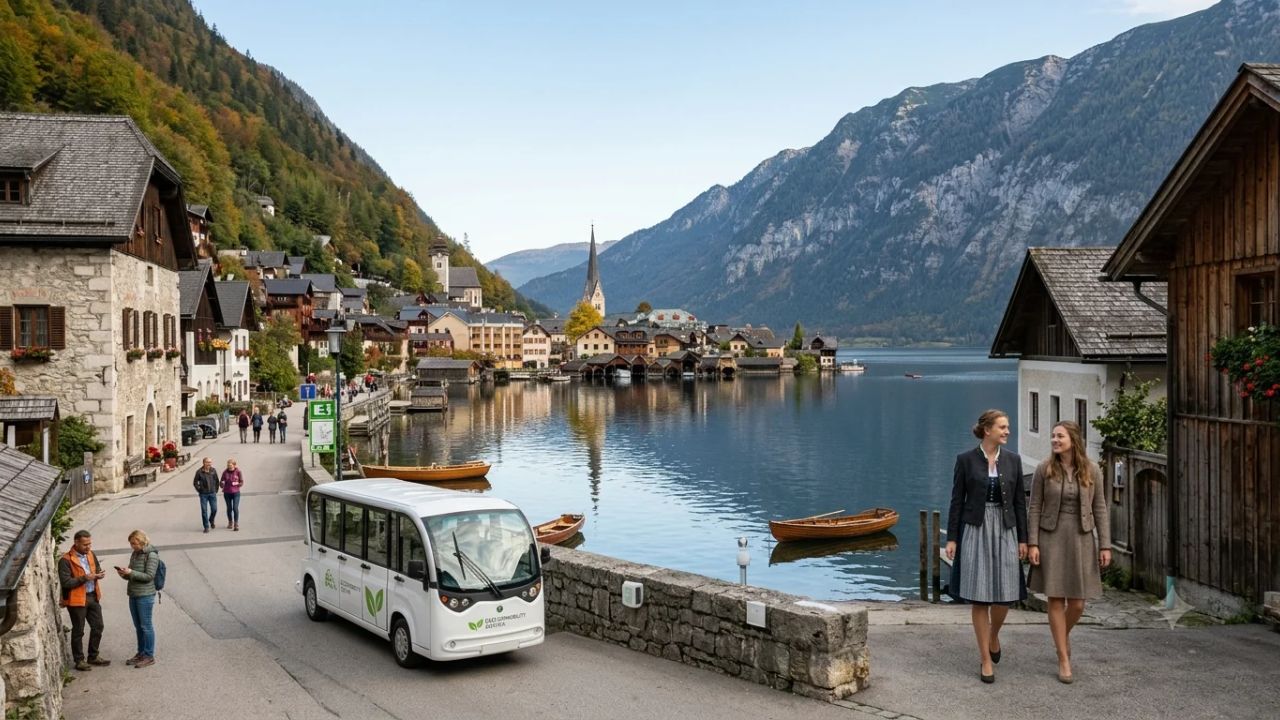
Austria has joined an expanding coalition of European destinations transforming travel management through the rollout of intelligent tourism hubs, predictive crowd-dispersal algorithms, and low-carbon transit networks designed to resolve historic overtourism bottlenecks. Driven by the formal adoption of the European Union Sustainable Tourism Strategy and guided by the new Power, Efficiency & Opportunity (PEO) Indices developed by the World Travel & Tourism Council (WTTC) and Oxford Economics, the continent is systematically replacing unconstrained volume targets with data-led spatial governance. With Austrian cultural bastions like Salzburg securing a prominent position on the European Commission’s 2027 smart tourism shortlist alongside alpine hotspots like Hallstatt, municipal authorities are deploying real-time pedestrian monitoring, integrated clean mobility cards, and non-invasive microclimate sensors. This technological mobilization across twelve European nations coincides with a decisive consumer migration toward value-driven destinations, where affordability and authenticity have generated double-digit arrival increases across Malta (+18%), Slovakia (+15%), Ireland (+13%), Poland (+11%), Romania (+10%), and Montenegro (+10%).
For decades, the European visitor economy celebrated gross volume as the ultimate measure of industry vitality: passenger throughput at primary airport hubs, peak-season hotel room occupancy percentages, and top-line foreign expenditure. However, the post-pandemic surge revealed the hidden costs of unmanaged density, precipitating severe municipal service strains, localized housing inflation, environmental degradation, and rising resident friction in marquee cultural capitals. In response, European destinations are executing a comprehensive operational transformation centered on four core pillars: Digitalization, Sustainability, Accessibility, and Cultural Heritage Management.
The Paradigm Shift: Transitioning from Volume to Algorithmic Governance
The transition toward smart destination governance marks the end of passive crowd absorption. By establishing integrated data architectures that combine internet-of-things (IoT) environmental sensors, optical crowd counters, mobile location data, and predictive algorithms, municipalities are acquiring the capability to intervene dynamically before physical carrying capacities are breached.
Rather than attempting to restrict travel through blunt administrative bans or punitive visitor fees alone, European destinations are deploying digital platforms to redistribute human movement both geographically across secondary provincial territories and chronologically throughout the twelve months of the year.
FOUR PILLARS OF EUROPEAN SMART TOURISM GOVERNANCE
| Column 1 | Column 2 | Column 3 | Column 4 | Column 5 | Column 6 | Column 7 |
|---|---|---|---|---|---|---|
| Digitalization | Sustainability | Accessibility | Heritage | |||
| Real-time IoT | Circular Energy | Universal ramps | Sensor | |||
| Crowd tracking | Cold-ironing | Acoustic guides | Micro- | |||
| Mobile data | Zero-waste zones | Open API transit | climates |
| Governance Pillar | Strategic Core | Primary Operational Mechanisms | Tourism Sector Impact |
|---|---|---|---|
| Digitalization | Real-time spatial tracking and dynamic routing | IoT sensor networks, optical foot-traffic counters, open API transit databases | Prevents choke points by redirecting visitor flows before thresholds are reached |
| Sustainability | Resource protection and carbon footprint reduction | Circular district energy, cold-ironing shore power, zero-waste pedestrian zones | Decouples tourism revenue generation from environmental degradation |
| Accessibility | Universal inclusivity across physical and digital spaces | Tactile urban paving, barrier-free access ramps, multilingual acoustic guidance | Ensures equal destination access for travelers with mobility or sensory limitations |
| Cultural Heritage | Non-invasive structural preservation and interpretation | LiDAR 3D spatial mapping, interior microclimate sensors, augmented reality platforms | Safeguards vulnerable historical fabric while enriching educational immersion |
By treating spatial flow management as a municipal utility on par with water or electrical distribution, smart cities are proving that visitor satisfaction and local resident quality of life can reinforce each other when supported by objective data.
Pioneering Alpine High-Tech: Austria’s Data-Driven Spatial Management
Austria’s aggressive deployment of smart tourism infrastructure establishes a critical benchmark for mountainous and historic destinations across Central Europe. With Salzburg earning recognition on the European Commission's 2027 smart tourism shortlist, the federal republic is combining baroque musical heritage and sensitive alpine ecosystems with cutting-edge spatial computing.
In high-density heritage zones like Salzburg's historic old town and the UNESCO-listed lakefront village of Hallstatt, authorities have moved away from static crowd assessments. Instead, synchronized optical sensor arrays and anonymous mobile telemetry track pedestrian densities in real time. When pedestrian volumes approach predefined safety margins in central squares, automated digital messaging systems redirect incoming tour groups toward peripheral cultural corridors, riverside promenades, and regional arts venues.
| Austria Smart Tourism Indicator | Operational Deployment | Strategic Objective |
|---|---|---|
| Algorithmic Crowd Redistribution | Optical pedestrian sensors in Salzburg historic core and Hallstatt | Diverts pedestrian traffic to secondary corridors prior to physical congestion |
| Unified Green Transit Network | National KlimaTicket integration with electric alpine shuttles and cable systems | Enables smooth transfers from high-speed electrified rail without private cars |
| Structural Microclimate Monitoring | Non-invasive interior sensor grids in cathedrals, concert halls, and palaces | Tracks ambient humidity, temperature, and vibration to protect ancient masonry |
| Digital Heritage Augmentation | Augmented reality platforms and digital spatial curation | Delivers in-depth historical context without installing invasive physical signage |
| European Institutional Standing | Shortlisted for European Commission 2027 Smart Tourism designation | Serves as an international pilot model for alpine spatial crowd management |
Complementing spatial monitoring is Austria's unified green transit network. By synchronizing regional mobility cards with the national electrified railway system, international arrivals can travel directly from major airport hubs like Vienna and Munich into remote alpine valleys. At regional rail terminals, travelers transfer onto zero-emission electric buses and solar-assisted cable cars without needing rental vehicles, dramatically reducing roadside vehicular gridlock in fragile mountain passes.
Inside centuries-old monuments, such as Salzburg Cathedral and historic concert halls, non-invasive sensor networks continuously monitor microclimates, measuring ambient temperature, humidity fluctuations, and acoustic vibrations caused by heavy foot traffic. This real-time environmental data allows facility conservators to modulate visitor intake dynamically, preventing humidity spikes that degrade historic frescoes and ancient woodwork.
Western and Mediterranean Innovations: Digital Twins, Universal Access, and Island IoT
Across Western Europe and the Mediterranean basin, destinations facing intense seasonal congestion are utilizing sophisticated digital platforms to protect maritime infrastructure, medieval architectural centers, and fragile island resources.
MEDITERRANEAN & WESTERN EUROPE SMART DESTINATION GRID
| Column 1 | Column 2 | Column 3 | Column 4 | Column 5 | Column 6 | Column 7 |
|---|---|---|---|---|---|---|
| Italy: Genoa | Portugal: Braga | Spain: Balearics | France | |||
| 3D Digital | Universal Design | Beach IoT | Short-Rail | |||
| Twin Mapping | Open API transit | Greywater loop | Flight Ban |
| Country & Focal Hub | Technological Innovation | Core Infrastructure Mechanism | Field-Level Outcome |
|---|---|---|---|
| Italy (Genoa) | Urban 3D Digital Twin Mapping | LiDAR point-cloud simulation of medieval caruggi alleyways | Optimizes sanitation, waste schedules, and tourist pedestrian dispersal |
| Italy (Genoa) | Maritime Shore-Power Cold Ironing | High-voltage electrical docks for mega-cruise and ferry vessels | Eliminates dockside diesel generator emissions and reduces port air pollution |
| Portugal (Braga) | Universal Physical Accessibility | Tactile paving, barrier-free ramps, and interactive audio sensors | Guarantees autonomous city exploration for visitors with physical impairments |
| Portugal (Braga) | Open Data Transit Ecosystem | Public APIs for municipal bus, funicular, and walking systems | Empowers local tech developers to build real-time transport navigation tools |
| Spain (Calvià & Ibiza) | Island-Scale Environmental IoT | Smart sensors across beaches, coves, and marine coastal trails | Displays live water clarity, UV indexes, and sand density to spread beachgoers |
| Spain (Calvià & Ibiza) | Closed-Loop Resource Conservation | Mandated greywater recycling and sensor-based aquifer monitoring | Prevents summertime depletion of delicate Mediterranean island water reserves |
| France (Calais & National) | Rail Decarbonization Mandate | Legal prohibition of domestic flights where rail journeys are under 2.5 hours | Shifts domestic and inbound travel volumes onto electrified high-speed rail |
| France (Calais) | Port Cultural Regeneration | Coastal sculpture trails, cycling highways, and fort thermal modernization | Revitalizes industrial transit ports into sustainable cultural destinations |
Italy: Preserving Genoa Through Urban Digital Twins and Clean Docks
Italy is consciously balancing visitor flows by elevating maritime and industrial centers like Genoa to relieve pressure on Rome, Venice, and Florence. Genoa has constructed a comprehensive 3D Urban Digital Twin that models the complex vertical topography of its steep hills and medieval caruggi (narrow stone alleyways). By simulating pedestrian foot traffic, the system identifies pinch points and dynamically reorganizes municipal sanitation routes, delivery delivery windows, and visitor signage. In the port, high-voltage cold-ironing shore power allows cruise ships and ferries to shut down diesel auxiliary engines, plugging directly into the municipal electrical grid.
Portugal: Universal Accessibility and Gamified Heritage in Braga
In northern Portugal, Braga has established itself as an urban testing laboratory for universal accessibility. The city has systematically modernized historic hilltops, religious sanctuaries, and cobblestone plazas with tactile ground indicators, automated wheelchair lifts, and interactive audio transponders for travelers with visual or auditory limitations. Additionally, Braga provides open API transit data to local software developers, powering applications that display real-time seating availability on municipal buses and funiculars. To disperse visitors into rural outskirts, the municipality launched interactive cultural trails that reward travelers who patronize artisanal weaving and pottery workshops outside high-density districts.
Spain: Island-Wide IoT and Aquifer Protection in Calvià and Ibiza
Faced with extreme seasonal influxes, Spain’s Balearic municipalities are deploying comprehensive environmental sensor grids. In Calvià and Ibiza, smart beach sensors deliver live readings on seawater clarity, UV exposure, and sand density directly to mobile dashboards, guiding vacationers away from crowded coves toward underutilized beaches. To protect stressed island water tables, municipal regulations mandate sensor-automated greywater recycling across hospitality resorts. Concurrently, predictive software coordinates daytime nature excursions with evening urban dining, dampening noise levels in fragile interior valleys.
France: National Rail Prioritization and Border Regeneration in Calais
France is executing an aggressive decarbonization policy by legally prohibiting commercial domestic airline flights on routes where direct high-speed rail connections exist within two and a half hours. This directive channels millions of travelers onto the electrified TGV network. In northern port hubs like Calais, industrial waterfronts have been converted into open-air sculpture walks, protected coastal cycling arteries, and migratory bird sanctuaries. Historic coastal fortifications have undergone low-impact thermal insulation upgrades, illuminated by solar-powered path lighting and interactive historical displays.
Northern and Central European Models: Circular Grids, Borderless Trails, and Rural Micro-Transit
In Northern and Central Europe, smart tourism is defined by circular urban design, cross-border institutional cooperation, and decentralized rural mobility solutions.
| Country & Target Region | Core Innovation | Technical Architecture | Sustainability Benefit |
|---|---|---|---|
| Denmark (Aalborg) | Circular Urban District Cooling | Industrial waste-heat capture and deep fjord seawater heat exchangers | Reduces guest-night carbon intensity across hotels and cultural venues |
| Denmark (Aalborg) | Autonomous Fjord Water Drones | Solar-powered autonomous surface vessels monitoring water purity | Provides live environmental safety data for urban swimming and kayaking |
| Slovenia (Ljubljana) | Zero-Waste Pedestrian Core | Total vehicle exclusion, underground vacuum waste, electric micro-taxis | Creates quiet, tree-shaded public spaces with zero tailpipe emissions |
| Slovenia & Italy (Nova Gorica) | Cross-Border Transit Corridor | Unified ticketing and integrated cycle routes across national borders | Unifies European heritage without requiring border-crossing vehicle stops |
| Germany (Geestland) | On-Demand Rural Algorithmic Transit | App-based ride-pooling electric vans across dispersed wetlands | Delivers car-free mobility options for travelers exploring rural regions |
| Germany (Geestland) | Transparent Supply-Chain Ledgers | Verifiable farm-to-table digital ledgers mapped within a 20-km radius | Directs dining expenditure to local agricultural and dairy producers |
Denmark: Climate-Centric Circularity in Aalborg
Denmark’s smart destination strategy, exemplified by Aalborg, embeds green infrastructure directly into the traveler experience. Waterfront hotels, museums, and conference facilities are plugged directly into district cooling systems that pump cold water from deep fjord channels, alongside industrial heat-recovery loops that capture excess factory thermal energy to warm hospitality spaces. In the harbor, autonomous solar-powered water drones monitor biochemical water quality and aquatic biodiversity, transmitting live safety metrics to swimmers, kayakers, and paddleboarders. Automated bike-sharing stations feature dynamic digital route planners that guide cyclists down protected greenways rather than automotive avenues.
Slovenia: Biodiversity Protection and Borderless Integration
Slovenia continues to lead in green destination branding by combining Ljubljana’s zero-waste urban center with innovative cross-border regional partnerships. Ljubljana’s historic core remains completely closed to private motorized traffic, maintained as a quiet, tree-canopied pedestrian zone serviced by free, on-demand electric micro-transits (Kavalir). In western Slovenia, the twin towns of Nova Gorica (Slovenia) and Gorizia (Italy) operate unified single-ticket transit corridors and joint cultural trails, demonstrating that smart tourism can transcend national frontiers. Around delicate alpine lakes and karst cave systems, automated environmental sensors cap daily visitor numbers automatically when ecological thresholds are neared.
Germany: Low-Impact Rural Micro-Transit in Geestland
In northern Germany, the coastal municipality of Geestland demonstrates that smart destination practices are just as vital in rural territories as in large metropolises. To prevent rural roads from being swamped by tourist vehicles, Geestland deployed an on-demand, algorithmically routed electric van fleet that collects hikers and cyclists from regional train stations and drops them at remote nature reserves. Public welcome centers and bird-watching hides are built according to strict Passivhaus timber standards powered by rooftop solar-and-battery microgrids. In parallel, local restaurants utilize transparent supply-chain tracking systems that allow diners to trace ingredients to certified organic farms within a 20-kilometer radius.
Southeastern and Eastern European Hubs: Geothermal Networks, Coastal Acoustics, and Architectural LiDAR
In Southeastern and Eastern Europe, destinations are deploying high-precision digital preservation tools, sensory architecture, and geothermal energy to create resilient, year-round travel models.
| Country & Regional Focus | Flagship Deployment | Engineering & Digital Method | Cultural & Environmental Gain |
|---|---|---|---|
| Bulgaria (Sofia & Sandanski) | Geothermal Heat Recovery Pumps | Automated closed-loop thermal extraction from natural mineral springs | Powers wellness centers and public spas without burning fossil fuels |
| Bulgaria (Sofia) | High-Definition 3D Projections | Non-contact digital reconstructions of Roman and Thracian excavations | Eliminates physical contact wear on ancient archaeological masonry |
| Croatia (Zadar) | Kinetic Sensory Urban Magnets | Sea Organ and Sun Salutation architectural installations on public quays | Distributes foot traffic evenly along coastal esplanades through art |
| Croatia (Zadar) | Shoulder-Season Ferry Network | Low-emission hybrid catamarans serving remote outer islands | Expands economic benefits of tourism into quiet fishing communities |
| Ukraine (Lviv) | High-Definition LiDAR Point Clouds | Millimeter-accurate 3D laser scans of UNESCO historic town squares | Preserves permanent digital records of vulnerable architectural treasures |
| Ukraine (Lviv) | Multi-Use Public Emergency Kiosks | Municipal interactive navigation terminals with civil safety alerts | Provides visitor wayfinding while serving as reliable emergency stations |
| Türkiye (Konya & Selçuk) | Sensor-Monitored Raised Walkways | Climate-regulated wooden bridges spanning ancient Roman ruins at Ephesus | Prevents tourist foot friction from degrading fragile Hellenistic flagstones |
| Türkiye (Konya) | Acoustic Spiritual Interpretation | Directional acoustic projection mapping inside historic Sufi centers | Delivers rich multilingual historical narratives while respecting sacred silence |
Bulgaria: Thermal Modernization and Archaeological Projections
Bulgaria is establishing a distinct high-tech wellness identity by modernizing historic thermal spas in Sandanski and Sofia. Municipalities have installed automated geothermal heat exchangers that extract heat from natural mineral waters, warming public hydrotherapy baths, sanatoriums, and eco-lodges entirely without fossil fuels. In Sofia’s archaeological preserves, ancient Roman and Thracian ruins are interpreted through immersive 3D spatial projections and web-guided augmented tours, removing the need for physical footpaths directly across fragile ancient stonework. In addition, rapid multi-modal transit links allow visitors to travel from downtown metro stations to mountain hiking trails in under forty minutes.
Croatia: Sensory esplanades and Outer-Island Connectivity in Zadar
Croatia is combating intense summer coastal crowding by combining sensory public architecture with distributed island ferry networks. In Zadar, the iconic Sea Organ (Morske Orgulje)—which transforms incoming ocean waves into musical tones via submerged polyethylene pipes—and the solar-absorbing Sun Salutation distribute human foot traffic along the perimeter of the historic peninsula. To protect the Venetian ramparts from dangerous bottlenecks, optical turnstiles monitor entry volume and broadcast congestion alerts to tour bus operators. During spring and autumn, low-emission hybrid catamarans maintain regular schedules to outlying islands, extending visitor spending into traditional maritime villages.
Ukraine: Architectural LiDAR Documentation and Civic Resilience in Lviv
Operating in a deeply challenging environment, Lviv has prioritized technological preservation to safeguard its architectural heritage. Municipal conservation teams have carried out millimeter-accurate LiDAR laser scans of UNESCO-listed cobblestone plazas, gothic cathedrals, and baroque residential facades, assembling high-resolution 3D point-cloud archives that safeguard architectural blueprints against physical destruction. Public interactive kiosks across the historic center perform double duty: delivering cultural wayfinding for independent visitors during normal operations, and broadcasting civil safety notices and shelter locations during emergencies.
Türkiye: Elevated Footbridges and Spiritual Curation in Konya and Ephesus
Türkiye is using advanced spatial curation to manage massive visitor flows across delicate historical sites. At ancient Ephesus in Selçuk, authorities constructed elevated, temperature-regulated timber walkways integrated with directional foot-traffic sensors. These walkways float above ancient Hellenistic and Roman streets, eliminating ground contact that previously wore down centuries-old marble paving stones. In Konya, the historic epicenter of Sufi mysticism, authorities introduced directional sound showers and projection mapping that guide international visitors through spiritual exhibits without disturbing the solemn atmosphere of active prayer halls. Digital craft passes connect surrounding ceramic studios and olive mills directly to incoming tourist itineraries.
The Rise of Value-Driven Destinations: Affordability Meets Authenticity
While sophisticated digital management provides the technological backbone for modern European travel, macroeconomic pressures are simultaneously reshaping consumer destination choices. Persistent post-inflation living costs, elevated hotel room rates in traditional tier-one capitals, and higher airfares have cultivated a highly discerning, budget-conscious traveler demographic.
European vacationers are actively bypassing saturated mega-destinations in favor of mid-sized regional hubs that offer rich cultural authenticity, untouched landscapes, and exceptional purchasing power. This structural trend has produced double-digit international arrival increases across smaller, highly competitive European nations.
| Emerging Destination | Arrival Growth Rate | Core Competitive Strengths | Primary Travel Demographics |
|---|---|---|---|
| Malta | +18% Surge | Year-round sunshine, compact walkable cities, English proficiency | Digital nomads, cultural explorers, winter sun-seekers |
| Slovakia | +15% Growth | High Tatras alpine trails, low-cost rail links, fortified castles | Outdoor trekkers, budget-conscious skiers, heritage enthusiasts |
| Ireland | +13% Growth | Rugged Wild Atlantic Way, village hospitality, regional food trails | Independent road-trippers, eco-hikers, culinary travelers |
| Poland | +11% Expansion | Restored town squares in Wrocław, Kraków, Gdańsk, affordable dining | Multi-city rail explorers, architecture buffs, weekend city-breakers |
| Romania | +10% Rise | Wild Carpathian nature, Transylvanian medieval citadels, farm homestays | Active wildlife travelers, slow-tourism seekers, budget adventurers |
| Montenegro | +10% Expansion | Dramatic fjord-like Bay of Kotor, pristine Durmitor alpine peaks | Coastal sailing enthusiasts, mountain backpackers, luxury-value travelers |
These double-digit growth rates illustrate a fundamental consumer realignment. In Malta (+18%), digital nomads and cultural travelers are taking advantage of year-round temperate weather, widespread English proficiency, and compact municipal layouts that make private vehicle rental unnecessary. Slovakia (+15%) has captured outdoor sports enthusiasts through electrified rail corridors connecting Bratislava directly with High Tatras trekking bases.
Poland (+11%) continues to expand its international appeal through meticulously restored historic districts in Wrocław, Kraków, and Gdańsk, supported by a punctual, affordable PKP Intercity rail network and world-class dining at modest price points. In the Balkans, Montenegro (+10%) provides an accessible coastal alternative to saturated Mediterranean coastlines, pairing UNESCO-listed Adriatic fjords with dramatic, untamed national parks.
Institutional Governance: The EU Sustainable Tourism Strategy and WTTC PEO Indices
The simultaneous rise of smart destination hubs and value-driven travel corridors is supported by ambitious institutional policy frameworks and sophisticated analytical metrics. At the European Union level, the formalized EU Sustainable Tourism Strategy provides the statutory and financial framework required to modernize the visitor economy across all member states.
EU SUSTAINABLE TOURISM STRATEGY OPERATIONAL PILLARS
| Column 1 | Column 2 | Column 3 | Column 4 | Column 5 | Column 6 | Column 7 |
|---|---|---|---|---|---|---|
| EU Tourism | EU Tourism | European Tourism | SME Admin | |||
| Academy | Observatory | Data Space | De-burden | |||
| Green and digital | Big-data early | Cross-sector | Streamlined | |||
| staff training | warning engine | data pooling | compliance |
| Strategy Component | Implementing Structure | Primary Function & Focus | Concrete Deliverables |
|---|---|---|---|
| EU Tourism Academy | European Commission Directorate | Upskilling hospitality workforce in green and digital skills | Certified vocational training for thousands of tourism operators |
| EU Tourism Observatory | Centralized Analytical Engine | Consolidating mobility data, bed-night volume, and water use | Early-warning alert system for emerging municipal overtourism hubs |
| Common Data Space | Interoperable Cloud Architecture | Enabling open, secure data sharing between public and private firms | Breaks proprietary platform monopolies on tourist travel patterns |
| Administrative De-burdening | Legislative Regulatory Reform | Simplifying regulatory compliance and reporting burdens | Protects family-run hotels and boutique guides (99% of businesses) |
To complement public policy, the World Travel & Tourism Council (WTTC), in direct analytical collaboration with Oxford Economics, created the Power, Efficiency & Opportunity (PEO) Indices. Evaluating 184 national economies, the PEO model replaces one-dimensional GDP measurements with a balanced three-pillar evaluation.
| PEO Index Pillar | Core Metric Focus | Primary Analytical Indicators | Practical Application |
|---|---|---|---|
| Power | Gross Economic Magnitude | Total contribution to GDP, absolute job creation, capital investment | Measures the foundational scale and vitality of the travel economy |
| Efficiency | Environmental Footprint | Greenhouse gas intensity per visitor, water consumption, material waste | Determines whether a nation is decoupling growth from resource depletion |
| Opportunity | Social Equity & Inclusion | Youth employment share, female executive leadership, local wage parity | Assesses how evenly tourism revenues flow to host communities |
Under the PEO evaluation lens, a destination cannot claim market leadership merely because its international airport handles tens of millions of transiting passengers or its luxury resorts generate billions in foreign exchange. If those arrivals accelerate aquifer depletion, increase local municipal debt, or displace residential communities, the destination scores poorly on Efficiency and Opportunity. This analytical framework validates the investments being made in smart hubs like Salzburg, Genoa, and Aalborg, where public authorities are actively managing environmental efficiency and social equity.
Why This Matters: Redefining Tourism Yield in the Post-Volume Era
The widespread deployment of smart tourism hubs across Austria and its European counterparts signifies a permanent structural transformation in how nations value their visitor economies. The era when national tourism boards could measure success solely by record-breaking arrival headcounts has passed. Facing intensifying climate volatility, resource constraints, and vocal resident opposition, tourism authorities must engineer systems that maximize economic yield while minimizing social and physical friction.
This transformation provides four strategic imperatives for travel operators, aviation planners, and regional destination authorities:
- Decoupling Revenue from Physical Density: Municipalities that invest in smart infrastructure can generate higher per-capita tourist expenditure while stabilizing or even lowering absolute peak-day crowd counts. By curating specialized cultural, gastronomic, and nature-based activities, destinations attract high-value, respectful travelers who stay longer and spend more in local shops and restaurants.
- Preventing Regulatory and Social Backlash: Unmanaged overtourism inevitably prompts severe municipal pushback, resulting in sudden cruise ship bans, heavy hotel development moratoria, or aggressive tourist taxes. By adopting predictive crowd-dispersal tools and IoT environmental sensors early, destinations address bottlenecks proactively, preserving resident goodwill.
- Optimizing Multimodal Transit Integration: The integration of national rail passes with regional electric buses, bike-sharing networks, and cable cars proves that visitors will embrace public transit when friction is eliminated. Transport planners must ensure direct, synchronized connections between major international transit hubs and secondary regional stations.
- Empowering Small and Medium Enterprises: By creating open-access data repositories and decentralized cultural trails, smart tourism frameworks break the algorithmic grip of mega-booking platforms. Small, family-operated artisanal producers, boutique inns, and rural culinary cooperatives gain direct visibility with international visitors, retaining wealth within the host community.
By combining algorithmic crowd management, low-carbon mobility, universal physical accessibility, and non-invasive heritage conservation, Europe’s smart hubs are resolving the historic contradiction between welcoming the world and protecting local community integrity. These pioneer destinations demonstrate that intelligent design can preserve Europe’s most cherished landscapes and cultural centers for generations to come.
Frequently Asked Questions
What defines a smart tourism hub under the European Union framework?
Under the European Union framework, a smart tourism hub is a destination that integrates innovative digital tools, environmental sustainability, universal accessibility, and cultural heritage conservation into its everyday urban and visitor management. Rather than evaluating success solely through arrival headcounts, a smart hub utilizes real-time data, Internet of Things (IoT) sensors, and green public transportation to regulate visitor densities, cut carbon emissions, improve accessibility for travelers with disabilities, and protect historic assets without compromising local resident quality of life.
How do predictive algorithms and IoT sensors prevent overtourism in places like Salzburg and Hallstatt?
In destinations like Salzburg and Hallstatt, optical sensors, anonymous mobile location data, and environmental monitoring networks measure pedestrian foot traffic and density levels in real time. When crowd numbers approach predefined carrying-capacity thresholds in historic centers or narrow lakeside promenades, municipal data systems automatically trigger digital signage, update mobile travel apps, and alert tour bus operators to redirect incoming visitors to secondary cultural trails, scenic viewpoints, or surrounding regional attractions, preventing dangerous choke points before they form.
What is the significance of the WTTC and Oxford Economics PEO Index for European travel?
The Power, Efficiency & Opportunity (PEO) Index, developed by the World Travel & Tourism Council and Oxford Economics, measures 184 travel economies across three comprehensive pillars: Power (economic contribution and job volume), Efficiency (greenhouse gas intensity, water consumption, and resource efficiency), and Opportunity (social inclusion, fair wages, and gender equity). This index changes international benchmarking by holding destinations accountable for environmental impact and community benefit, discouraging tourism models focused purely on gross passenger volume.
Why are value-driven destinations like Malta, Slovakia, and Poland experiencing double-digit arrival growth?
Value-driven destinations are recording double-digit arrival growth—including Malta (+18%), Slovakia (+15%), and Poland (+11%)—because rising living costs and accommodation inflation across traditional tier-one capitals have made international travelers far more price-conscious. These emerging alternatives offer exceptional value for money, combining well-preserved historical architecture, affordable high-speed electrified railway networks, authentic local dining, and uncrowded nature trails without the extreme congestion and inflated prices found in saturated legacy hotspots.
Related Travel Guides
This article is for informational purposes. Flight routes, passenger regulations, visa rules, and transit advisories are subject to change by airlines and aviation authorities. Readers are advised to verify schedules and travel documentation with relevant carriers and border agencies before departure.
Related Stories

WTTC Tourism Rankings 2026: US, China, and India Lead Global Power Index as New Environmental and Opportunity Benchmarks Unveiled

Spain Allocates €42 Million to Rural and Experiential Tourism as Inbound Arrivals from Switzerland, Poland, and Belgium Expand