Sushi Zanmai Makes Historic Asia Debut in Hong Kong: 82-Seat Flagship, Live Bluefin Tuna Show, and Kowloon Food Tourism Surge

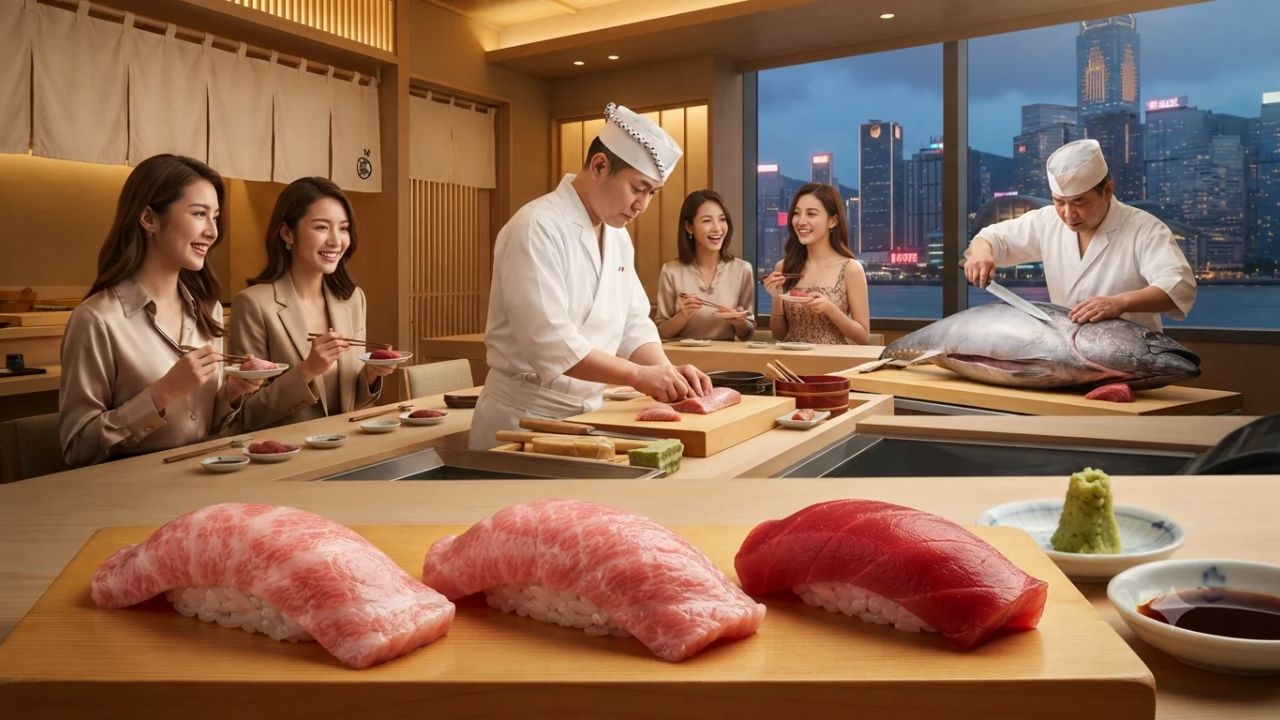
Hong Kong’s international reputation as Asia’s premier culinary capital is set to receive a major commercial and cultural boost on Tuesday, 24 November 2026, as Kiyomura Corporation officially launches Sushi Zanmai’s first overseas Asian flagship restaurant at One Humphreys in Tsim Sha Tsui, Kowloon. Situated just a one-minute walk from Exit A2 of Tsim Sha Tsui MTR Station, the 82-seat dining destination marks the Japanese sushi empire’s second international location following its Los Angeles debut in August 2025. Spearheaded by the Tokyo-based hospitality group renowned for its dominant presence across Tokyo's historic Tsukiji and Toyosu fish markets, the grand opening will feature a theatrical live cutting demonstration of a 200-kilogram Pacific bluefin tuna (maguro kaitai-sho) at 11:30 am, alongside a month-long promotion offering complimentary three-piece premium tuna flights to the first 300 qualifying dine-in customers each day through 23 December 2026. By introducing authentic Edomae sushi craftsmanship, competitive pricing, and flexible dining layouts—ranging from traditional nine-seat sushi bars to private tatami-style banquet suites—to the southern tip of the Kowloon Peninsula, Sushi Zanmai is positioned to enrich Hong Kong's vibrant food tourism ecosystem and establish a strategic springboard for long-term expansion across East and Southeast Asia.
For global travelers and regional gourmands, food is far more than mere sustenance; it represents a sensory gateway into regional culture, logistics, and heritage. Hong Kong has long maintained an unmatched culinary ecosystem where Michelin-starred dining, Cantonese street stalls, and international flavors intersect. Among all foreign dining cultures in the city, Japanese gastronomy enjoys an unparalleled cultural standing, supported by Hong Kong’s position as one of Japan’s largest export markets for fresh seafood and agricultural produce. The arrival of Sushi Zanmai—a household name in Japan celebrated for democratizing top-tier bluefin tuna through accessible prices and 24-hour hospitality—bridges a critical gap between budget conveyor-belt outlets and ultra-exclusive multi-thousand-dollar omakase counters. As Kowloon gears up for the 24 November opening, the launch offers travelers a compelling new dining anchor within walking distance of Victoria Harbour, cultural museums, and world-class retail landmarks.
========================================================================================
SUSHI ZANMAI HONG KONG: OPERATIONAL & LAUNCH SCORECARD
========================================================================================
Operational Parameter   Official Specification & Venue Detail
----------------------------------------------------------------------------------------
Restaurant Name         Sushi Zanmai Hong Kong Main Store (すしざんまい 香港総本店)
Operating Entity        Kiyomura Corporation (Tokyo, Japan)
Official Opening Date   Tuesday, 24 November 2026
Opening Time            10:30 am HKT
Street Address          G/F, One Humphreys, 1–2A Humphreys Avenue, Tsim Sha Tsui, Kowloon
Nearest Transit Hub     Tsim Sha Tsui MTR Station (Tsuen Wan Line), Exit A2 (1-minute walk)
Planned Operating Hours 11:00 am – 12:00 midnight daily (provisional; subject to confirmation)
Contact Telephone       +852 2328 6780
Total Seating Capacity  82 Seats (9 Counter, 53 Table, 4 Side-by-Side, 16 Private Room)
Private Dining Suites   2 Dedicated Suites (8 Seats per Suite; Reservations Recommended)
Grand Opening Spectacle Live 200-kg Pacific Bluefin Tuna Cutting Show (24 Nov, 11:30 am)
Opening Promotion       Complimentary 3-Piece Tuna Flight (Otoro, Chutoro, Akami; Value HK$90)
Promotion Duration      24 November 2026 – 23 December 2026 (First 300 Diners Daily)
Global Network Footprint43 Japan Locations + 1 USA Location (Los Angeles) + 1 Hong Kong
========================================================================================
Source: Kiyomura Corporation Corporate Disclosures & Hong Kong Launch Notice, Nov 2026.
========================================================================================
The Strategic Rationale: Why Kiyomura Chose Hong Kong for Its Asian Beachhead
Kiyomura Corporation’s decision to plant its first Asian flag outside Japan in Hong Kong is grounded in sound commercial economics and consumer dining behavior. Rather than venturing into secondary regional markets, the Tokyo-based operator identified Hong Kong as an indispensable gateway for three distinct structural reasons.
========================================================================================
HONG KONG JAPANESE DINING MARKET DYNAMICS (2024–2026)
========================================================================================
Market Driver           Economic Metric & Consumer Behavior Trend
----------------------------------------------------------------------------------------
Seafood Import Ranking  Consistently #1 or #2 globally for Japanese agricultural/fish exports
Japanese Dining Share   Accounts for over 18% of total international dining spend in HK
Average Dining Out Freq.Hong Kong residents dine out 4.8 times per week on average
Tourism Footfall (TST)  Over 28 million domestic, cross-border, and foreign visits annually
Price Segment Gap       Underserved middle tier: HK$200 – HK$500 per head authentic sushi
Culinary Tourism Weight 62% of inbound tourists identify local dining as primary travel goal
========================================================================================
1. Unrivaled Appetite for Authentic Japanese Seafood
Hong Kong consumers possess one of the most sophisticated palates in the world for authentic Japanese seafood. According to data from the Japan External Trade Organization (JETRO) and Japan’s Ministry of Agriculture, Forestry and Fisheries (MAFF), Hong Kong consistently ranks alongside mainland China and the United States as a primary destination for exported Japanese marine products. From delicate sea urchin (uni) sourced from Hokkaido to pristine bluefin tuna hauled from the waters off Aomori Prefecture, local diners understand seasonal freshness, cut grading, and rice temperature. By establishing an 82-seat flagship staffed by master chefs trained in Tokyo, Sushi Zanmai enters an educated market where brand recognition already runs exceptionally high among frequent travelers to Japan.
2. Tsim Sha Tsui as an Unmatched Tourism and Transit Epicenter
Selecting One Humphreys on Humphreys Avenue places Sushi Zanmai at the geographical heart of Kowloon’s primary retail and hospitality zone. Unlike suburban residential locations, Tsim Sha Tsui benefits from a multi-layered customer base:
- International Visitors: Staying at prestigious heritage properties such as The Peninsula Hong Kong, Rosewood Hong Kong, or Kowloon Shangri-La, leisure travelers seek accessible dining experiences that capture the culinary richness of East Asia.
- Cross-Border Day Visitors: Arriving via the High Speed Rail at Hong Kong West Kowloon Station or via the Star Ferry from Central, mainland travelers frequently converge along Nathan Road and Canton Road for shopping and dining.
- Local Professionals and Shoppers: Office workers from surrounding commercial towers and patrons visiting retail complexes like K11 MUSEA, iSQUARE, and Harbour City generate steady lunch, afternoon, and late-night demand.
3. Bridging the Market Polarization Gap
Hong Kong's Japanese dining market has traditionally been polarized between two extremes:
- Budget Conveyor-Belt Chains: Fast-casual franchises (such as Sushiro and Genki Sushi) offer rapid, low-cost dining, but often feature automated food delivery and standardized, frozen cuts.
- High-End Omakase Counters: Prestigious Ginza-style establishments in Central, Wan Chai, and Causeway Bay charge upwards of HK$2,000 to HK$4,000 per person, requiring bookings weeks or months in advance.
Sushi Zanmai establishes a high-value middle ground. Offering individual nigiri pieces starting at accessible price points alongside premium tasting sets, the restaurant provides authentic market-style hospitality, counter-side craftsmanship, and extended operating hours from 11:00 am until midnight, without the intimidating formality or prohibitive cost of traditional fine dining.
========================================================================================
HONG KONG SUSHI MARKET SEGMENTATION LANDSCAPE
========================================================================================
Dining Segment          Typical Spend / Head   Service Style        Target Audience
----------------------------------------------------------------------------------------
Fast-Casual Conveyor    HK$80 – HK$180         Automated conveyor,  Students, families,
(e.g., Sushiro, Genki)                         tablet self-ordering quick lunch crowds
Accessible Premium      HK$220 – HK$550        Table & sushi bar,   Food tourists, couples,
(Sushi Zanmai HK)                              chef counter service casual business diners
Upscale Boutique        HK$800 – HK$1,500      À la carte, premium  Executive dinners,
(e.g., Sen-ryo, Midori)                        sake pairings        seafood enthusiasts
Luxury Omakase          HK$2,000 – HK$4,500+   Set tasting menu,    Gourmands, special
(e.g., Sushi Shikon)                           exclusive counter    occasions, elite luxury
========================================================================================
The Art of the Tuna: Kiyoshi Kimura and the Toyosu New Year Auctions
To appreciate the significance of Sushi Zanmai's international expansion, one must examine the legacy of its parent company, Kiyomura Corporation, and its legendary founder, Kiyoshi Kimura. Revered throughout Japan as the self-proclaimed "Tuna King" (Maguro Daiou), Kimura transformed a humble fish distribution enterprise into a national cultural institution.
========================================================================================
CHRONOLOGY OF KIYOMURA CORPORATION & BLUEFIN TUNA MILESTONES
========================================================================================
Year  Key Milestone & Historical Event
----------------------------------------------------------------------------------------
1979  Kiyoshi Kimura founds Kiyomura Corporation in Tokyo, focusing on seafood distribution.
2001  Launches the first 24/7 Sushi Zanmai restaurant in Tokyo's historic Outer Tsukiji Market.
2012  Kimura wins the historic Tsukiji New Year auction, paying ¥56.4 million for Oma bluefin.
2013  Sets a global benchmark by bidding ¥155.4 million ($1.76M USD) for a 222-kg bluefin tuna.
2019  Breaks all-time records at the newly opened Toyosu Market, paying ¥333.6 million ($3.1M)
      for a colossal 278-kg bluefin tuna sourced from Oma, Aomori Prefecture.
2025  Expands outside Japan for the first time, opening Sushi Zanmai Los Angeles in August.
2026  (Jan) Sets a modern Toyosu auction record, bidding ¥510.3 million for a 243-kg bluefin.
2026  (Nov) Launches first overseas Asian flagship at One Humphreys in Tsim Sha Tsui, Hong Kong.
========================================================================================
1. The Tsukiji and Toyosu Heritage
When Sushi Zanmai opened its flagship in Tokyo's Tsukiji Outer Market in 2001, it revolutionized Japanese dining by operating 24 hours a day, 365 days a year, serving high-grade Pacific bluefin tuna (Thunnus orientalis) at prices ordinary citizens could afford. Kimura’s master stroke was direct bidding at the central wholesale auctions, eliminating intermediary wholesalers and passing savings directly to diners.
2. High-Stakes Auction Bidding as Brand Strategy
Kimura’s reputation was cemented through his annual participation in the ceremonial New Year tuna auctions at Tsukiji—and later Toyosu Market. These auctions are not merely commercial transactions; they are high-profile cultural spectacles broadcast across Japanese national television to usher in prosperity for the coming year. At the January 2026 Toyosu Market opening auction, Kiyomura Corporation captured global headlines once again by securing a prized 243-kilogram bluefin tuna from Oma, Aomori Prefecture, for an astonishing ¥510.3 million ($3.3 million USD). This demonstrated the brand's enduring commitment to securing the finest pelagic catches in the world.
3. Preserving the Cold Chain from Tokyo to Kowloon
Bringing this bluefin tuna expertise to Hong Kong requires precision cold-chain management. Kiyomura utilizes specialized super-freezing technology (chou-teion), maintaining tuna at -60°C (-76°F) from dockside processing through international air cargo transit into Hong Kong International Airport (HKG). This deep-freeze protocol prevents cell membrane rupture, halts lipid oxidation, and preserves the pristine ruby luster and delicate umami flavor of fresh tuna until master chefs thaw and prepare the cuts in Tsim Sha Tsui.
The Anatomy of Bluefin Tuna: Understanding Otoro, Chutoro, and Akami
Central to the grand opening of Sushi Zanmai Hong Kong is its month-long promotional tasting flight, which showcases the three foundational cuts of the Pacific bluefin tuna. For discerning travelers and culinary newcomers alike, understanding the anatomical origin and sensory characteristics of these cuts enhances the dining experience.
========================================================================================
BLUEFIN TUNA GASTRONOMIC PROFILE & VALUE MATRIX
========================================================================================
Cut Name   Japanese Origin & Muscle Layer  Fat Ratio & Texture   Standalone Menu Value
----------------------------------------------------------------------------------------
Otoro      Lower anterior belly (Harakami) 35% – 45% Lipid Content HK$40 per piece
(大トロ)   Directly beneath the gills      Intense marbling; melts
                                           at human body temp
Chutoro    Middle & rear belly/back flanks 18% – 28% Lipid Content HK$30 per piece
(中トロ)   (Haranaka & Sebora sections)    Harmonious blend of fat
                                           and lean muscle umami
Akami      Core dorsal loin surrounding    < 5% Lipid Content    HK$20 per piece
(赤身)     the central spine (Tenmi)       Firm, velvety texture;
                                           high iron & clean acid
----------------------------------------------------------------------------------------
Total Flight Value (3 Pieces Combined):                           HK$90 Normal Value
========================================================================================
1. Otoro (Extra Fatty Belly)
- Anatomy: Harvested from the ventral section closest to the head and gills (harakami), otoro represents the richest and most sought-after portion of the tuna.
- Flavor Profile: Characterized by fine, snow-white intra-muscular lipid striations running through pale pink flesh. The fats have a low melting point—approximately 36°C (96.8°F)—meaning the fish literally dissolves across the palate upon contact with the warmth of the tongue and seasoned sushi rice (shari).
- Culinary Artistry: Chefs often score the surface with fine incisions (kakutsuke) to allow soy glaze (nikiri) to penetrate the buttery surface, creating an exquisite contrast of savory salt and rich sweetness.
2. Chutoro (Medium Fatty Tuna)
- Anatomy: Located along the mid-belly (haranaka) and the lower dorsal section of the fish, chutoro provides the ideal middle ground between pure fat and pure muscle.
- Flavor Profile: Displaying a rich, rose-coral color, chutoro offers a balanced mouthfeel. Diners experience the silky, unctuous qualities of tuna oil alongside the distinct, iron-rich savory notes of red muscle meat. Many sushi connoisseurs regard chutoro as the most complete expression of bluefin tuna because neither fat nor meat overpowers the other.
3. Akami (Lean Red Meat)
- Anatomy: Sourced from the upper dorsal loin (tenmi) and deep inner core of the fish near the backbone, akami is almost entirely devoid of fatty striations.
- Flavor Profile: Possessing a deep, translucent ruby-crimson tone, akami is packed with natural myoglobin. Its texture is firm, dense, and velvety. Rather than melting, akami provides a clean, refreshing bite characterized by pleasant natural acidity (sanmi) and a lingering mineral finish.
- Traditional Preparation: In classic Edomae sushi traditions, akami is frequently marinated in soy sauce, mirin, and sake (zuke) for 10 to 20 minutes to heighten its savory depth and impart a glossy, lacquer-like exterior.
========================================================================================
TUNA CUT SENSORY COMPARISON RADAR
========================================================================================
Attribute              Otoro (Fatty)        Chutoro (Medium)     Akami (Lean)
----------------------------------------------------------------------------------------
Richness & Creaminess  Extremely High (9.8) Balanced (7.5)       Low to Mild (3.0)
Acidic Brightness      Low (2.0)            Moderate (5.5)       High & Clean (8.8)
Texture & Chew         Melt-in-mouth (1.5)  Silky & Soft (4.5)   Firm & Velvety (7.5)
Ideal Wasabi Pairing   Generous Portion     Moderate Portion     Delicate Dab
Shari Temperature      Body Temp (36°C)     Slight Warm (34°C)   Room Temp (32°C)
========================================================================================
Scale: 1.0 (Lowest) to 10.0 (Highest Intensity).
========================================================================================
Interior Architecture and Seating Dynamics: Designed for Modern Urban Travelers
Operating from the ground floor of One Humphreys at 1–2A Humphreys Avenue, the Hong Kong Main Store has been carefully planned to serve diverse dining cohorts across its 82-seat layout.
========================================================================================
SUSHI ZANMAI HONG KONG SEATING CAPACITY BREAKDOWN
========================================================================================
Seating Category        Seat Count Percentage Functional Dining Role
----------------------------------------------------------------------------------------
Artisanal Sushi Counter 9 Seats    11.0%      Direct master chef interaction; bespoke
                                              piece-by-piece Edomae service
Dining Table Seating    53 Seats   64.6%      Accommodates pairs, families, shopping
                                              parties, and casual tourist groups
Side-by-Side Seating    4 Seats     4.9%      Intimate configuration for solo travelers
                                              or couples seeking quiet dining
Private Dining Rooms    16 Seats   19.5%      Two private 8-person suites for corporate
                                              banquets and celebratory gatherings
----------------------------------------------------------------------------------------
Total Venue Capacity    82 Seats   100.0%     Flexible urban layout balancing speed & comfort
========================================================================================
1. The 9-Seat Counter: An Intimate Chef’s Theater
For culinary purists and solo food travelers, the nine counter seats provide the definitive sushi experience. Seated before refrigerated glass display cases (neta-bako) filled with sparkling ocean catches, diners can watch master itamae execute precise knife cuts, shape warm vinegared rice with rhythmic hand movements, and apply bespoke glazes. This seating zone allows for direct dialogue with the chefs regarding seasonal recommendations, daily auction catches, and fish origins.
2. The 53-Seat Main Dining Room: Social and Family Comfort
Comprising nearly two-thirds of the venue, the table seating area features booth and table arrangements designed for versatility. Spaced comfortably to accommodate shopping bags from nearby luxury malls, this zone serves couples, family units, and small tour groups seeking a relaxed meal without the quiet formality of the sushi counter.
3. The 16-Seat Private Dining Suites
A distinctive addition to the Hong Kong location is the inclusion of two private dining rooms, each accommodating up to eight guests (16 private seats total). Recognizing Hong Kong’s strong corporate entertaining culture and family banquet traditions, these rooms offer sound-insulated, elegant settings for private celebrations, business luncheons, and intimate dinners away from the main floor.
========================================================================================
HOURLY PATRON DYNAMICS & SERVICE PROJECTIONS (PROVISIONAL)
========================================================================================
Time Window            Projected Guest Cohort         Service Pacing & Focus
----------------------------------------------------------------------------------------
11:00 am – 02:00 pm    Business lunch, early shoppers High-turnover set menus, tuna specials
02:00 pm – 05:30 pm    Leisure travelers, late lunch  Afternoon tea sushi sets, à la carte
05:30 pm – 08:30 pm    Dinner peak: families, touristsFull-course dining, premium nigiri flights
08:30 pm – 12:00 mid.  Late-night diners, drinks      Sake pairings, sashimi platters, small bites
========================================================================================
Opening Ceremonies and Promotional Masterclass: The Month-Long Tuna Campaign
Kiyomura Corporation has engineered a grand opening campaign designed to generate immediate foot traffic and build sustained community goodwill among Hong Kong residents and inbound tourists.
========================================================================================
OPENING DAY PROGRAM: TUESDAY, 24 NOVEMBER 2026
========================================================================================
Timestamp (HKT) Scheduled Activity & Event Details
----------------------------------------------------------------------------------------
10:00 am        Dignitary arrivals, ribbon-cutting preparations, media registry
10:30 am        Official restaurant doors open to the general public; initial seating
11:15 am        Ceremonial welcome address by Kiyomura Corporation executive leadership
11:30 am        Live 200-kg Pacific Bluefin Tuna Cutting Ceremony (Maguro Kaitai-Sho)
12:15 pm        Chef distribution of freshly partitioned tuna cuts to seated patrons
12:30 pm – CloseRollout of the 30-Day Complimentary Tuna Sushi Promotion (Daily First 300)
========================================================================================
1. The 200-Kilogram Bluefin Tuna Cutting Demonstration (Maguro Kaitai-Sho)
At 11:30 am on opening day, master itamae will take center stage to perform the maguro kaitai-sho. Using colossal specialized knives—including the sword-like oroshi-hocho—the chefs will skillfully break down a 200-kilogram Pacific bluefin tuna before the audience.
- Educational Entertainment: As the fish is partitioned into large primals (kame), then fillets, and finally individual blocks (saku), the chefs explain the unique physiological qualities of each section.
- Freshness Direct to Table: Following the demonstration, freshly carved portions will be immediately prepped and served to seated diners, giving patrons an immediate taste of freshly butchered tuna.
2. The 30-Day Complimentary Sushi Promotion (24 Nov – 23 Dec 2026)
To ensure that opening excitement extends well beyond day one, Kiyomura has established a month-long incentive program:
- Eligibility: The first 300 qualifying dine-in customers each day who order at least one non-beverage food item will receive a complimentary three-piece bluefin tuna sushi set.
- Components: The promotional flight includes one piece of Otoro (valued at HK$40), one piece of Chutoro (valued at HK$30), and one piece of Akami (valued at HK$20), representing a total complimentary value of HK$90.
- Economic Value: Over the 30-day campaign, Kiyomura will distribute up to 9,000 complimentary tuna flights, representing an investment of over HK$810,000 ($104,000 USD) in consumer dining value.
========================================================================================
PROMOTIONAL RULES & VISITOR STRATEGY CHECKLIST
========================================================================================
Condition / Rule        Visitor Action & Recommendation
----------------------------------------------------------------------------------------
Daily Quota             Strictly limited to the first 300 qualifying dine-in patrons daily.
Queue Timing            Arrive between 10:15 am and 10:45 am on weekdays, or earlier on weekends.
Order Requirement       Must purchase at least one non-beverage menu item per seated person.
Dine-In Exclusivity     Offer applies strictly to dine-in consumption; no takeaway packaging.
Non-Transferable        Unused daily promotional portions do not roll over to subsequent days.
========================================================================================
Tsim Sha Tsui Food Tourism Circuit: Integrating Sushi into a Cultural Itinerary
The opening of Sushi Zanmai at One Humphreys provides travelers with an ideal culinary anchor around which to build a complete cultural day in Kowloon. Situated at the southern tip of the Kowloon Peninsula, Tsim Sha Tsui effortlessly combines historic maritime vistas, avant-garde architecture, and shopping.
========================================================================================
KOWLOON CULTURAL & CULINARY ITINERARY COMPASS
========================================================================================
Time of Day  Location / Attraction     Activity Focus & Visitor Experience
----------------------------------------------------------------------------------------
09:00 am     Star Ferry & Clock Tower  Depart Central or Wan Chai; take historic green ferry;
                                       photograph the 1915 Old Kowloon Station Clock Tower
10:00 am     Avenue of Stars           Stroll the waterfront promenade; view Bruce Lee statue;
                                       enjoy panoramic daytime views of Hong Kong Island skyline
11:00 am     Sushi Zanmai Hong Kong    Arrive at One Humphreys; secure counter or table seat;
             (One Humphreys)           savor 3-piece tuna set and fresh seasonal nigiri
01:30 pm     Hong Kong Museum of Art   Explore Chinese paintings, modern calligraphic art,
             (HKMoA, Salisbury Road)   and international traveling exhibits (18,000+ artifacts)
03:30 pm     K11 MUSEA & Avenue Walk   Discover immersive architectural design, contemporary
                                       sculptures, and curated artisanal coffee boutiques
05:30 pm     Harbour City / Ocean Deck Watch the sunset over western Victoria Harbour from the
                                       open-air rooftop observatory at Ocean Terminal
08:00 pm     A Symphony of Lights      View the world's largest permanent light and sound show
                                       illuminating over 40 skyscrapers across the harbour
09:00 pm     Late Night Dining / Tea   Return to Sushi Zanmai for late-night sake and sashimi,
                                       or explore nearby Jordan night food stalls
========================================================================================
1. Heritage Waterfront Landmarks
A five-minute walk south from Humphreys Avenue brings visitors to the Tsim Sha Tsui Promenade. Here, the red-brick and granite Clock Tower stands as a historic monument to the former terminus of the Kowloon-Canton Railway. Adjacent lies the Avenue of Stars, celebrating Hong Kong’s cinematic legends alongside sweeping panoramas of Victoria Harbour.
2. High-Caliber Cultural Institutions
Adjacent to the waterfront promenade sit two of Hong Kong’s primary cultural museums:
- Hong Kong Museum of Art (HKMoA): Housing more than 18,000 works spanning Chinese antiquities, historical paintings, and contemporary local installations across four expansive floors.
- Hong Kong Space Museum: Featuring its distinctive egg-shaped geodesic dome, interactive cosmos exhibits, and state-of-the-art planetarium theater.
3. World-Class Retail Centers
Shoppers can easily transition from dining to exploration. To the west lies Harbour City, Hong Kong’s largest shopping complex with over 450 stores stretching along Canton Road. To the east lies K11 MUSEA, a groundbreaking cultural-retail development designed by international architects, featuring indoor green walls, museum-grade art displays, and waterfront promenades.
Kiyomura’s Global Footprint and the Greater Asian Horizon
The launch of the Hong Kong Main Store marks an important evolutionary step in Kiyomura Corporation’s transition from a domestic Japanese powerhouse into an international hospitality brand.
========================================================================================
KIYOMURA CORPORATION GLOBAL RESTAURANT DISTRIBUTION (NOV 2026)
========================================================================================
Regional Market          Store Count Core Geographic Presence & Anchor Locations
----------------------------------------------------------------------------------------
Japan: Kanto (Tokyo)     32 Stores   Tsukiji Outer Market, Shinjuku, Shibuya, Ginza, Asakusa
Japan: Kyushu            5 Stores    Fukuoka (Hakata, Tenjin), Kumamoto, Kagoshima
Japan: Kansai            2 Stores    Osaka (Dotonbori), Kyoto
Japan: Hokkaido          1 Store     Sapporo (Susukino)
Japan: Aichi / Tokai     1 Store     Nagoya (Sakae)
Japan: Tohoku            1 Store     Sendai (Kokubuncho)
Japan: Chugoku           1 Store     Hiroshima (Hatchobori)
----------------------------------------------------------------------------------------
Total Japan Domestic     43 Stores   Covers all major metropolitan economic corridors
----------------------------------------------------------------------------------------
United States            1 Store     Los Angeles, California (Launched August 2025)
Hong Kong SAR            1 Store     Tsim Sha Tsui, Kowloon (Launched November 2026)
----------------------------------------------------------------------------------------
Total Worldwide Stores   45 Stores   Expanding international footprint across 3 territories
========================================================================================
1. The Domestic Powerhouse in Japan
Across Japan, Sushi Zanmai operates 43 branches spanning every major island. The Tokyo metropolitan area forms its spiritual and commercial backbone with 32 locations, anchored by multiple 24-hour branches in the Tsukiji district where the brand originally took root. Outside the capital, strategic flagships in Fukuoka, Osaka, Sapporo, and Nagoya serve millions of domestic and inbound tourists each year.
2. International Precedents: Los Angeles and Beyond
In August 2025, Kiyomura took its first step outside Japan by establishing Sushi Zanmai in Los Angeles, California. The California restaurant demonstrated that the company’s blend of theatrical tuna cutting, accessible pricing, and authentic sushi craftsmanship resonated strongly with international audiences.
3. Hong Kong as the Springboard for Asia
Kiyomura’s leadership has explicitly outlined ambitions to utilize the Hong Kong Main Store as an operational testbed for broader Asian expansion. The company is actively evaluating commercial feasibility in several high-growth regional hubs:
- Mainland China: Assessing opportunities in first-tier international cities including Shanghai and Shenzhen.
- Taiwan: Exploring high-density dining districts in Taipei.
- Southeast Asia: Conducting market research across Singapore, Kuala Lumpur (Malaysia), and Jakarta (Indonesia), where consumer demand for Japanese food tourism continues to grow rapidly.
========================================================================================
PROSPECTIVE ASIAN TARGET EXPANSION HUBS (FEASIBILITY PIPELINE)
========================================================================================
Target Metropolitan Market Country / Region   Anticipated Strategic Advantage
----------------------------------------------------------------------------------------
Shanghai (Pudong / Puxi)   Mainland China     Massive consumer base; strong Japanese cuisine affinity
Taipei (Xinyi / Zhongshan) Taiwan             Cultural familiarity; high per capita seafood spend
Singapore (Orchard Road)   Singapore          Southeast Asian finance hub; high tourist spending
Kuala Lumpur (Bukit Bintang)Malaysia          Growing middle-class food tourism; mall retail culture
Jakarta (SCBD / Senopati)  Indonesia          Rapidly expanding premium casual dining segment
========================================================================================
Note: Target markets reflect corporate strategic intentions; specific opening dates remain unconfirmed.
========================================================================================
Practical Traveler Guide: Visiting Sushi Zanmai Hong Kong
To maximize your visit to Sushi Zanmai Hong Kong, practical advance planning is essential, particularly during the high-demand opening month.
========================================================================================
PRACTICAL VISITOR NAVIGATION MATRIX
========================================================================================
Category               Traveler Guidance & Operational Instructions
----------------------------------------------------------------------------------------
Exact Venue Address    G/F, One Humphreys, 1–2A Humphreys Avenue, Tsim Sha Tsui, Kowloon
MTR Rail Connection    Tsim Sha Tsui Station (Tsuen Wan Line), take Exit A2. Walk east along
                       Humphreys Avenue for approximately 60 seconds.
MTR East Rail Option   East Tsim Sha Tsui Station (Tuen Ma Line), Exit N1 or N2. Walk 3 mins.
Airport Transit        Take Airport Express to Kowloon Station, transfer to Free Express
                       Shuttle or take a 7-minute taxi directly to Humphreys Avenue.
Payment Methods        Cash (HKD), Octopus Card, Visa, Mastercard, UnionPay, WeChat Pay,
                       and AlipayHK accepted.
Reservation Policy     Counter and table seating primarily walk-in; private dining suites
                       (8 persons) require advance telephone booking (+852 2328 6780).
Peak Congestion Hours  12:30 pm – 02:00 pm (lunch) and 06:30 pm – 08:30 pm (dinner).
Best Time to Visit     10:30 am – 11:30 am (promotional queue) or 03:00 pm – 05:00 pm (relaxed).
Dress Code             Casual comfortable; smart casual recommended for private rooms.
========================================================================================
Transit Directions: Step by Step
- By MTR (Subway): Board the Tsuen Wan Line to Tsim Sha Tsui Station. Follow station signage to Exit A2 (Humphreys Avenue). Upon stepping onto street level, turn right onto Humphreys Avenue. One Humphreys is situated immediately on your right, less than 60 meters from the exit.
- From Hong Kong Island via Star Ferry: Take the Star Ferry from Central Pier 7 or Wan Chai Pier across to the Tsim Sha Tsui Ferry Pier. From the pier, enjoy a pleasant 8-minute walk north along Canton Road or Salisbury Road, turning north up Nathan Road and east into Humphreys Avenue.
- From West Kowloon High Speed Rail Station: Take a 5-minute taxi ride or board the MTR at Austin Station, riding one stop to East Tsim Sha Tsui Station and walking through the underground pedestrian concourse to Exit N2.
Frequently Asked Questions
What is Sushi Zanmai Hong Kong and when does it open?
Sushi Zanmai Hong Kong Main Store is the first overseas Asian restaurant opened by Kiyomura Corporation, the famous Japanese sushi chain. It officially opens on Tuesday, 24 November 2026, at 10:30 am.
Where is the new restaurant located?
The restaurant is located at G/F, One Humphreys, 1–2A Humphreys Avenue, Tsim Sha Tsui, Kowloon, Hong Kong. It is approximately a one-minute walk from Exit A2 of Tsim Sha Tsui MTR Station.
What is the capacity and seating arrangement of the restaurant?
The restaurant features 82 total seats: nine counter seats for watching chefs at work, 53 dining table seats, four side-by-side companion seats, and 16 private room seats divided between two eight-person private dining suites.
What special event is happening on opening day?
On 24 November 2026 at approximately 11:30 am, the restaurant will host a live cutting demonstration (maguro kaitai-sho) of a 200-kilogram Pacific bluefin tuna, freshly preparing and serving portions to customers.
How does the opening sushi promotion work?
From 24 November to 23 December 2026, the first 300 qualifying dine-in customers each day will receive a complimentary three-piece bluefin tuna sushi set (Otoro, Chutoro, and Akami, valued at HK$90) upon ordering at least one non-beverage food item.
Who is the "Tuna King" associated with Sushi Zanmai?
Kiyoshi Kimura, the founder and president of Kiyomura Corporation, is widely known as Japan's "Tuna King" for his dominance at Tokyo's Tsukiji and Toyosu New Year tuna auctions, where he has repeatedly purchased record-breaking bluefin catches.
How does Sushi Zanmai ensure seafood freshness in Hong Kong?
Kiyomura Corporation maintains a dedicated -60°C (-76°F) super-frozen cold chain logistics network connecting Japanese fishing ports and Toyosu Market directly to Hong Kong International Airport, ensuring cellular freshness and preventing lipid degradation.
Can customers reserve tables in advance?
Counter and main dining tables operate primarily on a walk-in basis. However, guests wishing to book one of the two eight-person private dining rooms should contact the restaurant directly by telephone at +852 2328 6780.
What are the planned operating hours?
The restaurant has announced provisional operating hours from 11:00 am until 12:00 midnight daily, providing both lunch, afternoon, dinner, and late-night dining options.
What other attractions are nearby in Tsim Sha Tsui?
Within a 5 to 10-minute walk, visitors can reach the Tsim Sha Tsui Promenade, Avenue of Stars, Victoria Harbour, Hong Kong Museum of Art, Hong Kong Space Museum, K11 MUSEA, and Harbour City.
Strategic Outlook: Cultivating Culinary Connections Across Asia
The arrival of Sushi Zanmai in Tsim Sha Tsui underscores Hong Kong's enduring resilience as an international gastronomic capital. While global economic conditions and travel patterns continue to change, the city's strategic advantages—unmatched logistics, duty-free trade status, sophisticated local consumers, and central geographic placement—remain powerful magnets for world-class hospitality brands.
By blending theatrical culinary demonstrations with accessible Edomae sushi craftsmanship, Kiyomura Corporation does not merely open another restaurant; it introduces an authentic slice of Tokyo's historic market culture to the streets of Kowloon. For international travelers exploring the vibrant waterfront of Tsim Sha Tsui, Sushi Zanmai provides an exciting new destination where tradition, freshness, and culinary artistry converge.
Related Travel Guides
- Thailand’s Loy Krathong and Yi Peng 2026 Drive 6-Billion-Baht Cultural Tourism Surge Across Six Signature Provinces
- Wisconsin’s Hidden Beaches: Complete Travel Guide to 201 Great Lakes Shores, Island Sanctuaries, and Inland Bluffs
- Asia’s Winter Tourism Boom: How Hokkaido, Seoul, Xinjiang, and Central Asia Are Redefining Cold-Weather Travel
- Delta Air Lines Flight Delays Sweep USA: Weight and Balance Automation Glitch Disrupts Pre-Thanksgiving Travel Across Major Hubs
This article is for informational purposes. Flight routes, passenger regulations, visa rules, and transit advisories are subject to change by airlines and aviation authorities. Readers are advised to verify schedules and travel documentation with relevant carriers and border agencies before departure.
Related Stories

Thailand Loy Krathong 2026 Generates 6-Billion-Baht Boost as Ministry Expands Flights and Regulates Fares
Busan Tourism Boom Outpaces Seoul: 3.9 Million Foreign Visitors, 1-Trillion-Won Spend, and Global Long-Haul Travel Surge