
SpiceJet Flight Delays at Delhi IGI Airport Impact 500+ Passengers in September 2026
Over 500 travelers faced significant disruptions at Indira Gandhi International Airport as SpiceJet operational failures triggered delays for Leh, Jammu, and Dubai routes.

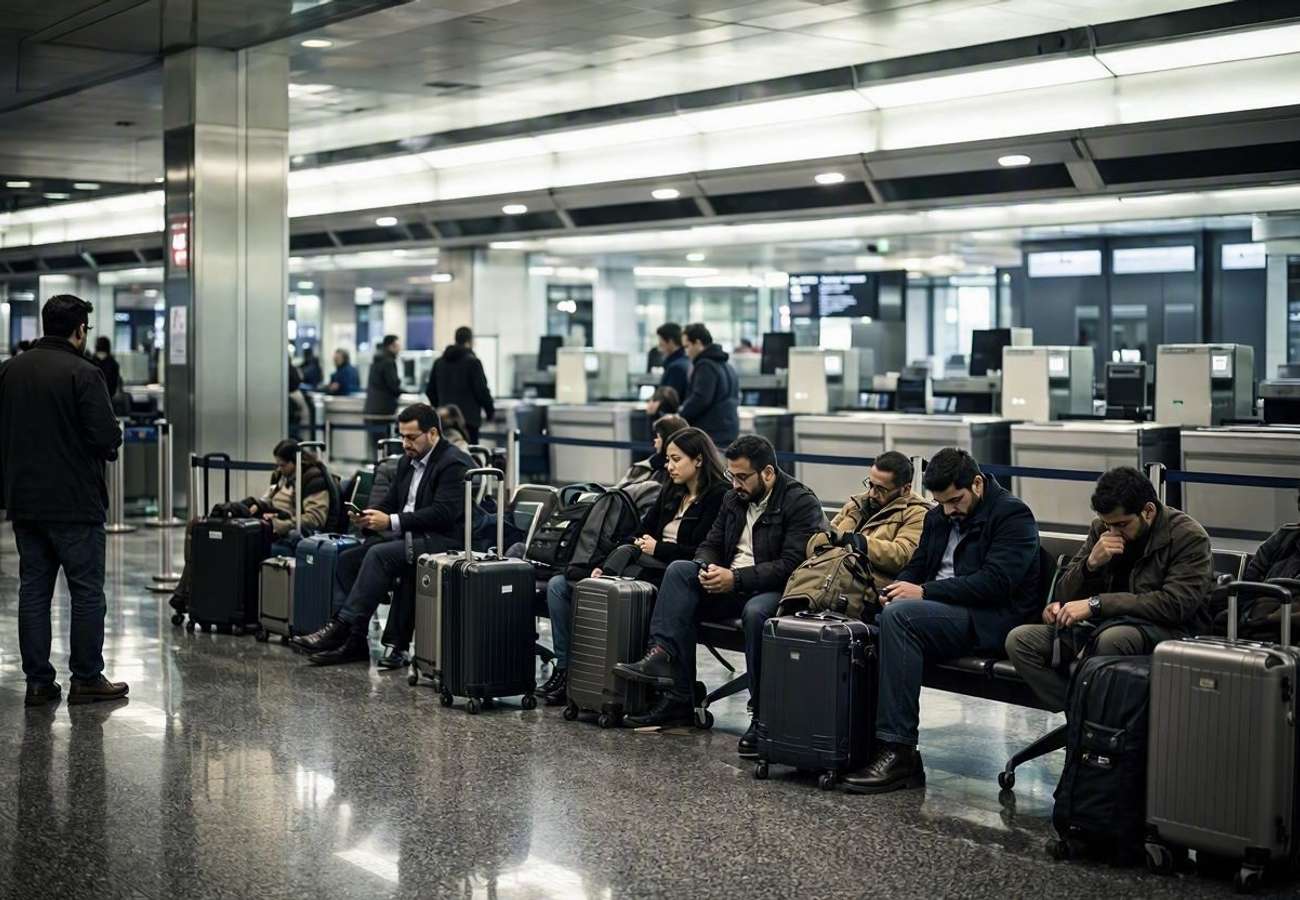
Image generated by AI
Staffing shortages at Terminal 1 around 2:30 a.m. left hundreds of passengers unable to complete basic check-in formalities, turning a routine early-morning departure into a chaotic scene of crowding and confusion. This operational lapse on September 19, 2026, is the latest in a series of reliability issues for SpiceJet at New Delhi’s Indira Gandhi International (IGI) Airport, highlighting a precarious gap between airline scheduling and ground-level execution.
The Operational Breakdown at IGI Airport
The disruption on Saturday, September 19, was not a localized glitch but a systemic failure affecting more than 500 passengers. The chaos primarily centered on early-morning departures, where critical staffing gaps at Terminal 1 prevented travelers from checking in on time. This bottleneck created a domino effect, delaying several high-priority domestic and international routes.
Specifically, flights SG121 and SG127, bound for Leh, and SG2160, heading to Jammu, faced significant delays. The disruption extended to international travel as well, with flight SG5111 from Delhi to Dubai—scheduled for a morning departure from Terminal 3—also reporting delays. For those traveling to high-altitude regions like Leh, these delays are more than just an inconvenience; they often disrupt critical acclimatization schedules and pre-booked mountain transport.
This event follows a particularly volatile week for the carrier. Just days prior, two other Dubai-bound services, including SG5105, saw delays exceeding 24 hours. These prolonged waits forced groups of passengers to occupy terminal spaces for an entire day, sparking protests and raising urgent questions about the airline's ability to maintain its flight schedule.
What Makes Delhi's Airport Logistics Unique
Navigating IGI Airport requires more than just a boarding pass; it requires an understanding of its fragmented terminal structure. Unlike many global hubs where a single airline occupies one terminal, SpiceJet operates across both Terminal 1 and Terminal 3. This split is a frequent source of confusion for travelers, especially during operational crises.
When a staffing shortage occurs at Terminal 1, passengers are often left in a vacuum of information. There is rarely a seamless communication bridge between terminals, meaning a traveler at T1 may not know if T3 is operating normally or if their rebooking options are available across the airport complex. This is particularly dangerous for those on "self-transfer" itineraries—travelers who book a domestic leg and an international leg on separate tickets. A few hours of delay at T1 can lead to a missed connection at T3, resulting in the total loss of the onward flight and non-refundable hotel bookings.
To manage these complexities, travelers should rely on the Airports Authority of India or the official Delhi International Airport Limited (DIAL) updates to verify which terminal is active for their specific flight number before leaving their hotel.
Visitor Insider Tips
If you are flying through Delhi, especially with a budget carrier, the standard "arrive three hours early" rule may not be enough during peak disruption periods.
- The Terminal Double-Check: Always verify your terminal on the day of departure. SpiceJet's split between T1 and T3 is not static. Use the airline's app or the airport's live flight board immediately upon arrival.
- The 2:00 a.m. Window: For pre-dawn flights, be aware that staffing levels at T1 can fluctuate. If you notice check-in queues stagnating or counters remaining closed by 2:30 a.m., immediately seek a supervisor to get a written confirmation of the delay for insurance purposes.
- Documentation Strategy: In the event of a delay, do not rely on verbal promises. Request a written "Delay Certificate" or an updated itinerary via email. This is essential for claiming compensation under Indian aviation law.
- Connection Buffer: Never book a self-transfer connection in Delhi with less than a six-hour window. The transit time between T1 and T3, combined with potential baggage re-checking, can easily eat up three hours.
- Local Survival: If stranded overnight, T3 offers better lounge and dining facilities than T1. If your flight is delayed significantly, negotiate with the airline for a transfer to T3 or a nearby airport hotel.
Cultural and Environmental Context
The friction seen at IGI Airport reflects a broader tension in India's rapidly expanding aviation sector. As the country pushes to become a global aviation hub, the infrastructure is often stretched thin by a massive surge in middle-class travelers. The reliance on low-cost carriers (LCCs) like SpiceJet means that operational margins are slim, and staffing shortages—like those seen on September 19—often happen because airlines are prioritizing flight frequency over ground-staff redundancy.
Furthermore, the interaction between passengers and airline staff during these delays often mirrors the wider cultural struggle with bureaucracy in India. The "protest" culture at the terminal is a common response when official communication channels fail. For the local community and airport employees, these spikes in passenger frustration create a high-stress environment that can further degrade the quality of service.
From a regulatory standpoint, the Directorate General of Civil Aviation (DGCA) governs these interactions through the Civil Aviation Requirements (CAR). These rules mandate that airlines provide refreshments and hotel accommodation for long delays. However, the burden of proof often falls on the passenger to demonstrate that they checked in on time and that the delay was within the airline's control.
FAQ: Visiting Delhi Airport 2026
What are my rights if my SpiceJet flight is delayed in Delhi? Under the DGCA's CAR, you are entitled to refreshments and, in cases of overnight delays, hotel accommodation. Compensation depends on the length of the delay and whether the airline provided timely notice. Always keep your boarding pass and a written record of the delay.
How do I move between Terminal 1 and Terminal 3 at IGI? You can use the airport shuttle services or a registered app-based taxi. Allow at least 45-60 minutes for the transfer, as traffic between terminals can be unpredictable during peak hours.
Is it safe for solo travelers to wait at IGI overnight? Yes, IGI is generally safe and well-monitored. However, solo travelers should stay in well-lit, populated areas of the terminal and use official airport lockers for valuables if they are not staying in a hotel.
Do I need a visa for a transit stay in Delhi? If you are staying in the international transit area and have a confirmed onward ticket, you generally do not need a visa. However, if you must change terminals (e.g., T3 to T1) or collect baggage, you will need a valid Indian visa or e-visa.
When the flight board turns red, the only real currency is a written record and a lot of patience.
Related Travel Guides
Disclaimer
This article is for informational and educational purposes only. It does not constitute legal, financial, or professional advice. While we strive to provide accurate and up-to-date information, travel policies, regulations, and conditions change rapidly. Always verify information with official sources before making travel decisions. Nomad Lawyer makes no representations about the accuracy, reliability, completeness, or suitability of the information provided. Readers should consult qualified professionals for advice specific to their circumstances. The views expressed in this article are those of the author and do not necessarily reflect the views of Nomad Lawyer.
Preeti Gunjan
Contributor & Community Manager
A passionate traveller and community builder. Preeti helps grow the Nomad Lawyer community, fostering engagement and bringing the reader experience to life.
Learn more about our team →