
SpiceJet Operational Failures at Delhi IGI Airport: Analysis of September 2026 Flight Disruptions
Operational breakdowns at Delhi's IGI Airport left SpiceJet passengers stranded on routes to Leh, Jammu, and Dubai, highlighting systemic capacity issues and the critical role of DGCA passenger assistance mandates.

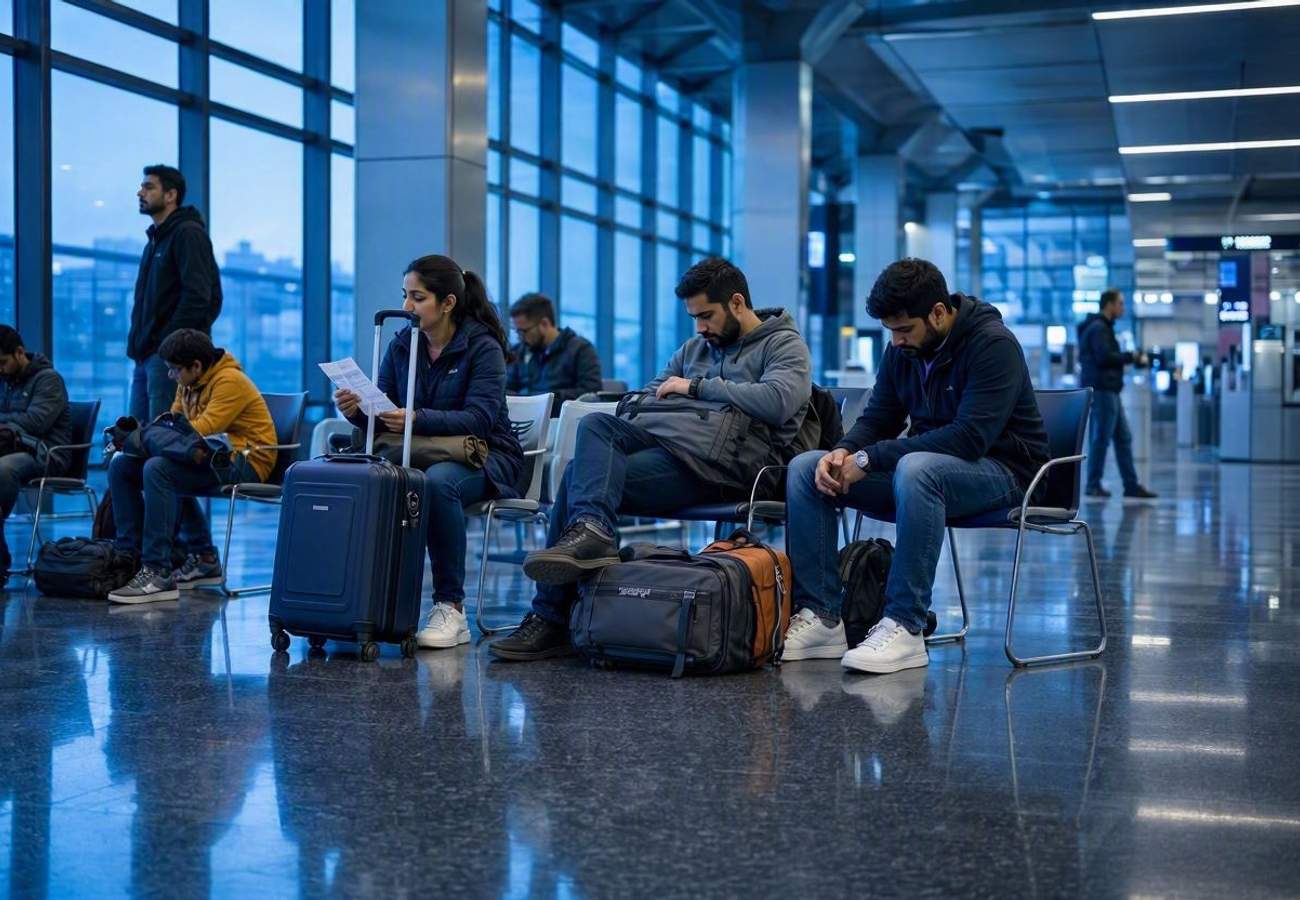
Image generated by AI
Flight delays on the Delhi-Dubai corridor have shifted from sporadic incidents to systemic failures, with recent reports indicating some SpiceJet passengers faced waits exceeding 24 hours—a stark contrast to the standard 2-4 hour operational buffers typical of major Indian hubs. This volatility suggests a critical misalignment between aircraft availability and scheduled capacity, turning Indira Gandhi International (IGI) Airport into a bottleneck for thousands of travelers.
The Operational Breakdown in Numbers
On September 19, 2026, SpiceJet experienced a cascade of operational failures at IGI Airport that paralyzed both domestic and international corridors. The disruption was most acute during the early morning window, creating a ripple effect that extended throughout the business day.
The data identifies three primary affected routes:
- Delhi to Leh: Significant delays reported, impacting high-altitude logistics.
- Delhi to Jammu: Multiple departures running hours behind schedule.
- Delhi to Dubai: A high-impact route that has seen repeated instability throughout the week.
The severity of these disruptions is highlighted by a prior incident earlier in the same week, where two separate flights bound for Dubai were delayed for more than 24 hours. In these instances, aircraft grounding was cited as the primary cause. This indicates a lack of "spare" aircraft capacity, meaning a single mechanical failure on a high-demand route like Delhi-Dubai can result in a total operational freeze for that specific itinerary.
Comparative Context: Systemic vs. Isolated Delays
When comparing these events to broader industry benchmarks, the SpiceJet situation at IGI deviates from standard "weather-related" or "air traffic control" delays. These are operational failures tied to fleet management and ground processing.
A critical complicating factor is the physical fragmentation of SpiceJet's operations at IGI. The airline splits its traffic across Terminal 1 (primarily domestic) and Terminal 3 (international and select domestic). When check-in bottlenecks occur, the lack of centralized processing increases passenger stress and slows the recovery rate of the schedule.
The following table compares the current operational volatility against standard industry expectations for a Tier-1 hub:
| Metric | Industry Standard (Tier-1 Hub) | SpiceJet IGI (Sept 2026) | Variance |
|---|---|---|---|
| Average Delay Threshold | 30 - 120 Minutes | 4 - 24+ Hours | Extreme Increase |
| Aircraft Recovery Time | 6 - 12 Hours | 24+ Hours | High |
| Passenger Support | Immediate Vouchers/Meals | Basic Food/Water (Reported) | Minimal |
| Terminal Synergy | Unified Check-in/Transfer | Split (T1 and T3) | High Friction |
According to data trends tracked by OAG, operational reliability is often tied to the ratio of active aircraft to scheduled rotations. The protests witnessed at IGI suggest that SpiceJet's current ratio is insufficient to absorb the shock of a single grounded aircraft, leading to the 24-hour delays seen on the Dubai route.
What This Means for Travelers
For passengers booking with SpiceJet or operating through Delhi IGI, the data suggests that "scheduled departure" is currently a fluid concept. The risk of a "knock-on" delay—where a morning failure ruins an evening connection—is significantly elevated.
Actionable Booking Advice:
- Buffer Connection Windows: If you are connecting through Delhi, a 3-hour window is no longer sufficient. We recommend a minimum of 6-8 hours for SpiceJet-to-SpiceJet transfers, or ideally, booking a single PNR (Passenger Name Record) to ensure the airline is responsible for rebooking.
- Terminal Verification: Always verify your terminal (T1 vs T3) via the official app or website 4 hours before departure. The split-terminal operation at IGI means a mistake in terminal arrival can add 60-90 minutes to your transit time.
- Documentation for Claims: Under the Directorate General of Civil Aviation (DGCA) guidelines, specifically CAR Section 3, Series M, Part IV, passengers are entitled to meals, refreshments, and in some cases, hotel accommodation. To successfully claim these or seek compensation, travelers must keep screenshots of all revised departure times and boarding pass reissues.
Forward Projection: The Stability Outlook
The trajectory of these disruptions suggests a period of instability for the Delhi-Dubai route through Q4 2026. When an airline experiences multiple 24-hour delays in a single week, it typically signals a fleet shortage or a maintenance backlog that cannot be solved by simple scheduling shifts.
We expect the International Air Transport Association (IATA) benchmarks for on-time performance in the South Asian region to be negatively impacted by these specific carrier failures. Unless SpiceJet increases its standby aircraft capacity at IGI, passengers should expect continued volatility during peak morning departures.
FAQ: SpiceJet Delhi Disruptions 2026
Are SpiceJet passengers entitled to compensation for 24-hour delays? Yes, under DGCA's CAR Section 3, Series M, Part IV, airlines must provide meals and hotel accommodation for prolonged delays. Financial compensation depends on whether the delay was caused by "extraordinary circumstances" or operational failures.
Which terminals should I use at Delhi IGI for SpiceJet? Most domestic flights operate from Terminal 1, while international flights use Terminal 3. However, some domestic services are routed through T3. Always check your ticket or the IGI live flight board.
Is it safe to book connecting flights with SpiceJet in Delhi? Currently, it is high-risk. Given the recent 24-hour delays on Dubai routes and hours-long delays to Leh and Jammu, we recommend booking separate flights with significant buffers or using a different carrier for critical connections.
What should I do if my flight is delayed more than 6 hours at IGI? Immediately request a written statement of the delay from the airline counter and demand refreshments/meals as per DGCA mandates. Document all communication for future refund or insurance claims.
When operational reliability collapses, the burden of risk shifts entirely to the passenger.
Related Travel Guides
Disclaimer
This article is for informational and educational purposes only. It does not constitute legal, financial, or professional advice. While we strive to provide accurate and up-to-date information, travel policies, regulations, and conditions change rapidly. Always verify information with official sources before making travel decisions. Nomad Lawyer makes no representations about the accuracy, reliability, completeness, or suitability of the information provided. Readers should consult qualified professionals for advice specific to their circumstances. The views expressed in this article are those of the author and do not necessarily reflect the views of Nomad Lawyer.
Preeti Gunjan
Contributor & Community Manager
A passionate traveller and community builder. Preeti helps grow the Nomad Lawyer community, fostering engagement and bringing the reader experience to life.
Learn more about our team →