
Atmospheric Cooling and Wind Shifts During Total Solar Eclipses: 2026 Meteorological Guide for Travellers
New atmospheric research reveals how total solar eclipses trigger rapid temperature drops of up to 6 degrees Celsius and wind lulls, impacting logistics for eclipse chasers.

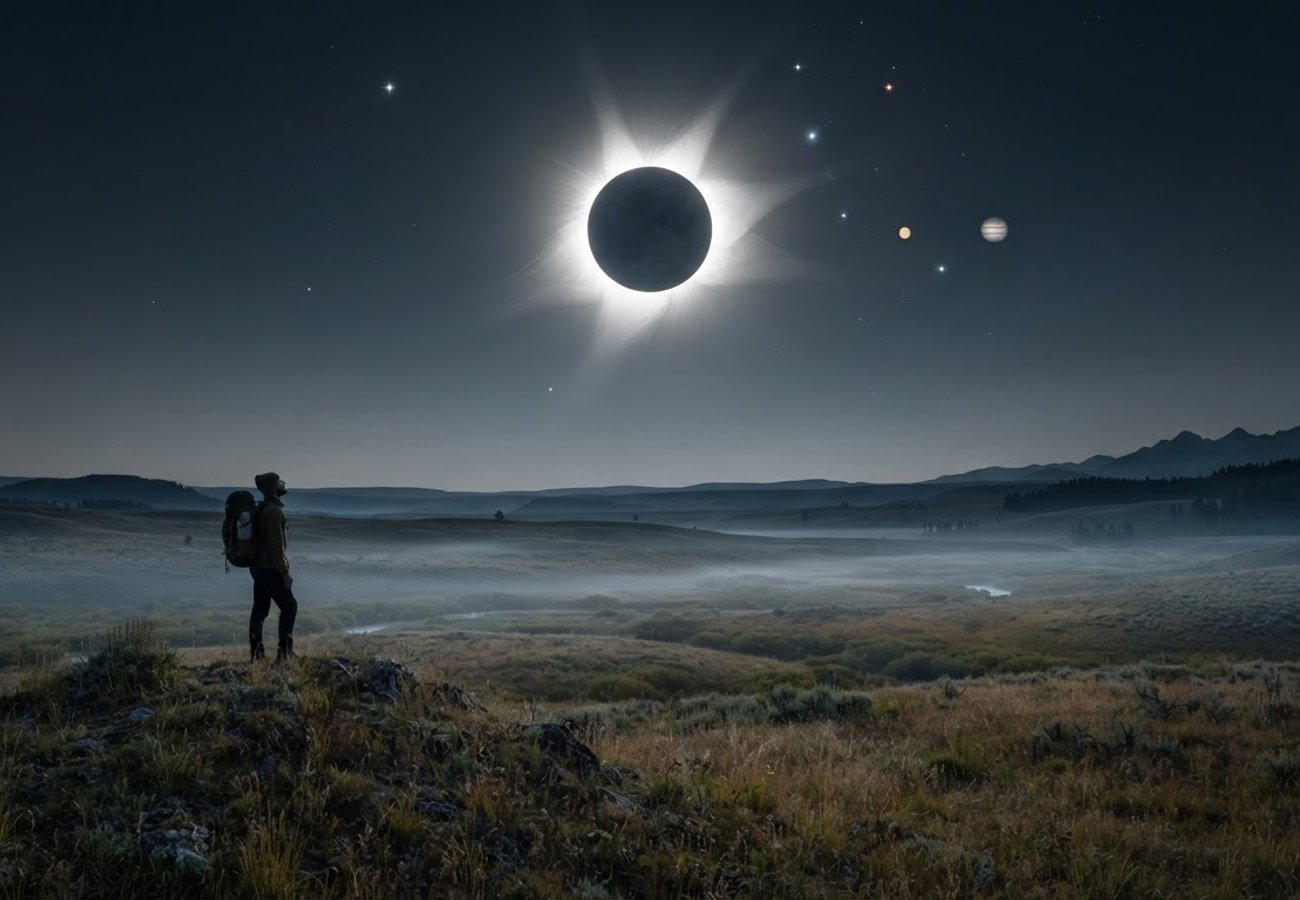
Image generated by AI
Total solar eclipses trigger rapid atmospheric reorganization, causing surface temperatures to plummet by up to 6 degrees Celsius and wind speeds to slacken almost instantly. For travellers, this creates a "sudden chill" and a perceptible stillness that requires specific gear and logistical planning.
The Mechanics of Eclipse-Induced Cooling
Recent atmospheric research, utilizing data from the Great American eclipses of 2017 and 2024, characterizes total solar eclipses as natural laboratories. By abruptly removing solar energy input, these events allow scientists to track the immediate reaction of the lower atmosphere. Data from state mesonets and university observatories confirm that the transition from daylight to twilight triggers a consistent signature of cooling, humidity spikes, and wind deceleration.
During the April 8, 2024, eclipse across North America, high-resolution profiling instruments recorded surface air temperature drops typically ranging between 2 and 5 degrees Celsius. A critical finding for those planning future excursions is the "thermal lag": the minimum temperature typically occurs approximately ten minutes after the moment of maximum obscuration. This indicates that the land surface continues to radiate heat even as the Sun begins to reappear.
Comparative Meteorological Data by Region
The magnitude of the temperature drop is heavily influenced by local geography, cloud cover, and the existing weather system. Historical data from Europe, Africa, and Asia show a wide variance in how the atmosphere responds to the Moon's shadow.
| Region/Event | Observed Temp Drop | Key Atmospheric Observation |
|---|---|---|
| North America (2024) | 2°C to 5°C | Minimum temp lagged totality by ~10 minutes |
| UK & Northern Europe (1999) | Up to 6°C | Stronger cooling recorded at grass-level sensors |
| Africa & Asia (Various) | 3°C to 5°C | Variance based on cloudiness and background systems |
| Coastal/Marine Zones | Muted/Gradual | Higher thermal inertia of sea surfaces slows cooling |
Atmospheric Stability and Humidity Shifts
Beyond the temperature drop, the "boundary layer"—the slice of air closest to the ground—undergoes a structural change. As solar radiation vanishes, convection weakens, causing the boundary layer to become more stable and shallow.
This stabilization results in a noticeable lull in wind speeds. Travellers often report a surreal stillness as turbulence weakens and ambient noise from wind and wildlife diminishes. Simultaneously, relative humidity tends to rise. While the absolute amount of water vapor remains constant, the cooler air reaches saturation more quickly, creating a sensation of dampness during the interval of totality.
Coastal vs. Inland Dynamics
For passengers on eclipse cruises or those stationed at coastal viewing sites, the experience differs from inland observations. Because the ocean possesses greater thermal inertia, sea surfaces cool more slowly than land.
Instruments deployed during the April 2024 event along the northeastern United States coastline found that temperature drops over water were more gradual. In some instances, the contrast between the rapidly cooling inland air and the warmer marine air triggered localized wind shifts, adding a layer of complexity to the coastal meteorological footprint.
Traveler Logistics Guide: Navigating the Eclipse Chill
From a ground-level perspective, the best way to navigate these atmospheric shifts is to treat the eclipse as a temporary seasonal change rather than a momentary event. The "sudden chill" can be jarring, especially if the background weather is hot and calm.
Clothing and Gear Strategy Do not rely on the ambient temperature of the morning. The most dramatic cooling occurs on hot, clear days when the disruption of daytime heating is most severe.
- Layering: Pack a windbreaker or light fleece, even in summer. The combination of dropping temperatures and rising humidity can make the air feel significantly colder than the thermometer suggests.
- Footwear: In sheltered or grassy areas, cooling is more intense. Ensure footwear provides adequate insulation from the ground.
Site Selection and Positioning
- Open Spaces: To experience the full range of atmospheric changes, position yourself in open areas with unobstructed sky views.
- Coastal Positioning: If viewing from a ship or beach, expect a more subtle temperature shift but be prepared for light, shifting breezes caused by land-sea temperature differentials.
Digital Transit and Policy Considerations When traveling to high-density "totality zones," be aware that local infrastructure often reaches a breaking point.
- Connectivity: Expect cellular networks to congest; download offline maps and transit schedules in advance.
- Customs and Entry: For international eclipse chasers, ensure all digital transit permits (such as ETIAS for Europe) are processed weeks prior to arrival to avoid bottlenecks at border crossings during peak event surges.
Infrastructure and Tourism Impact
The ability to predict these meteorological shifts allows tourism operators to better manage guest expectations and safety. Temperature-sensitive equipment and activities may be briefly impacted by the sudden drop in thermal energy. Furthermore, the predictable lull in wind speeds provides a window of stability for specialized viewing equipment, though the subsequent return of turbulence as the Sun reappears can be abrupt.
The astronomical spectacle of a total eclipse is as much a meteorological event as it is a visual one.
Related Travel Guides
Disclaimer
This article is for informational and educational purposes only. It does not constitute legal, financial, or professional advice. While we strive to provide accurate and up-to-date information, travel policies, regulations, and conditions change rapidly. Always verify information with official sources before making travel decisions. Nomad Lawyer makes no representations about the accuracy, reliability, completeness, or suitability of the information provided. Readers should consult qualified professionals for advice specific to their circumstances. The views expressed in this article are those of the author and do not necessarily reflect the views of Nomad Lawyer.
Preeti Gunjan
Contributor & Community Manager
A passionate traveller and community builder. Preeti helps grow the Nomad Lawyer community, fostering engagement and bringing the reader experience to life.
Learn more about our team →