Syrian Airlines Inaugurates Direct Aleppo to Moscow Flights as Airport Expansion Targets 2 Million Capacity

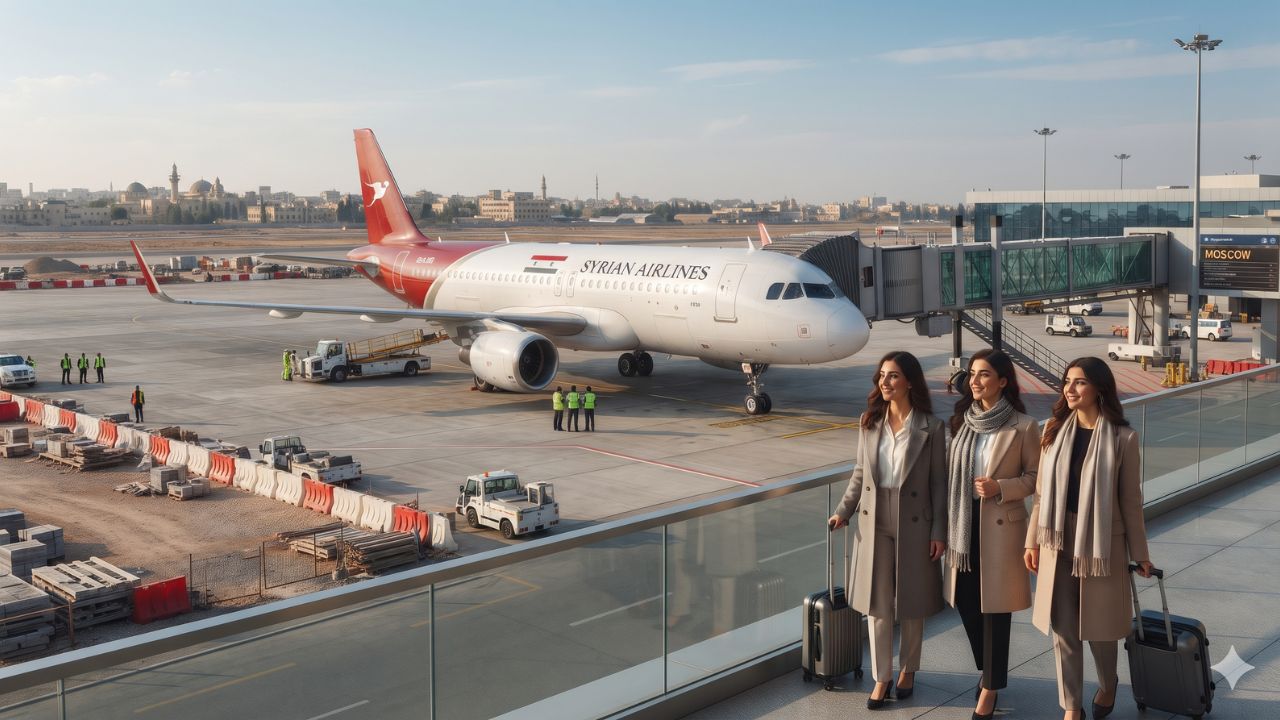
Just seventy-two hours after breaking ground on a major terminal overhaul to accommodate two million passengers annually, Aleppo International Airport dispatched its inaugural direct flight to Moscow. On 18 November 2026, national carrier Syrian Airlines executed its first commercial passenger service linking northern Syria directly with the Russian capital, fulfilling a strategic timeline announced by the General Authority of Civil Aviation and Air Transport on 15 October 2026. The flight marks the first time in years of regional warfare that Aleppo has hosted scheduled non-stop intercontinental service outside the capital corridor.
The departure occurred concurrently with a broader domestic transport reset. On the same day, Syrian Airlines inaugurated scheduled once-weekly domestic flights linking Damascus International Airport with Aleppo—joining the carrier's existing domestic lifeline to Deir Ezzor. While this expansion signals a determined effort to rebuild commercial transport links backed by foreign capital, western foreign ministries maintain strict "do not travel" advisories, emphasizing that new tarmac connections do not mitigate the acute security challenges on the ground.
Airport Overhaul Architecture and International Route Restoration
The launch of the Moscow corridor represents the operational spearhead of an infrastructure investment agreement signed between the Syrian civil aviation authority and Saudi Arabia's Elaf Investment Fund, an entity associated with the BinDawood Holding Group. Physical rehabilitation work officially began on 15 November 2026, aiming to modernize runways, enhance navigation and radar suites, expand cargo terminals, and scale the airport’s annual handling capacity beyond two million passengers.
The expansion comes as Syrian aviation authorities engage in multilateral technical discussions in Montreal, Canada, with the International Civil Aviation Organization (ICAO) focusing on safety oversight, air traffic management, and airspace harmonisation. Concurrently, Syrian Airlines has systematically rebuilt its international footprint throughout 2026. Damascus welcomed the return of Moscow flights on 16 August 2026, followed by service restorations to Amsterdam in July, Copenhagen on 21 September, and new European links into Berlin.
Domestically, the new weekly Damascus–Aleppo sector establishes a transit spine between the country's two largest metropolitan centers. Aviation planners have identified future domestic service restoration targets, including coastal Latakia, the northeastern hub of Qamishli, and the desert oasis gateway of Palmyra.
Tracking Syrian Airlines Route Restoration and Infrastructure Targets
The pace of airline route restorations and airport modernization across Syria reveals a coordinated effort to reactivate key international corridors:
| Project / Flight Milestone | Operational Date / Status | Partner / Operator | Route / Facility Scope | Strategic Infrastructure Role |
|---|---|---|---|---|
| Aleppo–Moscow Nonstop | Inaugurated 18 Nov 2026 | Syrian Airlines | Direct passenger service to Moscow | First direct intercontinental link from northern Syria |
| Damascus–Aleppo Domestic | Launched 18 Nov 2026 | Syrian Airlines | Weekly scheduled domestic flights | Second active domestic route alongside Deir Ezzor |
| Aleppo Airport Expansion | Commenced 15 Nov 2026 | Elaf Investment Fund / BinDawood | Terminal & technical rehabilitation | Targets annual capacity exceeding 2 million passengers |
| Damascus–Moscow Resumption | Launched 16 Aug 2026 | Syrian Airlines | Capital-to-capital direct route | Primary bilateral air link with the Russian Federation |
| Damascus–Copenhagen | Launched 21 Sep 2026 | Syrian Airlines | Direct Nordic European service | Direct Scandinavian corridor for diaspora travel |
| Damascus–Amsterdam | Resumed July 2026 | Syrian Airlines | Western European gateway connection | Restored passenger access to northern European hubs |
| Planned Domestic Additions | Under regulatory review | Syrian Airlines | Qamishli, Latakia, and Palmyra | Re-establishing domestic regional connectivity |
What Makes Historic Aleppo Different
Aleppo stands as one of the world's oldest continuously inhabited urban settlements, its recorded history stretching back more than four millennia through Hittite, Assyrian, Greek, Roman, Byzantine, Ayyubid, and Ottoman eras. At the city’s heart sits the medieval Citadel of Aleppo, an imposing fortress perched atop an enormous partially artificial limestone mound rising 150 feet above the urban plain.
Surrounding the citadel lies the Ancient City of Aleppo, recognized as a UNESCO World Heritage site in 1986. The quarter encompasses the vast Al-Madina Souq—a vaulted labyrinth of stone-vaulted market streets stretching over eight miles—where merchants historically traded silks, spices, and Aleppo’s famous laurel and olive oil soap. The Great Mosque of Aleppo (Umayyad Mosque), founded in the eighth century, anchors the city's religious heritage.
However, the scars of modern conflict remain deeply visible. Enscribed on the UNESCO List of World Heritage in Danger since 2013, extensive sections of the ancient souks and historic residential fabric suffered catastrophic structural devastation during years of heavy bombardment. While municipal artisans and international restoration teams have meticulously rebuilt vaulted corridors like Souq Al-Saqatiyya, municipal water lines, electricity networks, and residential quarters remain under profound operational strain.
Visitor Insider Tips for Permitted Travel and Diaspora Logistics
For humanitarian aid workers, authorized international monitors, and diaspora travelers undertaking essential journeys, navigating northern Syria's travel infrastructure requires strict logistical discipline:
- Respect Government Travel Advisories: The UK Foreign, Commonwealth & Development Office (FCDO) maintains an absolute advisory against all travel to Syria. Western governments have evacuated all consular personnel from Syrian territory, meaning emergency diplomatic evacuation or consular support is non-existent.
- Secure War-Risk Medical Evacuation Coverage: Standard international travel insurance policies automatically exclude coverage in nations under active foreign office travel bans. Travelers must secure specialized hostile-environment insurance policies that explicitly cover war risk and emergency aeromedical evacuation through regional air ambulances.
- Carry Physical Cash in Foreign Hard Currency: Due to extensive international financial sanctions, Visa, Mastercard, and SWIFT-connected banking systems do not operate inside Syria. Credit cards, debit cards, and foreign bank transfers are completely useless; travelers must carry pristine, uncreased US dollars or euros to settle all accommodation, transport, and living expenses in cash.
- Coordinate Protected Ground Logistics in Advance: Aleppo International Airport sits roughly six miles southeast of the central quarters. Road checkpoints are frequent, and transit security can change rapidly. Arrange private, vetted transport via licensed diplomatic agencies or reputable local family contacts before arriving at the airfield.
Cultural and Environmental Context
The reopening of Aleppo's skies highlights the humanitarian paradox facing northern Syria. For hundreds of thousands of displaced families residing abroad, direct air corridors eliminate grueling 12-hour overland taxi transfers from Beirut across mountainous frontier checkpoints. Reconnecting northern communities facilitates family reunions and the delivery of vital private aid to elderly relatives.
Yet heritage preservationists caution that aviation modernization cannot substitute for comprehensive urban reconstruction. Restoring the fragile limestone masonry of the ancient souks requires specialized stonecutters, traditional lime mortars, and immense capital. Balancing infrastructure investment—such as the Saudi-backed airport project—with the urgent necessity of restoring basic municipal water pipelines and reliable power grids remains an enduring humanitarian priority.
FAQ: Traveling to Aleppo and Syrian Aviation 2026
When did Syrian Airlines launch the Aleppo to Moscow route?
Syrian Airlines operated its inaugural direct flight from Aleppo International Airport to Moscow on 18 November 2026, following an initial announcement on 15 October 2026.
What is the goal of the Aleppo International Airport expansion?
Backed by Saudi Arabia's Elaf Investment Fund, the project began on 15 November 2026 to modernize facilities and expand annual passenger capacity beyond two million travelers.
Are domestic flights operating between Damascus and Aleppo?
Yes. Syrian Airlines introduced scheduled once-weekly domestic flights linking Damascus and Aleppo on 18 November 2026, complementing existing domestic flights to Deir Ezzor.
Is Syria safe for international tourism?
No. Western governments, including the United Kingdom, maintain unequivocal travel advisories against all travel to Syria due to ongoing security threats and zero consular assistance.
Against the limestone ramparts of northern Syria, the roar of departing jet engines signals a cautious attempt to rebuild connectivity across a storied yet fractured landscape.
Related Travel Guides
This article is for informational purposes. Flight routes, passenger regulations, visa rules, and transit advisories are subject to change by airlines and aviation authorities. Readers are advised to verify schedules and travel documentation with relevant carriers and border agencies before departure.
Related Stories
European Airlines Reconnect With Damascus as Aegean and German Carriers Launch Direct Flights
UK Holiday Travel Under Strain as Jet2 Challenges Aviation Taxes Amid European Fuel Spike