
Massive Flight Cancellations and Severe Travel Chaos Strike Charleston Airport, Decimating Regional Connections and Stranding US Passengers
Breaking airline news: Severe travel chaos engulfs Charleston International Airport as sudden flight cancellations and massive delays across PSA Airlines, Delta, and American Airlines obliterate passenger itineraries and domestic connections.

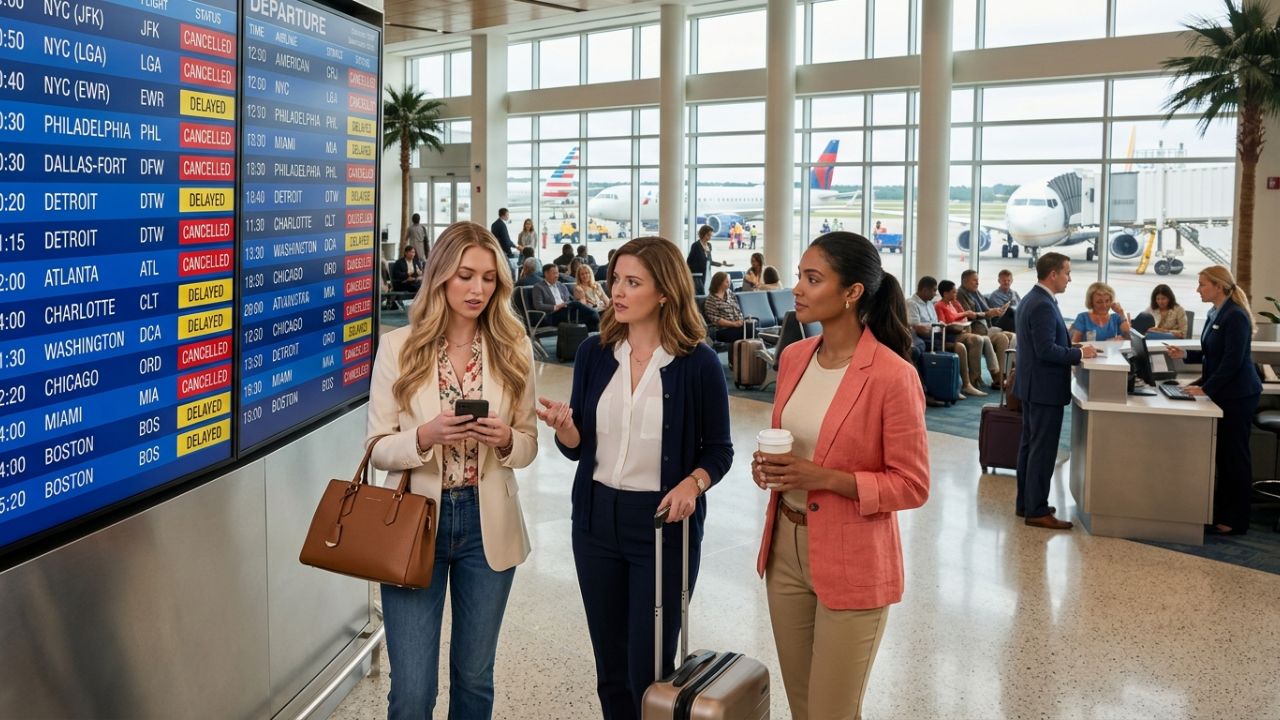
Image representing the intense operational breakdown at Charleston International Airport. As sudden flight cancellations and cascading delays hit major US carriers, travelers are plunged into severe travel chaos, destroying carefully planned itineraries across the domestic network.
Massive Flight Cancellations and Severe Travel Chaos Strike Charleston Airport, Decimating Regional Connections and Stranding US Passengers
A sudden and brutal wave of severe travel chaos has completely overwhelmed Charleston International Airport (CHS) as a massive spike in flight cancellations and cascading operational delays obliterates schedules across the US domestic network. Recorded on June 13, 2026, the sweeping airport disruptions resulted in 9 immediate flight cancellations and 25 severe delays, stranding thousands of passengers desperate to connect to major national hubs. The sudden logistical collapse heavily impacted major regional carriers, including PSA Airlines, Republic Airways, and Endeavor Air, while mainline titans like Delta Air Lines and American Airlines simultaneously suffered significant operational hits, forcing travelers into a desperate scramble for survival amidst the chaos.
This breaking airline news highlights a catastrophic failure in regional connectivity, transforming what should be a reliable mid-tier transit node into an absolute bottleneck. For passengers attempting to fly out of Charleston toward major cities like Philadelphia, New York, Dallas-Fort Worth, and Detroit, the sudden groundings translate to blown itineraries, destroyed hotel reservations, and missed critical connections. As aircraft schedules fracture under the pressure, the ensuing travel chaos acts as a stark warning to all summer passengers: the domestic aviation network remains highly volatile, and travelers must adopt aggressive, hyper-flexible strategies to avoid being trapped in escalating airport disruptions.
Expanded Overview: The Collapse of Regional Connectivity
When an airport that serves as a vital artery for domestic US travel suffers an operational breakdown of this magnitude, the shockwaves are felt instantly across the entire national grid. The disruption at Charleston International Airport was not a single isolated event, but rather a system-wide scheduling imbalance that devastated both peak and off-peak departure windows. By neutralizing critical routes to massive mega-hubs, the cascading delays effectively trapped passengers at the origin point, while simultaneously starving destination airports of expected incoming hardware. This aggressive compression of the flight schedule forced airlines to scramble for available crews and aircraft, leaving thousands of passengers facing the grim reality of overnight strandings and chaotic rebooking battles.
Section-Wise Breakdown: Navigating the Domestic Disruption
To fully grasp the massive scale of these flight cancellations, it is crucial to analyze how the sudden breakdown impacted specific national routes originating from Charleston.
The Obliterated Corridors: Terminated Routes The most severe travel chaos was inflicted upon passengers holding tickets for high-demand routes that were completely canceled. Flights destined for Philadelphia, New York City, Dallas-Fort Worth, and Detroit were abruptly scrubbed from the board. For passengers utilizing these routes as essential bridges to international flights or broader domestic connections, the sudden cancellations resulted in total itinerary failure, forcing them to either abandon their trips entirely or accept brutal multi-day delays.
The Cascading Gridlock: Delayed Networks Even for routes that managed to avoid outright termination, the pain was intense. A massive wave of 25 delays crippled outbound flows to Atlanta, Charlotte, Washington, D.C., Denver, New York City, Kansas City, and Minneapolis-Saint Paul. Because these destinations serve as vital connecting hubs, a two-hour delay out of Charleston easily translates into a missed connection in Atlanta or Charlotte, creating secondary layers of travel chaos for passengers who find themselves stranded halfway to their final destination.
Flight Details: The Disruption Matrix
To provide absolute clarity on the scale of this operational failure, the following verified data details the exact breakdown of flight cancellations and delays recorded at Charleston International Airport across multiple US carriers.
| Airline Operator | Total Cancellations | Cancellation Rate | Total Delays | Delay Rate |
|---|---|---|---|---|
| PSA Airlines (AAL) | 5 | 19% | 4 | 15% |
| Republic Airways | 2 | 20% | 0 | 0% |
| Endeavor Air (DAL) | 2 | 16% | 4 | 33% |
| Delta Air Lines | 0 | 0% | 6 | 20% |
| American Airlines | 0 | 0% | 6 | 23% |
| Southwest Airlines | 0 | 0% | 3 | 10% |
| JetBlue | 0 | 0% | 1 | 10% |
| Breeze Airways | 0 | 0% | 1 | 3% |
Data reflects the verified flight tracking telemetry for operations at Charleston International Airport on June 13, 2026. The matrix highlights the severe operational impact on regional feeder networks and major mainline carriers.
Passenger Impact: Stranded in the Terminal
The massive spike in airport disruptions at Charleston inflicted severe financial and emotional pain on passengers. When flights are suddenly grounded, the immediate fallout is chaotic: passengers swarm customer service desks, desperately attempting to secure the final few seats on alternative routes before they vanish. Those flying on heavily impacted regional carriers like PSA Airlines and Endeavor Air were forced to navigate a grueling rebooking process, often discovering that their connecting flights out of major hubs were already lost. The travel chaos forced hundreds of passengers to absorb unbudgeted costs for emergency hotel stays, alternative ground transportation, and lost vacation days, underscoring the extreme vulnerability of relying on single-hub connections during periods of high network stress.
Industry Analysis: The Fragility of Feeder Networks
While specific meteorological or technical triggers for the June 13 collapse have not been universally declared, disruptions of this scale expose the inherent fragility of the US regional aviation model. Regional carriers like PSA Airlines and Republic Airways are vital for feeding passengers into mainline hubs, but they operate with extremely tight turnaround margins. When a scheduling anomaly occurs—whether due to air traffic control congestion, crew availability limits, or sudden technical groundings—these regional networks are often the first to fracture. The data clearly shows that while mainline carriers like Delta and American absorbed heavy delays, it was the regional feeder flights that suffered the highest cancellation rates, effectively cutting the vital supply lines to the mega-hubs and plunging the entire system into travel chaos.
“The sweeping flight cancellations at Charleston highlight a critical vulnerability in the domestic transit grid," noted Anup Kumar Keshan, Founder and Editor-in-Chief of Travel And Tour World. "When regional connectivity breaks down, the resulting travel chaos doesn't just impact local passengers—it sends massive disruptive shockwaves through major national hubs. Travelers must treat every regional connection as a potential fail-point and plan their itineraries with maximum defensive buffers.”
Conclusion: A Highly Volatile Recovery Outlook
The severe travel chaos that erupted at Charleston International Airport serves as a brutal reminder of the high-stakes reality of modern domestic flying. The sudden wave of flight cancellations and delays across major carriers completely decimated passenger schedules, exposing the extreme volatility of regional transit connections. While airlines are working aggressively to restore network integrity and clear the backlog of stranded passengers, the immediate outlook remains highly unpredictable. Travelers relying on regional airport departures must assume a defensive posture, constantly monitoring real-time flight telemetry, understanding their carrier’s rebooking policies, and maintaining absolute flexibility to survive the escalating threat of sudden airport disruptions.
Key Takeaways
- Massive Disruptions: Charleston International Airport suffered 9 flight cancellations and 25 severe delays, triggering widespread travel chaos.
- Decimated Routes: Critical connections to major hubs like Philadelphia, New York City, and Dallas-Fort Worth were completely severed.
- Regional Collapse: PSA Airlines and Endeavor Air recorded some of the highest cancellation and delay rates, severely impacting feeder traffic.
- Systemic Shockwaves: Mainline carriers including Delta and American Airlines suffered heavy delays, compounding the national travel gridlock.
- Passenger Vulnerability: Travelers were left stranded, facing missed connections, emergency rebooking battles, and significant financial losses.
Related Travel Guides
Disclaimer
This article is for informational and educational purposes only. It does not constitute legal, financial, or professional advice. While we strive to provide accurate and up-to-date information, travel policies, regulations, and conditions change rapidly. Always verify information with official sources before making travel decisions. Nomad Lawyer makes no representations about the accuracy, reliability, completeness, or suitability of the information provided. Readers should consult qualified professionals for advice specific to their circumstances. The views expressed in this article are those of the author and do not necessarily reflect the views of Nomad Lawyer.
Kunal K Choudhary
Co-Founder & Contributor
A passionate traveller and tech enthusiast. Kunal contributes to the vision and growth of Nomad Lawyer, bringing fresh perspectives and driving the community forward.
Learn more about our team →