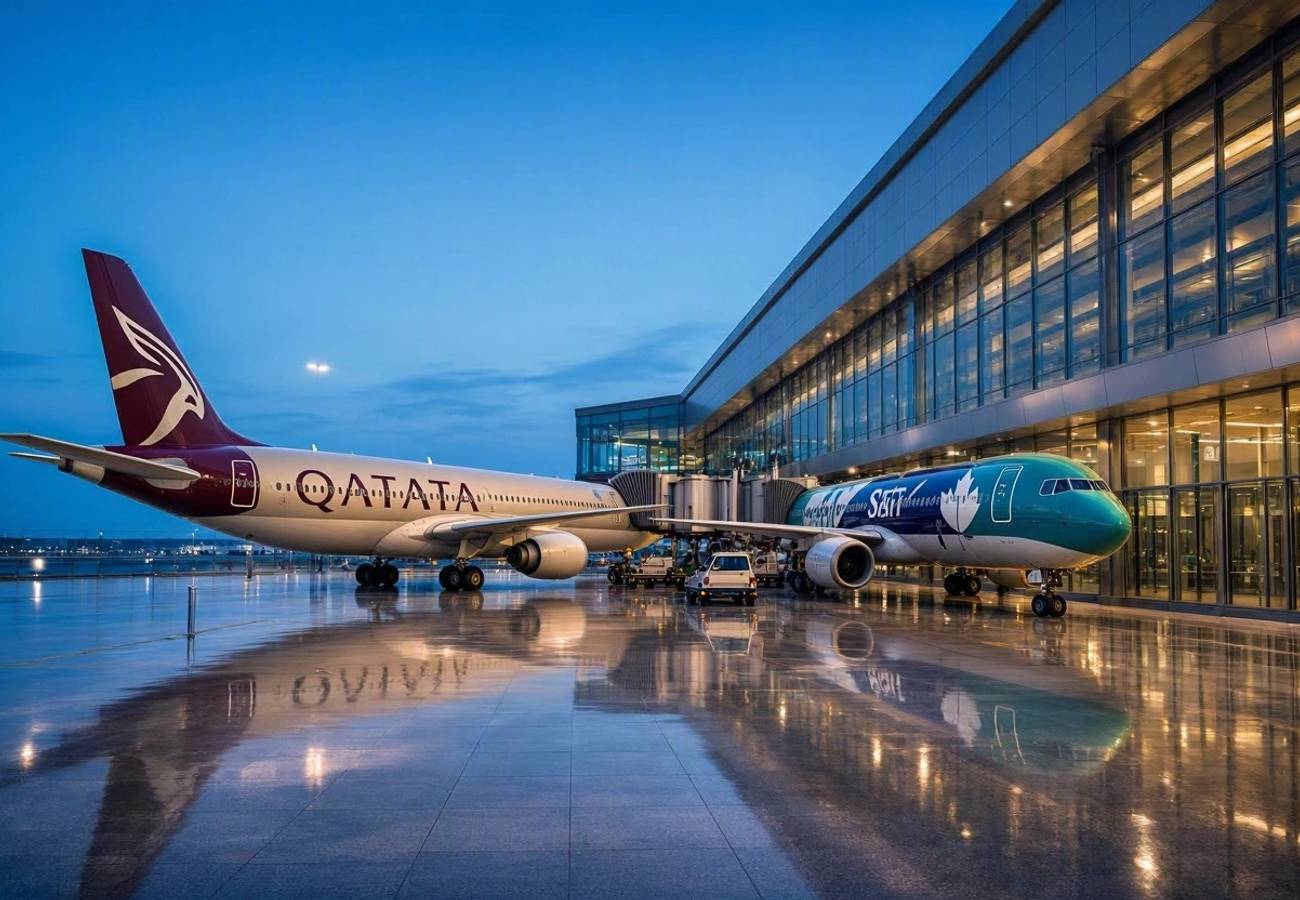
Qatar Airways Outpaces Gulf Rivals in Flight Disruption Payouts: GCC Passenger Rights Guide 2026

While many long-distance flyers assume that transiting through the Middle East leaves them without statutory protection during schedule meltdowns, a single grounded widebody aircraft departing Europe can cost a Gulf carrier upwards of €224,000 in mandatory compensation and passenger care. Regulatory disclosures published across the Gulf Cooperation Council (GCC) in October 2026 reveal that Qatar Airways has established a commanding lead over regional competitors like Emirates and Saudia in resolving flight delay claims, maintaining a tight 0.45 percent long-delay rate and processing cash reimbursements through automated digital channels rather than restricting passengers to travel vouchers.
Gulf Aviation Consumer Protections: Qatar Airways vs Regional Benchmarks
Civil aviation governing bodies across the Arabian Peninsula are enforcing stringent consumer protection rules as passenger traffic through Doha, Dubai, Riyadh, Abu Dhabi, and Muscat scales past historic highs. Historically, travelers booking flights on Middle Eastern airlines were subject almost entirely to discretionary conditions of carriage. In 2026, an overlapping matrix of regional and international legal standards—governed by national civil aviation authorities, the European Union, the United Kingdom, and Transport Canada—mandates transparent cash compensation and clear duty of care provisions.
According to official comparative reliability audits, Qatar Airways achieved a systemwide on-time performance rate of approximately 65.68 percent across thousands of daily global sectors. This compares favorably against the regional GCC industry average of 62.0 percent to 64.5 percent. Even more telling for long-haul passengers is the carrier's containment of severe disruptions: Qatar Airways limited delays exceeding three hours (180 minutes) to roughly 0.45 percent of total operations, whereas competing regional hubs recorded long-delay rates between 1.10 percent and 1.80 percent.
The airline's 24-hour flight cancellation rate stood at 2.5 percent, outperforming the wider regional average of 2.8 percent to 3.5 percent. Because Qatar Airways anchors its worldwide network of more than 170 destinations around a single transfer facility at Hamad International Airport in Doha, operational bottlenecks are managed through centralized ground control systems. By integrating statutory claim workflows directly into its customer mobile application and website, the airline eliminates the multi-month delays that often accompany traditional paper reviews.
| Regulatory Framework / Performance Indicator | Qatar Airways Benchmark | Regional Industry Standard (Emirates, Saudia, Peers) | Passenger Legal Entitlement & Financial Remedy |
|---|---|---|---|
| Systemwide On-Time Rate (OTP) | ~65.68% (or ~65.7%) | 62.0% – 64.5% | Punctual schedule delivery across intercontinental transfer banks. |
| Long-Delay Rate (>3 Hours) | ~0.45% of flights | 1.10% – 1.80% of flights | Triggers statutory cash payouts under EU261, UK261, and APPR frameworks. |
| 24-Hour Flight Cancellation Rate | ~2.5% | 2.8% – 3.5% | Full ticket refund or alternate re-routing within mandatory time windows. |
| GACA 3 to 6-Hour Delay Payout | Applied on KSA sectors | Statutory across Saudi routes | 50 Special Drawing Rights (SDRs) paid directly to passenger. |
| GACA Delays Exceeding 6 Hours | Applied on KSA sectors | Statutory across Saudi routes | 150 Special Drawing Rights (SDRs) direct financial remedy. |
| GACA Delay Exceeding 5 Hours | Voluntary cancellation | Mandatory passenger choice | Right to treat flight as cancelled with 100% unused refund + compensation. |
| GACA Denied Boarding Penalty | 200% ticket value + refund | Standard KSA enforcement | Immediate cash settlement for involuntary offloading. |
| GACA Baggage Delay Compensation | Scaled daily disbursement | 148 SDRs Day 1; 60 SDRs/day | Capped at a maximum statutory threshold of 1,288 SDRs. |
| GACA Lost or Damaged Baggage | Full statutory reimbursement | Up to 1,288 SDRs per passenger | Documented property recovery or replacement value. |
| EU261 / UK261 Long-Haul Delay (>3,500 km) | €600 / £520 cash compensation | €600 / £520 cash compensation | Applies to all EU/UK departures to or through Gulf hubs (Case C-537/17). |
| Canadian APPR 9+ Hour Delay | CAD $1,000 cash remedy | CAD $1,000 cash remedy | Mandatory for direct flights to/from Canada delayed by 9 hours or more. |
| Tarmac Delay Disembarkation Mandate | Max 3 hours before return to gate | Max 3 hours before return to gate | Mandatory passenger deplaning unless safety/security rules dictate otherwise. |
| Cabin Involuntary Downgrade | 50% to 75% sector fare refund | 50% to 75% sector fare refund | Reimbursed directly to original payment method within seven days. |
| Financial Risk per Disrupted Widebody | ~€224,000 exposure | ~€224,000 exposure | Calculated for 300-seat Airbus A350 or Boeing 777 (€180k claims + care). |
Statutory Disruption Compensation Matrix: GCC, Europe, and North America
International air passengers moving through Gulf hubs fall under distinct consumer protection regimes depending on their route origin, destination, and ticket structure. The most robust regional regime is enforced by the Saudi General Authority of Civil Aviation (GACA). Under GACA Passenger Rights Protection Regulations, travelers departing Saudi airports or flying on Saudi carriers receive explicit cash remedies calculated in International Monetary Fund Special Drawing Rights (SDRs):
- Delays Between 3 and 6 Hours: Airlines must issue financial compensation equal to 50 SDRs per affected passenger.
- Delays Surpassing 6 Hours: The mandatory compensation increases to 150 SDRs.
- Delays Crossing 5 Hours: The traveler holds the legal option to consider the trip aborted, obligating the carrier to provide a full refund of the unused ticket along with cancellation compensation.
- Denied Boarding: Airlines bumping passengers involuntarily must reimburse 200 percent of the unused ticket price in addition to issuing a full ticket refund.
- Delayed and Damaged Luggage: GACA rules require airlines to disburse 148 SDRs for luggage delayed on the first day, followed by 60 SDRs for each subsequent day of delay, up to a statutory cap of 1,288 SDRs. Damaged or permanently lost baggage mandates compensation up to the same 1,288 SDR ceiling.
When journeys begin in Europe, consumer rights expand substantially under European Commission Air Passenger Rights (Regulation EC 261/2004) and matching UK261 legislation. Payouts follow fixed distance tiers:
- Short-Haul (<1,500 km): €250 or £220.
- Medium-Haul (1,500 km to 3,500 km): €400 or £350.
- Long-Haul (>3,500 km): €600 or £520 for arrival delays reaching three hours or more at the final destination.
A landmark ruling by the Court of Justice of the European Union (Case C-537/17 Wegener) established that connecting itineraries booked under a single reservation departing an EU or UK airport remain fully protected through to the final arrival point. For instance, a traveler flying London or Paris to Bangkok via Doha on Qatar Airways is entitled to €600 (£520) if an airline-caused delay on either sector creates a three-hour late arrival in Thailand.
Transatlantic travelers bound for Canada benefit from the Canadian Air Passenger Protection Regulations (APPR). Disruption payments on Canadian routes scale from CAD $400 for delays between 3 and 6 hours, CAD $700 for delays between 6 and 9 hours, and CAD $1,000 for delays reaching 9 hours or more. Canadian rules also require airlines to provide clear verbal and electronic status updates every 30 minutes until departure.
Carrier Disruption Policies: Comparing Qatar Airways, Emirates, and Saudia
Operational strategies diverge significantly among the Gulf's three major international airlines. Qatar Airways operates exclusively through Hamad International Airport, routing travelers through unified transit concourses. When flight delays occur within carrier control, the airline's automated system routes affected passengers toward direct digital compensation processing. By allowing travelers to select direct bank transfer or credit card reversal instead of forcing restricted travel vouchers, the airline resolves claims with high velocity.
Emirates manages the planet's largest fleet of Airbus A380 and Boeing 777 widebody aircraft out of Dubai International Airport. The carrier adheres strictly to UAE General Civil Aviation Authority (GCAA) rules and international conventions. On flights leaving European hubs, Emirates provides statutory cash settlements (€250 to €600) alongside structured duty of care packages, including four-star hotel accommodations, airport transfers, and meal vouchers for overnight interruptions. However, because Emirates is not an EU carrier, flights originating in Dubai heading toward Europe do not fall under EC 261 mandates. Passengers on those routes must rely on the airline's internal customer care policies and local civil aviation frameworks.
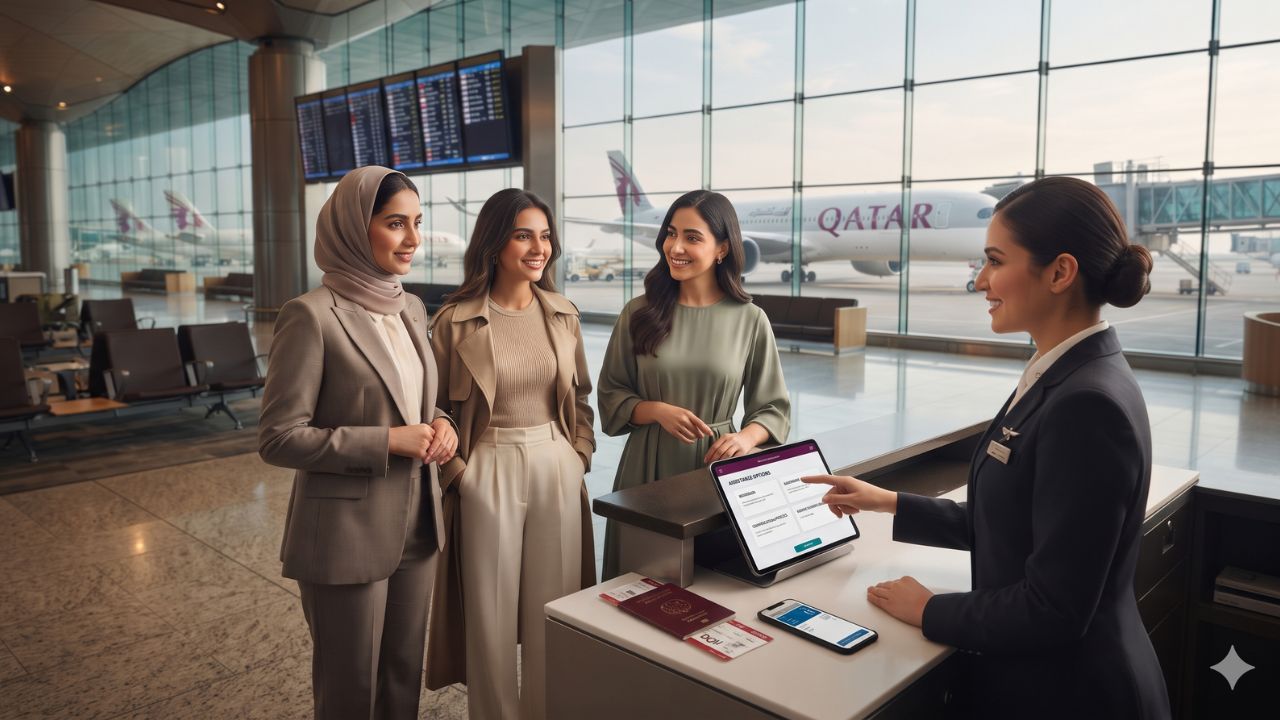
Saudia, operating split main hubs at Riyadh King Khalid International Airport and Jeddah King Abdulaziz International Airport, is governed by GACA's enhanced 2026 consumer framework. The national carrier faces automatic financial penalties if it fails to disburse SDR allowances for flight delays, baggage losses, or gate bumps. Saudia has updated its ground service desks with digital tablet interfaces, enabling station agents to approve immediate meal vouchers after two hours of delay and coordinate overnight hotel rooms whenever connections slip past midnight.
Across all GCC carriers, duty of care rules require free hot meals and cold drinks after two hours of flight disruption, as well as access to two free telephone calls, faxes, or emails. If an aircraft sits on the active apron or taxiway for more than three hours, international and regional transport standards demand that the airline return to the terminal and allow passengers to disembark, provided safety and security conditions permit. If an airline involuntarily downgrades a passenger to a lower seating tier, statutory rules require a refund of 50 percent to 75 percent of the ticket sector price within seven days.
Transit Passenger Insider Tips: Layovers, Claims, and Hub Logistics
- Bypass Third-Party Claim Agencies: Never surrender 30 to 40 percent of your statutory €600 or CAD $1,000 payout to online claims agencies. Qatar Airways maintains an internal digital portal under its customer support tab where travelers can upload boarding passes and booking references to receive direct bank transfers with zero commission deductions.
- Hamad Airport Delay Hotel Protocol: If your connection in Doha is disrupted by more than eight hours due to schedule adjustments under airline control, head directly to the primary transfer service desk near the giant yellow Lamp Bear sculpture in Concourse A/B. Present your boarding pass to obtain a complimentary room voucher for the airside Oryx Airport Hotel or an escorted landside transit hotel.
- Doha Metro Stopover Hack: If your daytime connection faces an unexpected five-to-six-hour delay, store your carry-on luggage at the terminal storage lockers and walk straight into the Hamad International Airport Metro Station. Board the Red Line into central Doha. In roughly 20 minutes and for a fare of only 2 QAR (about €0.50), you can explore the alleys of Souq Waqif, visit the Museum of Islamic Art, or wander the restored streets of Msheireb Downtown before clearing express transit security.
- Track Special Drawing Rights (SDR) Conversions: If filing a delay or lost baggage claim under Saudi GACA rules, your settlement will be calculated in SDRs, an international reserve asset created by the IMF. Verify current exchange rates on the date of your settlement, and request that the payout be converted into USD or EUR before transfer to prevent local bank exchange fees.
- Document Every Delay Reason in Writing: Always ask the boarding gate supervisor or customer service desk for a stamped flight delay confirmation report (Attestation de Retard). Airlines frequently classify delays as air traffic control issues or weather events to dodge statutory payouts; having official documentation stating aircraft mechanical trouble or crew rotation issues guarantees a swift claim approval.
Cultural and Economic Context: Gulf Vision 2030 and Global Transit Diplomacy
Commercial aviation represents the central economic engine driving national development roadmaps across the Gulf Cooperation Council, including Qatar National Vision 2030 and Saudi Arabia's Vision 2030. These sovereign strategies aim to diversify regional economies away from hydrocarbon dependence by positioning Gulf capitals as premier global hubs for tourism, trade, international diplomacy, and international sports events.
In this high-stakes environment, passenger trust is a direct reflection of national brand reputation. When flight disruptions leave thousands of intercontinental travelers stranded in transit terminals, the economic fallout extends far beyond individual compensation checks. Megahub operators recognize that a single canceled widebody flight carrying 300 passengers generates roughly €224,000 in statutory compensation, hotel accommodation, and catering liability. Across an entire fleet of modern Airbus A350-1000 and Boeing 777 aircraft, operational reliability safeguards millions of dollars in corporate balance-sheet reserves.
At the same time, regional aviation ministries are balancing rapid fleet expansion with environmental sustainability mandates. GCC hubs are integrating Sustainable Aviation Fuel (SAF) bunkering systems and investing in next-generation taxiway routing software that minimizes aircraft auxiliary engine runtimes on the ground. By pairing rigorous punctuality with enforceable passenger rights, Gulf carriers are proving that passenger care and operational scale can advance hand in hand across modern global skies.
FAQ: GCC Flight Delay Compensation 2026–2027
Can I claim EU261 compensation on a Qatar Airways flight from London to Sydney via Doha?
Yes. Under EU Case C-537/17 Wegener, single-ticket bookings departing European Union or UK airports remain covered through to your final destination, qualifying you for up to €600 (£520) if you arrive three hours late.
How does Saudi Arabia's GACA compensation work for delayed luggage?
GACA mandates that airlines pay 148 SDRs for luggage delayed on the first day, plus 60 SDRs for each additional day up to a maximum payout of 1,288 SDRs.
What happens if my plane is held on the tarmac for over three hours in the GCC?
Under GACA and international aviation directives, airlines must return the aircraft to the gate and permit passengers to disembark safely, unless strict airfield security protocols prohibit movement.
Do Gulf airlines have to give cash refunds instead of flight vouchers?
Yes. Under GACA, EU261, and Canadian APPR mandates, travelers are legally entitled to receive monetary refunds sent to their original payment method rather than mandatory airline vouchers.
In the fast-moving corridors of global transit, the true mark of a world-class airline is not how smoothly it flies when skies are clear, but how honorably it treats its travelers when schedules fall apart.
Related Travel Guides
London Gatwick 20% Passenger Surge Fuels Direct Air Corridors to Italy, Spain, and Slovakia
Emirates Opens Refurbished Rome Travel Store in EUR: Italy Network and Global Advice Guide
The Best Middle East Transit Lounges and Free City Tour Layovers, According To Reddit (Coming Soon)
This article is for informational purposes. Flight routes, passenger regulations, visa rules, and transit advisories are subject to change by airlines and aviation authorities. Readers are advised to verify schedules and travel documentation with relevant carriers and border agencies before departure.
Related Stories
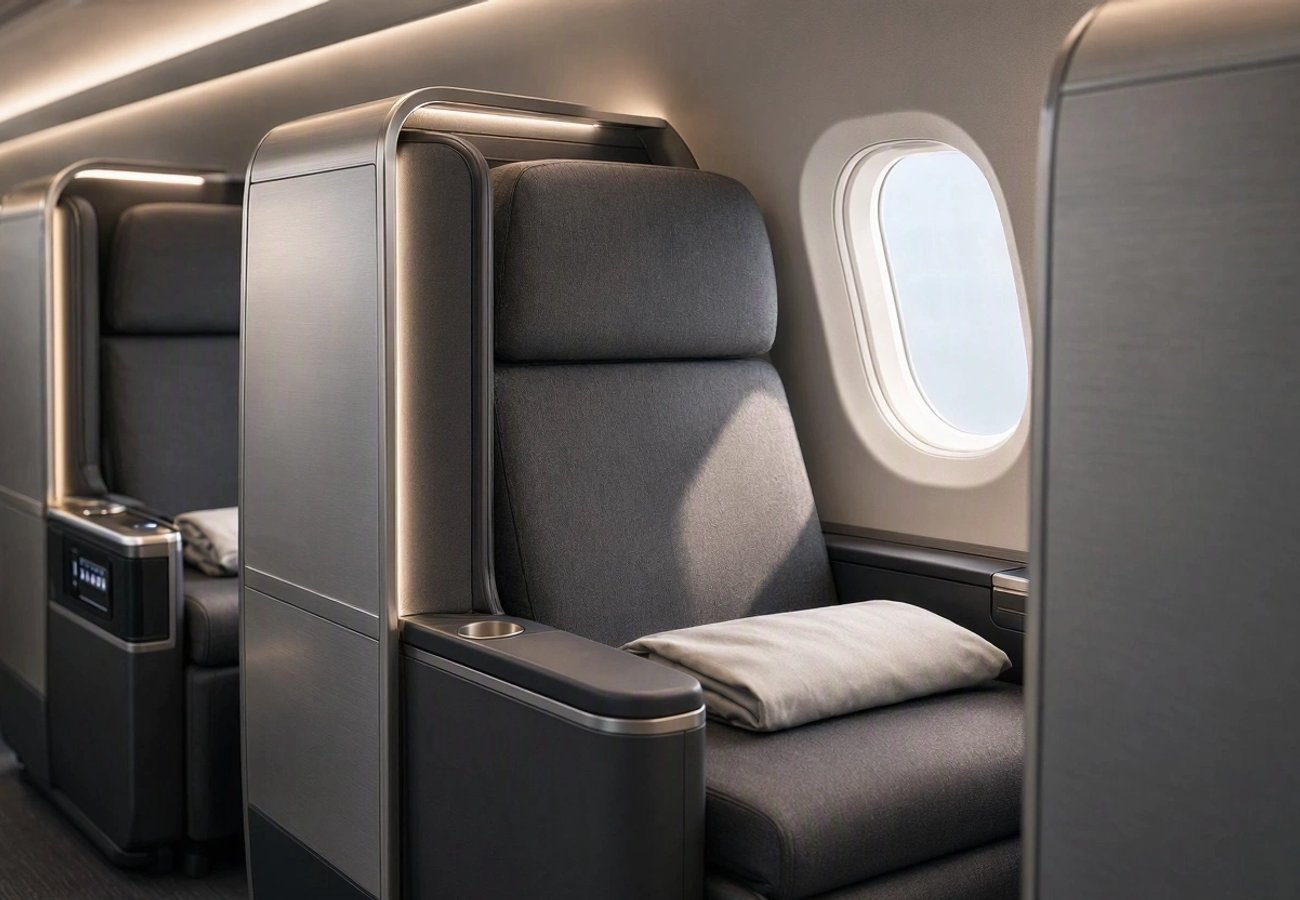
Qatar Airways A321LR Business Class: 16 Lie-Flat Suites and Privacy Doors Launching 2027
WestJet and Qatar Airways Expand Reciprocal Codeshare Network to Boost Canada-Doha Connectivity 2026