
Saudi Arabia's Southern Ardah: Preserving Al-Baha's Sword Traditions and Regional Heritage in 2026
Explore the Southern Ardah of Al-Baha, a masterful Arabian sword tradition blending poetry and rhythmic dance to preserve Saudi Arabia's regional identity.

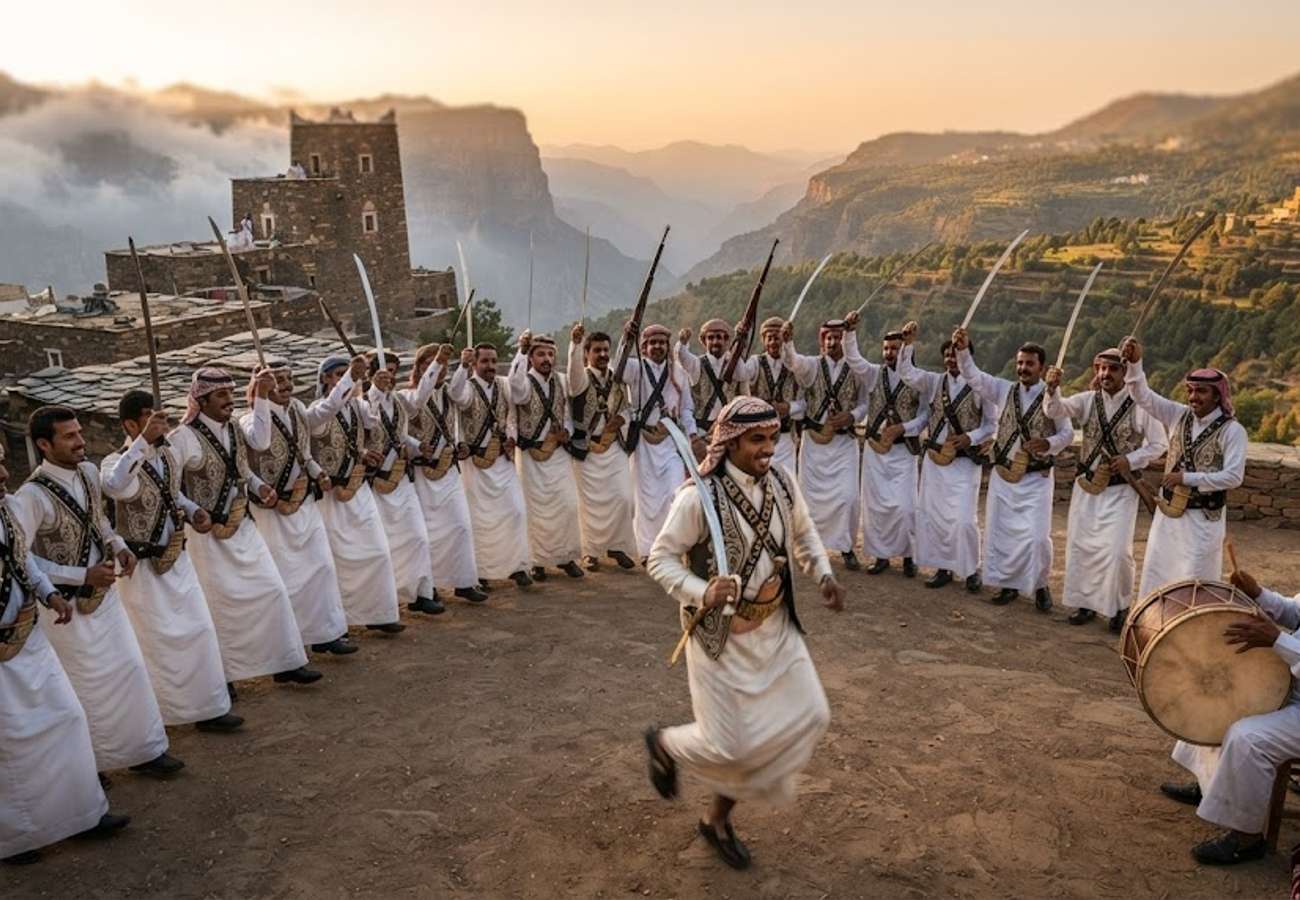
Image generated by AI
The Southern Ardah of Al-Baha is more than a performance; it is a living oral archive supported by 12 folk troupes and over 350 active members dedicated to preserving Saudi Arabia's regional identity.
The Evolution of Southern Ardah in Al-Baha
In the highlands of Al-Baha, the Southern Ardah has transitioned from a tribal display of strength into a refined artistic performance. This tradition serves as a complex language of movement and sound, used by local communities to narrate folk tales and document historical events. Unlike generic tourist displays, the Southern Ardah is deeply embedded in the social fabric of the region, passed down through generations to maintain a shared communal identity.
Dr. Ali Al-Baha, Director of the Saudi Arabian Society for Culture and Arts (Al-Baha branch), emphasizes that this art form has evolved into a sophisticated display of poetic eloquence and artistic grace. To prevent these customs from fading, the region has implemented structured institutional support. This includes the systematic revival of nearly forgotten arts, such as Al-Mahshoush and Al-Samer, ensuring they are documented and presented during national and tourism festivals.
Technical Mastery: The Mechanics of the Dance
The Southern Ardah is defined by disciplined coordination and a specific spatial architecture. According to Faisal Waze’, Head of the society’s folk troupe, the performance relies on three core pillars:
- Choreographic Formations: Performers arrange themselves in flexible rows, wielding traditional swords, rifles, or daggers. The dance moves from synchronized pairs into circular formations before returning to a single row. Lead performers dictate the sequence, which the rest of the group echoes with precision.
- Poetic Exchanges: The physical movement is not continuous; it is punctuated by pauses for improvised verses. These poetic exchanges between featured poets act as the narrative heartbeat of the performance.
- Rhythmic Guidance: The pacing is governed by the Al-Zir drum. This traditional instrument provides the acoustic continuity that dictates the energy and speed of the dancers.
A Regional Network of Warrior Arts
The Southern Ardah does not exist in isolation. It is part of a broader family of performance arts spanning the Arabian Peninsula and the Levant. While Al-Baha’s version is distinct, it shares a genetic link with other UNESCO-recognized traditions.
The closest relative is the Alardah Alnajdiyah of the Najd region (UNESCO inscribed 2015), which similarly uses poetry, drumming, and swords to demonstrate unity. In contrast, the Hijazi Almezmar (UNESCO inscribed 2016) replaces swords with large wooden sticks and focuses on a call-and-response chanting style with up to 100 participants.
Further across the Gulf, the Al-Ayyala of the UAE and Oman utilizes bamboo sticks, while Oman's Razha emphasizes competitive poetry as an oral archive of leadership and honor. Even the Levant's Dabkeh, though focused on intricate footwork and physical contact rather than weaponry, serves the same social function: using collective movement to foster community solidarity.
Comparative Analysis of Arabian Performance Traditions
| Performance | Location | Key Structural Elements | Primary Symbolic Object | Heritage Purpose |
|---|---|---|---|---|
| Southern Ardah | Al-Baha, Saudi Arabia | Rows, circular formations, poetry exchange, Al-Zir drum | Swords, rifles, daggers | Local identity, community expression |
| Alardah Alnajdiyah | Najd, Saudi Arabia | Facing rows, lead poet, synchronized drumbeats | Swords | National celebrations, unity |
| Almezmar | Hijaz, Saudi Arabia | Two facing lines, central rotation, chanting | Large wooden sticks | Social unity, religious festivals |
| Al-Ayyala | UAE and Oman | Facing rows, drum tempo, chanted verses | Bamboo sticks, swords | Cultural pride, diplomatic ceremonies |
| Al-Bar’ah | Dhofar, Oman | Individual body/shoulder gestures | Traditional attire | Mountain heritage preservation |
| Razha | Oman | Sword displays, competitive poetry | Swords | Honoring leadership and honor |
| Dabkeh | Levant | Connected lines, rhythmic footwork | None | Community solidarity, storytelling |
| Samri | Saudi Arabia & Gulf | Group singing, hand clapping | None | Social entertainment, poetic appreciation |
Cultural & Environmental Value
For the visitor, the real impact of the Southern Ardah is the realization that poetry is the primary cultural archive of the region. In a society where oral history was paramount, these dances served as the "books" of the community, recording heroic deeds and social values.
By supporting these folk troupes, tourism in Al-Baha directly contributes to the local economy and the preservation of intangible heritage. The focus on eco-tourism in the Al-Baha highlands complements these cultural displays, encouraging visitors to engage with the land and the people without disrupting the delicate mountain ecosystems.
Visitor Insider Tips
- Timing Your Visit: The best window to witness authentic Southern Ardah is during national holidays or regional tourism festivals organized by the Saudi Arabian Society for Culture and Arts.
- Cultural Etiquette: When observing performances, maintain a respectful distance from the performers, especially when swords and daggers are in motion. It is customary to applaud after the completion of a poetic exchange.
- Local Specialty: While in Al-Baha, pair your cultural exploration with a visit to the local honey markets, as the region is world-renowned for its high-altitude mountain honey.
- Hidden Spot: Seek out the smaller village gatherings in the governorates surrounding Al-Baha for a more intimate, less commercialized experience of the Ardah.
Tourism Outlook
The institutionalization of the Southern Ardah ensures that it will not become a static museum piece. As Saudi Arabia continues to open its doors to global travelers, the integration of these performances into the official tourism circuit provides a sustainable revenue stream for the 350+ performers. The long-term impact is a strengthened regional identity that allows Al-Baha to stand as a distinct cultural pillar within the Kingdom's broader vision.
A rhythmic bridge between the warrior past and a curated cultural future.
Related Travel Guides
Disclaimer
This article is for informational and educational purposes only. It does not constitute legal, financial, or professional advice. While we strive to provide accurate and up-to-date information, travel policies, regulations, and conditions change rapidly. Always verify information with official sources before making travel decisions. Nomad Lawyer makes no representations about the accuracy, reliability, completeness, or suitability of the information provided. Readers should consult qualified professionals for advice specific to their circumstances. The views expressed in this article are those of the author and do not necessarily reflect the views of Nomad Lawyer.
Preeti Gunjan
Contributor & Community Manager
A passionate traveller and community builder. Preeti helps grow the Nomad Lawyer community, fostering engagement and bringing the reader experience to life.
Learn more about our team →