
Saskatchewan Features An Extraordinary Dark Tourism Paradise That Will Deeply Inspire Every Travel Fan In Canada, All You Need To Know
Saskatchewan Features An Extraordinary Dark Tourism Paradise That Will Deeply Inspire Every Travel Fan In Canada, All You Need To Know

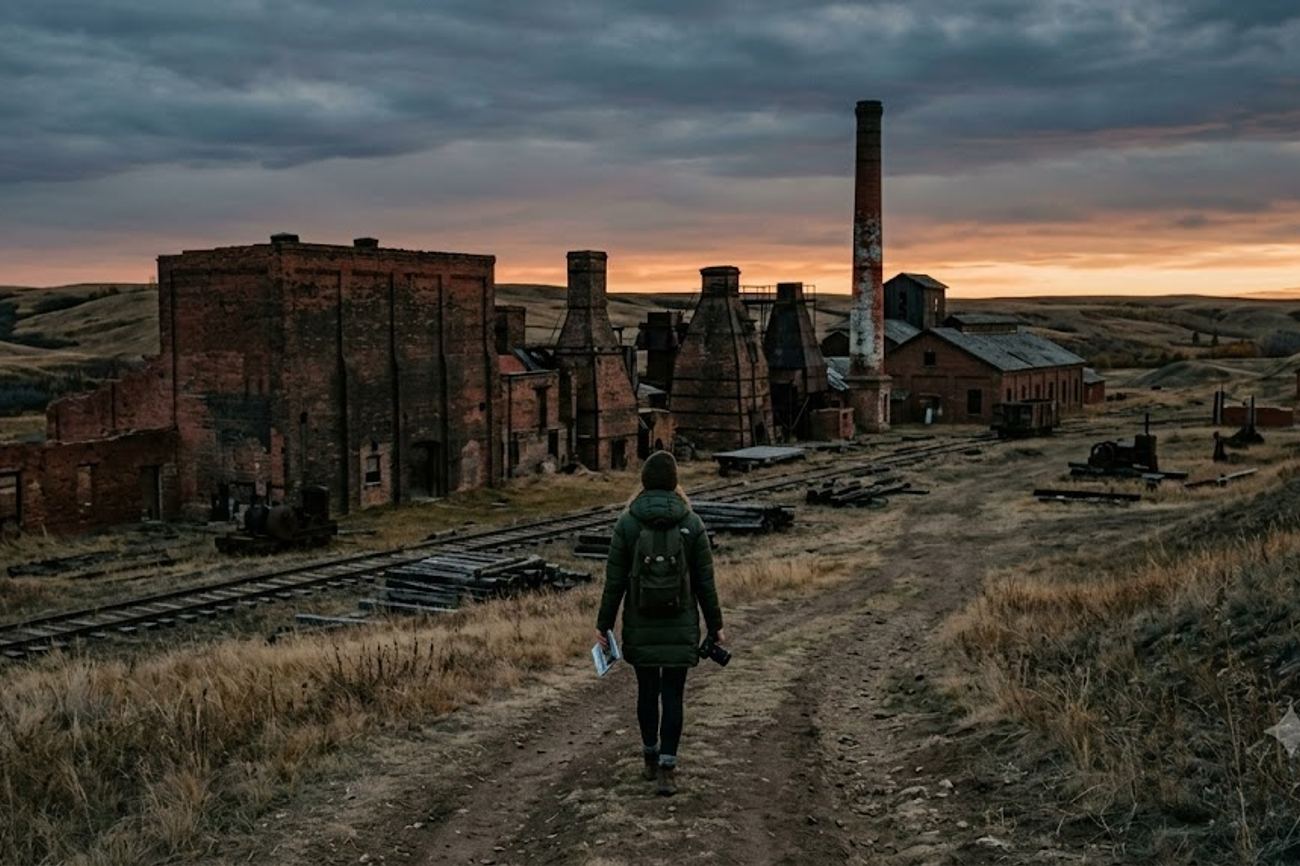
Image generated by AI
95 percent of visible stars are obscured in urban centers like Saskatoon and Regina, a staggering loss of celestial visibility that transforms the Saskatchewan prairie reserves into some of the most valuable astronomical assets in North America. While city dwellers operate under sky quality levels below 18.0 magnitudes per square arcsecond, the province's dedicated dark-sky preserves offer a stark, photometric contrast that is repositioning the region as a hub for high-precision astrotourism.
The Mechanics of Prairie Darkness
The emergence of Saskatchewan as a leader in "dark tourism" is not an accident of geography but a result of deliberate regulatory intervention and topographical advantages. The province leverages vast, low-density prairie landscapes and high-elevation plateaus to minimize artificial light pollution, which is the primary antagonist of night-sky preservation. By safeguarding the natural day-night cycle, these regions protect both the human experience of the cosmos and the biological imperatives of native flora and fauna.
Central to this effort are two primary preserves: Grasslands National Park and Cypress Hills Interprovincial Park. These areas operate under strict mandates to eliminate human-generated light across hundreds of square kilometers. For the traveler, this means moving beyond the "scenic view" into a realm of scientific-grade darkness. The infrastructure supporting this—ranging from the research-grade equipment at the Cypress Hills public observatory to the primitive, light-free campsites near the Fort Walsh National Historic Site—creates a tiered experience for both the casual stargazer and the serious astrophysicist.
Photometric Benchmarks and Spatial Data
To understand the quality of these skies, one must look at the Bortle Scale and magnitude measurements. The Bortle Scale classifies the night sky from Class 1 (pristine darkness) to Class 9 (inner-city skyglow). Saskatchewan’s preserves sit at the absolute peak of this scale.
| Location | Bortle Class | Sky Brightness (mag/arcsec²) | Visual Magnitude Limit | Key Topographical Feature |
|---|---|---|---|---|
| Grasslands National Park | Class 1 | 22.0 | +7.5 to +8.4 | Frenchman River Valley |
| Cypress Hills Interprovincial Park | Class 1/2 | 21.8 | High Contrast | 1,466m Elevation Plateau |
| Urban Centers (Regina/Saskatoon) | Class 8/9 | < 18.0 | Heavily Obscured | City Light Pollution |
Grasslands National Park, designated by the Royal Astronomical Society of Canada on October 2, 2009, covers 907 square kilometers. Its 22.0 mag/arcsec² reading is a gold standard in North American astronomy, allowing the naked eye to perceive atmospheric airglow along the horizon. Meanwhile, Cypress Hills Interprovincial Park, established in 2004 as the first interprovincial preserve of its kind, utilizes its 1,466-meter elevation to push observers above the humidity and atmospheric dust that typically plague prairie vistas. Covering 400 square kilometers, it provides a high-contrast environment with a brightness reading of 21.8 mag/arcsec².
Expert Analysis: The Economics of the Nocturnal Economy
For the modern traveler, the shift toward astrotourism in Saskatchewan represents a transition from "sightseeing" to "experience-seeking." This is not merely about looking at stars; it is a sophisticated intersection of environmental conservation and rural economic development.
The direct consequence of this trend is the stabilization of rural gateway communities. Towns such as Val Marie, Maple Creek, and Wood Mountain have historically been subject to the volatility of agricultural cycles and seasonal tourism. However, the demand for dark-sky experiences expands the traditional tourist window into the cooler autumn and winter months. When travelers visit for the Saskatchewan Summer Star Party (SSSP) every August at Meadows Campground, or the bi-annual outreach events in May and July, they inject sustainable capital into local hospitality and eco-guide sectors during periods that were previously dormant.
From a regulatory perspective, the strict adherence to red-filtered lighting—mandated because white light requires a 30-minute recovery period for human night vision—demonstrates a commitment to the "product" of darkness. Furthermore, the integration of Transport Canada regulations regarding green laser pointers near flight paths shows that these preserves are not isolated bubbles but are integrated into the broader safety and regulatory framework of Canadian airspace.
The pricing pressure created by this niche market is likely to drive an increase in "premium primitive" accommodations. As the value of a Class 1 Bortle sky increases, we can expect to see a rise in specialized eco-lodgings that prioritize light-shielding architecture over traditional luxury, catering to a demographic that views darkness as a luxury commodity.
Key Takeaways
- Unmatched Clarity: Grasslands National Park achieves a Bortle Class 1 rating with a brightness of 22.0 mag/arcsec², enabling naked-eye observation of atmospheric airglow.
- Elevation Advantage: Cypress Hills Interprovincial Park sits at 1,466 meters, effectively bypassing low-level prairie humidity and dust.
- Strict Protocols: Visitors must use red-filtered lighting to maintain dark adaptation; white light is prohibited to prevent the 30-minute visual recovery lag.
- Economic Shift: Astrotourism is extending the tourism season into autumn and winter, providing critical off-peak revenue for towns like Val Marie and Maple Creek.
- Conservation Link: Light pollution reduction is directly tied to the survival of threatened species, specifically the burrowing owl and black-tailed prairie dog.
FAQ: Saskatchewan Dark Skies 2024
When is the best time to visit for maximum visibility? Plan your trip between July and September. To ensure the darkest possible conditions, schedule your visit to coincide with the New Moon phase, which eliminates lunar interference with deep-sky objects.
What equipment should I bring for a trip to Grasslands or Cypress Hills? While the Cypress Hills public observatory provides research-grade equipment, individual visitors should bring red-filtered flashlights. Binoculars or telescopes are recommended to take advantage of the +7.5 to +8.4 magnitude visual limit.
Are there organized events for amateur astronomers? Yes. The Saskatchewan Summer Star Party (SSSP) occurs every August at Meadows Campground. Additionally, guided night-sky walks take place in the Frenchman River Valley during May and July.
How does light pollution affect the local wildlife? Artificial light disrupts the natural day-night cycles of nocturnal animals. By maintaining dark-sky preserves, Saskatchewan protects the habitats of the burrowing owl and the black-tailed prairie dog from human-induced disorientation.
In the silence of the prairies, the absence of light becomes the most valuable destination of all.
#GrasslandsNationalPark #CypressHillsInterprovincialPark #SaskatchewanAstrotourism #BortleScale #RoyalAstronomicalSocietyOfCanada #DarkSkyPreserves
Related Travel Guides
Disclaimer
This article is for informational and educational purposes only. It does not constitute legal, financial, or professional advice. While we strive to provide accurate and up-to-date information, travel policies, regulations, and conditions change rapidly. Always verify information with official sources before making travel decisions. Nomad Lawyer makes no representations about the accuracy, reliability, completeness, or suitability of the information provided. Readers should consult qualified professionals for advice specific to their circumstances. The views expressed in this article are those of the author and do not necessarily reflect the views of Nomad Lawyer.
Naina Thakur
Contributor & Travel Specialist
Travel enthusiast and legal writer covering visa regulations, responsible tourism, and cultural journeys across global destinations.
Learn more about our team →