
Switzerland Teams Up With Canada And More Among 46 Visa Free Travel Countries Boosting United States Tourism
Switzerland Teams Up With Canada And More Among 46 Visa Free Travel Countries Boosting United States Tourism

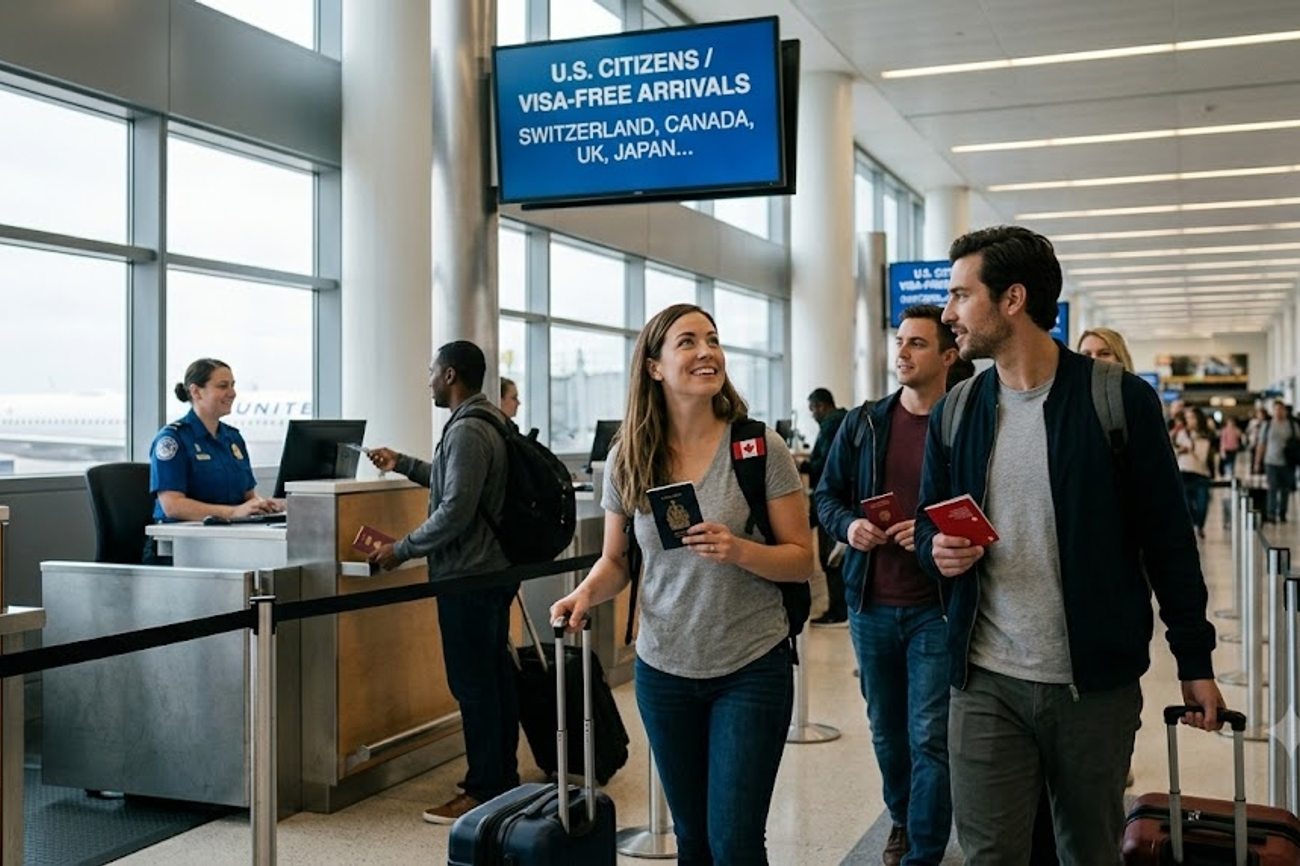
Image generated by AI
[Washington, September 2026] — The United States has officially expanded visa-free access to 46 nations, including Canada and Switzerland, in a strategic move to eliminate entry barriers and catalyze a surge in international arrivals.
The policy shift, effective as of September 2026, aims to streamline global mobility and bolster the U.S. visitor economy. By removing stringent visa requirements for qualifying travelers from these 46 countries, the federal government intends to increase the flow of tourists to both metropolitan hubs and rural attractions, including the U.S. National Park system. This initiative coincides with a period of significant economic expansion and a targeted push to reach 85 million international visitors annually by 2030.
The Catalyst for Expanded Access
The primary driver behind this policy expansion is a concerted effort to enhance the United States' competitiveness as a premier global destination. By simplifying the entry process, the U.S. is attempting to reduce the friction associated with international travel, thereby increasing visitor confidence and encouraging spontaneous or short-term trips.
This move comes at a critical juncture as the U.S. prepares for the 2026 FIFA World Cup, an event expected to provide a massive regional travel stimulus. The government is leveraging this sporting milestone to solidify the country's position in the global tourism market, recognizing that easier access for citizens of high-income nations directly correlates with increased spending in the leisure, luxury, and business travel segments.
Markets and Infrastructure Impacted
The new visa-free regime affects a diverse array of global markets, ranging from European powerhouses to Asia-Pacific economies. The following entities and hubs are central to this transition:
Visa-Free Eligible Nations
- North America: Canada, Mexico (via existing frameworks).
- Europe: United Kingdom, France, Germany, Italy, Spain, Netherlands, Belgium, Sweden, Denmark, Finland, Norway, Ireland, Austria, Greece, Portugal, Poland, Hungary, Czechia, Slovakia, Slovenia, Latvia, Lithuania, Estonia, Croatia, Luxembourg, Andorra, Liechtenstein, Monaco, San Marino.
- Asia-Pacific: Japan, South Korea, Singapore, Taiwan, Australia, New Zealand, Brunei, Palau Islands, Marshall Islands, Micronesia.
- Middle East/Other: Qatar, Israel, Chile.
Critical Aviation Gateways The surge in arrivals is expected to place additional pressure on the five busiest U.S. hubs:
- Hartsfield–Jackson Atlanta International Airport (ATL): The nation's primary hub, historically handling over 100 million annual passengers.
- Dallas/Fort Worth International Airport (DFW): A pivotal link for Europe, Asia, and Latin America, serving roughly 87 million passengers.
- Denver International Airport (DEN): The main gateway to the West, welcoming over 80 million passengers yearly.
- Los Angeles International Airport (LAX): A critical Pacific and Latin American portal handling 75 million+ passengers.
- Chicago O’Hare International Airport (ORD): A global cargo and passenger powerhouse serving over 70 million travelers.
Primary Air Carriers The financial beneficiaries of this increased connectivity are the major U.S. airlines, currently led by:
- Delta Air Lines: Annual revenue of approximately $63.3 billion.
- United Airlines: Annual revenue of approximately $59 billion.
- American Airlines Group: Annual revenue of approximately $54.6 billion.
- Southwest Airlines: Annual revenue of approximately $28 billion.
- Alaska Airlines: A key player in Western U.S. regional connectivity.
What This Means for Travelers
For the average international traveler, these changes translate to a significant reduction in bureaucracy and cost. Instead of enduring lengthy embassy appointments, paying visa application fees, and waiting weeks for processing, qualifying citizens from the 46 listed nations can now enter the U.S. with streamlined documentation.
Immediate Passenger Impact:
- Booking Flexibility: Travelers can now book last-minute flights to the U.S. without the fear of visa delays.
- Cost Reduction: The elimination of visa fees reduces the overall cost of entry.
- Diversified Itineraries: With easier access, visitors are more likely to venture beyond New York or Los Angeles to explore national parks and regional destinations.
- Hospitality Demand: Increased arrivals will likely lead to higher occupancy rates at luxury landmarks like The Plaza Hotel in New York and The Beverly Hills Hotel in California.
Travelers are encouraged to verify their specific passport requirements via the U.S. Department of State or the Customs and Border Protection (CBP) official portals before departure to ensure they meet all "qualifying" criteria for visa-free entry.
Economic Context and Projections
The expansion of travel access is occurring against a backdrop of robust domestic economic growth. In the second quarter of 2026, the United States recorded a nominal GDP of $32.49 trillion, an increase from $31.87 trillion in the first quarter. While real GDP growth slowed slightly to an annualized rate of 1.5% in Q2 (down from 2.1% in Q1), the economy remains resilient.
Growth is currently being fueled by strong consumer spending, high export volumes, and aggressive investments in artificial intelligence infrastructure. These factors have helped the U.S. mitigate the impact of reduced government spending and rising imports. According to the International Monetary Fund (IMF), the U.S. is projected to maintain an overall GDP growth of approximately 2.3% for the full year of 2026.
In terms of tourism volume, forecasts for 2026 place international arrivals between 69.9 million and 70.5 million. This represents a growth rate of 2.4% to 3.4%. While markets in Japan, Taiwan, Colombia, and Mexico are showing strong growth, the U.S. is facing headwinds and "pressure" regarding arrivals from South Korea, Canada, and various European regions—making the new visa-free policy a necessary tool to stabilize these declining segments.
FAQ: U.S. Visa-Free Access 2026
Which countries now have visa-free access to the U.S.? As of September 2026, 46 nations have visa-free access, including Canada, Switzerland, the UK, Japan, Australia, and most EU member states. Check the official CBP list for the full registry of eligible countries.
Does this mean I don't need any documentation to enter the U.S.? No. While a traditional visa may not be required, travelers must still possess a valid passport and meet all other legal entry requirements, which may include electronic travel authorizations or health screenings.
How does the 2026 FIFA World Cup affect this policy? The World Cup is a primary catalyst for these changes. The U.S. is streamlining entry to accommodate the expected surge of international football fans, ensuring that border congestion is minimized during the tournament.
Will this affect flight prices to the United States? Increased demand typically puts upward pressure on prices; however, the expanded access may encourage airlines like Delta and United to increase flight frequencies and capacity, which can help stabilize fares through competition.
The U.S. is betting that open borders for the elite 46 will pave the way to a 85-million-visitor reality by 2030.
#USA-Visa-Free-2026 #US-Tourism-Forecast #ATL-DFW-LAX #FIFA-World-Cup-Travel #US-GDP-2026 #Global-Mobility-Policy
Related Travel Guides
Disclaimer
This article is for informational and educational purposes only. It does not constitute legal, financial, or professional advice. While we strive to provide accurate and up-to-date information, travel policies, regulations, and conditions change rapidly. Always verify information with official sources before making travel decisions. Nomad Lawyer makes no representations about the accuracy, reliability, completeness, or suitability of the information provided. Readers should consult qualified professionals for advice specific to their circumstances. The views expressed in this article are those of the author and do not necessarily reflect the views of Nomad Lawyer.
Naina Thakur
Contributor & Travel Specialist
Travel enthusiast and legal writer covering visa regulations, responsible tourism, and cultural journeys across global destinations.
Learn more about our team →