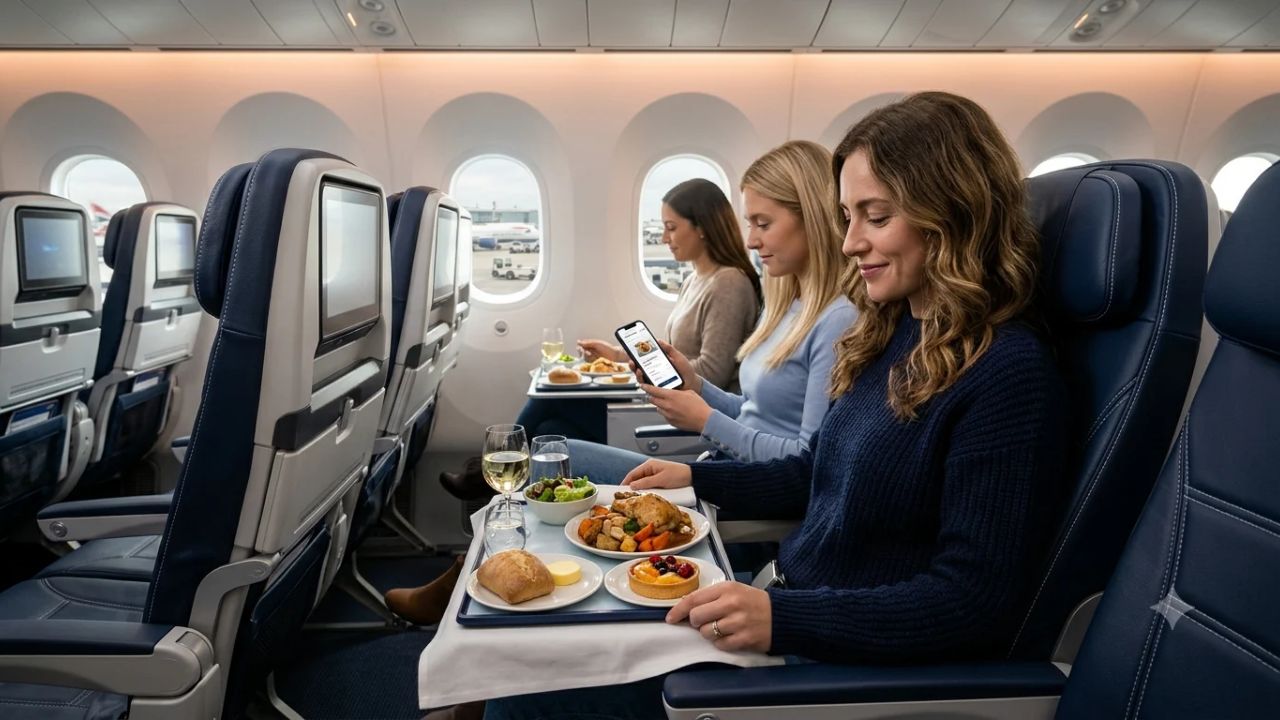
Qatar Airways Raises the Bar for Premium Travel With Four Major Skytrax Wins

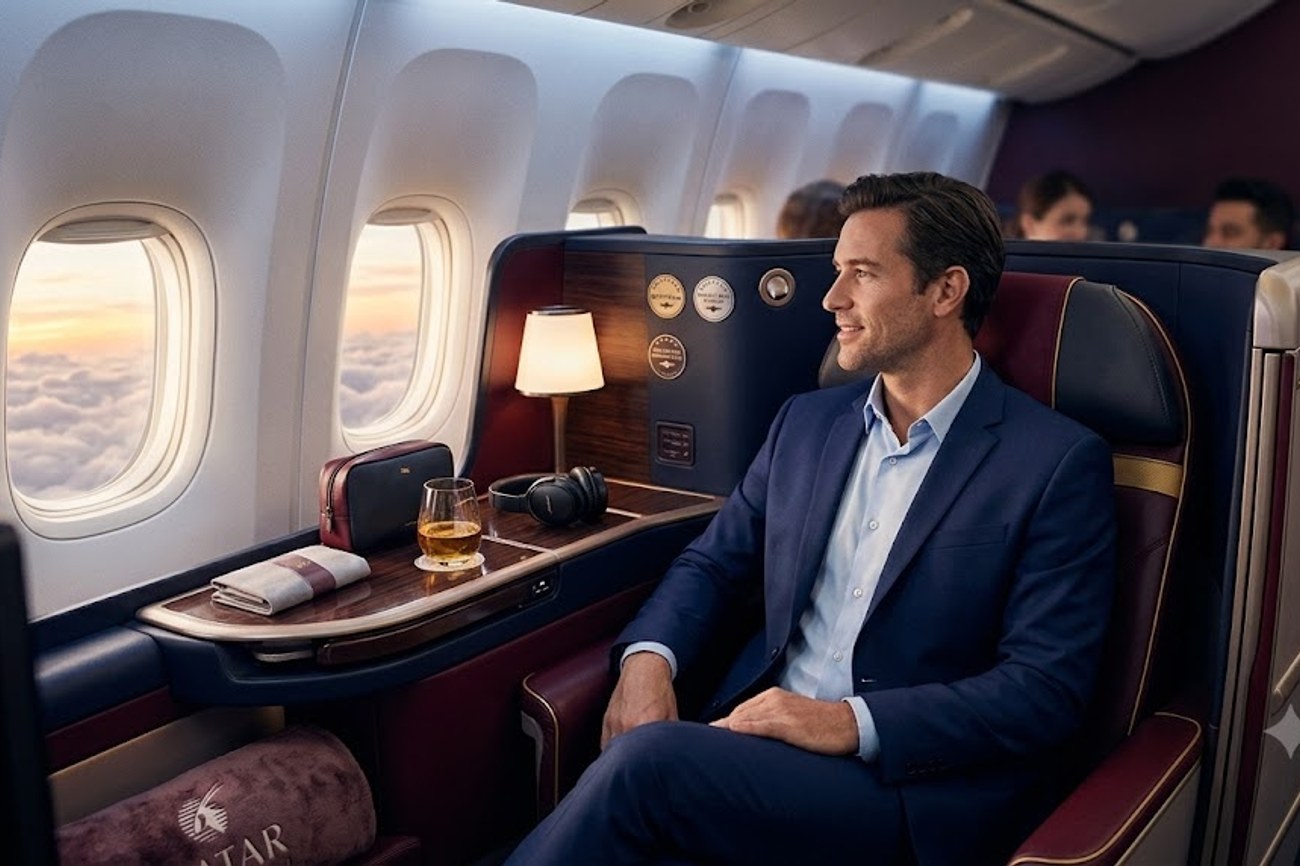
Image generated by AI
150 widebody aircraft have already been integrated into a Starlink rollout that has facilitated connectivity for over 25 million passengers across 96,000 flights. This massive infrastructure investment underscores a pivotal shift in aviation: the transition of the aircraft cabin from a dead zone into a high-speed digital workspace. By securing the inaugural "World’s Best Onboard Wi-Fi" title at the 2026 Skytrax World Airline Awards, Qatar Airways is signaling that bandwidth is now as critical a luxury as champagne or lie-flat beds.
The Digital Pivot in Premium Aviation
The 2026 Skytrax awards in London highlighted a fundamental change in how airlines compete for high-yield passengers. While Qatar Airways secured its 13th "World’s Best Business Class" title and its 14th "Best Airline in the Middle East" award, the introduction of a dedicated Wi-Fi category marks a regulatory and commercial turning point. Connectivity is no longer a peripheral amenity; it is a core component of the product offering.
The scale of the Starlink deployment is significant. With as many as 340 Starlink-enabled flights operating daily, the airline is leveraging low-earth orbit (LEO) satellite technology to eliminate the latency issues that plagued previous generations of aviation internet. For the modern nomad or corporate traveler, this removes the "connectivity anxiety" associated with long-haul transit, effectively merging the office and the aircraft.
However, this rollout is not yet universal. The availability of high-speed internet remains aircraft-dependent, meaning the passenger experience is currently fragmented. Travelers must verify the specific tail number or aircraft type for their flight to ensure they are not boarding a legacy widebody lacking the Starlink hardware.
The Doha Hub: Beyond the Transit Terminal
The airline's success is inextricably linked to its home base at Hamad International Airport, a facility designed to process more than 65 million passengers annually. The recognition of the Al Mourjan Business Lounge – The Garden for the eighth time as the world's best business-class lounge reflects a strategy of "experience extension."
In this model, the journey does not begin at takeoff but at the lounge door. By integrating high-end hospitality with the airport's broader infrastructure—including the tropical "Orchard" garden—the airport transforms a transactional connection into a destination in its own right. This is a calculated move to attract passengers traveling between Europe, Asia, Africa, and the Americas who might otherwise choose direct flights or competing hubs in Dubai or Istanbul.
According to Visit Qatar, the airport serves as a gateway to more than 190 destinations and supports over 50 different airlines. This scale allows Qatar Airways to maintain an aggressive growth trajectory, with plans to serve over 170 destinations during the 2026–27 winter season, peaking at nearly 1,800 weekly frequencies in December.
Expert Analysis: The Convergence of Privacy and Connectivity
The simultaneous awards for Qsuite (World’s Best Business-Class Seat) and Starlink Wi-Fi reveal a sophisticated psychological play in premium cabin design. For years, the "gold standard" of business class was defined by the physical seat—the pitch, the width, and the bed. Qatar Airways has evolved this by addressing two distinct human needs: the need for total isolation and the need for total connectivity.
The Qsuite addresses the "privacy deficit" of traditional aviation. By offering enclosed suites and flexible configurations for groups or couples, the airline has effectively turned the cabin into a series of private rooms. When you pair this physical privacy with the digital ubiquity of Starlink, the aircraft becomes a mobile sanctuary.
For travelers booking these routes, the direct consequence is a shift in the value proposition. The price premium for business class is no longer just for a better nap; it is for the ability to maintain a professional workflow without interruption while remaining physically shielded from other passengers. The pricing pressure this creates for competitors is immense; other carriers can no longer simply offer a "good seat" to compete—they must offer a seamless digital and physical ecosystem.
Qatar Airways continues to dominate the luxury aviation sector by integrating its award-winning Qsuite with seamless transit experiences at Hamad International Airport. These enhancements streamline passenger logistics for global travelers connecting through Doha to destinations across six continents.
Furthermore, the integration of transit visas for passengers with connections longer than six hours transforms the hub from a waiting room into a tourism catalyst. By lowering the barrier to entry for the city of Doha, Qatar Airways is diversifying the passenger experience, ensuring that the "Doha stopover" is a value-add rather than a logistical burden.
Key Takeaways
- Connectivity Scale: Over 150 widebody aircraft are now equipped with Starlink, supporting 340 daily flights and serving 25 million passengers to date.
- Network Expansion: The 2026–27 winter schedule will feature over 170 destinations and nearly 1,800 weekly flights in December.
- Infrastructure Capacity: Hamad International Airport is engineered to handle 65 million annual passengers and connects to 190+ destinations.
- Product Synergy: The combination of Qsuite's physical privacy and Starlink's digital access defines the new benchmark for "premium" travel.
- Transit Flexibility: Passengers with 6+ hour connections can apply for transit visas to explore Doha, reducing the friction of long layovers.
FAQ: Qatar Airways Experience 2026
Does every Qatar Airways flight have Starlink Wi-Fi? No. Connectivity depends on the specific aircraft assigned to the flight. Passengers should check their flight details or contact the airline to confirm if their specific service is Starlink-enabled.
What makes the Qsuite different from standard business class? Qsuite offers enclosed suites with doors for total privacy and flexible seating arrangements that allow colleagues or families to create a shared private space in the cabin.
Can I leave the airport during a long layover in Doha? Yes. Passengers with connections of six hours or more who are not eligible for visa-free entry can apply for a transit visa to take a Doha transit tour.
How many destinations does Qatar Airways serve in the 2026-27 winter season? The airline plans to serve more than 170 destinations, with flight frequencies reaching nearly 1,800 per week during the month of December.
The era of the "disconnected flight" is ending; the aircraft is now simply another node in the global network.
Tags: Qatar Airways, Hamad International Airport, Qsuite, Starlink Aviation, Doha Transit, Skytrax 2026
Related Travel Guides
This article is for informational purposes. Flight routes, passenger regulations, visa rules, and transit advisories are subject to change by airlines and aviation authorities. Readers are advised to verify schedules and travel documentation with relevant carriers and border agencies before departure.
Related Stories

Jet Airways vs. Boeing NCLAT Battle: Why Manufacturer Litigation Offers No Quick Ticket Refunds for Indian Travel Agents

easyJet Launches Direct Liverpool to Reykjavik Flights: Inside the North West's New Winter Gateway to Iceland