
Guatemala Aviation Strengthens Mundo Maya Recertification as Flores Travel Gateway Targets La Aurora Resilience
Guatemala Aviation Strengthens Mundo Maya Recertification as Flores Travel Gateway Targets La Aurora Resilience

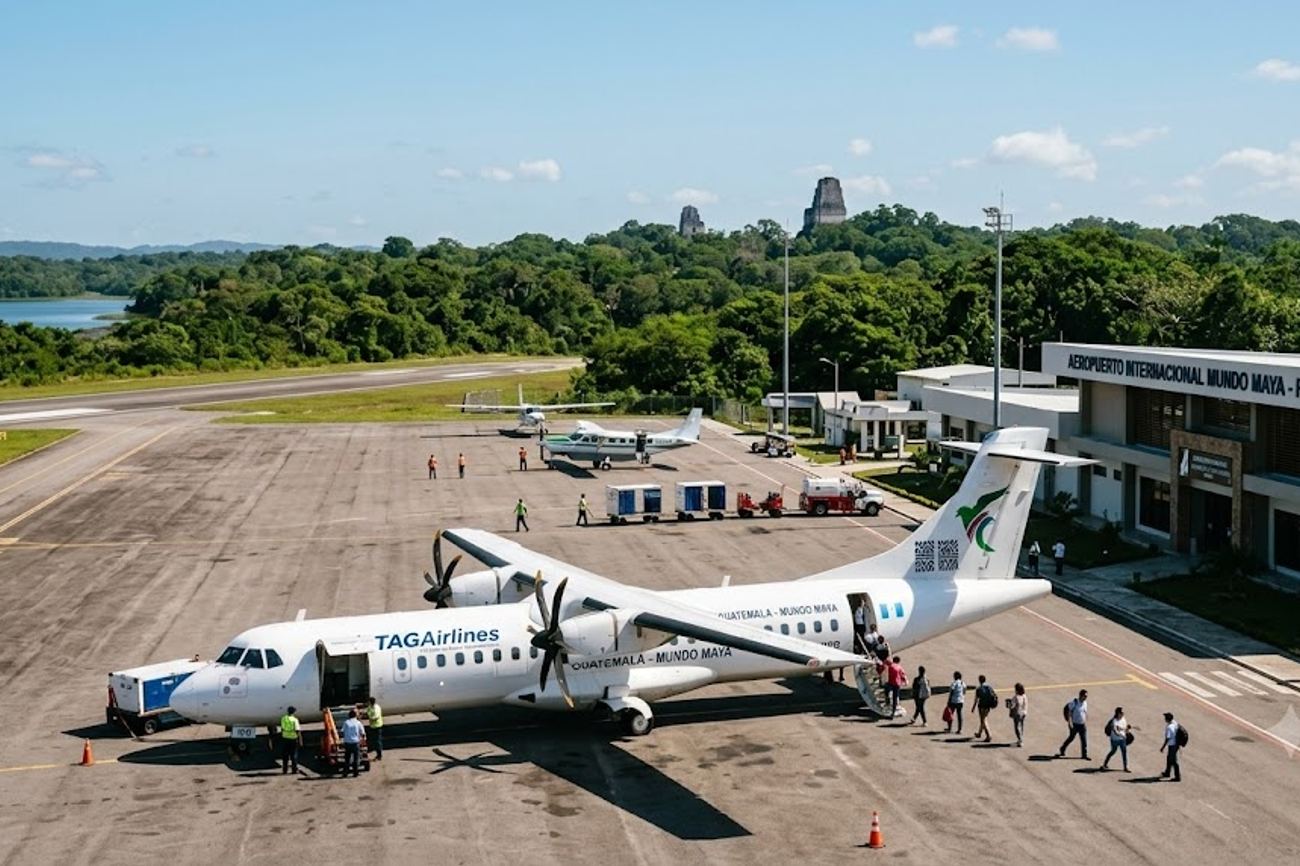
Image generated by AI
A 37 percent surge in passenger traffic between 2023 and 2025 at Mundo Maya International Airport has exposed a critical divergence between traveler volume and flight frequency. While the number of aircraft movements remained nearly stagnant, the sheer density of people moving through the terminal in Flores, Petén, has forced the Guatemalan government to pivot from simple maintenance to a comprehensive operational overhaul. This is no longer a regional upgrade; it is a strategic repositioning of the airport's role within the national aviation architecture.
The Divergence of Volume and Frequency
The current crisis at Mundo Maya is not one of airspace congestion, but of "passenger intensity." Between 2023 and 2025, recorded flight operations grew by a negligible 1 percent, moving from 7,471 to 7,563. However, during that same window, passenger throughput leaped from 284,365 to approximately 390,584.
This statistical gap reveals a systemic pressure point: the airport is processing significantly more people per flight. When passenger volume grows by 37 percent while flight counts remain flat, the stress does not fall on the runway or the air traffic controllers, but on the "soft" infrastructure—security checkpoints, baggage reclaim, waiting lounges, and immigration desks. The airport is essentially experiencing a surge in load factors and larger aircraft utilization, which pushes the existing terminal facilities toward a breaking point.
| Operational Indicator | 2023 | 2025 | Variance | Strategic Implication |
|---|---|---|---|---|
| Passenger Traffic | 284,365 | 390,584 | +37% | Severe pressure on terminal throughput |
| Flight Operations | 7,471 | 7,563 | +1% | Airspace capacity remains underutilized |
| Pass. per Operation | 38.1 | 51.6 | +35.7% | Shift toward higher-capacity aircraft |
Technical Overhaul and the Path to Certification
To mitigate these pressures, the Dirección General de Aeronáutica Civil is executing a 40-point action plan divided across five strategic pillars: runway infrastructure, air traffic control, organizational capacity, emergency response, and passenger experience.
The physical specifications of the airfield are now being optimized for larger commercial jets. The airport features a runway measuring 3,000 metres in length and 45 metres in width. To support these operations, the government has integrated high-spec navigation technology. On 9 January 2026, a new DVOR/DME (Doppler Very High Frequency Omnidirectional Range with Distance Measuring Equipment) system was inaugurated via the Central American Corporation for Air Navigation Services (COCESNA), providing pilots with precise bearing and distance data to enhance safety during both visual and instrument flight conditions.
Further technical additions include an Instrument Landing System (ILS) with Glide Slope and a navigation array consisting of 50 antennas. On the security front, the airport has deployed two baggage X-ray systems augmented by artificial intelligence to identify prohibited items, reflecting a move toward modernized, automated screening to handle the 37 percent increase in traveler volume.
Expert Analysis: The Strategic Pivot to a Secondary Hub
The most provocative element of this modernization is the government's stated ambition: transforming Mundo Maya into a viable alternative to La Aurora International Airport in Guatemala City. For decades, La Aurora has functioned as the sole primary gateway for the country, creating a single point of failure and a bottleneck for international arrivals.
For travelers and logistics planners, the consequence of this shift is a potential decentralization of Guatemalan tourism. If Mundo Maya achieves full recertification and operational resilience, it allows international carriers to bypass the capital entirely and land directly in the Petén region. This eliminates the need for the common "City-to-Flores" domestic leg, reducing travel time for those visiting the Maya ruins and reducing the load on the capital's congested airspace.
However, the data suggests a looming challenge. While the runway is capable, the landside infrastructure is lagging. A waiting area for 270 people and parking for only 65 vehicles are insufficient for an airport aspiring to be a national alternative. If passenger intensity continues to rise at the current rate, the terminal will become a bottleneck long before the runway reaches capacity. The pricing pressure created by this imbalance often manifests as higher airport taxes or increased fees for airlines to fund rapid-fire expansions.
The strategic recertification of aviation corridors serving Flores enhances connectivity to the Petén region, streamlining passenger logistics for those visiting the Tikal ruins. Travelers can coordinate flight schedules and airport services through the Directorate General of Civil Aviation (DGAC), ensuring compliance with national safety and operational standards.
Key Takeaways
- Passenger Intensity Gap: Passenger volume grew 37% (to 390,584) while flights grew only 1%, meaning the airport is handling far more people per aircraft movement.
- Technological Leap: The installation of a DVOR/DME system on 9 January 2026 and an ILS with Glide Slope allows for safer, precision arrivals in poor visibility.
- Strategic Redundancy: The government is positioning Mundo Maya as a backup or alternative to La Aurora International Airport to decentralize air traffic.
- Security Modernization: New AI-assisted baggage screening is being deployed to manage the increased throughput and meet international certification standards.
- Infrastructure Bottlenecks: Despite runway upgrades, landside capacity (65 parking spaces, 270-person waiting area) remains a critical weakness.
FAQ: Mundo Maya Airport 2026
Will Mundo Maya Airport allow direct international flights? The Guatemalan government is pursuing recertification specifically to allow Mundo Maya to function as an alternative to La Aurora. While currently primarily regional, the upgrades in navigation and security are designed to support larger international aircraft and volumes.
How has passenger traffic changed at Mundo Maya recently? Between 2023 and 2025, traffic rose from 284,365 to 390,584 passengers. This 37% increase happened despite flight operations only increasing by 1%, indicating that planes arriving at the airport are carrying more passengers on average.
What new technology has been added to the airport? Key upgrades include a DVOR/DME navigation system inaugurated in January 2026, a 50-antenna navigation array, an Instrument Landing System (ILS) with Glide Slope, and AI-powered baggage X-ray scanners.
What is the current size of the Mundo Maya runway? The runway is 3,000 metres long and 45 metres wide, which provides the necessary core airfield capacity for most standard commercial aviation operations.
The transition from a regional strip to a national alternative is a high-stakes gamble on the infrastructure of Petén.
Related Travel Guides
- Singapore Airlines Leads Qatar Airways and More Airlines in New Global Long Haul Travel Experience Ranking
- Etihad Airways Becomes Official Airline Partner Of UAE Wrestling Federation To Drive Sports Growth And Global Connections
- Cyprus Tourism Growth Set To Accelerate As French Travellers Return With More Airline Seats In 2027
Disclaimer
This article is for informational and educational purposes only. It does not constitute legal, financial, or professional advice. While we strive to provide accurate and up-to-date information, travel policies, regulations, and conditions change rapidly. Always verify information with official sources before making travel decisions. Nomad Lawyer makes no representations about the accuracy, reliability, completeness, or suitability of the information provided. Readers should consult qualified professionals for advice specific to their circumstances. The views expressed in this article are those of the author and do not necessarily reflect the views of Nomad Lawyer.
Raushan Kumar
Founder & Lead Developer
Full-stack developer with 11+ years of experience and a passionate traveller. Raushan built Nomad Lawyer from the ground up with a vision to create the best travel and law experience on the web.
Learn more about our team →