
Qantas Delays Airbus A321XLR Brisbane to Manila Debut to February 2027 Amid Asia Expansion
Qantas has pushed back the international launch of its Airbus A321XLR on the Brisbane–Manila route to February 2027, shifting its narrowbody strategy while maintaining current A330 capacity.

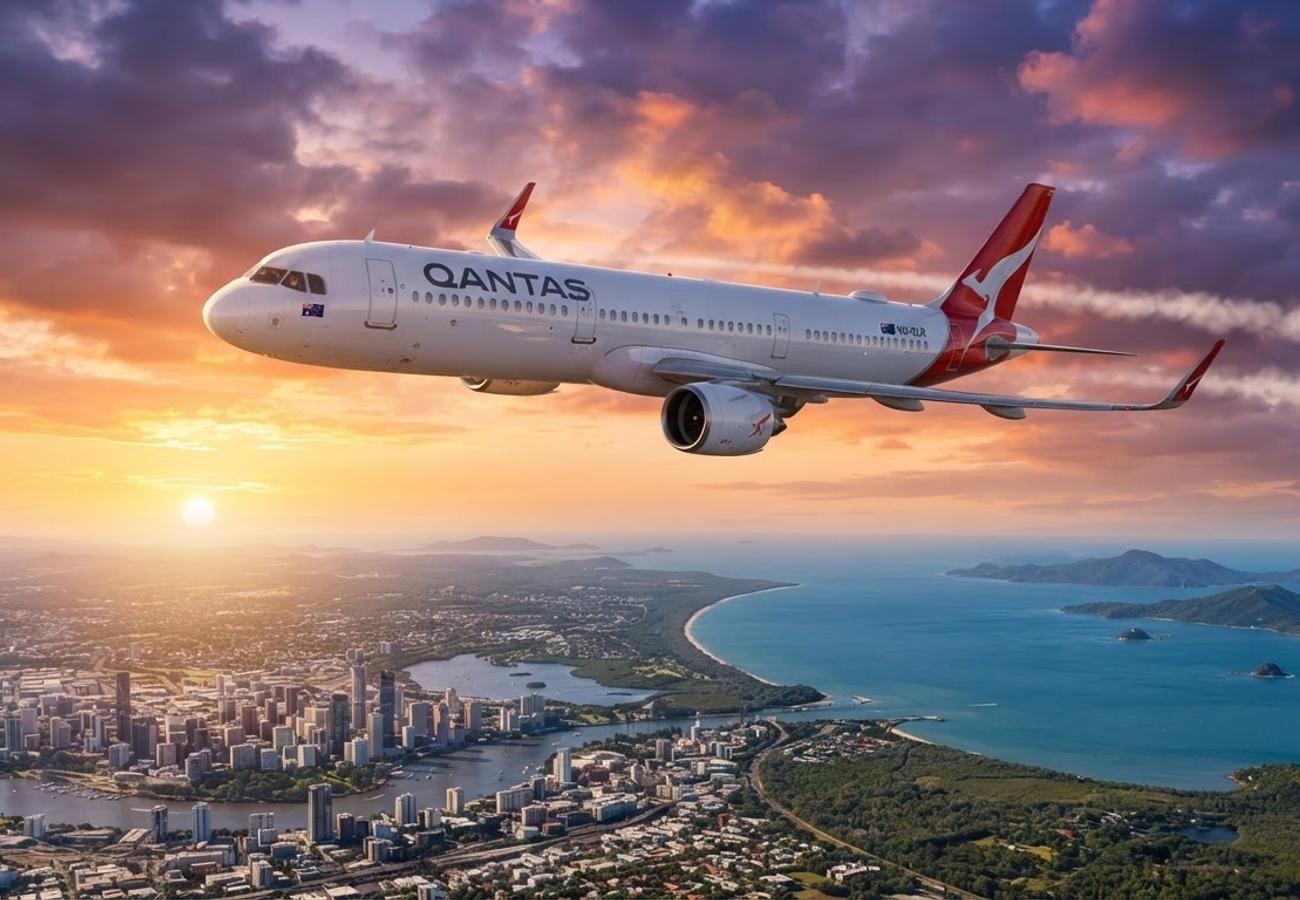
Image generated by AI
Qantas has postponed the international debut of its Airbus A321XLR, moving the launch of the Brisbane–Manila service from October 2026 to February 1, 2027. The carrier will maintain daily connectivity using Airbus A330-200 aircraft during this interim period.
The shift in timeline alters the immediate rollout of the Australian flag carrier’s next-generation narrowbody strategy. Despite the delay, the broader objective remains unchanged: utilizing the long-range Airbus jet to optimize regional and international connectivity where widebody aircraft are economically inefficient.
Deployment Timeline and Route History
Qantas originally slated the Airbus A321XLR to enter international service on October 25, 2026. Updated schedule data now confirms the first international operation will commence on February 1, 2027.
The Brisbane–Manila corridor is a strategic asset for Qantas. After operating the route until 2013, the airline restored the service in 2024. The current reliance on the Airbus A330-200 ensures that the surge in travel demand between Queensland and the Philippines is met without interruption.
Strategic Role of the Airbus A321XLR
The A321XLR is designed to bridge the gap between short-haul narrowbody efficiency and long-haul widebody range. For Qantas, this aircraft allows for the servicing of "thin" long-haul routes—markets with steady demand that cannot justify the operating costs of a Boeing 787 or Airbus A330.
Key Operational Advantages:
- Cost Efficiency: Lower fuel burn and operating costs per flight compared to widebody jets.
- Market Agility: Ability to connect secondary cities directly to major hubs.
- Capacity Balance: Optimized for routes where frequency is more valuable than maximum seat count.
- Cargo Utility: Enhanced belly-hold capacity relative to standard narrowbody aircraft.
Fleet Configuration and Passenger Experience
Qantas currently operates seven A321XLR aircraft. The current configuration balances density with operational needs, typically featuring:
- Total Seating: Approximately 197 to 200 seats.
- Business Class: Roughly 20 seats.
- Economy Class: Between 177 and 180 seats.
Our analysis of the fleet indicates a tiered rollout. While initial configurations focus on high-density regional needs, future iterations will feature premium cabins with lie-flat seating for extended international operations.
Market Analysis: Australia–Philippines Corridor
The delay occurs against a backdrop of aggressive growth in the Australia–Philippines travel sector. Market data indicates over one million round-trip passengers traveled between the two nations in the previous year.
This growth is driven by:
- VFR Traffic: Strong "Visiting Friends and Relatives" demand from the large Filipino community in Australia.
- Tourism: Increased Australian interest in Philippine beaches and cultural sites.
- Economic Links: Growth in education, employment, and business travel.
Qantas faces stiff competition on these routes from Philippine Airlines, Cebu Pacific, and Jetstar. The introduction of the A321XLR is a direct response to this environment, allowing Qantas to compete on price and frequency by matching aircraft size to actual demand.
Brisbane as a Strategic Asia-Pacific Hub
The deployment of the A321XLR aligns with Brisbane’s evolution into a primary aviation gateway. With the city preparing for the 2032 Olympic and Paralympic Games, Brisbane Airport is aggressively expanding global connectivity. The A321XLR provides the flexibility needed to test new, lower-density routes that would be financially unviable with larger aircraft.
Route Specifications and Fleet Comparison
| Feature | Current Operation (A330-200) | Future Operation (A321XLR) |
|---|---|---|
| Aircraft Type | Widebody | Narrowbody (Long Range) |
| Launch Date | Active (since 2024) | February 1, 2027 |
| Typical Capacity | High | 197–200 Seats |
| Primary Benefit | Maximum Volume | Operational Efficiency/Lower Cost |
| Route | Brisbane $\leftrightarrow$ Manila | Brisbane $\leftrightarrow$ Manila |
Why This Matters: Industry Implication
From a logistical perspective, this delay signals a cautious approach to the "narrowbody-long-haul" transition. For travelers, the immediate impact is negligible as the A330 continues to provide capacity. However, the long-term shift to the A321XLR suggests a move toward "point-to-point" connectivity.
The real industry shift here is the move away from the "hub-and-spoke" reliance on massive widebodies for every international leg. By utilizing the A321XLR, Qantas can increase flight frequencies on the Brisbane–Manila route without risking empty seats. This typically leads to more competitive pricing and better scheduling for the passenger.
Forward Outlook
Expect Qantas to use the window between now and February 2027 to refine the cabin configurations for the A321XLR. As the airline integrates more of these jets, we anticipate the announcement of additional "long-thin" routes across Southeast Asia that were previously ignored due to the high cost of widebody deployment.
The transition to the A321XLR marks the end of the widebody monopoly on long-haul Asian routes.
Related Travel Guides
Disclaimer
This article is for informational and educational purposes only. It does not constitute legal, financial, or professional advice. While we strive to provide accurate and up-to-date information, travel policies, regulations, and conditions change rapidly. Always verify information with official sources before making travel decisions. Nomad Lawyer makes no representations about the accuracy, reliability, completeness, or suitability of the information provided. Readers should consult qualified professionals for advice specific to their circumstances. The views expressed in this article are those of the author and do not necessarily reflect the views of Nomad Lawyer.
Kunal K Choudhary
Co-Founder & Contributor
A passionate traveller and tech enthusiast. Kunal contributes to the vision and growth of Nomad Lawyer, bringing fresh perspectives and driving the community forward.
Learn more about our team →