
Poland Accelerates Bieszczady Rail Access via New Jedlicze–Szebnie Connector and Line 108 Upgrades
Poland is transforming rail access to the Bieszczady Mountains with a new 3.4km Jedlicze–Szebnie connector and a 66km overhaul of Line 108, slashing travel times from Rzeszów by up to 25 minutes.

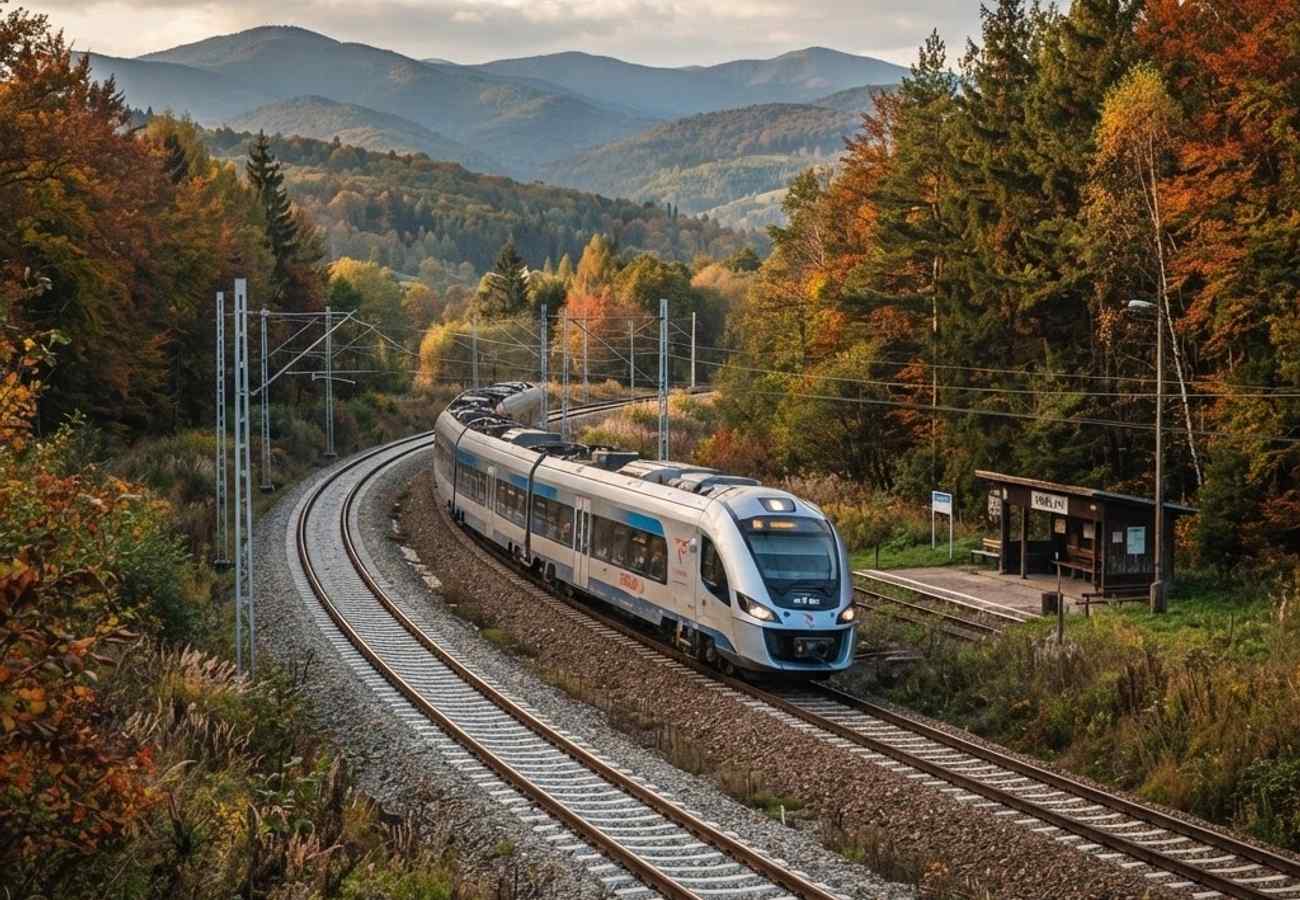
Image generated by AI
Rail connectivity to Poland’s remote Bieszczady Mountains is undergoing a structural overhaul. The simultaneous advancement of the Jedlicze–Szebnie rail connector and the revitalization of the Jasło–Nowy Zagórz railway (Line 108) will create a streamlined corridor from Rzeszów through Krosno and Sanok toward the southeastern borderlands.
The primary objective is the elimination of operational bottlenecks that currently force trains to reverse direction at Jasło, a logistical inefficiency that has long inflated journey times to the Bieszczady foothills.
The Jedlicze–Szebnie Connector: Redesigning Regional Geometry
The planned Jedlicze–Szebnie rail connector is a strategic intervention designed to physically link railway lines 106 and 108 east of Jasło. According to project data from infrastructure manager PKP Polskie Linie Kolejowe, this new link will span approximately 3.4 kilometers between the existing Szebnie and Wojaszówka stops.
By removing the requirement for trains from Rzeszów to reverse at Jasło, the connector establishes a direct north–south axis. This is not a minor bypass; it is a structural change in regional routing. Government transport documentation indicates this will facilitate "clockface" scheduling, allowing regional services to synchronize more effectively with long-distance trains arriving in the Subcarpathian capital.
Construction on the connector is slated for completion in the late 2020s, coordinated with the broader modernization of Line 108.
Line 108 Revitalization: Speed and Capacity Gains
Parallel to the connector, a massive revitalization of Line 108 between Jasło and Nowy Zagórz is underway, supported by European funds for eastern Poland. The project covers roughly 66 kilometers of track and involves a total modernization of signaling, engineering structures, and track beds.
Our analysis of the project data reveals two primary performance gains:
- Reduced Transit Times: Travel times between Rzeszów and key hubs like Krosno and Sanok are expected to drop by 20 to 25 minutes.
- Increased Load Capacity: Upgrades will allow for higher permissible line speeds and the operation of heavier trains.
Ten specific stations are earmarked for substantial rebuilding to meet modern accessibility and passenger facility standards:
- Jasło
- Tarnowiec
- Jedlicze
- Krosno
- Targowiska
- Wróblik Szlachecki
- Zarszyn
- Nowosielce
- Sanok
- Nowy Zagórz
Timeline and Implementation
The rollout of these improvements will occur in two distinct phases:
| Project Component | Scope | Expected Completion |
|---|---|---|
| Line 108 Revitalization | 66km track & 10 stations | Mid-2028 |
| Jedlicze–Szebnie Connector | 3.4km new rail link | Late 2029 (approx.) |
Current Demand and Service Patterns
While the infrastructure is still under construction, regional operator Polregio has already begun testing demand through seasonal and weekend "Bieszczady identity" services. These trains run from Rzeszów through Jasło, Jedlicze, Krosno, and Sanok, extending to Zagórz, Uherce, and Ustrzyki Dolne.
Current 2024–2025 timetables show a preference for limited-stop patterns on weekend routes to Ustrzyki Dolne, stopping only at critical hubs (including Boguchwała, Czudec, and Strzyżów nad Wisłokiem). This suggests that regional authorities are already optimizing for leisure travelers ahead of the full infrastructure launch.
Why This Matters: Industry Implications
From a logistical perspective, this project solves a "last-mile" inefficiency for one of Poland's most prized natural regions. The Bieszczady Mountains have historically been car-dependent due to the Jasło reversal bottleneck.
For the travel industry, the impact is threefold:
- Tourism Shift: A 25-minute reduction in travel time, combined with modernized stations, makes rail a viable competitor to road travel during peak hiking and skiing seasons.
- Freight Logistics: Increasing axle load limits on Line 108 is critical for the movement of bulk commodities (timber and construction materials) toward the Ukrainian border.
- Geopolitical Resilience: The proximity to the Polish-Ukrainian border via Krościenko means this corridor is essential for humanitarian logistics and cross-border freight resilience.
Forward Outlook
Travelers should expect periodic disruptions and replacement bus services through 2028 as Line 108 undergoes modernization. Once the connector opens in the late 2020s, we anticipate a surge in off-season tourism and the potential for more frequent, high-capacity regional expresses. The transition from a "seasonal" rail destination to a year-round accessible region depends entirely on the successful synchronization of the Line 108 completion and the connector's opening.
The Bieszczady region is finally shedding its isolation through strategic rail geometry.
Related Travel Guides
Disclaimer
This article is for informational and educational purposes only. It does not constitute legal, financial, or professional advice. While we strive to provide accurate and up-to-date information, travel policies, regulations, and conditions change rapidly. Always verify information with official sources before making travel decisions. Nomad Lawyer makes no representations about the accuracy, reliability, completeness, or suitability of the information provided. Readers should consult qualified professionals for advice specific to their circumstances. The views expressed in this article are those of the author and do not necessarily reflect the views of Nomad Lawyer.
Preeti Gunjan
Contributor & Community Manager
A passionate traveller and community builder. Preeti helps grow the Nomad Lawyer community, fostering engagement and bringing the reader experience to life.
Learn more about our team →