Paraguay Visa-Free Travel Rules Enter Focus as Key August 2027 Validity Deadline Approaches

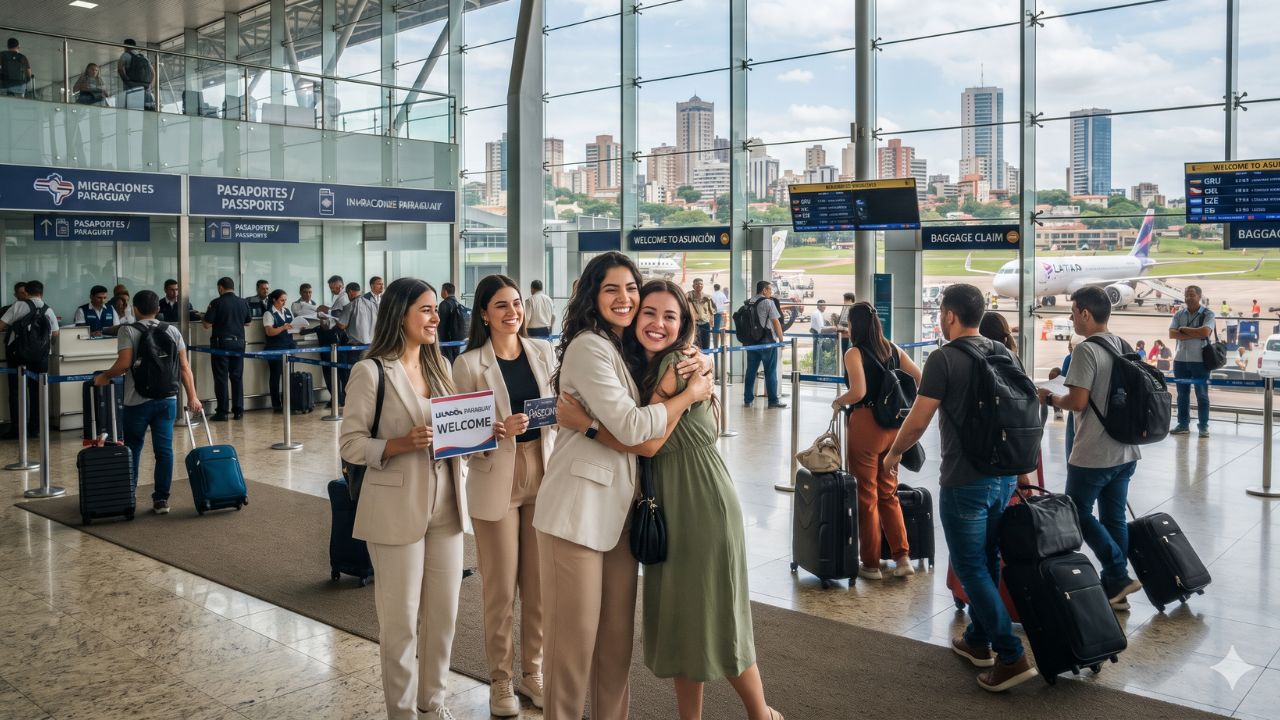
Image generated by AI
While neighboring Argentina and Brazil attract millions of overseas holidaymakers each season, landlocked Paraguay remains South America's best-kept cultural secret—where everyday life moves to the gentle clink of ice in silver tereré cups and Guaraní thrives as an official language alongside Spanish. Under Law No. 7314, officially enacted on 13 August 2024, citizens of the United States, Canada, Australia, and New Zealand enjoy visa-free entry for tourism, permitting stays of up to 90 days without advance paperwork. However, the Dirección Nacional de Migraciones de Paraguay has recorded 13 August 2027 as an administrative validity deadline on its national visa-exemption register, prompting international airlines, tour operators, and independent explorers to assess what this timeline means for future South American itineraries.
Deciphering Law No. 7314: Administrative Review vs. Policy Cancellation
International travel planning hinges on clarity regarding immigration frameworks. Law No. 7314 was established to dismantle bureaucratic friction, replacing cumbersome consular visa applications and reciprocal entry fees with a straightforward 90-day tourist entry stamp upon arrival at Silvio Pettirossi International Airport (ASU) in Luque or overland border crossings.
The appearance of the 13 August 2027 cutoff in official immigration schedules simply reflects the statutory three-year review window embedded within the legislative decree. Immigration authorities have not issued any proclamation revoking the exemption, nor have they announced plans to reinstate mandatory consular visas, advance electronic authorizations, or supplementary tourist levies for travelers from North America or Australasia. The administrative milestone establishes a procedural renewal deadline rather than an abrupt border closure.
The distinction becomes evident when comparing Law No. 7314 with Paraguay's broader diplomatic accords. Longstanding regional mobility pacts under the MERCOSUR framework—granting seamless border crossing to citizens of Argentina, Brazil, and Bolivia, as well as associated nations such as Chile—operate under separate international treaties entirely unaffected by the 2027 deadline. Similarly, bilateral agreements with European nations like Germany, Austria, Spain, France, and the United Kingdom provide perpetual 90-day visa-free admission without any attached calendar expiration.
How Paraguay Compares: Maximum Permitted Stays by Nationality
Paraguay's immigration database outlines varied durations of stay depending on regional treaties, reciprocity, and bilateral accords. While travelers from Western Europe, North America, and parts of Latin America receive a standard 90-day visitor pass, citizens from other partnering states operate under different duration windows.
The table below outlines the official visa-exemption register maintained by the National Directorate of Migration, detailing permitted tourist stays and administrative validity horizons across major source markets:
| Country of Citizenship | Advance Visa Required | Listed Maximum Stay | Administrative Validity Cutoff | Governing Framework |
|---|---|---|---|---|
| United States | Not required | 90 days | 13 August 2027 | Law No. 7314 (13 Aug 2024) |
| Canada | Not required | 90 days | 13 August 2027 | Law No. 7314 (13 Aug 2024) |
| Australia | Not required | 90 days | 13 August 2027 | Law No. 7314 (13 Aug 2024) |
| New Zealand | Not required | 90 days | 13 August 2027 | Law No. 7314 (13 Aug 2024) |
| Germany | Not required | 90 days | Not listed (Indefinite) | Bilateral Exemption Treaty |
| Austria | Not required | 90 days | Not listed (Indefinite) | Bilateral Exemption Treaty |
| United Kingdom | Not required | 90 days | Not listed (Indefinite) | Bilateral Exemption Treaty |
| Spain | Not required | 90 days | Not listed (Indefinite) | Bilateral Exemption Treaty |
| France | Not required | 90 days | Not listed (Indefinite) | Bilateral Exemption Treaty |
| Italy | Not required | 90 days | Not listed (Indefinite) | Bilateral Exemption Treaty |
| Portugal | Not required | 90 days | Not listed (Indefinite) | Bilateral Exemption Treaty |
| Mexico | Not required | 90 days | Not listed (Indefinite) | Bilateral Accord |
| Costa Rica | Not required | 90 days | Not listed (Indefinite) | Bilateral Accord |
| Panama | Not required | 90 days | Not listed (Indefinite) | Bilateral Accord |
| Dominican Republic | Not required | 60 days | Not listed (Indefinite) | Special Bilateral Agreement |
| Japan | Not required | 90 days | Not listed (Indefinite) | Bilateral Exemption Accord |
| South Korea | Not required | 30 days | Not listed (Indefinite) | Short-Stay Exemption |
| Singapore | Not required | 30 days | Not listed (Indefinite) | Short-Stay Exemption |
| Malaysia | Not required | 30 days | Not listed (Indefinite) | Short-Stay Exemption |
| Philippines | Not required | 30 days | Not listed (Indefinite) | Short-Stay Exemption |
Regardless of whether an entry requires advance processing, the maximum duration granted by border agents at the port of entry represents an absolute ceiling. Tourist exemptions strictly forbid paid employment, local commercial contracting, or permanent residence establishment without obtaining proper legal immigration status.
What Makes Paraguay Different: Jesuit Reductions, Guaraní Soul, and the Chaco Wilderness
Paraguay defies standard South American tourist tropes. The country is not defined by soaring Andean peaks or crowded Atlantic beaches, but by untamed wilderness, slow-paced river cities, and a fierce pride in its indigenous roots. Unlike anywhere else on the continent, Guaraní is spoken across all socioeconomic classes, creating a bilingual culture where indigenous mythology, folk medicine, and communal sharing form the bedrock of daily interaction.
In the south near Encarnación along the Paraná River, the UNESCO World Heritage Jesuit Missions of La Santísima Trinidad de Paraná and Jesús de Tavarangue stand as monumental stone testimonies to 17th- and 18th-century communal societies. These sprawling red-sandstone ruins, flanked by carved stone pulpits and acoustic church walls, saw Jesuit missionaries and indigenous Guaraní craftsmen establish self-sustaining, autonomous settlements that resisted European slave traders.
To the west across the Paraguay River stretches the vast Gran Chaco—a semi-arid plain of spiny quebracho trees, salt flats, and remote Mennonite agricultural cooperatives like Filadelfia. Home to jaguars, giant armadillos, and tapirs, the Chaco represents one of South America's most uncompromised eco-tourism frontiers, accessible only to travelers willing to embrace gravel roads and rustic wilderness outposts.
Visitor Insider Tips: Tereré Etiquette, Tri-Border Crossings, and River Bases
Exploring Paraguay requires embracing local rhythms and unwritten social codes that generic guidebooks rarely explain.
- Mastering Tereré Etiquette: In Paraguay's subtropical climate, hot mate is set aside in favor of tereré—cured yerba mate steeped in ice water infused with crushed medicinal herbs called yuyos (such as mint, lemon verbena, or boldo). When offered a horn or leather-wrapped cup (guampa) by locals, never say "gracias" upon taking it. Saying "thank you" signals that you do not want another pour. Drink the entire cup until the straw makes a bubbling sound, hand it straight back to the pourer (cebador), and wait for your turn in the circle.
- Where to Base Yourself in Asunción: While the historic center (Centro Histórico) around the Palacio de los López holds architectural appeal, it empties out after dark. For evening dining, boutique hotels, and pedestrian-friendly streets, base yourself in leafy residential neighborhoods like Villa Morra, Carmelitas, or Los Laureles.
- Handling the Ciudad del Este Tri-Border Crossing: When crossing the Friendship Bridge (Puente de la Amistad) from Foz do Iguaçu, Brazil into Ciudad del Este, Paraguay, public city buses frequently cross the border without stopping at immigration. If you plan to travel beyond Ciudad del Este or stay overnight, you MUST instruct the driver to let you off at the Paraguayan border post to obtain your official entry stamp. Failing to secure this stamp leads to heavy administrative fines upon exit.
- Currency and Exchange Nuances: The official currency is the Paraguayan Guaraní (PYG). While credit cards work reliably in major hotels and upscale shopping centers in Asunción and Ciudad del Este, cash remains mandatory for rural buses, street vendors, and markets like Mercado 4. Bring pristine, tear-free US dollars if exchanging foreign currency; local casas de cambio routinely reject bills with even microscopic pen marks or small creases.
Cultural and Environmental Context: Community Roots and Chaco Conservation
Paraguay's unique national identity is deeply intertwined with its natural environment and historical resilience. After surviving catastrophic 19th-century conflicts that decimated its adult male population, Paraguayan women rebuilt the country, passing down oral storytelling, lacemaking (ñandutí), and the Guaraní tongue to subsequent generations. Today, cultural agencies like the Secretaría Nacional de Turismo (SENATUR) actively promote community-based tourism initiatives that directly support indigenous craft cooperatives and women-led artisan collectives in towns like Itauguá.
Environmental preservation presents a more urgent challenge. The Gran Chaco dry forest biome is undergoing severe ecological stress from commercial cattle ranching, charcoal production, and mechanized soybean agriculture. Sustainable tourism offers a vital economic alternative, incentivizing private landowners to establish protected biological reserves, fund wildlife monitoring corridors, and hire indigenous guides who possess encyclopedic knowledge of regional medicinal flora.
By traveling thoughtfully, supporting locally owned posadas turísticas, and respecting community heritage from the banks of the Paraguay River to the ruins of the southern department of Itapúa, international visitors play a meaningful role in proving that living culture and intact ecosystems are Paraguay's most valuable treasures.
FAQ: Visiting Paraguay Visa-Free 2026–2027
Do US, Canadian, Australian, and New Zealand passport holders need a visa right now?
No. Under Law No. 7314, citizens of these four nations receive a visa-free entry stamp for up to 90 days upon arrival for tourism purposes.
Will Paraguay start requiring visas after 13 August 2027?
Not necessarily. The date marks an internal administrative validity review for Law No. 7314. The Paraguayan government has not announced any reinstatement of visa requirements or fees.
How do travelers reach Asunción from major international transport hubs?
Silvio Pettirossi International Airport (ASU) connects via nonstop regional flights from major South American hubs including São Paulo (GRU), Buenos Aires (EZE), Santiago (SCL), Bogotá (BOG), and Panama City (PTY).
What vaccination certificates are required to enter Paraguay?
An International Certificate of Vaccination against Yellow Fever is mandatory for travelers arriving from or transiting through endemic nations, including specific regions of Brazil, Bolivia, Peru, and several African countries.
[Beneath the shade of lapacho trees, sipping ice-cold tereré among red-earth colonial alleys, visitors quickly realize that Paraguay's greatest luxury is its untouched authenticity.]
Related Travel Guides
Copa Airlines Expands Flights to Margarita Island Venezuela: Travel Guide 2026
This article is for informational purposes. Flight routes, passenger regulations, visa rules, and transit advisories are subject to change by airlines and aviation authorities. Readers are advised to verify schedules and travel documentation with relevant carriers and border agencies before departure.
Related Stories
Qatar Airways Launches Historic Flights to Colombia and Venezuela: Long-Haul South America Travel Guide 2026
Chiang Mai Airport Flight Disruptions for Yi Peng and Loy Krathong: Complete Traveler Guide 2026