
Oregon Travel Warning: Wildfire Smoke Forces Tourism Industry to Rethink Summer Demand
Oregon Travel Warning: Wildfire Smoke Forces Tourism Industry to Rethink Summer Demand

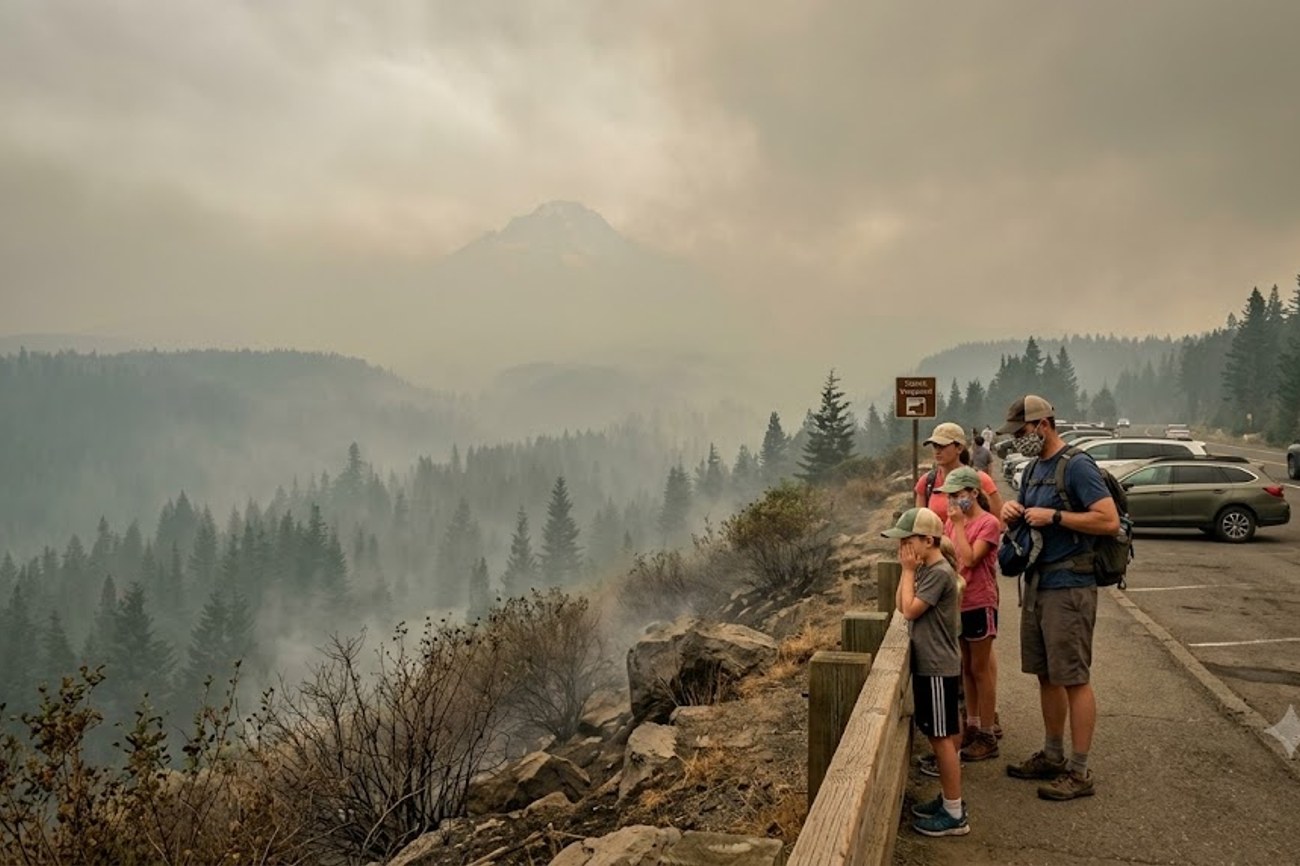
Image generated by AI
A family arriving at Portland International Airport for a long-awaited summer trek through the Cascade Mountains finds their itinerary shattered as a thick, grey haze blankets the horizon. While their hotel in Bend remains open and no active fire threatens the city limits, the air quality index has spiked to hazardous levels, rendering the hiking and cycling trips they booked months ago impossible.
The Oregon Wildfire Smoke Crisis: A Tourism Pivot
As of September 14, 2026, the state of Oregon is facing a systemic challenge where wildfire smoke—rather than the fires themselves—is dictating the viability of the summer tourism economy. The disruption is not characterized by sudden evacuations, but by a prolonged degradation of air quality that permeates regions far removed from the actual flames. Because smoke can travel hundreds of miles, destinations in Central and Southern Oregon are seeing a sharp decline in visitor numbers even when local infrastructure is fully operational.
The economic ripple effect is most severe in small, nature-dependent communities. For these towns, summer is not just a peak season; it is the primary source of annual revenue. When air quality deteriorates, the impact is felt immediately by a chain of providers: hotels see a surge in cancellations, restaurants lose foot traffic, and specialized outdoor recreation companies find their bookings evaporated.
Research conducted by the Sustainable Tourism Lab at Oregon State University has provided a data-driven look at this phenomenon. Their analysis indicates a threshold of tolerance for the modern traveler: while a one- or two-day smoke event rarely triggers a cancellation, extended periods of poor air quality lead to a statistically significant drop in tourism demand. Bend, Oregon, has emerged as the primary case study for this trend, illustrating how a city built on mountain biking, skiing, and river recreation is vulnerable to climate-related atmospheric shifts.
Affected Regions and Tourism Hubs
The impact of wildfire smoke is not uniform across the state, but several key zones are experiencing significant disruptions to their summer demand:
- Central Oregon (Bend and surrounding areas): High vulnerability due to the concentration of outdoor-centric tourism and proximity to fire-prone landscapes.
- Southern Oregon: Frequent disruptions to sightseeing and nature-based excursions.
- Mountain Communities: High economic sensitivity due to a heavy reliance on summer hiking, camping, and cycling visitors.
- Eastern Oregon: Subject to erratic smoke drift that affects visibility and respiratory health for travelers.
Conversely, the Oregon Coast, the Portland metropolitan area, and various western regions often maintain better air quality, though they are not entirely immune to drifting smoke.
Your Rights as a Passenger and Traveler
When wildfire smoke disrupts your travel to Oregon, your legal and financial recourse depends entirely on the type of contract you have with your transport and accommodation providers. Unlike a flight cancellation due to mechanical failure, wildfire smoke is generally categorized as an "Act of God" or a "Force Majeure" event.
Flight Cancellations and Changes If your flight into Portland (PDX) or other Oregon airports is cancelled due to smoke-induced visibility issues or airport closures, your rights are governed by the carrier's contract of carriage and national regulations. For passengers traveling from the US, the US Department of Transportation mandates that if an airline cancels a flight for any reason, you are entitled to a full refund of the unused ticket, regardless of whether the ticket was non-refundable.
Hotel and Vacation Rental Policies Most standard hotel bookings are subject to a 24- or 48-hour cancellation window. However, if you have a non-refundable booking, "smoke" is rarely listed as a valid reason for a penalty-free refund unless the local government has issued a mandatory evacuation order. To protect yourself, check if your booking is "flexible" or "refundable." If you are using a platform like Airbnb or VRBO, refer to their specific "Extenuating Circumstances" policies, though air quality typically does not qualify unless it reaches a level where local authorities prohibit travel.
Travel Insurance Claims This is the most critical layer of protection. Standard travel insurance may not cover "smoke" unless you have a specific "Cancel For Any Reason" (CFAR) upgrade. If you have CFAR, you can typically recover 50% to 75% of your non-refundable costs. Without CFAR, you would need a medical certificate proving that the air quality poses a specific, documented health risk to you (e.g., severe asthma) to trigger a claim.
Rebooking Strategy and Alternatives
If your primary destination in Central or Southern Oregon is engulfed in smoke, do not automatically cancel your entire trip. Oregon’s diverse geography means that atmospheric conditions vary wildly between the coast and the interior.
The Coastal Pivot The Oregon Coast often remains a viable alternative during interior smoke events. If Bend is hazardous, shift your itinerary toward the coast for seafood experiences and beach viewpoints. This allows you to retain your travel dates while moving to a region with higher air filtration from Pacific breezes.
Seasonal Shifting For those planning future trips, the current trend is to avoid the "peak smoke" window of mid-to-late summer. Moving your visit to late spring or early autumn offers three distinct advantages:
- Air Quality: Significantly lower risk of prolonged smoke events.
- Crowd Control: Fewer visitors than the July/August rush.
- Climate: Milder temperatures that are often more conducive to hiking and cycling.
Real-Time Monitoring Tools Before departing, use professional tracking and air quality tools to make an informed decision. Monitor FlightAware for any airport delays in the Pacific Northwest and use AirNow.gov to check the specific Air Quality Index (AQI) for your destination zip code. If the AQI exceeds 150, outdoor activities are generally discouraged for the general public; if it exceeds 200, they are hazardous.
FAQ: Oregon Wildfire Smoke Travel 2026
Am I entitled to a refund if the air quality is poor? Generally, no. Air quality is not a legal ground for a refund unless there is a government-mandated evacuation or the airline cancels the flight. Check your specific "Force Majeure" clauses in your booking contracts.
Can I change my flight to a different Oregon city? Depending on your fare class, you may be able to change your destination. If the airline cancels your flight due to smoke, you can request a reroute or a full refund via the US DOT guidelines.
Which parts of Oregon are safest during smoke season? The Oregon Coast and the western regions typically experience the best air quality during interior wildfire events due to prevailing wind patterns and oceanic influence.
Should I cancel my hotel if I see smoke on a wildfire map? Not necessarily. Smoke drift is unpredictable. Check real-time AQI monitors for the specific town rather than statewide alerts, as conditions can vary significantly between neighboring valleys.
Stay agile with your itinerary; in the modern West, the air is as much a part of the map as the roads.
#OregonWildfires #PDX #BendOregon #TravelLaw #AirQualityIndex #USDOT
Related Travel Guides
- Taiwan Warns Travellers Over Mainland China Risks As New Border Checks Raise Digital Security Concerns
- UK Follows Turkey And More Countries As Australia Issues New Travel Advisory With Fresh Warnings On Protests And Entry Changes
- Turkish Airlines Algiers Flight Is Now Turning Back To Istanbul As The Reported Bird Strike Disrupts New Travel
Disclaimer
This article is for informational and educational purposes only. It does not constitute legal, financial, or professional advice. While we strive to provide accurate and up-to-date information, travel policies, regulations, and conditions change rapidly. Always verify information with official sources before making travel decisions. Nomad Lawyer makes no representations about the accuracy, reliability, completeness, or suitability of the information provided. Readers should consult qualified professionals for advice specific to their circumstances. The views expressed in this article are those of the author and do not necessarily reflect the views of Nomad Lawyer.
Kunal K Choudhary
Co-Founder & Contributor
A passionate traveller and tech enthusiast. Kunal contributes to the vision and growth of Nomad Lawyer, bringing fresh perspectives and driving the community forward.
Learn more about our team →