
Oman Air Elevates Salalah Tourism With 270,000 Passengers During Khareef Season As Regional Air Connectivity Expands
Oman Air Elevates Salalah Tourism With 270,000 Passengers During Khareef Season As Regional Air Connectivity Expands

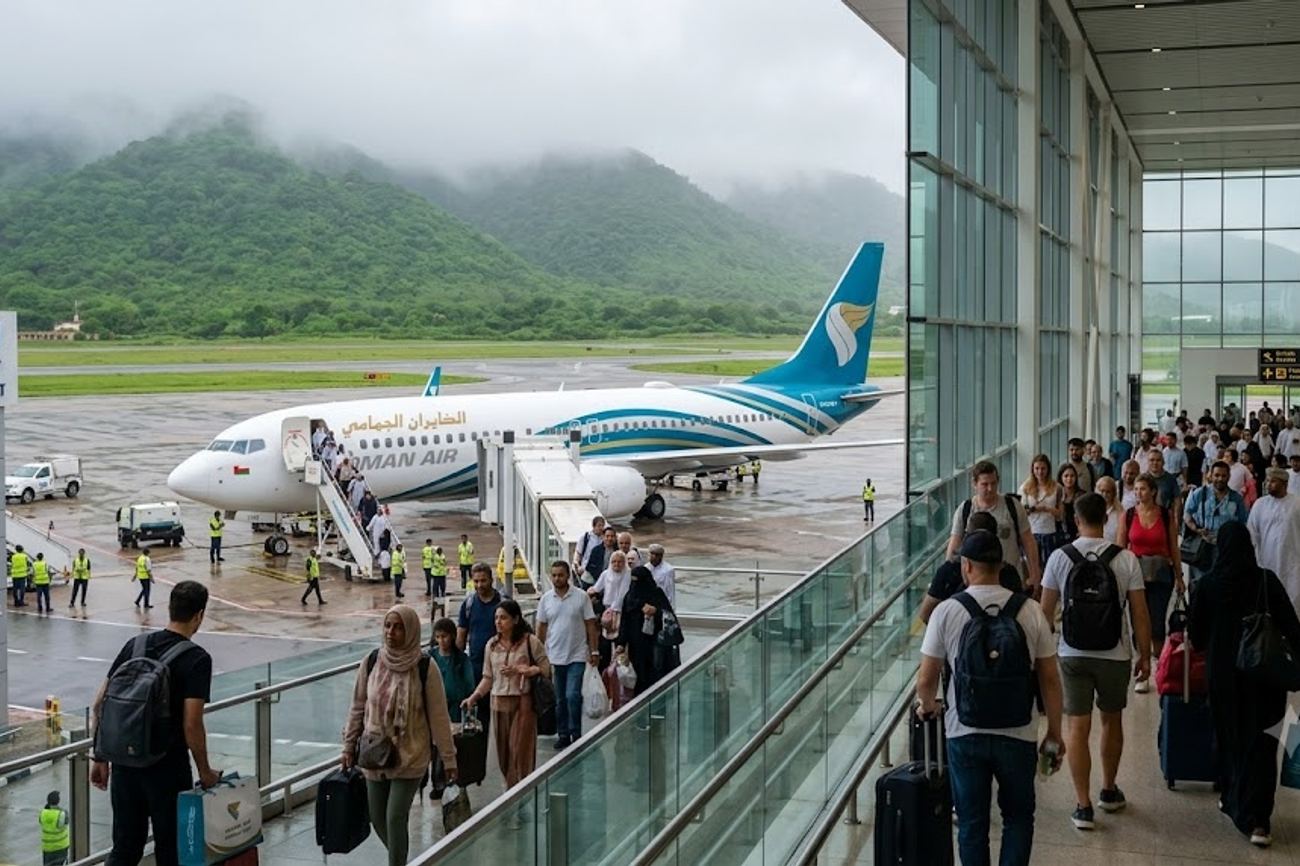
Image generated by AI
Passenger traffic to Salalah surged by 24% in June alone, signaling a shift in seasonal travel patterns that culminated in 270,000 total passengers transported by Oman Air between mid-June and mid-September. This acceleration represents a clear deviation from previous growth trajectories, as the airline leveraged a 16% increase in total seat capacity to capture a larger market share of the Khareef monsoon tourism sector.
The Khareef Surge in Numbers
The data from Oman Air's recent seasonal operations reveals a targeted strategy of capacity expansion to meet an intensifying demand for "cool-weather" tourism in the Arabian Peninsula. The transport of 270,000 passengers during the mid-June to mid-September window reflects a 9% year-over-year increase in traffic. However, the most striking data point is the June growth rate of 24%, which indicates that the "shoulder" period of the Khareef season is expanding, with travelers arriving earlier to avoid the absolute peak of the summer heat.
To accommodate this, Oman Air scaled its operations to a peak of 15 daily flights during August. The airline did not merely increase flight frequency but shifted its fleet deployment strategy. By utilizing Boeing 787-9 Dreamliners—wide-body aircraft typically reserved for long-haul international routes—on selected services to Salalah, the carrier optimized its seat-to-flight ratio. This move allowed for a 16% growth in overall seat capacity, ensuring that the surge in demand did not result in prohibitive fare spikes or total seat unavailability.
The expansion extended beyond domestic routes. The introduction of three weekly direct flights between Dubai and Salalah from July added over 4,900 seats per month. When coupled with scheduled charter operations between Bahrain and Salalah during July and August, the data suggests a strategic pivot toward the GCC (Gulf Cooperation Council) market. According to IATA, regional connectivity within the Middle East is a primary driver for tourism growth, and Oman Air's data confirms that reducing transit friction through direct GCC links directly correlates with increased passenger volume.
Regional Connectivity and Market Benchmarks
The growth seen in Salalah is not an isolated event but part of a broader regional trend where "climate-refuge" destinations are seeing disproportionate growth during the Q3 summer window. While much of the GCC experiences extreme temperatures, Salalah's southwest monsoon creates a unique market position.
The following table illustrates the operational scaling Oman Air implemented to capture this seasonal demand:
| Metric | Previous Year / Baseline | Current Season (Khareef) | Variance |
|---|---|---|---|
| Total Passenger Volume | ~247,700 (est.) | 270,000 | +9% |
| June Passenger Growth | Baseline | Current | +24% |
| Total Seat Capacity | Baseline | Current | +16% |
| Peak Daily Frequency | <15 flights | 15 flights (August) | Increase |
| Dubai-Salalah Capacity | 0 seats | 4,900+ seats/month | New Route |
When comparing this to broader industry trends, the use of wide-body aircraft like the Boeing 787-9 for short-haul seasonal spikes is a high-efficiency tactic. This allows the carrier to maximize the "per-slot" value at Salalah International Airport. As noted in data trends from OAG, airport slot constraints often limit growth; by increasing the size of the aircraft rather than just the number of flights, Oman Air bypassed these constraints to achieve its 16% capacity increase.
What This Means for Travelers
The data indicates that Salalah is transitioning from a niche regional secret to a high-demand international summer hub. For the individual traveler, this shift necessitates a change in booking behavior.
First, the 24% surge in June traffic suggests that the "early window" is now a primary travel period. Travelers seeking to avoid the August peak—where the airline is running 15 flights per day—should target the mid-June window. However, because capacity is filling faster, the traditional "last-minute" booking approach is no longer viable for the Khareef season.
Second, the addition of 4,900 monthly seats from Dubai significantly changes the logistics for international visitors. Rather than routing exclusively through Muscat, travelers from Europe, Asia, and Africa can now leverage Dubai's status as a global hub to enter the Dhofar region more efficiently. If you are planning a visit for the next monsoon season, booking 12-16 weeks in advance is recommended, particularly for the Boeing 787-9 flights, which offer superior comfort for the journey.
Third, the introduction of Bahrain-Salalah charters during July and August indicates that these specific corridors are highly volatile and subject to limited-time availability. Travelers from the Bahraini market should monitor charter announcements specifically, as these may offer more competitive pricing than standard scheduled fares.
The Trajectory of Dhofar’s Aviation Economy
The current data trajectory suggests that Salalah is being positioned as a cornerstone of Oman's Vision 2040 economic diversification strategy. By shifting the tourism burden away from Muscat and distributing it to the Dhofar region, Oman is reducing seasonal volatility in its national tourism numbers.
The growth in passenger traffic (9%) and seat capacity (16%) suggests that the airline is currently "building ahead" of the demand curve. This is a bullish signal; Oman Air is investing in capacity before the market is fully saturated, suggesting they expect the 270,000 passenger figure to be a baseline for future growth rather than a ceiling.
Furthermore, the integration of Salalah into the wider GCC network via Dubai and Bahrain suggests a move toward "multi-destination" tourism. We can expect to see more "open-jaw" tickets where travelers enter via Dubai and exit via Muscat, increasing the average length of stay in the country. As outlined by the World Travel & Tourism Council (WTTC), diversifying the tourism product—in this case, moving from urban tourism to nature-based monsoon tourism—is essential for long-term GDP growth in the region.
FAQ: Salalah Khareef Travel 2024-2025
Will flight prices to Salalah increase during the monsoon? Yes. With a 24% surge in June and peak operations in August, demand is outstripping traditional capacity. While seat capacity grew by 16%, the high demand for the "cool" climate typically drives prices up during July and August.
Is it better to fly via Muscat or Dubai? For international travelers, the new Dubai-Salalah route is more efficient. With over 4,900 additional seats per month, it reduces transit time and avoids the need for a domestic transfer in Muscat.
Which aircraft are being used for the Salalah routes? Oman Air is deploying Boeing 787-9 Dreamliners on selected high-demand services to maximize capacity, alongside their standard narrow-body fleet.
When is the best time to book for the Khareef season? Given the 9% annual increase in passengers, booking 3-4 months in advance is advised. The June window is becoming increasingly popular, meaning early-season seats are filling faster than in previous years.
The shift toward wide-body deployment and GCC-direct connectivity proves that Salalah is no longer a seasonal detour, but a primary destination in the Middle Eastern aviation map.
#OmanAir #SalalahTourism #KhareefData #GCC AviationGrowth #DhofarEconomicShift #Boeing787Capacity
Related Travel Guides
- Cayman Islands Aligns With Jamaica And More As Cayman Airways Expands Seasonal Holiday Travel
- Singapore Airlines Wins World’s Best As Skytrax Awards Highlight New Era Of Passenger Experience
- TSA Checkpoint Modernization Meets FAA Air Traffic Overhaul: How Security Tech and Fee Inflation Define US Aviation
Disclaimer
This article is for informational and educational purposes only. It does not constitute legal, financial, or professional advice. While we strive to provide accurate and up-to-date information, travel policies, regulations, and conditions change rapidly. Always verify information with official sources before making travel decisions. Nomad Lawyer makes no representations about the accuracy, reliability, completeness, or suitability of the information provided. Readers should consult qualified professionals for advice specific to their circumstances. The views expressed in this article are those of the author and do not necessarily reflect the views of Nomad Lawyer.
Kunal K Choudhary
Co-Founder & Contributor
A passionate traveller and tech enthusiast. Kunal contributes to the vision and growth of Nomad Lawyer, bringing fresh perspectives and driving the community forward.
Learn more about our team →