
Osoyoos Tourism Navigates Economic Pressures Amid Wildfire Smoke Disruption
Wildfire smoke from the Bald Range wildfire causes cancellations in Osoyoos, impacting wineries and local businesses across the South Okanagan.

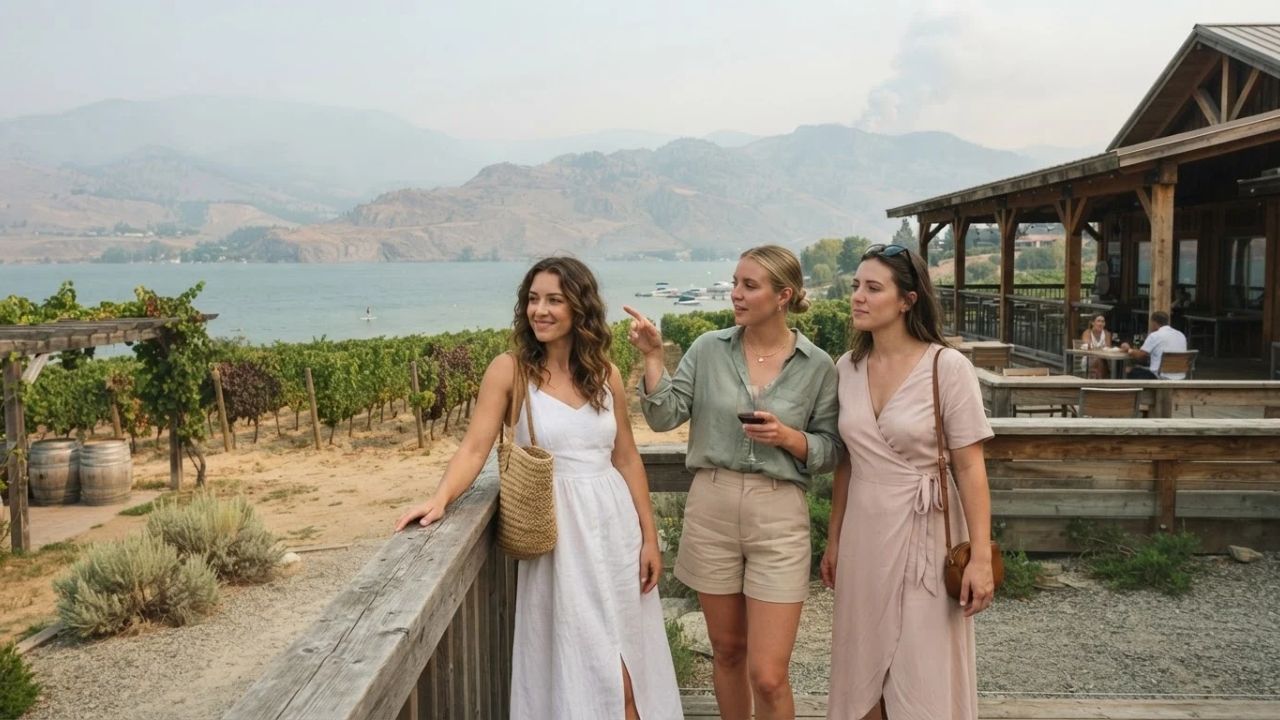
Image generated by AI
Wildfire smoke from the Bald Range wildfire has triggered air quality warnings and bookings cancellations across British Columbia’s South Okanagan, highlighting the vulnerability of Western Canada's seasonal tourism economies. Wineries and local businesses in Osoyoos are facing economic pressure as climate-related events disrupt peak summer travel.
Climate Realities in Seasonal Tourism Economies
The South Okanagan region is one of British Columbia’s primary summer travel destinations. Known for its warm climate, vineyards, lake recreation, and distinct desert-like environment, the area attracts travelers from across Canada and international markets. During the summer, local economies rely heavily on high visitor volumes to sustain retail, hospitality, and adventure operators.
However, the increasing frequency of wildfire-related disruptions highlights a growing challenge for weather-dependent tourism. When smoke spreads across the valley, it impacts outdoor comfort, safety, and visibility. For destination communities like Osoyoos and Oliver, managing these environmental changes requires a focus on emergency preparedness, clear communication, and diversifying the seasonal visitor calendar.
The Bald Range Wildfire and Regional Air Quality
The Bald Range wildfire has affected areas around Summerland and the wider Okanagan-Similkameen region. In response to shifting smoke conditions, Environment Canada issued air quality advisories for the South Okanagan, warning that smoke concentrations can change rapidly based on wind patterns and fire activity.
For travelers, the presence of wildfire smoke has disrupted standard outdoor itineraries. Osoyoos is normally promoted for its active outdoor lifestyle, including:
- Beach and Water Recreation: Activities on Osoyoos Lake, Canada's warmest lake, are restricted during periods of poor air quality.
- Active Travel: Cycling, hiking, and scenic road trips through the desert terrain are less appealing when visibility is reduced.
- Wine Tourism: Outdoor vineyard tours and patio tastings are impacted by smoke exposure, forcing operators to adapt their guest services.
The Regional District of Okanagan-Similkameen (RDOS) continues to manage emergency response operations, including evacuation alerts and recovery support, while advising travelers to verify local conditions before visiting.
Economic Pressures on Okanagan Wine Tourism
The wine sector, a key driver of the South Okanagan tourism industry, has been particularly affected by the wildfire smoke. Summer and early autumn represent the busiest months for estate wineries, as visitors travel to the region for vineyard tours, tasting room experiences, and culinary events. Wineries generate a large portion of their annual direct-to-consumer revenue during this peak window.
Wildfire uncertainty, road closures, and air quality advisories have led to accommodation cancellations and reduced visitor traffic at tasting rooms. Wineries in Oliver and Osoyoos are facing the challenge of managing reduced operations during what should be their highest-demand season. This economic pressure emphasizes the need for visitors to support the region through indoor tastings, retail purchases, and shoulder-season visits.
Preserving Regional Heritage and Indigenous Tourism
For the visitor, the real impact of supporting the South Okanagan during these environmental challenges is the preservation of local livelihoods and indigenous heritage. Osoyoos is home to the Osoyoos Indian Band, which operates Nk'Mip Cellars (the first indigenous-owned winery in North America) and the Nk'Mip Desert Cultural Centre. These institutions preserve the history, language, and ecology of the Okanagan desert.
Supporting these community-owned businesses during challenging seasons ensures that conservation and cultural education projects remain funded. Visitors can practice sustainable travel by purchasing wines directly from estate cellars, dining at restaurants that source ingredients from local Okanagan farms, and participating in indoor cultural exhibits when outdoor trails are restricted.
For example, you can explore the changing dynamics of US Cities Drive Global Tourism Through BBQ, Jazz, Sports, and Authentic Heritage to see how regional pride is shaping travel. For budget-conscious travelers, aligning slow city travel with municipal transit options mirrors similar regional initiatives, such as the Free Admission at Select US State Parks programs. This trend is similar to the tourism growth seen in other destinations, as detailed in our guide on how Utica, New York Emerges as an Affordable Northeast Tourism Hub.
Visitor Insider Tips: Navigating Wildfire Season
To plan a safe and flexible trip to the South Okanagan during the summer wildfire season, keep these practical tips in mind:
- Check Real-Time Air Quality: Monitor the Air Quality Health Index (AQHI) provided by Environment Canada. Plan outdoor activities for days when the index indicates low risk, and move activities indoors when the risk increases.
- Utilize Indoor Tasting Rooms: Many wineries in Oliver and Osoyoos feature air-conditioned indoor tasting bars and wine caves, allowing you to enjoy tastings safely away from outdoor smoke.
- Monitor Road and Access Updates: Use official resources like DriveBC to check for highway closures, pilot car operations, or wildfire-related travel advisories before departing.
- Plan Shoulder-Season Trips: Consider visiting Osoyoos in the spring or late autumn. Wineries remain open, the climate is mild, and the risk of wildfire smoke is significantly lower than during July and August.
- Protect Vulnerable Travelers: If you or your family members have pre-existing respiratory conditions, consult local health advisories and ensure you have necessary medications before traveling to areas affected by smoke.
Long-Term Outlook for South Okanagan Tourism
The long-term outlook for tourism in Osoyoos and the wider Okanagan Valley depends on building climate resilience. Tourism associations are increasingly promoting year-round travel, highlighting spring fruit blossom tours and autumn harvest festivals to reduce dependence on the mid-summer season.
By combining sustainable tourism management with coordinated wildfire safety programs, the region can continue to protect its natural attractions and support local businesses.
FAQ
How is the Bald Range wildfire affecting Osoyoos?
While the wildfire is located near Summerland, shifting winds have carried smoke into the South Okanagan, affecting air quality and outdoor tourism in Osoyoos.
What are the main indoor activities in Osoyoos?
Visitors can explore indoor wine tastings, visit the Nk'Mip Desert Cultural Centre's indoor galleries, dine at local farm-to-table restaurants, and browse art galleries.
Where can I check road closures in British Columbia?
Travelers should use DriveBC, the official provincial road report service, to check for real-time highway closures and travel advisories.
Why is Oliver, BC famous in wine tourism?
Oliver is known as the "Wine Capital of Canada," hosting numerous estate wineries along the Golden Mile Bench and Black Sage Bench.
Stay updated on the environmental trends and safety advisories affecting South Okanagan travel.
Related Travel Guides
Disclaimer
This article is for informational and educational purposes only. It does not constitute legal, financial, or professional advice. While we strive to provide accurate and up-to-date information, travel policies, regulations, and conditions change rapidly. Always verify information with official sources before making travel decisions. Nomad Lawyer makes no representations about the accuracy, reliability, completeness, or suitability of the information provided. Readers should consult qualified professionals for advice specific to their circumstances. The views expressed in this article are those of the author and do not necessarily reflect the views of Nomad Lawyer.
Raushan Kumar
Founder & Lead Developer
Full-stack developer with 11+ years of experience and a passionate traveller. Raushan built Nomad Lawyer from the ground up with a vision to create the best travel and law experience on the web.
Learn more about our team →