Norway Joins Denmark and More Others as Stockholm Attractions Drive Sweden Travel in 2026

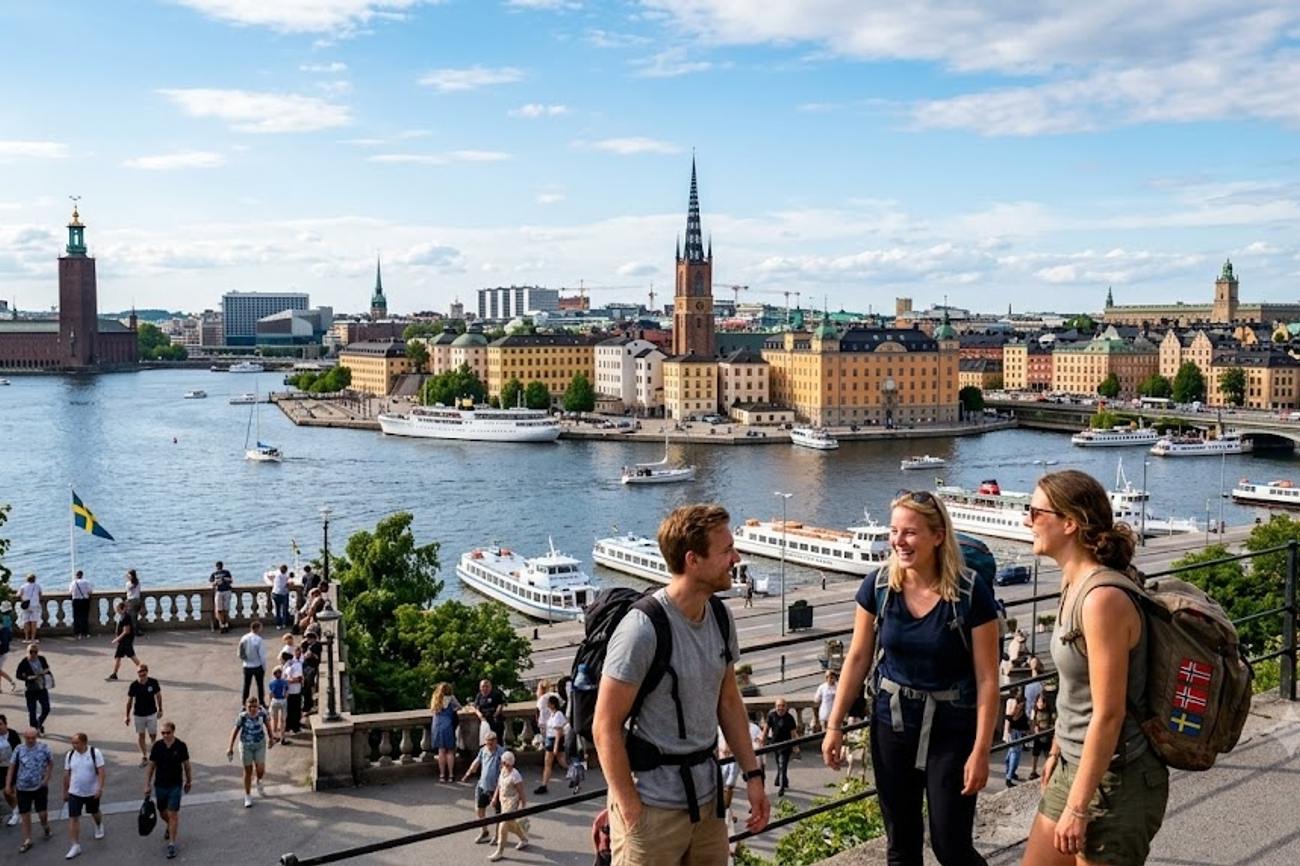
Image generated by AI
[Stockholm, August 2026] — Stockholm is experiencing a surge in tourism growth for 2026, driven by a record-breaking influx of international visitors and a significant rise in commercial guest nights. New data from the Stockholm Business Region indicates that the Swedish capital is successfully leveraging its unique blend of urban infrastructure and natural landscapes to attract a broader European market, with Norway, Denmark, and the Netherlands emerging as primary source markets.
The growth is reflected across all major transit modes. Year-to-date figures for 2026 show that commercial guest nights in Stockholm have climbed by 4.7%. This hospitality growth is supported by a 3.4% increase in flight passenger volumes and a 2.9% rise in arriving train passengers. These figures follow a landmark 2025, during which Stockholm County recorded 15.97 million commercial guest nights—a 4% increase over 2024 levels.
The 2026 Tourism Surge
The current expansion is not limited to the capital. Across Sweden, July 2026 saw a total of 14,249,923 guest nights, representing a 5.3% year-over-year increase. The most aggressive growth is found in the foreign visitor segment, which surged by 9.9% in July. This indicates a shift in Sweden's tourism economy, moving from a reliance on domestic travel to a more robust international appeal.
The surge is attributed to Stockholm's ability to consolidate diverse travel experiences—ranging from royal heritage and high-density urban sightseeing to expansive maritime nature—within a single accessible destination.
Markets and Metrics Impacted
The following data outlines the specific growth sectors and passenger trends driving the 2026 Swedish travel boom:
| Metric | 2026 Performance (YTD/July) | Growth Rate |
|---|---|---|
| Sweden Total Guest Nights (July) | 14,249,923 | +5.3% |
| Foreign Guest-Night Growth (July) | N/A | +9.9% |
| Stockholm Commercial Guest Nights | N/A | +4.7% |
| Stockholm Flight Passenger Volume | N/A | +3.4% |
| Stockholm Train Arrivals | N/A | +2.9% |
Key source markets contributing to these figures include:
- Norway: Currently the most critical foreign visitor market for Sweden.
- Denmark: A primary driver of European demand.
- The Netherlands: A significant contributor to the increase in international arrivals.
Practical Traveler Advisory and Strategic Insights
For those planning a trip to Sweden in 2026, the increase in passenger volumes and guest nights suggests a higher demand for accommodation and transport. Travelers should expect increased crowds at primary hubs and major attractions.
Practical Implications:
- Booking Lead Times: With commercial guest nights rising by 4.7% in the capital, hotel availability in central districts like Gamla Stan and near the waterfront will tighten. Early booking is recommended.
- Transport Planning: The 3.4% increase in air travel and 2.9% increase in rail arrivals suggest that Arlanda Airport and Stockholm Central Station will experience higher congestion.
- Diversified Itineraries: The trend toward "nature-based holidays" means more visitors are moving beyond the city center. Travelers can now easily combine urban stays with excursions to the archipelago using public ferry networks.
- Accessibility: The city's infrastructure supports multiple transit modes—including trams, buses, and ferries—making it easier to avoid traffic congestion when visiting high-density areas like Djurgården.
The Core Attraction Ecosystem
Stockholm's 2026 strategy focuses on three distinct "experience zones" that allow visitors to pivot between different types of tourism without leaving the city limits.
The Cultural Hub: Djurgården Djurgården serves as the primary anchor for family and cultural tourism. The island integrates green spaces with world-renowned institutions. Key sites include the Vasa Museum, which houses a preserved 17th-century warship, and the ABBA Museum. Additionally, Skansen, the world's oldest open-air museum, offers a comprehensive look at Swedish traditions and architecture.
The Historic Core: Gamla Stan The city's oldest district, Gamla Stan, provides a walkable concentration of medieval and early modern history. This area is critical for short-stay travelers who need to maximize their time. Within a small radius, visitors can access the Royal Palace, the Nobel Prize Museum, and the Stockholm Cathedral. The district's narrow streets are designed for pedestrian traffic, integrating dining and shopping with architectural sightseeing.
The Natural Extension: The Stockholm Archipelago To prevent urban saturation, the city is promoting its archipelago, which consists of over 30,000 islands and islets. This allows a standard "city break" to evolve into a nature-based holiday.
- Short Trips: Fjäderholmarna offers quick island excursions.
- Cultural Trips: Vaxholm provides a mix of harbor town charm and sightseeing.
- Active Trips: Grinda and Utö are targeted at hikers, kayakers, and those seeking overnight coastal stays.
Institutional and Royal Heritage
The city's identity is further reinforced by its monumental architecture. The Royal Palace remains a primary draw, functioning as both the King's official residence and a public museum with over 600 rooms across 11 floors. This complex includes the Treasury and the Tre Kronor Museum.
Complementing the royal sites is the Stockholm City Hall. Beyond its political function, it is a major tourist site due to its association with the Nobel banquet. The City Hall's 106-meter tower provides the city's most comprehensive panoramic views, though access is limited to its operating season.
For those interested in the arts, the city's museum network has expanded beyond traditional history. Visit Stockholm reports over 100 attractions, including Fotografiska for photography and Moderna Museet for contemporary art. The Nationalmuseum continues to be the primary resource for design and applied arts dating back to 1500.
FAQ: Stockholm Travel 2026
What is the best way to visit Djurgården? Visitors can reach the island via several modes of transport, including walking, cycling, bus, tram, or ferry. Ferries are highly recommended for those wanting to experience the city's waterfront.
Is Gamla Stan suitable for travelers with very limited time? Yes. Because the Royal Palace, Nobel Prize Museum, and Stockholm Cathedral are concentrated in a small, walkable area, it is the most efficient district for short-term visitors.
How many islands are in the Stockholm archipelago? The archipelago is Sweden's largest, containing more than 30,000 islands and islets, starting approximately 20 minutes from the city center.
Which museums are considered "must-sees" in 2026? The Vasa Museum (maritime history), ABBA The Museum (pop culture), and Skansen (open-air heritage) remain the top-tier attractions for most visitors.
Sweden is successfully pivoting from a regional destination to a global tourism powerhouse.
Related Travel Guides
This article is for informational purposes. Flight routes, passenger regulations, visa rules, and transit advisories are subject to change by airlines and aviation authorities. Readers are advised to verify schedules and travel documentation with relevant carriers and border agencies before departure.
Related Stories

Australia and Philippines Forge Historic Defence Cooperation Pact to Protect Indo-Pacific Trade and Travel Corridors

Phuket Luxury Tourism Surge 2026: High-Net-Worth Arrivals and New Aviation Routes