Australia and Philippines Forge Historic Defence Cooperation Pact to Protect Indo-Pacific Trade and Travel Corridors

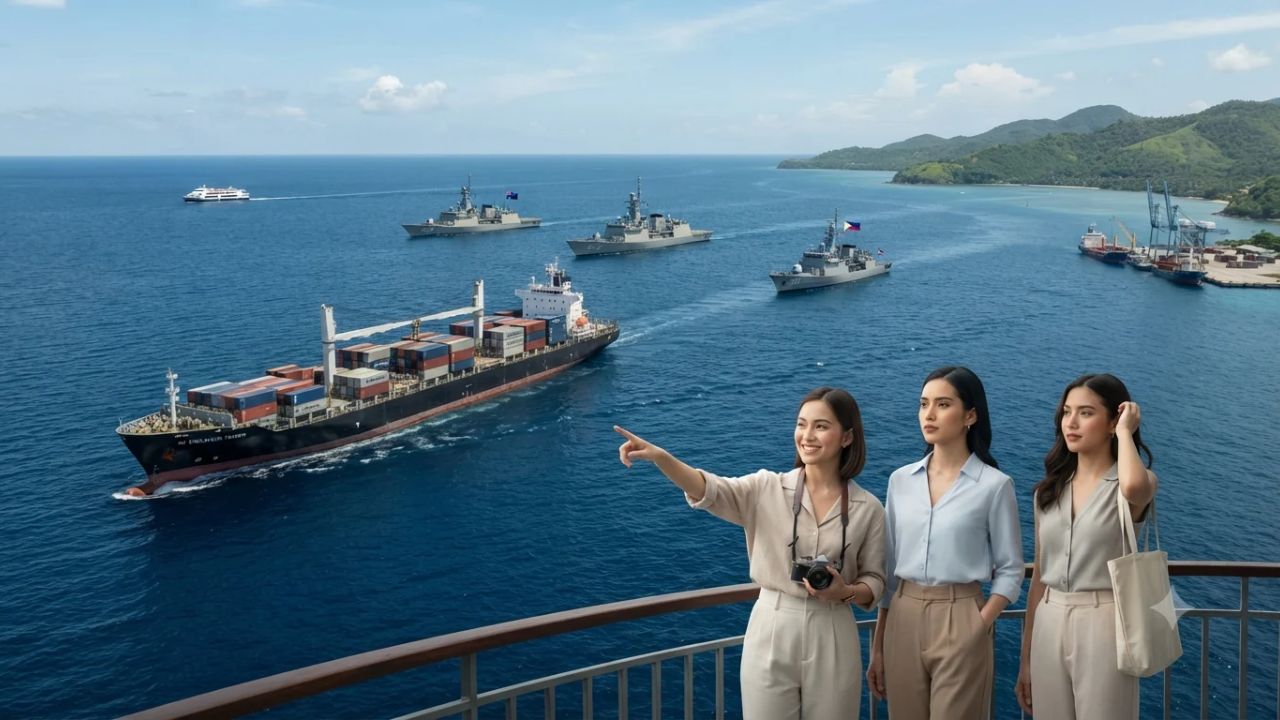
Maritime security and international travel corridors across the Indo-Pacific reached a decisive turning point in November 2026 as Australia and the Philippines signed a landmark bilateral Defence Cooperation Arrangement designed to neutralize coercive gray-zone tactics and safeguard vital sea lines of communication (SLOCs). Transiting waters that carry over US$3.4 trillion in annual global commerce and serve as primary flight corridors connecting Australasia with East Asia, the shared maritime domain faces unprecedented friction from aggressive maritime militia swarms, high-powered water cannon deployments, military-grade laser targeting, and hazardous aerial intercepts. Signed by Philippine Defense Secretary Gilberto Teodoro and his Australian counterpart, the historic pact accelerates the transition of regional defense architecture from an outdated hub-and-spoke model into a resilient security latticework. By granting Australian forces reciprocal logistical persistence across the Philippine archipelago, streamlining the Status of Visiting Forces Agreement (SOFA), and deploying advanced maritime domain surveillance, the alliance establishes an operational shield protecting commercial cargo fleets, international passenger aviation, and archipelagic tourism.
The geopolitical importance of this defense alignment extends directly into the civilian travel economy. The Indo-Pacific is not merely a theater of strategic posturing; it is the physical circulatory system of global tourism, international trade, and commercial passenger aviation. Millions of international vacationers, business travelers, and merchant seafarers transit the South China Sea and adjacent straits annually, relying on the presumption that these waters remain open, lawful, and free from coercion. Philippine Defense Secretary Gilberto Teodoro explicitly identified the Philippine archipelago as the "first line of defense" for regional stability, emphasizing that defending sovereign rights within its Exclusive Economic Zone (EEZ) directly preserves the freedom of navigation that global aviation and passenger cruising require. By anchoring all joint maneuvers to the binding 2016 South China Sea Arbitral Award under the United Nations Convention on the Law of the Sea (UNCLOS), Canberra and Manila are reinforcing international law against unilateral expansionism.
========================================================================================
AUSTRALIA–PHILIPPINES DEFENCE COOPERATION ARRANGEMENT SCORECARD (NOV 2026)
========================================================================================
Operational Dimension        Strategic Specification / Policy Mandate
----------------------------------------------------------------------------------------
Bilateral Accord             Australia–Philippines Defence Cooperation Arrangement (DCA)
Key Signatories              Philippine DND (Gilberto Teodoro) & Australian DoD
Core Strategic Architecture  Evolution from "Hub-and-Spoke" to Multilateral "Latticework"
Allied Coordination Matrix   Interlocks with United States (MDT) and Japan (RAA Framework)
Primary Legal Anchor         2016 Permanent Court of Arbitration Ruling under UNCLOS
Air & Maritime Domain Scope  West Philippine Sea, Luzon Strait, Sulu Sea, Indo-Pacific SLOCs
Commercial Trade Protected   Over US$3.4 Trillion in annual maritime commercial transit
Civilian Travel Corridors    Major international flight paths & trans-archipelagic cruise routes
Operational Mechanisms       Archipelagic logistics sharing, streamlined SOFA deployment,
                             unmanned aerial surveillance (UAS), cyber-domain defense
Logistical Persistence       Mutual access to fuel, naval replenishment, and airfield staging
Deterrence Objective         Neutralizing gray-zone maneuvers (lasers, water cannons, ramming)
========================================================================================
Sources: Department of National Defense (Manila) & Australian Department of Defence (Canberra).
========================================================================================
The Strategic Evolution: From "Hub-and-Spoke" to Allied Latticework
For more than seven decades following the conclusion of the Second World War, security across the Asia-Pacific region rested almost exclusively on the San Francisco System—a "hub-and-spoke" security matrix in which the United States operated as the central hub, maintaining separate, bilateral mutual defense treaties with individual allies including Australia, the Philippines, Japan, South Korea, and Thailand.
While this structure maintained general deterrence throughout the Cold War, modern geopolitical realities have exposed its structural limitations. Coercive state actors have exploited the gaps between isolated bilateral alliances through low-intensity, non-kinetic aggression—operating below the formal threshold that would trigger American treaty intervention.
The Rise of Minilateral Security Networks
The November 2026 Australia-Philippines defense pact formalizes the transition toward what military strategists call an allied latticework:
- Direct Bilateral Integration: Rather than routing military coordination through Washington, Canberra and Manila now coordinate naval deployments, joint air patrols, and intelligence exchanges directly.
- The Quad and Trilateral Overlap: The arrangement synchronizes with the broader US-Japan-Australia-Philippines defense framework. In 2026, Japan deployed combat-capable Ground Self-Defense Force (JGSDF) units to Philippine soil during Exercise Balikatan—the first such deployment since 1945—under the newly operationalized Reciprocal Access Agreement (RAA).
- Collective Deterrence Density: By intertwining military doctrine, communications protocols, and airfield access, the allies create an integrated security environment where an aggressive provocation against a Philippine vessel directly implicates Australian, Japanese, and American operational interests.
========================================================================================
REGIONAL SECURITY ARCHITECTURE COMPARISON: HISTORIC VS. MODERN LATTICEWORK
========================================================================================
Security Vector              Historic "Hub-and-Spoke" Model    Modern "Latticework" Model (2026)
----------------------------------------------------------------------------------------
Central Organizing Anchor    United States (Unilateral Hub)    Multilateral Interlocking Coalition
Allied Interoperability      Isolated bilateral channels       Direct Manila–Canberra–Tokyo links
Reaction to Gray-Zone TacticsFragmented and reactive           Synchronized collective exposure
Legal Basis for Joint PatrolsAd-hoc bilateral memos            Strict UNCLOS & 2016 Arbitral Award
Logistical Agility           Heavy reliance on US bases        Dispersed archipelagic access nodes
Civilian Sector Protection   Incidental security byproduct     Explicit defense of commercial corridors
========================================================================================
Countering Gray-Zone Coercion: Neutralizing Hybrid Threats in Contested Waters
The catalyst compelling Canberra and Manila to sign the November 2026 pact is the proliferation of gray-zone operations—calculated, aggressive acts of state coercion that stop short of open military warfare but systematically erode sovereign rights and disrupt international transit.
Both nations have experienced dangerous gray-zone encounters firsthand across the South China Sea and adjacent air corridors:
Coercive Operations Confronting the Philippines
Philippine Coast Guard cutters and civilian rotation vessels supplying the BRP Sierra Madre at Second Thomas Shoal (Ayungin Shoal) and patrolling Sabina Shoal (Escoda Shoal) have faced escalating hostilities:
- Kinetic Ramming: Intentional collisions by foreign coast guard and maritime militia hulls designed to shear off communication arrays and disable propulsion systems.
- High-Velocity Water Cannons: High-pressure water cannon blasts exceeding 1,200 psi aimed directly at ship bridges, shattering navigational windshields and injuring Filipino personnel.
- Military-Grade Laser Blinding: Directing high-energy green laser beams into the cockpits of Philippine patrol aircraft and bridge wings of surface cutters, inducing temporary blindness and endangering navigational safety.
Aggressive Encounters Confronting Australian Forces
Australian defense personnel operating in international waters and international airspace under Operation Gateway have encountered similar hybrid hostility:
- Acoustic Sonar Assaults: Royal Australian Navy divers inspecting propeller shafts on the frigate HMAS Toowoomba in international waters were subjected to close-range hull-mounted sonar emissions, inflicting acoustic trauma and inner-ear damage.
- Flares and Chaff Intercepts: Royal Australian Air Force (RAAF) P-8A Poseidon maritime surveillance aircraft conducting routine airspace monitoring were intercepted by fighter jets releasing dangerous magnesium flares across their flight trajectory.
By signing the 2026 pact, Australia and the Philippines turn isolated encounters into shared allied responsibilities. As Defense Secretary Gilberto Teodoro articulated, collective resistance drastically elevates the political, diplomatic, and tactical penalties for any actor seeking to impose a closed sphere of influence over international waterways.
========================================================================================
GRAY-ZONE COERCIVE TACTICS AUDIT & ALLIED COUNTERMEASURES
========================================================================================
Observed Coercive Tactic     Targeted Asset / Sector         Allied Countermeasure Strategy
----------------------------------------------------------------------------------------
Maritime Militia Swarming    Philippine fishing & supply boatsCoordinated joint coast guard patrols
High-Pressure Water Cannons  Bridge & navigation structures  Armored communications & transparency
Acoustic Sonar Pulses        Naval divers & underwater ops   Acoustic signature logging & alerts
Military Laser Illumination  Cockpits & lookout positions    Anti-laser protective eyewear & sensors
Close Aerial Jet Intercepts  Surveillance planes (P-8A)      Real-time multi-angle video telemetry
GPS Jamming & AIS Spoofing   Commercial merchant & cruise shipsEncrypted navigation & sat-backup links
========================================================================================
The Four Pillars of Archipelagic Defense Architecture
To convert diplomatic declarations into practical maritime power, the November 2026 Defence Cooperation Arrangement establishes four distinct operational pillars engineered specifically for the intricate geography of the Philippine archipelago.
========================================================================================
THE FOUR OPERATIONAL PILLARS OF ARCHIPELAGIC DEFENSE
========================================================================================
Pillar Vector                Operational Implementation Mechanism
----------------------------------------------------------------------------------------
1. Logistical Persistence    Reciprocal staging access across northern and western Philippine
                             ports, airstrips, and fuel depots for Australian assets.
2. Streamlined InteroperabilityUpgraded Status of Visiting Forces Agreement (SOFA) cutting
                             diplomatic clearance timelines from weeks to under 48 hours.
3. Maritime Domain Awareness Integration of Australian long-range MQ-4C Triton and MQ-9B
                             unmanned aerial systems with Philippine coastal radar chains.
4. Cyber-Domain & Resilience Combined task forces defending civilian AIS tracking, flight
                             corridor communications, and satellite positioning networks.
========================================================================================
Pillar 1: Archipelagic Logistical Persistence
The geography of the Philippines—comprising more than 7,600 islands—presents unique logistical opportunities. Rather than constructing massive, vulnerable military bases, the pact enables allied forces to distribute fuel, spare parts, and ammunition across decentralized northern and western coastal facilities.
Australian frigates and maritime patrol aircraft can refuel and restock at Philippine naval stations in Palawan, Subic Bay, and northern Luzon (overlooking the strategic Bashi Channel and Luzon Strait). This mutual access eliminates long transit delays back to Darwin or Perth, allowing joint naval formations to maintain continuous, uninterrupted presence along critical maritime chokepoints.
Pillar 2: Streamlined Interoperability and SOFA Upgrades
Bureaucratic delays have historically hampered rapid responses during maritime crises. The new arrangement streamlines the bilateral Status of Visiting Forces Agreement (SOFA), reducing diplomatic clearance procedures for troop movements, warship port calls, and emergency humanitarian deployments from multiple weeks to less than 48 hours. Combined ground, naval, and air forces can rapidly mobilize for live-fire maneuvers, anti-submarine warfare (ASW) drills, and amphibious coastal landing exercises.
Pillar 3: Next-Generation Maritime Domain Awareness (MDA)
Effective deterrence requires total transparency. Australia is deploying advanced airborne radar and unmanned aerial systems—including MQ-4C Triton high-altitude drones—to feed real-time maritime telemetry into the Philippine National Coast Watch Center. By streaming high-resolution visual evidence of illicit maritime incursions directly to international news agencies and diplomatic forums, the alliance dismantles the cover of plausible deniability that gray-zone actors rely upon.
Pillar 4: Cyber-Resilience and Navigation Protection
Recognizing that modern warfare often begins in the electromagnetic spectrum, the pact creates a joint cyber-defense center. Allied specialists actively counter electronic warfare threats, including GPS spoofing and Automatic Identification System (AIS) ghosting, which rogue vessels utilize to conceal illegal movements or disrupt commercial cargo navigation and civilian cruise liners.
Securing the Arteries of Global Trade, Aviation, and Tourism
The ultimate beneficiaries of the Australia-Philippines defense arrangement are not military commanders, but the global economy, international travelers, and regional commerce. The Indo-Pacific waterway is an indispensable global transit corridor:
========================================================================================
GLOBAL ECONOMIC AND TRAVEL ASSETS SECURED BY ALLIED MARITIME STABILITY
========================================================================================
Economic / Travel Vector     Annual Scope & Volume           Vulnerability to Disruption
----------------------------------------------------------------------------------------
Global Maritime Trade        Over US$3.4 Trillion annually   Blockades inflate war-risk insurance
Crude Oil & Energy Transits  Roughly 33% of global LNG & oil Tanker rerouting adds 10-14 days transit
Commercial Aviation Flights  Over 1.2 Million flights/year   Airspace closures force costly diversions
Archipelagic Tourism         Millions of cruise & island visitorsPerceptions of conflict collapse bookings
Global Seafarer Workforce    Over 25% of commercial mariners Physical danger to Filipino and allied crews
----------------------------------------------------------------------------------------
Total Regional Exposure      Indispensable global trade arteryCrippling supply chain inflation
========================================================================================
Sources: United Nations Conference on Trade and Development (UNCTAD) & IATA Flight Route Audits.
========================================================================================
1. Protecting Maritime Commercial Fleets
More than one-third of global maritime shipping transits through the South China Sea. Container vessels transporting electronics from East Asia to Europe, bulk carriers shipping Australian iron ore and bauxite to manufacturing centers, and liquefied natural gas (LNG) tankers supplying Japan and South Korea all traverse these waters.
When gray-zone harassment goes unchecked, maritime underwriters in London and Singapore impose exorbitant "war-risk" insurance surcharges, drastically inflating freight costs. By establishing reliable deterrence, the Australia-Philippines alliance helps stabilize commercial shipping rates and protects global consumer supply chains from sudden cost shocks.
2. Safeguarding Commercial Aviation Corridors
Above the sea lanes lies some of the most heavily congested international airspace in the world. Flight routes connecting Sydney, Melbourne, and Brisbane with Tokyo, Seoul, Hong Kong, and Taipei pass directly through the Manila and Ho Chi Minh Flight Information Regions (FIRs).
Unannounced military missile tests, aggressive fighter jet intercepts, and electronic GPS jamming introduce severe safety risks to commercial passenger jets carrying hundreds of travelers. Allied air patrols enforce standard international aviation regulations, ensuring flight paths remain open and safe for global airlines.
3. Preserving Tourism Across the Coral Triangle
The Philippines and northern Australia boast some of the world's most pristine marine tourism destinations. Regions such as Palawan (El Nido, Coron), Boracay, Cebu, and the Tubbataha Reefs Natural Park attract millions of international travelers each year, driving billions of dollars in foreign exchange earnings. Maintaining freedom of navigation guarantees that international cruise liners can operate uninterrupted archipelagic itineraries without fear of geopolitical harassment.
========================================================================================
KEY TOURISM HUBS BENEFITING FROM EXPANDED REGIONAL MARITIME STABILITY
========================================================================================
Destination Region   Travel Category         Core Visitor Experiences at Stake
----------------------------------------------------------------------------------------
Palawan (Philippines)Island & Eco-Tourism     El Nido limestone cliffs, Coron wreck diving
Tubbataha Reefs (PH) World Heritage Diving   Untouched oceanic atolls and pelagic marine life
Boracay Island (PH)  Beach Resort Tourism    White Beach hospitality, water sports, dining
Batanes Islands (PH) Northern Eco-Sanctuary  Historic stone houses, dramatic ocean bluffs
Coral Sea (Australia)Expedition Cruising     Great Barrier Reef outer passages and diving
Sulu Sea Archipelago Adventure Cruising     Marine sanctuaries and cultural heritage routes
========================================================================================
Anchoring Operations in International Law: The 2016 UNCLOS Ruling
A defining pillar of the Australia-Philippines Defence Cooperation Arrangement is its explicit, unyielding adherence to rules-based international maritime law. Rather than asserting arbitrary spheres of control, all combined activities are rooted in the 2016 South China Sea Arbitral Tribunal Ruling.
The Legal Authority of the Arbitral Award
On 12 July 2016, an Arbitral Tribunal constituted under Annex VII of the United Nations Convention on the Law of the Sea (UNCLOS) issued a unanimous, legally binding ruling in the case brought by the Philippines against the People’s Republic of China (Republic of Philippines v. People's Republic of China).
Key determinations of the landmark ruling established that:
- Invalidity of Historic Claims: The unilateral "nine-dash line" (and its expanded ten-dash iterations) possesses no legal validity under international law.
- Maritime Feature Classifications: Low-tide elevations (such as Mischief Reef and Subi Reef) cannot generate territorial seas, exclusive economic zones, or continental shelves, and artificial island construction cannot alter legal maritime status.
- Sovereign Exclusive Economic Rights: The Philippines maintains exclusive sovereign rights to explore and exploit natural resources, fisheries, and seabed energy reserves within its 200-nautical-mile Exclusive Economic Zone (EEZ), specifically including Reed Bank and Scarborough Shoal.
By formally binding all joint defense patrols to this ruling, Canberra and Manila demonstrate to the international community that their military deployments are fundamentally lawful operations to preserve the global commons. This legal foundation reassures commercial shipping firms, airline operators, and foreign travelers that the alliance acts as a protective shield for international law.
Strategic Traveler Guidance: Navigating Indo-Pacific Routes
For international tourists, maritime cruise passengers, and business travelers moving through Southeast Asia and Australasia, understanding the regional security context provides confidence when planning itineraries:
========================================================================================
TRAVELER SECURITY & ITINERARY PLANNING PROTOCOLS
========================================================================================
Travel Vector          Guidance & Strategic Considerations
----------------------------------------------------------------------------------------
Commercial Aviation    Flights traversing Southeast Asia and Australia operate under strict
                       ICAO safety guidelines. Airlines avoid non-notified military areas.
Cruise Ship Operations Major international cruise lines maintain active satellite links with
                       allied maritime authorities; tourist voyages remain fully protected.
Archipelagic Tourism   Mainstream Philippine island destinations (Palawan, Boracay, Cebu,
                       Siargao) remain peaceful and operating under standard tourist protocols.
Travel Insurance       Select comprehensive travel insurance policies that include coverage
                       for carrier delays, airspace rerouting, and geopolitical advisories.
Embassy Registrations  International travelers should register itineraries with home consular
                       systems (e.g., Australia's Smartraveller or US STEP program).
Consular Clarity       Differentiate between localized maritime border disputes and peaceful
                       domestic tourist areas located hundreds of miles from offshore reefs.
========================================================================================
Clarifying Travel Geography for Tourists
It is vital for international travelers to distinguish between disputed offshore coral atolls and peaceful domestic holiday destinations:
- The flashpoints of gray-zone encounters—such as Second Thomas Shoal or Scarborough Shoal—are isolated maritime reefs situated 100 to 120 nautical miles offshore in the open South China Sea.
- In contrast, the world-famous vacation islands of the Philippines—including Boracay, Bohol, Siargao, and the protected mainland resorts of Palawan—remain safe, welcoming, and vibrant destinations where international visitors can enjoy their holidays without operational interference.
Frequently Asked Questions
What is the Australia-Philippines Defence Cooperation Arrangement?
The Defence Cooperation Arrangement is a bilateral defense agreement signed in November 2026 between Australia and the Philippines that expands military interoperability, enables reciprocal logistical access across the Philippine archipelago, upgrades the Status of Visiting Forces Agreement, and strengthens joint maritime surveillance in the Indo-Pacific.
Why is this defense agreement important for global trade?
The pact secures vital international sea lines of communication (SLOCs) through the South China Sea, an international trade artery carrying over US$3.4 trillion in commercial cargo annually. Deterring gray-zone aggression protects commercial shipping from expensive route diversions and surging war-risk insurance premiums.
What are "gray-zone" tactics in the South China Sea?
Gray-zone tactics are coercive maneuvers executed by state actors that fall below the threshold of conventional military warfare. Examples include swarming civilian and coast guard ships with armed maritime militias, intentionally ramming hulls, blasting vessels with high-powered water cannons, illuminating cockpits with military-grade lasers, and utilizing electronic GPS jamming.
What did Philippine Defense Secretary Gilberto Teodoro say about the agreement?
Defense Secretary Gilberto Teodoro emphasized that the agreement bolsters the country's "credible deterrence posture in areas where we have jurisdiction," describing the Philippines as a vital "first line of defense" for maintaining regional freedom of navigation.
Does the defense pact affect commercial passenger flights?
Yes, positively. By monitoring regional airspace and enforcing international civil aviation regulations, the alliance helps prevent hazardous unannounced military missile drills and dangerous fighter jet intercepts, keeping commercial flight paths safe for millions of international passengers flying between Australia and Asia.
What is the legal foundation of the Australia-Philippines maritime agreement?
The agreement is strictly anchored in international maritime law, specifically the United Nations Convention on the Law of the Sea (UNCLOS) and the historic 2016 South China Sea Arbitral Award, which officially invalidated unilateral historical claims to the South China Sea.
How does Japan fit into this regional security framework?
Japan actively cooperates with Australia, the Philippines, and the United States under an evolving multilateral "latticework." In 2026, Japan deployed combat-capable ground troops to the Philippines during Exercise Balikatan under its newly operationalized Reciprocal Access Agreement (RAA).
Are popular Philippine tourism destinations like Boracay and Palawan safe to visit?
Yes. Popular tourism destinations like Boracay, Cebu, Bohol, and mainland Palawan are situated hundreds of miles away from disputed offshore maritime features and operate under peaceful, secure, and normal tourism conditions.
What is the Status of Visiting Forces Agreement (SOFA)?
A Status of Visiting Forces Agreement is a legal framework establishing the operational rules, jurisdictional rights, and administrative procedures governing military personnel from one nation operating within the territory of a partner nation. The 2026 arrangement streamlines these procedures between Australia and the Philippines.
What role does technology play in the new defense pact?
The agreement emphasizes next-generation maritime domain awareness (MDA), deploying advanced unmanned aerial systems (like the MQ-4C Triton), high-resolution satellite imagery, and joint cyber-defense centers to detect and publicize illegal incursions in real time.
Strategic Maritime Outlook: Preserving the Indo-Pacific as an Open Global Commons
The signing of the November 2026 Defence Cooperation Arrangement between Australia and the Philippines marks a pivotal milestone in the collective defense of the Indo-Pacific. By replacing isolated, reactive national responses with an integrated archipelagic security network, Canberra and Manila have demonstrated that the preservation of international law is a shared global imperative.
For the international community, the benefits of this alliance are tangible and profound. In an era where geopolitical instability threatens supply chains and tests international norms, this unified defense posture ensures that the Indo-Pacific remains open, lawful, and stable. By safeguarding the maritime trade routes and commercial skies that connect distant continents, Australia and the Philippines are ensuring that the global economy can continue to trade, thrive, and explore without fear.
Related Travel Guides
- Vietnam Introduces New Visa Rules in 2027 for Tourists, Remote Workers, and Medical Travelers
- Brussels and Charleroi Airports Face Major Flight Disruptions as National Strike Threatens 59,500 Passenger Journeys
- United States Travel Gets a Major Boost as United Strengthens Seven Hubs Amid Regional Flight Cuts
- Dubai to Adelaide as Emirates Airbus A350 Elevates Passenger Comfort and Unlocks South Australia's Visitor Economy
This article is for informational purposes. Flight routes, passenger regulations, visa rules, and transit advisories are subject to change by airlines and aviation authorities. Readers are advised to verify schedules and travel documentation with relevant carriers and border agencies before departure.
Related Stories

Oceania Tourism Shifts to Night-Time Operations to Combat Extreme Heatwaves in 2026

Phuket Luxury Tourism Surge 2026: High-Net-Worth Arrivals and New Aviation Routes