
Nicaragua Unveils Multi-Destination Eco and Heritage Route Spanning Granada, León Volcanoes, Ometepe Island, and the Corn Islands
Explore Nicaragua's multi-destination route combining Granada, León Cathedral, Cerro Negro volcano boarding, Ometepe Island, and the Corn Islands.

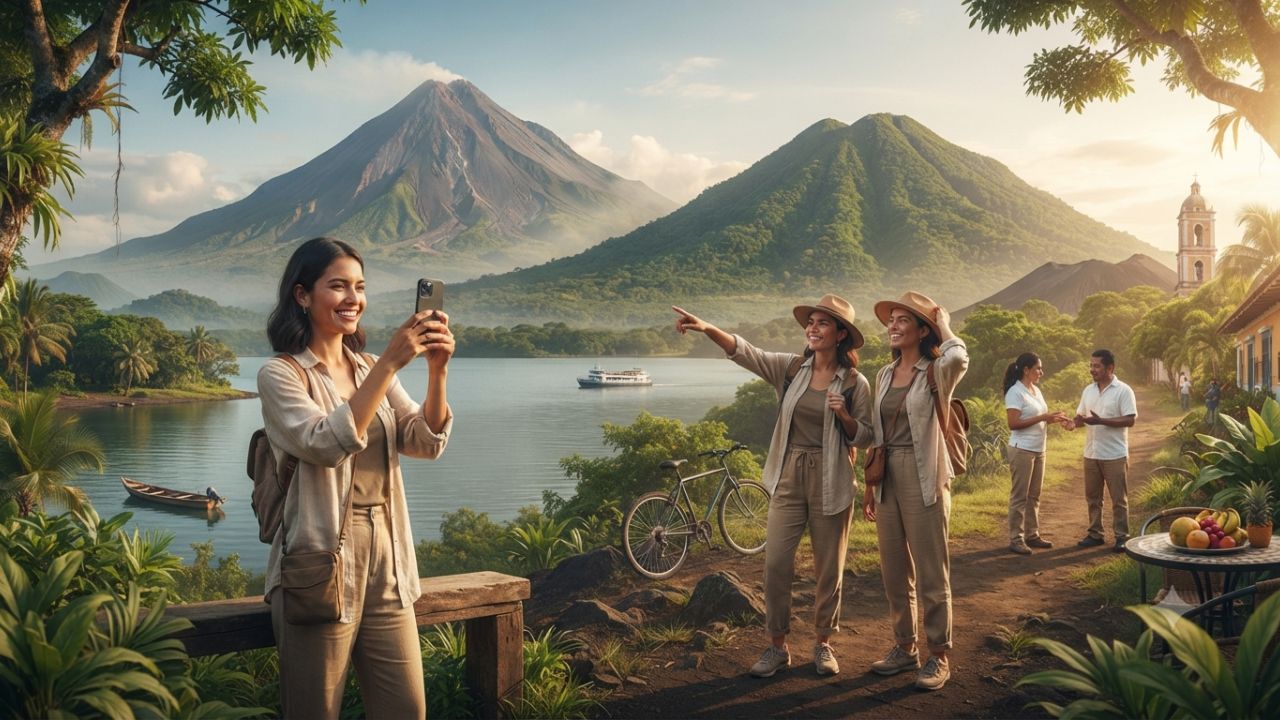
Image generated by AI
Nicaragua's tourism sector is highlighting a multi-destination travel corridor linking the colonial architecture of Granada and León with active volcanic landscapes, twin-volcano lake islands, and remote Caribbean reefs. The comprehensive route spans the Pacific, central lake, and Caribbean regions, offering adventure hiking, heritage culture, and coastal eco-tourism alongside critical safety and legal compliance guidelines for international visitors.
Nicaragua Integrates Colonial Heritage, Volcanic Adventure, and Caribbean Escapes
Positioned between Honduras and Costa Rica, Nicaragua features a diverse geographical profile anchored by Lake Nicaragua (Lake Cocibolca), the Pacific coastline, and the Caribbean Sea. According to destination data from the Nicaraguan Tourism Institute (INTUR), the country's primary travel itinerary links historical urban hubs on the Pacific side with volcanic national parks and island sanctuaries.
Visitors begin journeys in Granada, established on the shores of Lake Nicaragua, featuring preserved Spanish colonial architecture and boat excursions through Las Isletas. Further north, León provides a contrasting cultural hub, anchored by the iconic white roof of the UNESCO World Heritage León Cathedral, alongside adventure activities like volcano boarding on the dark slopes of Cerro Negro.
In Lake Nicaragua, Ometepe Island forms a world-famous skyline created by twin volcanoes: the steep, active Concepción and the green, cloud-forest covered Maderas.
Comprehensive Destination & Attraction Specification Matrix
| Region & Destination | Primary Attraction / Landmark | Activity & Experience Focus | Logistics & Access Profile |
|---|---|---|---|
| Granada (Pacific Coast) | Colonial Center & Las Isletas | Architectural tours, lake boat cruises, café culture | 45 minutes from Managua Airport (MGA); paved highway |
| León (Pacific Coast) | UNESCO León Cathedral & Cerro Negro | Roof walks, volcano boarding, surf at Las Peñitas | 1 hour 30 minutes from Managua; regional bus & highway links |
| Ometepe Island (Lake Nicaragua) | Concepción & Maderas Volcanoes | Hiking, petroglyphs, organic farm stays, lake beaches | Ferry service from San Jorge port (Rivas); weather-dependent |
| Masaya National Park | Active Masaya Volcano Crater | Nighttime lava viewing, geological education | 30 minutes from Granada; paved park vehicle access |
| Corn Islands (Caribbean Sea) | Big Corn & Little Corn Islands | Snorkeling, scuba diving, car-free island relaxation | Domestic flight to Big Corn; panga boat to car-free Little Corn |
| Río San Juan Corridor | Indio Maíz Biological Reserve | Rainforest boat expeditions, birdwatching, eco-lodges | Riverboat transit from San Carlos; specialized eco-guides required |
Traveler Logistics & Legal Compliance Guide
While Nicaragua offers unique landscapes, international travel authorities maintain strict safety, legal, and consular advisories that travelers must adhere to.
Official Travel Advisories and Consular Rules
- US State Department Advisory: The US Department of State maintains a Level 3 (Reconsider Travel) advisory for Nicaragua, citing concerns related to crime, health infrastructure, and arbitrary law enforcement.
- Photography & Drone Laws: Public photography is strictly restricted, particularly around government buildings, military installations, and police activity. Drones are strictly illegal in Nicaragua and will be confiscated at customs entry ports.
- UK Consular Access: The United Kingdom has no resident diplomatic mission in Nicaragua. Emergency British consular assistance is managed through the British Embassy in San José, Costa Rica.
Transport, Health, and Safety Regulations
- Night Driving Warning: Driving outside major cities after dark is strongly discouraged due to unlit vehicles, wandering livestock, and poor road illumination.
- Insurance Requirements: Travelers should secure comprehensive international travel insurance covering emergency medical treatment and medical evacuation flights.
- Guided Volcano Excursions: Activities like volcano boarding on Cerro Negro or trekking on Concepción Volcano require licensed local guides and safety equipment.
Regional Infrastructure, Eco-Tourism Corridors, and Conservation Impact
The development of eco-tourism corridors along the Río San Juan and the Indio Maíz Biological Reserve highlights Nicaragua's effort to generate sustainable income for rural communities. Riverboat journeys along the San Juan River connect Lake Nicaragua directly to the Caribbean, passing pristine rainforests and river communities.
In the Caribbean, Little Corn Island maintains a car-free environment, relying on walking trails and sea pangas to protect fragile coral reefs and marine ecosystems. By enforcing low-impact travel rules, these remote regions provide sustainable alternatives to high-density resort hubs.
Strategic Logistics Analysis and 2026 Traveler Insights
Navigating Nicaragua’s multi-destination corridor requires a nuanced understanding of the country's distinct regional infrastructures. For the 2026 travel cycle, visitors should adopt a "hub-and-spoke" logistics model, utilizing Managua as the primary entry point before dispersing to the Pacific and Caribbean peripheries.
Optimal Timing and Seasonal Planning
The Nicaraguan calendar is defined by the verano (dry season) from November to April and the invierno (rainy season) from May to October. For the proposed route, the dry season is critical for accessing the highlands of Ometepe and the slopes of Cerro Negro, where mudslides can impede hiking trails during peak rainfall. However, the "shoulder" months of May and October often provide a strategic advantage: lower accommodation rates in Granada and León and more vibrant, lush landscapes in the cloud forests of Maderas.
Transit Modalities and Connectivity
While paved highways efficiently connect Managua, Granada, and León, the transition to the Caribbean Corn Islands represents a significant logistical shift. Travelers should prioritize domestic flights from Managua to Big Corn or Little Corn to avoid the arduous multi-day overland and ferry journey. For the Pacific leg, private shuttles are recommended over public chicken buses for those transporting high-value equipment or adhering to tight schedules. Accessing Ometepe requires a ferry from San Jorge; travelers should book "fast ferry" options to reduce transit time and ensure vehicle permits are secured in advance if renting a 4x4.
2026 Booking and Compliance Considerations
As Nicaragua pivots toward high-value eco-tourism, the demand for sustainable "glamping" and organic farm stays on Ometepe is increasing. Early booking (3–6 months) is advised for boutique colonial estates in Granada. From a legal and compliance standpoint, international visitors must ensure their passports are valid for at least six months beyond their stay and maintain digital copies of their entry stamps, as these are frequently requested at regional checkpoints. Travelers should also monitor current health advisories regarding mosquito-borne illnesses in the Caribbean lowlands, ensuring prophylaxis is updated prior to arrival.
Frequently Asked Questions
What is volcano boarding and where is it done in Nicaragua?
Volcano boarding is an extreme activity where participants slide down the black volcanic ash slope of Cerro Negro near León on a specially constructed board.
Are drones allowed for tourists in Nicaragua?
No. Drones are strictly illegal in Nicaragua for personal or commercial tourist use and will be confiscated by customs officers at entry ports.
How do travelers reach Ometepe Island?
Travelers reach Ometepe Island by taking a passenger or vehicle ferry from the port of San Jorge near Rivas across Lake Nicaragua to Moyogalpa or Altagracia.
Related Travel Guides
Guatemala Maya Heritage Trekking Routes and Lake Atitlan Guide
El Salvador Surf City Volcano Trails and Colonial Escapes
10 Best Volcano Hiking Routes in Central America, According to Reddit
Disclaimer
This article is for informational and educational purposes only. It does not constitute legal, financial, or professional advice. While we strive to provide accurate and up-to-date information, travel policies, regulations, and conditions change rapidly. Always verify information with official sources before making travel decisions. Nomad Lawyer makes no representations about the accuracy, reliability, completeness, or suitability of the information provided. Readers should consult qualified professionals for advice specific to their circumstances. The views expressed in this article are those of the author and do not necessarily reflect the views of Nomad Lawyer.
Kunal K Choudhary
Co-Founder & Contributor
A passionate traveller and tech enthusiast. Kunal contributes to the vision and growth of Nomad Lawyer, bringing fresh perspectives and driving the community forward.
Learn more about our team →