
Armenia Tourism Surges Beyond Yerevan as Tatev, Vayots Dzor and Dilijan Draw New Travellers
Armenia Tourism Surges Beyond Yerevan as Tatev, Vayots Dzor and Dilijan Draw New Travellers

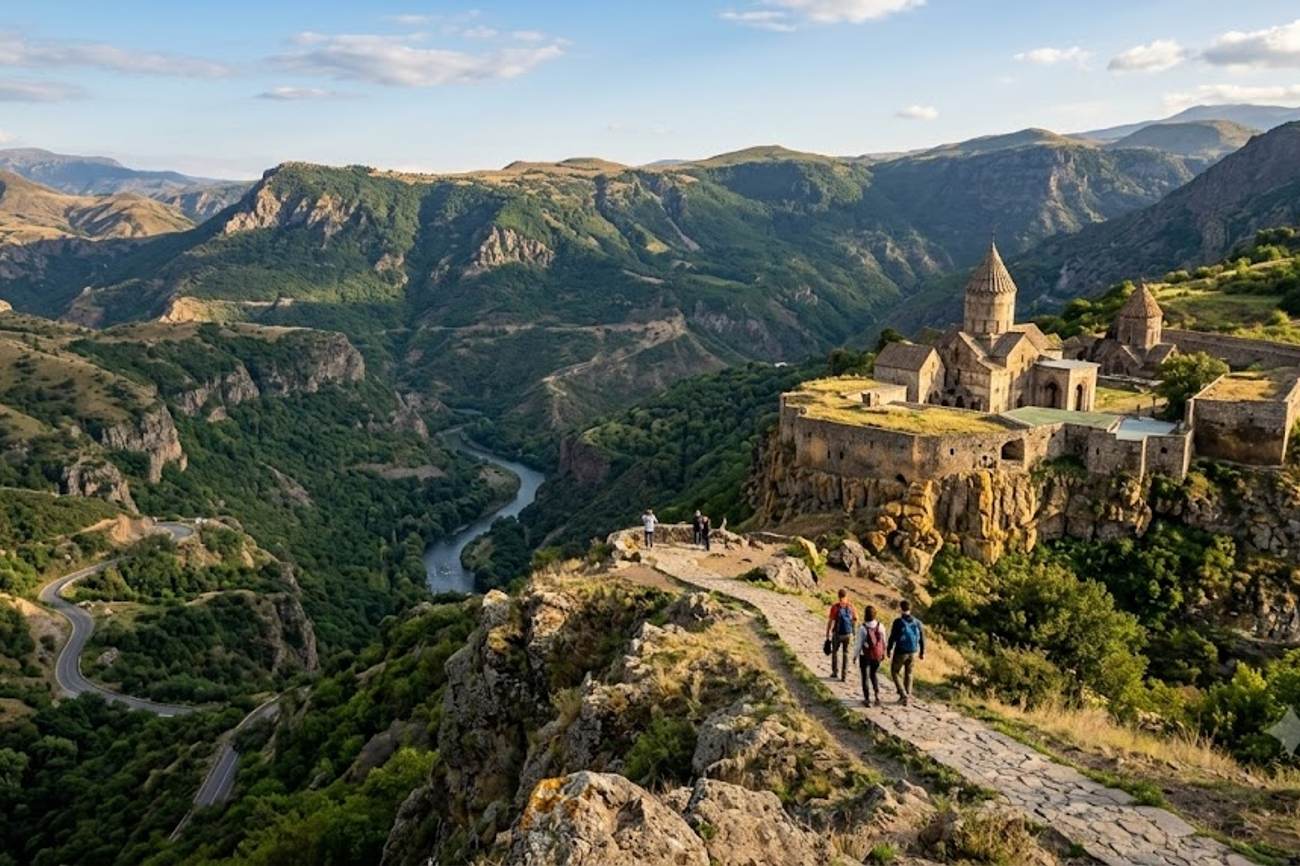
Image generated by AI
1,240,307 international tourists visited Armenia between January and July 2026, marking a 7% increase compared to the same period in 2025. However, this growth trajectory faced a sharp seasonal correction in July, which saw a 24.6% decline in arrivals. This volatility suggests that while the baseline demand for the Caucasus region is expanding, the market remains susceptible to specific monthly fluctuations, potentially linked to geopolitical shifts or regional travel patterns.
The Decentralization of the Armenian Travel Market
For years, Armenian tourism was characterized by a "hub-and-spoke" model where Yerevan served as the sole anchor, with regional visits treated as brief day trips. Current data indicates a strategic shift toward regional diversification. The growth is no longer confined to the capital's urban center but is migrating toward the southern highlands of Syunik and the forested corridors of Tavush.
This movement is driven by the development of high-capacity infrastructure designed to move tourists deeper into the interior. The most prominent example is the "Wings of Tatev" cableway in the south. Spanning 5,752 metres between Halidzor and the Tatev Monastery, this installation is officially recognized by Guinness World Records as the longest reversible aerial tramway on earth. By bridging the Vorotan Gorge, the cableway transforms a difficult geographical barrier into a primary tourist draw, effectively anchoring the Syunik region as a standalone destination for heritage and adventure.
The expansion is further supported by the Transcaucasian Trail, which is integrating mountain landscapes around Dilijan and other remote regions. This initiative shifts the traveler profile from the casual sightseer to the long-haul trekker, encouraging multi-day stays in rural villages and monasteries rather than return trips to Yerevan hotels.
Regional Asset Mapping and Infrastructure
The current tourism strategy relies on three distinct "experience pillars": adventure in the south, viticulture in the center, and ecology in the north.
| Region | Primary Anchor | Key Infrastructure/Site | Primary Appeal |
|---|---|---|---|
| Syunik | Tatev & Goris | Wings of Tatev (5,752m cableway) | Adventure, Caves, Heritage |
| Vayots Dzor | Areni | Areni-1 Cave (6,100-year-old winery) | Ancient Wine, Monasteries |
| Tavush | Dilijan | Dilijan National Park (240 sq km) | Forestry, Hiking, Slow Travel |
In the south, the integration of Old Khndzoresk—a settlement famous for its rock-carved cave dwellings—with the Goris and Tatev corridors allows for the construction of extended itineraries. This reduces the reliance on Yerevan-based tour operators and empowers local guesthouse economies.
To the northwest, Vayots Dzor is leveraging archaeological data to dominate the wine tourism sector. The Areni-1 Cave, containing evidence of wine production dating back approximately 6,100 years, provides a historical legitimacy that few other wine regions globally can claim. This is complemented by the continued use of karas (traditional clay fermentation vessels), blending ancient methods with modern production of indigenous Areni and Voskehat grapes.
In the north, the focus shifts to the Ministry of Territorial Administration and Infrastructure goals of ecological preservation and sustainable growth. Dilijan National Park, covering 240 square kilometres, utilizes a network of marked trails connecting Lake Parz and Lake Gosh. This area is specifically positioned as a "slow travel" sanctuary, contrasting with the high-energy adventure of the south.
Expert Analysis: The Economic Pivot to Seasonal and Niche Tourism
The 24.6% drop in July arrivals, contrasted with the overall 7% growth, reveals a critical vulnerability in Armenia's tourism product: a reliance on peak-season surges. To counter this, the Armenian tourism sector is pivoting toward "event-based" and "seasonal" anchors to smooth out the demand curve.
The Areni Wine Festival, scheduled for 3 October 2026, is a prime example of this strategy. By scheduling a major cultural event in early October, the region captures the autumn harvest crowd, incentivizing travel during a window that might otherwise see a decline. For the traveler, the direct consequence is a shift in value; visiting during the harvest allows for a combined itinerary of the Areni-1 Cave and Noravank Monastery, but it also puts pressure on the emerging network of local guesthouses and family-run wineries.
From a logistical perspective, the "Saryan Street" development in Yerevan serves as a critical conversion point. By creating a high-density wine and food district in the capital, the city acts as a "showroom" for the provinces. A tourist tasting an Areni grape on Saryan Street is significantly more likely to book a multi-day trip to Vayots Dzor. This creates a symbiotic relationship between urban luxury and rural authenticity.
The pricing pressure resulting from this diversification is twofold. First, the rise of boutique guesthouses in Syunik and Tavush is likely to increase the average daily spend per tourist. Second, the move toward "slow travel" and hiking trails increases the length of stay, shifting the revenue model from high-volume/low-duration to lower-volume/high-duration. This is a more sustainable economic model for the local communities in Goris and Dilijan.
Key Takeaways
- Growth Volatility: While total arrivals rose 7% to 1,240,307 (Jan-July 2026), a sharp 24.6% dip in July indicates seasonal instability.
- Infrastructure Anchors: The 5,752-metre Wings of Tatev cableway is the primary catalyst for transforming the Syunik region into a multi-day destination.
- Historical Legitimacy: The Areni-1 Cave offers a 6,100-year-old provenance for Armenian wine, supporting a growing industry based on indigenous Areni and Voskehat grapes.
- Ecological Expansion: Dilijan National Park’s 240 square kilometres of protected forest are shifting the northern tourism profile toward "slow travel" and nature-based itineraries.
- Strategic Timing: The October 3, 2026, Areni Wine Festival is a key tactical move to extend the tourism season beyond the summer peak.
FAQ: Armenia Regional Travel 2026
Is it possible to visit Tatev and Goris in one day from Yerevan? While possible, it is not recommended. The development of the Tatev cableway and the cave dwellings of Old Khndzoresk now support longer itineraries, allowing travelers to explore the Syunik region's hiking trails and village stays more deeply.
When is the best time to visit the Vayots Dzor wine region? Early October is ideal. The Areni Wine Festival (October 3, 2026) coincides with the grape harvest, providing the best access to local producers, traditional karas fermentation sites, and the Areni-1 Cave.
What is the best way to experience Dilijan National Park? For short visits, Lake Parz is the most accessible. For those seeking a deeper experience, use the marked trails connecting Lake Gosh and Lake Parz, which are particularly striking during the autumn foliage change.
What are the primary indigenous grape varieties in Armenia? The most prominent varieties are Areni and Voskehat. These are widely showcased in the wineries of Vayots Dzor and the specialized wine bars along Saryan Street in Yerevan.
The shift from capital-centric tours to regional exploration marks Armenia's transition from a stopover destination to a primary travel hub.
#SyunikTourism2026 #VayotsDzorWine #DilijanNationalPark #WingsOfTatev #ArmenianTourismGrowth
Related Travel Guides
- Haiti Tourism Turns to Clairin Heritage as Northern Communities Revive Artisanal Cane Traditions
- Thiruvananthapuram to Tambaram Special Train Extended Through October 2026: Kerala-Tamil Nadu Festive Rail Connectivity
- Thailand Overhauls Tourist Visa Policy: 60-Day Entry Ends for 21 Countries as Digital e-Visa Rules Begin September 15, 2026
Disclaimer
This article is for informational and educational purposes only. It does not constitute legal, financial, or professional advice. While we strive to provide accurate and up-to-date information, travel policies, regulations, and conditions change rapidly. Always verify information with official sources before making travel decisions. Nomad Lawyer makes no representations about the accuracy, reliability, completeness, or suitability of the information provided. Readers should consult qualified professionals for advice specific to their circumstances. The views expressed in this article are those of the author and do not necessarily reflect the views of Nomad Lawyer.
Preeti Gunjan
Contributor & Community Manager
A passionate traveller and community builder. Preeti helps grow the Nomad Lawyer community, fostering engagement and bringing the reader experience to life.
Learn more about our team →