
Montréal 2026 Goes Beyond Sport as Canada Prepares for a Global Tourism Surge Through Cycling’s Biggest Stage
Montréal 2026 Goes Beyond Sport as Canada Prepares for a Global Tourism Surge Through Cycling’s Biggest Stage

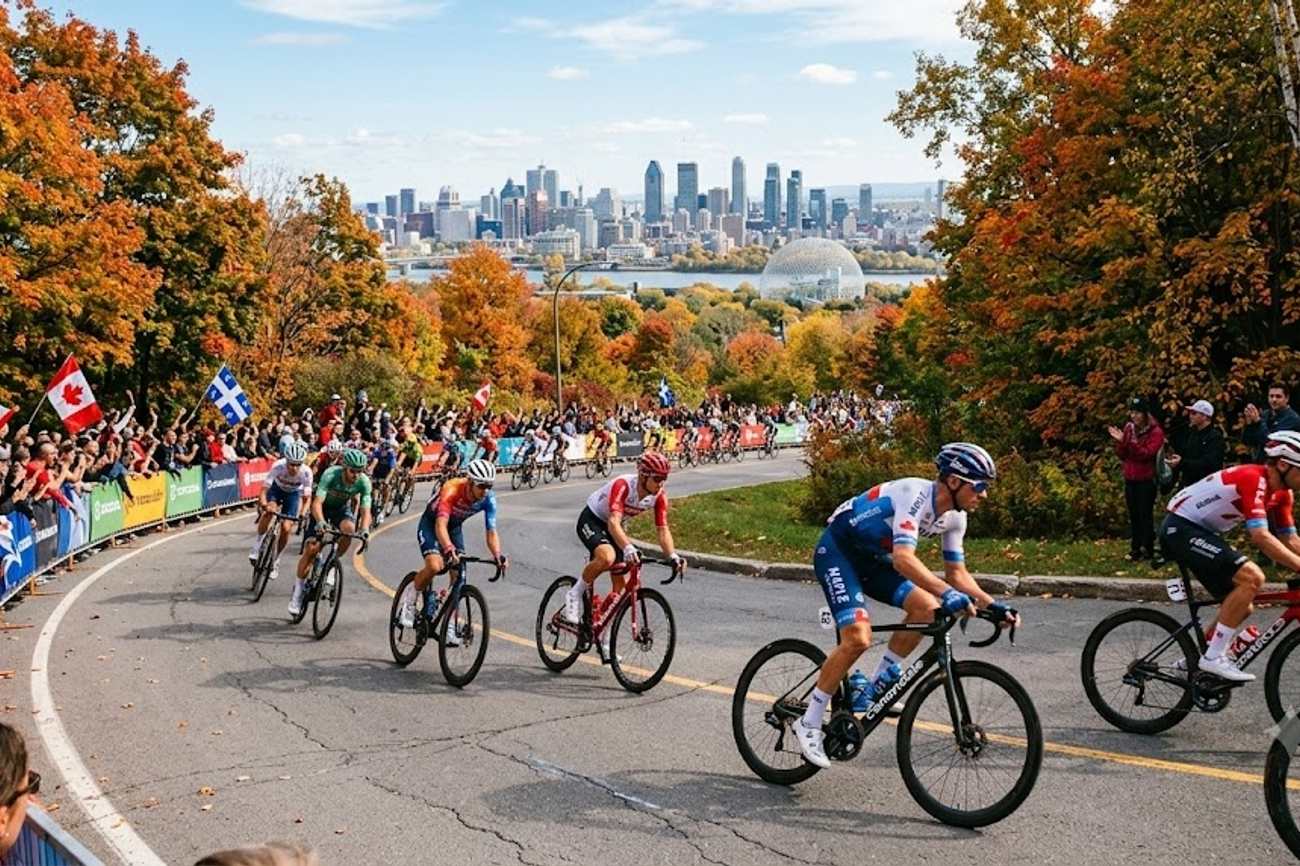
Image generated by AI
The rainbow jersey is the most coveted prize in cycling, but for the riders descending on Montréal in 2026, the real challenge will be the brutal gradients of Mount Royal. While most visitors see the mountain as a scenic park, the 1,100 riders from 100 nations will experience it as a tactical battleground where climbing endurance determines who claims one of the 13 world titles on offer.
The High-Stakes Arrival of the UCI World Championships
From 20 to 27 September 2026, Montréal transforms into the global epicenter of road cycling. This isn't just another race; it is a massive logistical and sporting undertaking that brings the world's elite, under-23, and junior categories to the streets of Quebec. The scale is immense, with approximately 1,000 riders expected to compete across a grueling schedule of individual time trials, road races, and a mixed team relay.
To manage the influx of fans, the city is establishing a dedicated Fan Village near the base of Mount Royal, creating a centralized hub for entertainment and spectator activities. For the city, the stakes are as much economic as they are athletic. Looking at the historical trajectory of the event, the potential for growth is clear. Kigali 2025, for instance, saw 1 million unique spectators and a €19.6 million economic contribution. Even further back, Flanders 2021 attracted over 1 million unique visitors who spent nearly €36 million. While every host city has a different footprint, the arrival of the UCI championships typically triggers a surge in demand for hotels, local bistros, and transport services.
What Makes Montréal Different
Unlike the flat plains often found in European classics, Montréal offers a distinct geographic challenge. The Mount Royal circuit is the heart of the event, forcing riders to balance raw power with the ability to recover during rapid descents. This terrain favors "puncheurs" and climbers over pure sprinters, adding a layer of unpredictability to the races.
The roster of athletes expected to tackle these hills is a who's who of global cycling. Great Britain is sending heavy hitters like Tom Pidcock and Zoe Bäckstedt, while Belgium will rely on the time-trial precision of Remco Evenepoel and the versatility of Wout van Aert. Slovenia will see Primož Roglič leading the charge in the absence of Tadej Pogačar. The American contingent is equally formidable, featuring Olympic gold medallist Kristen Faulkner and the powerhouse Quinn Simmons. Other rising stars, such as Mexico's Isaac del Toro and France's Paul Seixas, will be looking to make their mark on the Canadian soil.
For the spectator, the experience is immersive. You aren't watching from a distant stadium; you are standing on the curbs of the city, feeling the wind as a peloton of 100 riders screams past at 60km/h. It is a visceral integration of professional sport into the urban fabric of the city.
Visitor Insider Tips
If you are planning to be in the city for the September 2026 window, forget the generic tourist maps. To experience the championships like a local, you need a strategy.
Timing and Positioning: The most iconic views are on the slopes of Mount Royal, but these will be the most crowded. To avoid the crush, position yourself at the transition points where the race leaves the mountain and enters the city streets. You get the thrill of the speed without the shoulder-to-shoulder congestion of the climb.
Transport Hacks: Do not attempt to drive during the race window. The city will implement temporary street closures and strict parking restrictions that can turn a five-minute trip into an hour-long detour. Use the Société de transport de Montréal (STM) metro system. It is the only reliable way to bypass road blocks and reach the Fan Village quickly.
Where to Base Yourself: Avoid the immediate downtown core if you want a more authentic experience. Look for accommodations in Le Plateau-Mont-Royal. It is the cycling heart of the city, filled with independent cafes and a culture that mirrors the European vibe of the riders.
Local Etiquette: Cycling fans in Montréal are passionate but respectful. If you are standing near the barriers, keep the road clear until the very last second. The riders are moving at lethal speeds; any encroachment on the line is a safety hazard for the athletes and a quick way to get reprimanded by race marshals.
Regional Flavors: Between races, step away from the Fan Village food stalls. Head to a local boulangerie for a real Quebecois experience or find a spot serving authentic poutine—the ultimate high-carb fuel that mirrors the energy needs of the cyclists.
Cultural and Environmental Context
Hosting an event of this magnitude creates a fascinating tension between the city's daily rhythm and the requirements of professional sport. Montréal is already a city that prizes its green spaces and pedestrian-friendly zones, and the UCI championships amplify this. However, the environmental impact of bringing 1,100 athletes and potentially a million spectators to a concentrated area is significant.
There is a delicate balance in preserving the ecology of Mount Royal—a site of immense local pride—while allowing thousands of fans to swarm its trails. The city's approach focuses on directing the crowds toward the Fan Village to minimize the degradation of the park's natural flora.
Furthermore, the event serves as a catalyst for cycling infrastructure. Historically, cities that host the World Championships see a lasting increase in "bikeability." By showcasing the city as a world-class cycling destination, Montréal encourages its own residents to move away from car dependency, aligning with broader Canadian goals for urban sustainability. You can learn more about the city's commitment to heritage and urban planning through UNESCO, as the city balances its historic architecture with the needs of a modern, mobile population.
FAQ: Visiting Montréal 2026
What is the best time to visit during the event? Arrive by 18 September. This allows you to scout the route and find your preferred viewing spots before the official competition begins on 20 September.
How do I get to the Fan Village? The Fan Village is located near Mount Royal. The most efficient method is using the STM metro and walking the final distance to avoid road closures.
Is the event safe for solo travelers? Yes. Montréal is highly regarded for its safety. The presence of increased security and crowds during the championships makes it an even more accessible environment for solo visitors.
Do I need a visa to enter Canada for the races? Depending on your nationality, you may need a visa or an Electronic Travel Authorization (eTA). Check the official Government of Canada website for current entry requirements.
When the world's fastest riders hit the slopes of Mount Royal, the city doesn't just host a race—it becomes the race.
Related Travel Guides
Disclaimer
This article is for informational and educational purposes only. It does not constitute legal, financial, or professional advice. While we strive to provide accurate and up-to-date information, travel policies, regulations, and conditions change rapidly. Always verify information with official sources before making travel decisions. Nomad Lawyer makes no representations about the accuracy, reliability, completeness, or suitability of the information provided. Readers should consult qualified professionals for advice specific to their circumstances. The views expressed in this article are those of the author and do not necessarily reflect the views of Nomad Lawyer.
Naina Thakur
Contributor & Travel Specialist
Travel enthusiast and legal writer covering visa regulations, responsible tourism, and cultural journeys across global destinations.
Learn more about our team →