UK and Global Aviation Alliances Propel Oman Tourism Beyond 10% Growth: Inside the Sultanate's Vision 2040 Upscale Travel Boom

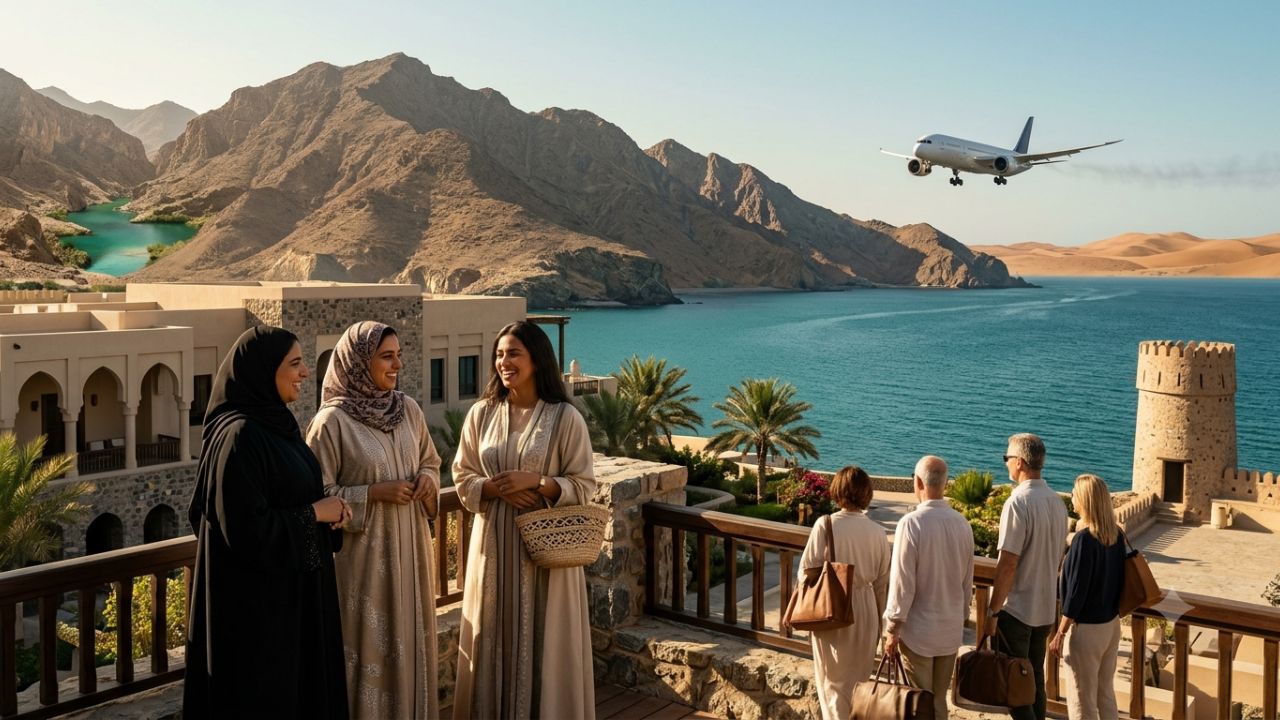
MUSCAT, Oman — Driven by a deepening bilateral aviation alliance with the United Kingdom and an expanding network of direct international air routes, the Sultanate of Oman’s tourism economy is undergoing a transformative expansion, registering a 10.4 percent annual surge in British visitor arrivals. Centered within the economic diversification targets of the national Oman Vision 2040 roadmap, the Arabian Peninsula nation has successfully positioned itself as a premier global sanctuary for upscale, culturally rooted, and eco-conscious travel. The decisive milestone—which propelled annual British arrivals past the 100,000 threshold and solidified the United Kingdom as Oman’s crown European feeder market—arrives alongside expanding flight corridors connecting the Sultanate to high-yield source markets across the Gulf Cooperation Council, South Asia, and Western Europe. By coupling aggressive air route development and digital trade platforms with an unyielding commitment to architectural restraint and environmental preservation, Muscat is transforming historic diplomatic ties into an economic engine targeted to welcome 11.7 million international travelers annually by 2040.
+----------------------------------------------------------------------------------------------------+ | KEY TAKEAWAYS: OMAN'S BILATERAL TOURISM EXPANSION & VISION 2040 AVIATION DYNAMICS | +----------------------------------------------------------------------------------------------------+ | - Impressive UK Market Performance: British visitor arrivals expanded by 10.4% year-on-year, | | surpassing the 100,000 annual visitor threshold and cementing the UK as Oman's top European hub. | | - High-Yield Economic Trajectory: Total international arrivals climbed toward 3.9 million visitors,| | generating over OMR 2.28 billion ($5.92B USD) in direct economic output under Vision 2040. | | - Daily Nonstop Aviation Bridges: National flag carrier Oman Air operates consistent daily nonstop | | frequencies connecting London Heathrow (LHR) directly with Muscat International Airport (MCT). | | - Bilateral Investment Depth: The UK stands as Oman's largest foreign direct investment partner, | | committing over OMR 11.5 billion, heavily concentrated in luxury Integrated Tourism Complexes. | | - Strategic Source Market Coalitions: Complementary growth driven by UAE overland travelers, Indian| | destination wedding buyouts, German eco-expeditions, and seasonal direct European charters. | | - Architectural Restraint Mandate: Prohibits coastal high-rise skyscrapers, enforcing traditional | | Omani architectural geometry, low-rise stone masonry, and eco-sensitive coastal masterplans. | | - Digital & Border Modernization: 14-day visa exemptions for over 100 nations, foundational support| | for the Unified GCC Tourist Visa, and the Visit Oman B2B marketplace transforming trade supply. | +----------------------------------------------------------------------------------------------------+
   OMAN'S STRATEGIC TOURISM ECOSYSTEM: GLOBAL HUBS TO LOCAL ASSETS
   ===============================================================
   [UK & European Feeder Markets]    [GCC Regional Feeder Basin]
   - UK: 10.4% Growth (>100k pax)    - UAE: Overland Hatta / Al Ain
   - Germany: ITB Berlin Eco-Trek    - Saudi: Empty Quarter Highway
   - Italy/France: Winter Charters   - GCC Summer Escape (Khareef)
                 │                                  │
                 └─────────────────┬────────────────┘
                                   ▼
          [Direct Air Bridges: Oman Air LHR & Regional LCCs]
                                   │
                                   ▼
          [Upscale Low-Rise Hospitality & Authentic Culture]
          - Al Mouj Muscat & AIDA Clifftop Luxury (ITCs)
          - UNESCO Forts: Nizwa, Bahla & Museum Across Ages
          - Natural Splendor: Jebel Shams, Wahiba & Daymaniyat
                                   │
                                   ▼
          [Oman Vision 2040: Target 11.7M International Visitors]
The UK-Oman Strategic Axis: Aviation Links, WTM Deals, and Capital Alignment
The remarkable growth of British travel to Oman is the product of coordinated, long-term bilateral planning rather than accidental market momentum. For centuries, the United Kingdom and the Sultanate have maintained deep strategic, military, and diplomatic bonds. Over the past decade, the Ministry of Heritage and Tourism has systematically transformed this diplomatic goodwill into a powerful commercial tourism corridor, deploying high-visibility consumer marketing, high-level travel trade negotiations, and sustained airline capacity enhancements.
A cornerstone of this strategy is aggressive, in-market consumer visibility across major British urban centers. The Ministry of Heritage and Tourism rolled out comprehensive out-of-home advertising campaigns, wrapping hundreds of London’s iconic double-decker buses and traditional black cabs with imagery of Oman’s dramatic landscapes. Commuters traversing central London, Westminster, and Windsor are introduced daily to the jagged peaks of the Hajar Mountains, the turquoise pools of southern wadis, and the historic mud-brick citadels of the interior, establishing strong brand recognition across an affluent traveling demographic.
The commercial foundation of this partnership is solidified each autumn at World Travel Market London, held at ExCeL London. The dedicated Omani national pavilion serves as an active trading floor uniting major state entities—including the OMRAN Group, national operator Visit Oman, Oman Airports, and premier local destination management companies—with leading British tour operators, independent travel agencies, and luxury travel designers. Contracts negotiated at WTM ensure that prominent British travel packagers place Oman at the focal point of their winter-sun and cultural touring catalogs, guaranteeing consistent booking pipelines across the UK retail trade.
Underpinning these trade relationships is frictionless, long-haul aviation connectivity. National carrier Oman Air maintains consistent daily nonstop services between London Heathrow Terminal 4 and Muscat International Airport, operating modern Boeing 787 Dreamliners configured with premium business and economy cabins. This direct air bridge is supplemented by seamless connections through prominent Gulf carriers, providing British leisure travelers, multi-generational families, and business travelers with flexible, high-frequency access to the Sultanate without intermediate stopover friction.
In addition, the economic relationship is cemented by bilateral capital flows. The United Kingdom represents Oman’s single largest foreign direct investment partner, with cumulative capital commitments surpassing OMR 11.5 billion. This investment depth directly shapes the luxury hospitality landscape. British lifestyle investors and high-net-worth individuals constitute a core buyer demographic for luxury Integrated Tourism Complexes, such as Al Mouj Muscat along the capital’s northern coast and the multi-billion-dollar clifftop development AIDA at Yiti, developed in partnership with Dar Global. These developments provide foreign investors with freehold property ownership rights and resident visas, blurring the boundary between second-home ownership and high-yield, long-stay tourism.
British traveler demographics have also evolved beyond traditional retired cultural touring groups to encompass young professionals and multi-generational families. The steady expansion of luxury family resorts, certified desert glamping camps, and specialized wadi canyoning tours appeals directly to affluent British households seeking safe, exotic, and culturally enriching winter holidays without the commercial artificiality often associated with other regional destinations. By combining high-frequency flag carrier aviation with targeted boutique luxury distribution, the UK-Oman axis continues to outperform broader European outbound averages.
| Strategic Driver | Operational Mechanism | Direct Market Impact | Long-Term Strategic Benefit |
|---|---|---|---|
| London Out-of-Home Marketing | Branded black cabs, double-decker buses, tube displays | High visibility among high-income UK urban commuters | Builds aspirational brand recognition for winter sun |
| World Travel Market Contracts | Annual B2B trade agreements at ExCeL London | Direct catalogue integration with UK luxury operators | Secures advance seasonal hotel room commitments |
| Direct Flag Carrier Aviation | Daily Oman Air Boeing 787 flights (Heathrow–Muscat) | Seamless, premium point-to-point passenger transit | Guarantees reliable passenger volume year-round |
| Bilateral FDI Integration | Over OMR 11.5 billion in UK capital commitments | Development of high-end Integrated Tourism Complexes | Generates high-spending second-home and villa tourism |
| Bespoke Cultural Positioning | Packaging heritage forts, mountain retreats, desert camps | Attracts mature, high-spend cultural travelers | Drives extended dwell time and provincial spending |
Global Flight Corridors: How Partner Nations Propel Regional Arrivals
While the United Kingdom serves as Oman’s primary European engine, a diverse coalition of source markets across the Gulf Cooperation Council, South Asia, and continental Europe is scaling up dedicated travel corridors, overland routes, and charter operations into the Sultanate:
   REGIONAL & INTERNATIONAL INBOUND FEEDER CHANNELS
   ================================================
   [United Arab Emirates] ──► Overland Hatta/Al Ain gateways & Musandam yachting
   [India]                ──► Point-to-point LCC routes & multi-million-dollar weddings
   [Germany]              ──► ITB Berlin partnerships, 4x4 self-drive eco-expeditions
   [Saudi Arabia & GCC]   ──► Trans-Empty Quarter desert highway & Salalah Khareef
   [Italy & France]       ──► Direct seasonal winter charters into Salalah beachfronts
The United Arab Emirates represents Oman’s largest inbound source market by raw visitor volume, functioning as an indispensable short-haul feeder basin for both spontaneous weekend breaks and planned regional tours. Modernized overland border crossings at Hatta and Al Ain enable tens of thousands of UAE citizens and expatriate residents to drive smoothly into northern Oman within two to three hours. The dramatic maritime fjords of the Musandam Peninsula receive an uninterrupted flow of weekend yachting enthusiasts and traditional dhow cruise travelers departing directly from UAE ports, while the cool, high-altitude climate of Jebel Akhdar provides an essential summer sanctuary for regional residents escaping desert heat.
India represents a rapidly expanding powerhouse of high-density air access and luxury event tourism. High-frequency point-to-point flight connections operated by low-cost carriers including IndiGo, Air India Express, and Oman’s low-cost carrier SalamAir link Muscat and Salalah directly to major Indian financial and cultural hubs such as Mumbai, New Delhi, Kochi, Chennai, and Kozhikode. This dense aviation web supports a booming Indian destination wedding industry. Premier coastal properties—including the Shangri-La Barr Al Jissah, Al Bustan Palace (a Ritz-Carlton Hotel), and the Jumeirah Muscat Bay—regularly host multi-day Indian wedding celebrations, booking out hundreds of luxury rooms and generating massive food, beverage, and event production revenues for local suppliers.
In continental Europe, Germany functions as the primary anchor for sustainable, outdoor-oriented travel. German holidaymakers demonstrate an enduring affinity for Oman’s pristine topography, prioritizing self-drive four-wheel-drive mountain expeditions, wadi trekking, deep-desert crossings in the Rub Al Khali (Empty Quarter), and marine scuba diving within the Daymaniyat Islands Nature Reserve. The Sultanate’s recurring high-profile partnerships at ITB Berlin—the world’s leading travel trade convention—guarantee extensive marketing coverage across German-speaking Central Europe, reinforced by seasonal winter charter flights operating directly into both Muscat and Salalah.
Across the wider Arabian Peninsula, Saudi Arabia and neighboring Gulf states provide vital seasonal travel balance, centered on the unique climatic phenomenon of the Dhofar Governorate. During July and August, when temperatures across the Gulf regularly exceed 45 degrees Celsius, southern Oman experiences the southwestern monsoon, known locally as the Khareef. The coastal mountains surrounding Salalah transform into lush, emerald-green valleys blanketed by cool mists and gentle rains. Hundreds of thousands of families from Saudi Arabia, Kuwait, Qatar, and the UAE travel to Salalah, creating an unparalleled regional leisure surge. The recent completion of the direct Trans-Empty Quarter desert highway connecting Saudi Arabia directly with Oman has permanently compressed overland travel times, stimulating cross-border road trips, family caravans, and desert exploration.
Meanwhile, in Italy, France, and Central Europe, travel consortiums deploy dedicated, direct seasonal charter flights directly into Salalah Airport between October and April. Operating out of Rome, Milan, Paris, Warsaw, and Prague, these winter-sun charters sustain high seasonal occupancy rates across southern beachfront resorts, allowing European travelers to enjoy dolphin-watching cruises, tranquil ocean waters, and UNESCO-listed frankincense heritage sites along the ancient incense trading trails.
Architectural Restraint and Heritage Preservation: The Anti-High-Rise Model
A defining characteristic that distinguishes Oman from neighboring Gulf destinations is its deliberate, state-mandated aesthetic philosophy. Rather than imitating the hyper-modern, glass-and-steel skyscraper skylines that define Dubai, Doha, or Abu Dhabi, the Sultanate has built its international brand around cultural authenticity, architectural restraint, and environmental harmony.
National urban planning regulations strictly forbid the construction of visually jarring high-rise towers along the country’s natural shorelines and historic valleys. Commercial and residential buildings must adhere to strict height ceilings, generally capped at five to eight stories, and incorporate traditional Omani architectural elements: graceful horseshoe arches, delicate wooden latticework window screens (mashrabiya), decorative roof battlements, and muted, earth-toned exterior plastering that complements the surrounding desert and limestone mountains.
This architectural discipline extends directly into civic and cultural monuments across the capital. In Muscat, the Sultan Qaboos Grand Mosque exemplifies this refined architectural mastery, housing a hand-woven Persian prayer carpet produced by 600 artisans over four years and illuminated by an extraordinary 14-meter-tall Swarovski crystal chandelier, all enveloped within luminous Italian Carrara marble courtyards and hand-chiseled Omani sandstone arches. Similarly, the Royal Opera House Muscat balances world-class acoustic engineering with traditional Islamic wooden marquetry and marble colonnades, establishing a venue where international symphony orchestras, ballet companies, and Arab musical masters perform within an authentic architectural sanctuary.
This philosophy extends directly into luxury resort development. Leading international hospitality brands operating in Oman—such as Six Senses Zighy Bay in Musandam, Anantara Al Jabal Al Akhdar, and Alila Jabal Akhdar—construct their properties using locally quarried limestone, hand-carved Omani woodwork, and flat stone roofs that blend into the rocky cliff faces. By embedding five-star luxury within traditional village layouts, these resorts deliver an intimate sense of place that resonates deeply with discerning international travelers seeking cultural depth rather than ostentatious modernity.
Simultaneously, the Sultanate preserves its history within living, active communities. Ancient defensive fortifications—including the monumental circular gun tower of Nizwa Fort, the UNESCO World Heritage-listed Bahla Fort, and the dramatic mountain ramparts of Rustaq—are not preserved as static, lifeless museums. Instead, they operate as dynamic civic centers hosting energetic open-air Friday livestock auctions, traditional silver and copper artisan souqs, and communal date-farming demonstrations.
The pinnacle of this historical storytelling is the Museum of Oman Across the Ages, located in Manah near Nizwa. Designed as an architectural homage to the jagged peaks of the surrounding Hajar Mountains, the museum features soaring geometric angles clad in local stone. Inside, expansive multimedia galleries, interactive archaeological exhibits, and digital archives guide visitors through centuries of Omani seafaring conquests, copper smelting ingenuity, traditional aflaj irrigation engineering, and the diplomatic history of the modern Renaissance, offering an intellectual foundation that enriches every traveler’s journey across the country.
   THE FOUR PILLARS OF OMANI TOURISM INTEGRITY
   ===========================================
   [Heritage & Living Culture] ──► UNESCO Forts, Manah Museum, traditional souqs
   [Architectural Restraint]   ──► Low-rise zoning, stone masonry, no skyscrapers
   [Radical Natural Variety]   ──► Jebel Shams canyon, Wahiba dunes, Daymaniyat reefs
   [Frictionless Mobility]     ──► 14-day visa waiver, GCC Unified Visa, Visit Oman
Raw Geographic Drama: From Jebel Shams to the Daymaniyat Marine Sanctuary
Oman’s physical geography delivers an astonishing degree of landscape diversity that challenges conventional Western stereotypes of desert topography. Within a three-hour drive from Muscat, travelers can transition from warm, dolphin-rich ocean waters to sub-zero alpine mountain summits or sweeping sand dune seas:
In the Al Hajar Mountain range, Jebel Shams rises to an elevation of 3,009 meters above sea level, earning international acclaim as the Grand Canyon of Arabia. Carved into its limestone flanks is the breathtaking Wadi Ghul, a vertical canyon that plunges more than 1,000 meters straight down to the valley floor. Hikers navigate the legendary Balcony Walk—a narrow cliff-hanging trail that traces the rim of the chasm to the abandoned stone hamlet of As Sab—enjoying cool mountain air and sweeping vistas across rugged limestone gorges. Nearby, the high plateau of Jebel Akhdar (the Green Mountain) is renowned for centuries-old terraced orchards where local farmers cultivate damask roses, pomegranates, walnuts, and apricots irrigated by UNESCO-recognized gravity-fed stone canals known as falaj.
Slicing through the arid limestone mountains are Oman’s legendary wadis—steep, freshwater river canyons that sustain lush date palm oases and crystalline emerald swimming pools. In Wadi Shab, adventure travelers swim through deep limestone pools, climb through submerged water caves, and discover hidden waterfalls cascading inside subterranean caverns. In Wadi Bani Khalid, expansive turquoise basins framed by white limestone boulders provide safe, warm freshwater swimming throughout the year, serving as favored picnic retreats for local families and international travelers alike.
Off the northern coastline, the Daymaniyat Islands Nature Reserve represents an extraordinary marine sanctuary. Comprising nine uninhabited rocky islets surrounded by protected coral reefs, the reserve is home to abundant sea turtles, stingrays, reef sharks, and migratory whale sharks that feed in nutrient-rich waters between May and October. Governed by strict conservation permitting that bans fishing and limits visitor landing during turtle nesting seasons, the Daymaniyat Islands offer world-class scuba diving and snorkeling that rival the Red Sea, directly accessible via a 45-minute speedboat ride from Muscat’s marinas.
On the southern outskirts of the capital, the soon-to-open Oman Botanic Garden is set to become one of the largest constructed botanical institutions on Earth. Spanning more than 420 hectares in the foothills of the Hajar Mountains, the reserve preserves the entire native plant heritage of the Sultanate. Two massive, climate-controlled biomes replicate the distinct microclimates of the country: one housing the arid, thorny flora of the northern mountain ranges, and the other recreating the dense, humid monsoon cloud forests of southern Dhofar, establishing a global benchmark for botanical conservation and ecological education.
Policy Modernization: Vision 2040, Visa Waivers, and Digital Marketplaces
Behind Oman’s scenic appeal and expanding flight paths lies a comprehensive, coordinated public policy framework engineered to eliminate operational friction across the travel ecosystem. Under the directives of Oman Vision 2040, tourism is classified as one of five key economic pillars designated to replace fossil fuel dependency, alongside logistics, manufacturing, fisheries, and mining.
A primary catalyst for international growth has been progressive border liberalization. The Sultanate has enacted a 14-day visa-free entry exemption for citizens of more than 100 countries, enabling international tourists to enter without prior consular paperwork or entry fees. For travelers planning extended touring holidays, the Royal Oman Police operates a streamlined digital electronic visa portal that issues 30-day single-entry and one-year multi-entry tourist visas within hours of online submission.
Concurrently, Oman has taken a leading leadership role in advancing the Unified GCC Tourist Visa, an integrated regional travel authorization modeled after Europe's Schengen agreement. When fully operational across all six Gulf Cooperation Council member states—Oman, Saudi Arabia, the United Arab Emirates, Qatar, Kuwait, and Bahrain—the unified permit will allow international travelers from the UK, Europe, North America, and Asia to move seamlessly across international borders under a single electronic visa. This historic integration positions Oman as an essential, high-contrast cultural anchor on multi-destination Arabian itineraries, enabling travelers to combine modern urban stopovers in Dubai or Doha with deep heritage, hiking, and desert exploration in the Sultanate.
Simultaneously, the digital distribution of Omani travel services has been revolutionized through the launch of Visit Oman. Serving as the country's officially accredited digital B2B travel marketplace, the platform connects international travel wholesalers, British high-street travel agencies, and European booking portals directly with local Omani ground operators. The platform empowers small and medium-sized tourism enterprises—including independent Bedouin desert camps, certified mountain trekking guides, village homestays, and local transport cooperatives—to list their services directly onto global travel distribution systems. By providing real-time room inventory, dynamic flight connections, and verified tour packages, Visit Oman ensures that international travel planners can assemble bespoke, high-yield Omani itineraries in seconds while ensuring that tourism revenues flow directly to local host communities.
| Vision 2040 Policy Initiative | Regulatory Mechanism | Intended Market Outcome |
|---|---|---|
| 14-Day Visa-Free Exemption | Automatic border waivers for citizens of 100+ nations | Lowers booking friction for spontaneous long-weekend and regional travelers |
| Unified GCC Tourist Visa | Multi-national electronic visa across 6 Gulf states | Positions Oman as an essential cultural component on multi-destination Gulf tours |
| Visit Oman B2B Marketplace | Centralized digital platform linking local SMEs to global trade | Eliminates aggregator commission leakages and empowers provincial tour operators |
| National Heritage Concessions | Public-private operating agreements for historic forts | Reinvests tourism entrance fees directly into monument conservation and local jobs |
| Integrated Tourism Complexes (ITCs) | Special economic zones offering foreign freehold property | Drives multi-billion-dollar foreign investment in upscale coastal hospitality |
Practical Blueprint: Structuring an Authentic Omani Expedition
To experience the full breadth of Oman’s cultural and geographic diversity, international travelers should approach itinerary planning with deliberate structure and respect for local traditions:
   TRAVELER CHECKLIST: PLANNING AN OMANI EXPEDITION
   ===============================================
   [ ] Optimal Seasonal Timing: Target October to April for comfortable 25–30°C winter-sun
       weather in northern Oman, or July–August for the cool, emerald Khareef season in Salalah.
   [ ] Secure 4x4 Vehicle Rentals: Reserve a true four-wheel-drive vehicle with low-range gearing
       if planning to ascend Jebel Akhdar (where police checkpoints mandate 4WD) or cross desert dunes.
   [ ] Respect Traditional Cultural Dress: Wear clothing covering shoulders and knees when exploring
       historic towns, souqs, and villages; women must cover hair and wrists when visiting Sultan Qaboos Mosque.
   [ ] Combine Contrasting Regions: Allocate 3 nights in Muscat, 2 nights in the Hajar Mountains
       (Nizwa/Jebel Akhdar), 1 night in a desert camp (Wahiba Sands), and 3 nights in coastal Salalah.
   [ ] Pre-Book Marine Dive Permits: Secure conservation permits in advance through certified dive
       centers to access the protected coral reefs of the Daymaniyat Islands Nature Reserve.
   [ ] Leverage Local Currency & Cards: International credit cards are widely accepted across cities
       and resorts, but carry Omani Rials (OMR) for rural mountain markets and local fruit stalls.
When packing for an Omani journey, travelers should prepare for dramatic temperature fluctuations. While coastal Muscat and seaside resorts maintain warm, tropical conditions, high mountain elevations in Jebel Shams and Jebel Akhdar experience sharp temperature drops after dusk, with winter nighttime temperatures frequently dipping near freezing. Packing thermal fleece layers alongside lightweight linen apparel is essential for mountain exploration.
By aligning targeted international aviation alliances with an uncompromising commitment to cultural preservation and environmental restraint, Oman has forged a truly unique path in global tourism. For British and international travelers seeking profound cultural encounters, dramatic geological wonders, and refined, authentic hospitality, the Sultanate stands as an extraordinary jewel of the Arabian Peninsula.
Related Travel Guides
- Germany and Key European Markets Propel Greek Tourism to €18.2B as Cyclades Face Infrastructure Reckoning
- Greece Crowned Top Family Holiday Destination at UK Travel Awards: Arrivals Reach 4.89M
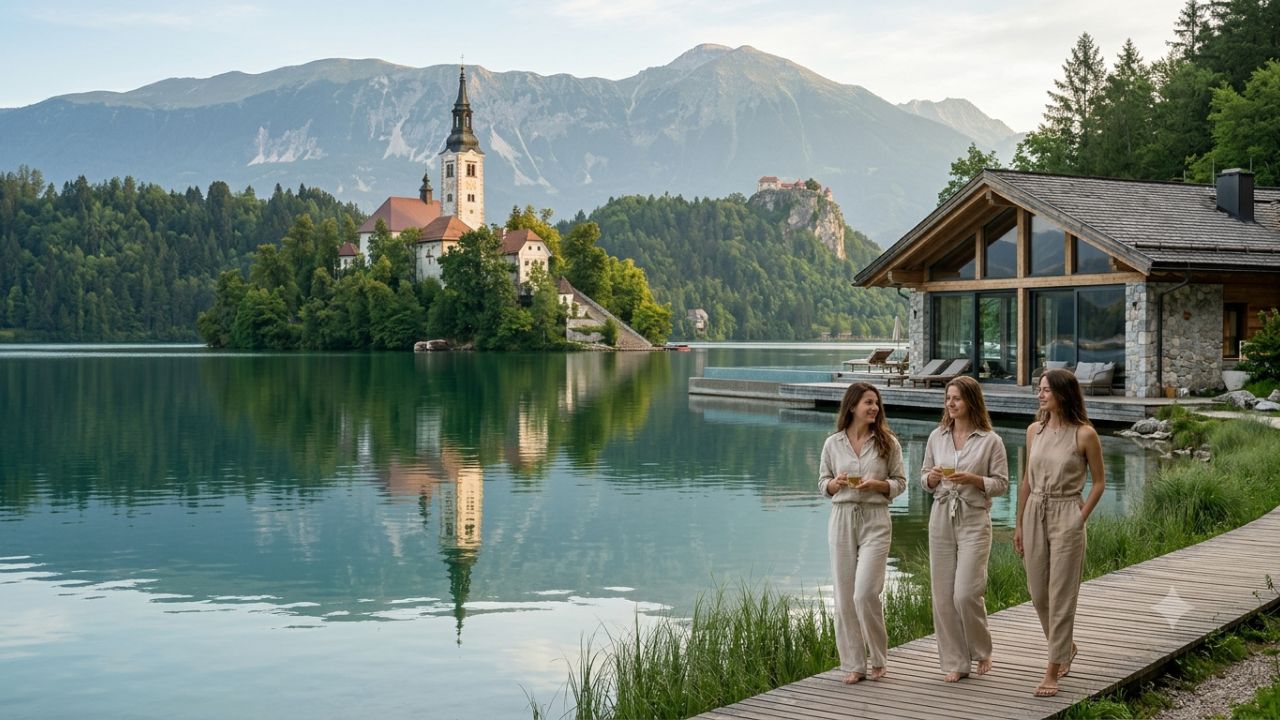
- Slovenia Unveils 2027 Wellness Tourism Vision at WTM London: UK Arrivals Surge 32.5%
- Angola Visa-Free Travel for 102 Nations: Inbound Tourism Surges as New Luanda Airport Opens
This article is for informational purposes. Flight routes, passenger regulations, visa rules, and transit advisories are subject to change by airlines and aviation authorities. Readers are advised to verify schedules and travel documentation with relevant carriers and border agencies before departure.
Related Stories
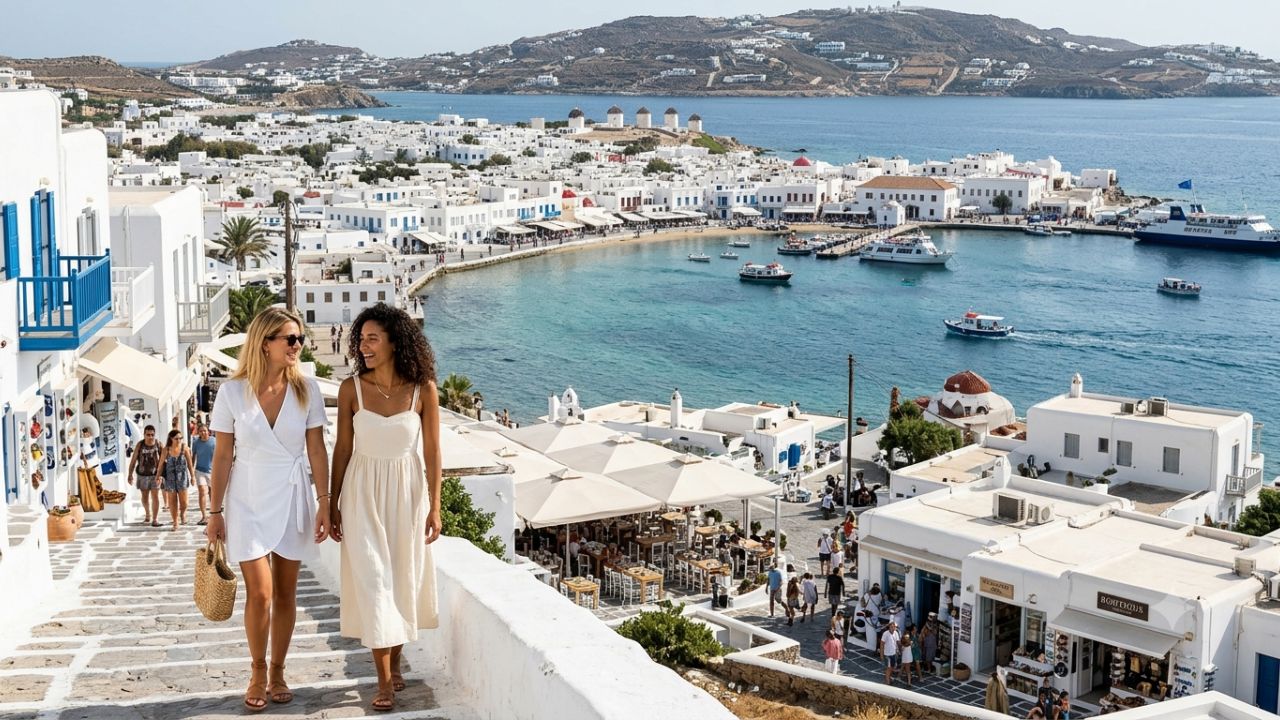
Germany and Key European Markets Propel Greek Tourism to €18.2B as Mykonos and Cyclades Face Infrastructure Reckoning
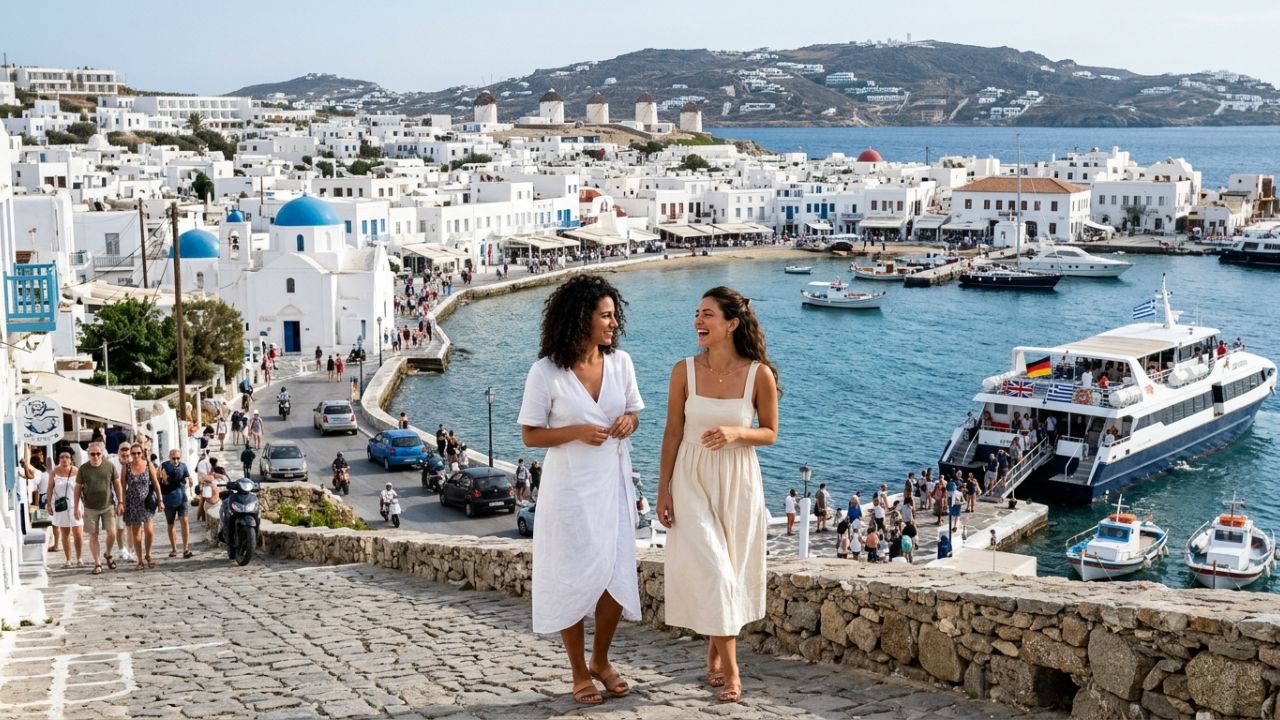
Greece Crowned Top Family Holiday Destination at UK Travel Awards: How British Arrivals Reached 4.89M as Travel Receipts Hit €3.74B