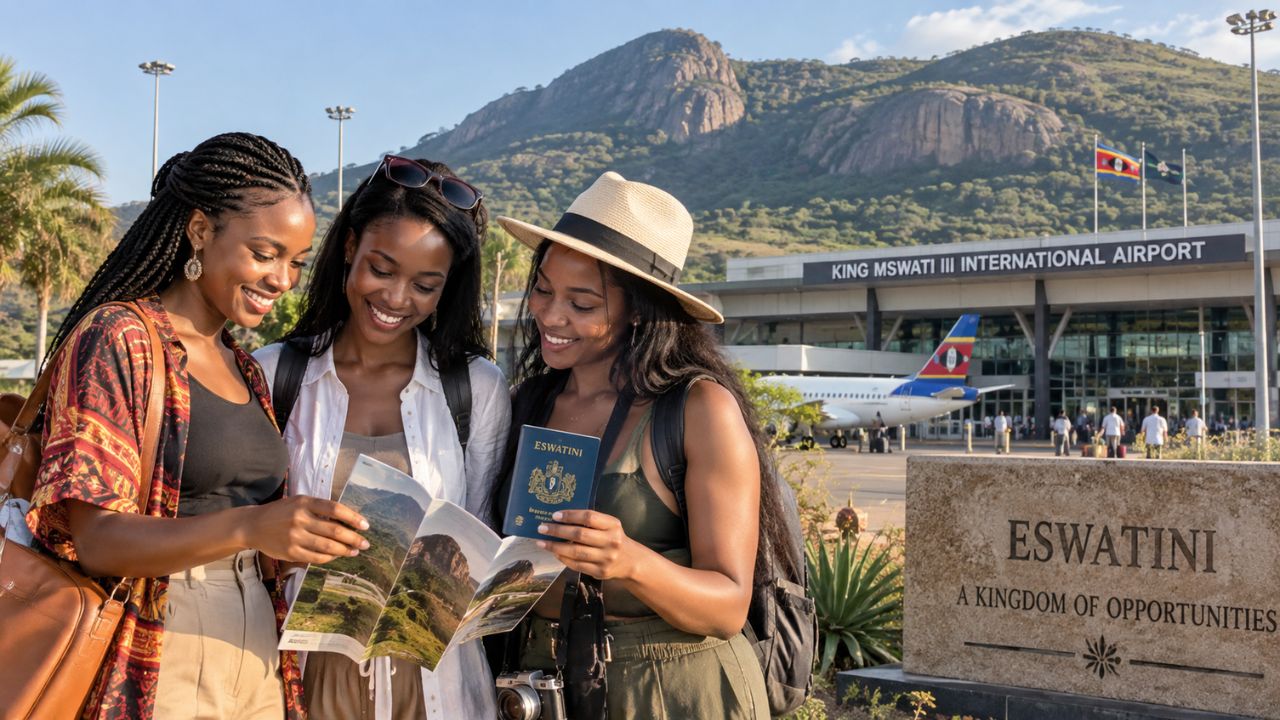
Angola Visa-Free Travel for 102 Nations: How US, Russia, and European Tourists Drive 30% Inbound Surge as Dr. António Agostinho Neto Airport Opens New Aviation Era

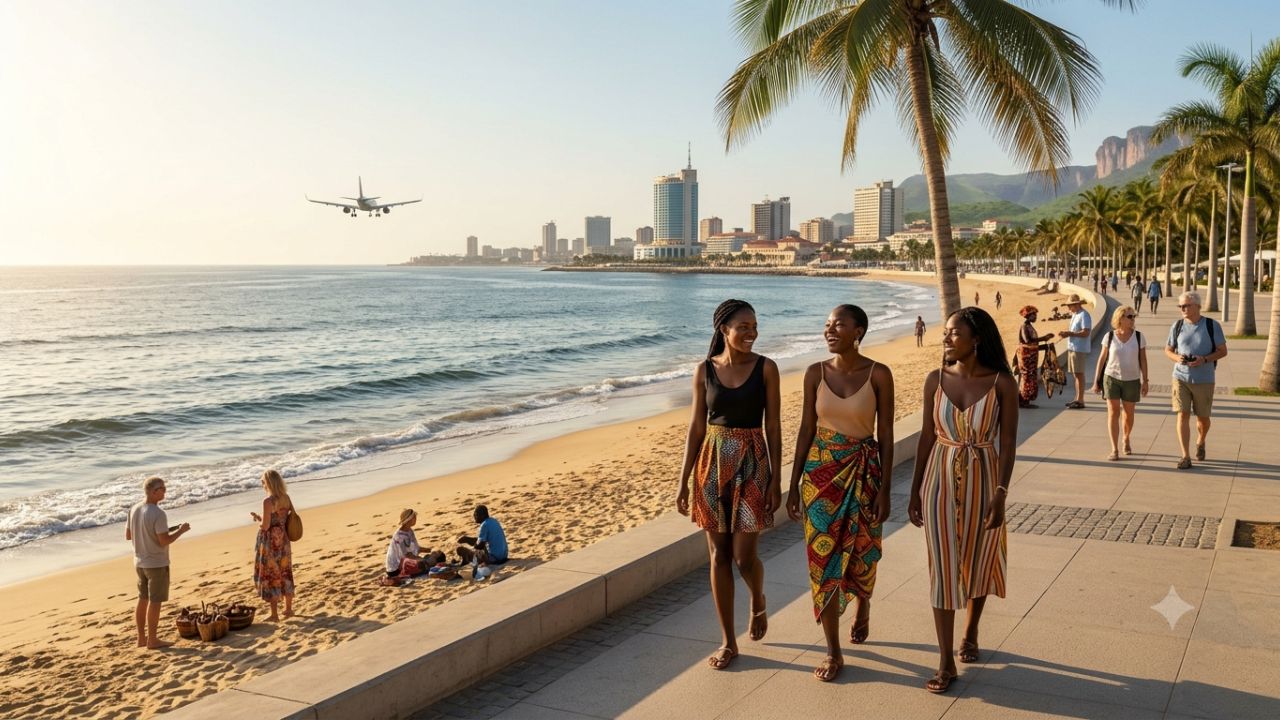
LUANDA, Angola — In one of the most consequential diplomatic and economic openings in contemporary African tourism, the Republic of Angola has operationalized a sweeping visa-free entry framework for citizens of 102 countries and territories, unlocking unprecedented international leisure and business access across the Southern African nation. Codified under Presidential Decree Number 189/23 as part of President João Lourenço’s national economic diversification agenda, the landmark policy eliminates consular visa requirements for travelers from major global markets, including the United States, the Russian Federation, Switzerland, Japan, South Korea, China, and all 27 European Union member states. Eligible foreign nationals can now enter Angola without a tourist visa for stays of up to 30 continuous days per visit, capped at an aggregate 90 days per calendar year. This historic liberalization has catalyzed explosive growth across the country's travel sector: official arrivals climbed by 30 percent in the first half of 2026 to reach 107,000 visitors, establishing Angola as the fastest-growing tourism destination on the African continent and the fourth fastest-growing worldwide.
+----------------------------------------------------------------------------------------------------+ | KEY TAKEAWAYS: ANGOLA'S 102-NATION VISA-FREE POLICY & AVIATION TRANSFORMATION | +----------------------------------------------------------------------------------------------------+ | - Universal Visa Liberalization: Unrestricted visa-free tourism entry enacted for 102 sovereign | | nations and territories under Presidential Decree 189/23, eliminating prior consular paperwork. | | - Generous Stay Allowances: Grants eligible tourists up to 30 continuous days per entry, with a | | cumulative ceiling of 90 days allowed per calendar year for leisure, family, and cultural visits.| | - Record Inbound Expansion: International visitor arrivals surged 30% year-on-year in the first | | half of 2026 to reach 107,000, following a 28% full-year rebound in 2025 to 223,140 visitors. | | - Economic Rebalancing Milestone: Non-oil GDP expanded by 9.24% in the second quarter of 2026, as | | national authorities channel international capital into hospitality, transport, and mining. | | - Next-Generation Aviation Hub: The newly inaugurated Dr. António Agostinho Neto International | | Airport (NBJ) operates with a planned capacity of 15 million passengers and 130,000 tons of cargo.| | - Intercontinental Air Bridges: Flag carrier TAAG Angola Airlines, alongside global operators | | including Emirates, TAP Air Portugal, Ethiopian Airlines, and Airlink, expand international hubs.| | - Premier Eco-Tourism Assets: Kissama National Park wildlife recovery, the thundering 105-meter | | Kalandula Falls, and the dramatic 1,000-meter Serra da Leba hairpin pass lead visitor demand. | +----------------------------------------------------------------------------------------------------+
   ANGOLA'S STRATEGIC TOURISM DIVERSIFICATION ARCHITECTURE
   =======================================================
   [Presidential Decree 189/23: 102 Visa-Free Nations]
   (US, Russia, EU-27, UK, Switzerland, China, Japan, Gulf States)
                          │
                          ▼
   [Dr. António Agostinho Neto International Airport (NBJ)]
   - $3.8B Mega-Terminal (15M Annual Passenger Capacity)
   - TAAG Hub + Emirates, TAP Portugal, Ethiopian, Airlink
                          │
         ┌────────────────┴────────────────┐
         ▼                                 ▼
   [Economic Rebalancing]           [Regional Tourism Dispersion]
    - Non-Oil GDP: +9.24%            - Kissama Safari Savannas (70km)
    - Inbound Arrivals: +30%         - Kalandula Falls (Malanje)
    - Leisure Visitors: +20%         - Serra da Leba & Tundavala (Lubango)
    - 6,000+ Direct Airport Jobs     - Benguela & Lobito Atlantic Beaches
The Geopolitical Architecture of Presidential Decree 189/23
For decades following its independence and subsequent civil conflict, Angola maintained one of the world's most restrictive and bureaucratic consular visa regimes. Historically dependent on offshore crude petroleum extraction and diamond mining, the state treated international travel primarily through the lens of corporate oil concessions and bilateral diplomatic protocols. Prospective leisure visitors faced burdensome consular application procedures requiring certified letters of invitation, notarized bank statements, extensive background checks, and non-refundable fees exceeding several hundred dollars. This formidable administrative barrier effectively isolated the country’s breathtaking natural landscapes from the mainstream global travel trade, leaving the leisure sector almost entirely undeveloped.
The enactment of Presidential Decree Number 189/23 represents a structural break from this legacy of isolation. Designed by President João Lourenço’s administration as an engine for foreign exchange diversification, the executive order unilaterally dismantled visa entry barriers for 102 sovereign nations and territories spanning six continents. Under the revised legal framework, citizens of qualified nations do not need to apply for an electronic visa prior to departure or pay fees upon arrival. Instead, travelers present a passport valid for at least six months, an international certificate of vaccination against yellow fever, a confirmed return or onward airline ticket, and verified accommodation reservations at port-of-entry immigration checkpoints.
The breadth of eligible jurisdictions illustrates a pragmatic, non-aligned foreign policy designed to maximize international commercial engagement. In Europe, the exemption encompasses all 27 member states of the European Union, the United Kingdom, Switzerland, Norway, Iceland, Monaco, Vatican City, and the Russian Federation. In North America, citizens of the United States, Canada, and Mexico enjoy equal visa-free privileges. Across the Asia-Pacific region, travelers from Japan, South Korea, China, Singapore, Australia, New Zealand, India, Indonesia, and the Philippines can enter without restriction. In the Middle East, the wealthy outbound travel markets of the United Arab Emirates, Qatar, and Saudi Arabia are fully integrated into the scheme. In addition, the decree incorporates major Latin American nations including Brazil, Argentina, and Chile, alongside sixteen partner states across the African continent.
By allowing foreign tourists to stay for up to 30 days per entry without consular clearance, Angola has aligned its border control standards with global best practices. The 90-day cumulative annual allowance provides ample flexibility for multi-entry regional travelers, digital nomads, retired adventurers, and international researchers exploring the wider Southern African Development Community. This administrative liberalization has effectively removed the geographic friction that once deterred independent travelers, repositioning Luanda as an accessible gateway to Central and Southern Africa.
Inbound Tourism Surge: Analyzing the 30 Percent Arrival Rebound
The operational impact of the 102-nation visa waiver was immediate and pronounced. According to verified industry data, Angola welcomed approximately 107,000 international visitor arrivals during the first six months of 2026, marking an exceptional 30 percent increase compared to the corresponding period in 2025. This rapid growth has earned Angola recognition from international travel trade bodies as Africa’s fastest-growing tourism destination and the fourth fastest-growing globally.
This performance follows a strong baseline recovery established during 2025, when Angola recorded 223,140 international arrivals—a 28 percent annual expansion from the 174,408 travelers registered in 2024. Most significantly, the 2025 performance officially eclipsed the country’s pre-pandemic peak of 217,512 arrivals established in 2019, confirming that the current expansion is driven by structural policy reforms rather than transient post-pandemic catch-up demand.
| Inbound Travel Metric | 2024 Baseline | 2025 Full Year | H1 2026 Performance | Annualized Trajectory |
|---|---|---|---|---|
| Total International Arrivals | 174,408 | 223,140 | ~107,000 | +30.0% YoY pace in 2026 |
| Leisure & Holiday Arrivals | 43,300 | 52,000+ | ~28,500 | +20.0% expansion in holiday segment |
| European Sourced Arrivals | Baseline 2024 | +28.7% YoY | Sustained double-digit | Strong demand from Portugal, France, Germany |
| New Luanda Airport Passenger Flow | Initial Transition | ~800,000 | 2.0+ million (Cumulative) | Scaling toward 15M annual capacity |
| Direct Aviation Employment | ~3,500 jobs | ~4,800 jobs | ~6,000 direct positions | Broad economic ripple into local supply chains |
A qualitative examination of visitor composition reveals a healthy transformation within the national travel profile. Traditionally, more than 80 percent of foreign arrivals were corporate personnel tied strictly to oil exploration in Cabinda and Soyo or diamond mining in Lunda Norte. In contrast, leisure and holiday arrivals expanded by 20 percent in 2025 to exceed 52,000 travelers, with the leisure share climbing even higher throughout 2026. European arrivals registered a 28.7 percent increase, driven by strong historic and cultural ties with Portugal, as well as rising curiosity among independent adventure travelers from France, Germany, the United Kingdom, and Switzerland.
This shift in passenger demographics carries profound economic implications. While corporate business travelers generally confine their movements to high-security business hotels in central Luanda and private corporate helicopters to offshore rigs, leisure visitors distribute expenditure across domestic airlines, rural eco-lodges, regional transport operators, artisanal craft markets, and local tour guiding cooperatives. This decentralized spending injects foreign exchange directly into provincial economies, generating durable employment in regions historically sidelined by oil-centric industrialization.
Macroeconomic Rebalancing: Non-Oil GDP Expansion and IMF Projections
Angola’s aggressive tourism promotion cannot be viewed in isolation from its macroeconomic realities. As Africa’s second-largest crude oil producer behind Nigeria, the national budget has historically been hostage to the volatile boom-and-bust cycles of international petroleum benchmark prices. When global oil prices collapse, national export earnings evaporate, precipitating currency devaluations and sovereign debt distress.
To escape this mono-commodity trap, the Angolan government has prioritized economic diversification under its national development strategies. The results of this policy reorientation have materialized with remarkable speed during 2026. According to the International Monetary Fund, Angola’s nominal Gross Domestic Product is projected to reach approximately US$152.35 billion, while national GDP measured on a Purchasing Power Parity basis is estimated at US$423.95 billion. Nominal GDP per capita has climbed to between US$3,754 and US$3,876, underscoring rising domestic wealth and expanding middle-class consumption.
While the IMF initially projected real GDP growth of 2.3 percent for 2026, actual macroeconomic performance expanded considerably faster during the first six months of the year, registering cumulative national economic growth of 7.15 percent. The primary engine of this outperformance was the non-oil productive sector, which expanded by an extraordinary 9.24 percent in the second quarter of 2026 alone. Revised forecasts published by the African Development Bank anticipate overall national economic expansion ranging between 4.4 percent and 6.6 percent across the 2026–2027 fiscal cycles.
Tourism is strategically positioned at the intersection of this non-oil renaissance. Unlike capital-intensive extractive industries that employ relatively few citizens per million dollars invested, hospitality and tourism are labor-intensive service sectors with vast domestic multiplier effects. Expanding visitor arrivals stimulates commercial demand across agricultural food production, municipal infrastructure construction, domestic aviation, and regional handicrafts, transforming foreign visitor expenditures into widespread social mobility.
The Aviation Gateway: Dr. António Agostinho Neto International Airport
The physical centerpiece of Angola’s global connectivity strategy is the newly operational Dr. António Agostinho Neto International Airport, located in the Bom Jesus district approximately 40 kilometers southeast of Luanda. Constructed with an investment exceeding US$3.8 billion, the state-of-the-art aviation facility replaces the aging Quatro de Fevereiro International Airport, which had operated beyond its intended design parameters for decades.
Engineered to function as the premier intercontinental transit hub for Central and Southern Africa, the new airport features two massive parallel runways capable of handling the world’s largest commercial aircraft, including the Airbus A380 and Boeing 777-300ER. The terminal complex is designed to process 15 million passengers annually alongside 130,000 metric tons of air cargo. By October 2026, official government operating data confirmed that the new airport had already handled approximately two million passengers while supporting around 6,000 direct aviation and logistics jobs.
The facility connects to central Luanda via a dedicated commuter rail line operated by the Luanda Railway (Caminhos de Ferro de Luanda), which transports passengers directly from Bungo central station in downtown Luanda to the passenger terminal, bypassing the capital’s notorious highway traffic jams. Inside the terminal, automated biometric passport gates, centralized transit screening, extensive duty-free shopping arcades, and international airline lounges provide a seamless travel experience that rivals major European and Gulf hubs.
Complementing the capital’s mega-airport is a coordinated national network of regional secondary airports, ensuring that international travelers can access the country's diverse interior provinces:
Paulo Teixeira Jorge International Airport in Catumbela serves the coastal province of Benguela, providing immediate access to the Atlantic seaside promenades, colonial architecture, and white-sand beaches of Lobito and Benguela. Having achieved full international certification, the airport is poised to accommodate regional flights from neighboring African nations.
Maria Mambo Café Airport serves the forested northern exclave of Cabinda, separated from mainland Angola by the Democratic Republic of Congo. Operating an average of 28 weekly flights from Luanda, the airport provides access to tropical rainforest reserves and the cultural traditions of the Mayombe forest.
Mukanka Airport in Lubango anchors adventure tourism across Huíla Province in southern Angola. With nine weekly scheduled flights from Luanda, the airport serves as the primary base for expeditions into the dramatic Tundavala Gap, the breathtaking Serra da Leba mountain pass, and the tribal cultures of the Namibe desert margin.
Albano Machado Airport in Huambo connects travelers with the temperate central highlands, supporting expeditions to Mount Moco, Angola’s highest mountain peak, and the surrounding agricultural valleys.
   ANGOLA'S STRATEGIC REGIONAL AIRPORT ACCESS NETWORK
   ==================================================
   [Dr. António Agostinho Neto (NBJ)] ──► Primary Intercontinental Hub (15M Capacity)
                  │
                  ├──► Catumbela Airport (CBT)  ──► Benguela & Lobito Coastal Beaches
                  ├──► Mukanka Airport (SDD)    ──► Lubango, Serra da Leba & Tundavala
                  ├──► Maria Mambo Café (CAB)   ──► Cabinda Exclave & Mayombe Rainforest
                  └──► Albano Machado (NOV)     ──► Huambo Central Highlands & Mount Moco
Global Airline Partnerships: Connecting Angola to Six Continents
A world-class airport infrastructure requires robust international airline partnerships to funnel passengers across borders. Angola’s aviation connectivity has expanded through a combination of national carrier modernization and strategic foreign airline operations.
National flag carrier TAAG Angola Airlines serves as the operational backbone of the country's aviation ecosystem. Following the successful relocation of its international operations to Dr. António Agostinho Neto International Airport, TAAG has embarked on an aggressive fleet renewal program, introducing fuel-efficient Boeing 787 Dreamliners and Airbus A220 regional passenger aircraft. The airline operates vital intercontinental routes connecting Luanda directly with Lisbon, Madrid, São Paulo, Johannesburg, Cape Town, Windhoek, and Kinshasa. TAAG’s transatlantic service to São Paulo, Brazil, represents one of the few direct southern hemisphere aviation links bridging South America and sub-Saharan Africa, facilitating substantial cultural, business, and leisure traffic between the two Portuguese-speaking nations.
International legacy carriers have expanded their frequencies into Luanda, capitalizing on the simplified visa-free entry framework. Emirates operates regular widebody flights connecting Dubai directly with Luanda, integrating Angola into an expansive global network that feeds high-spending travelers from the Middle East, India, China, Japan, and Southeast Asia. TAP Air Portugal maintains dense flight connections between Lisbon and Luanda, preserving historical and linguistic ties while providing seamless one-stop connections for travelers departing from across Western Europe and North America.
Ethiopian Airlines, Africa’s largest carrier, connects Luanda through its mega-hub in Addis Ababa, providing convenient flight schedules for travelers arriving from across East Africa, Europe, and Asia. Regionally, South African carrier Airlink transferred its Luanda operations to the new Dr. António Agostinho Neto International Airport on March 1, 2026, operating four weekly return flights connecting Johannesburg and Luanda. This regional link facilitates seamless multi-destination itineraries that combine South African wildlife safaris with Angolan cultural and coastal exploration.
| Airline Operator | Hub Airport | Primary Routes to Luanda | Strategic Market Contribution |
|---|---|---|---|
| TAAG Angola Airlines | Luanda (NBJ) | Lisbon, Madrid, São Paulo, Johannesburg, Cape Town | National carrier providing domestic dispersion and transatlantic links |
| Emirates | Dubai (DXB) | Dubai–Luanda direct widebody services | High-yield Middle Eastern, Asian, and Australasian feeder traffic |
| TAP Air Portugal | Lisbon (LIS) | Lisbon–Luanda daily scheduled flights | Primary European gateway connecting North America and EU markets |
| Ethiopian Airlines | Addis Ababa (ADD) | Addis Ababa–Luanda network flights | Pan-African connectivity and Asian connections |
| Airlink | Johannesburg (JNB) | Johannesburg–Luanda regional flights | Southern African business, safari, and leisure integration |
Luxury Hospitality Investments: International Brands Anchor Luanda
As visitor arrivals accelerate, Angola’s commercial hospitality sector is undergoing an upscale modernization designed to satisfy the expectations of discerning international travelers. Long characterized by exorbitant hotel room rates driven by corporate oil budgets, Luanda’s lodging landscape has diversified to offer authentic luxury, contemporary lifestyle amenities, and international service standards.
Leading this hospitality evolution is the InterContinental Luanda Miramar, operated by IHG Hotels and Resorts. As Angola’s first internationally branded five-star luxury hotel, the property occupies a commanding position in the historic Miramar district overlooking Luanda Bay and the Atlantic Ocean. Featuring 367 luxurious rooms and suites, multiple fine-dining restaurants, an expansive outdoor swimming pool, and an upscale wellness spa, the property caters to senior diplomatic missions, international corporate conferences, and high-net-worth leisure travelers seeking refined comfort.
In the center of the capital, the EPIC SANA Luanda Hotel remains a premier five-star landmark. The hotel offers 288 guest rooms, 50 serviced residences, four specialized restaurants, and a comprehensive wellness spa. Its central location near Luanda Bay makes it a favored retreat for cultural travelers exploring the historic colonial core, art galleries, and waterfront promenades.
Other prominent lodging establishments supporting tourism expansion include the Protea Hotel by Marriott Luanda, which offers modern lifestyle accommodations tailored to corporate and independent leisure travelers between the city center and the upscale southern suburb of Talatona. In Talatona itself, the Palmeiras Hotel provides spacious suite accommodations and wellness facilities catering to extended-stay business travelers and families. Meanwhile, the historic Hotel Trópico in central Luanda continues its half-century tradition of hospitality, offering restored rooms, business conference halls, and wellness amenities in the civic heart of the city.
   LUANDA LUXURY HOSPITALITY LEADERSHIP
   ====================================
   [InterContinental Luanda Miramar] ──► 367-room flagship IHG luxury property
   [EPIC SANA Luanda Hotel]          ──► 5-star Bayfront luxury & extensive spa
   [Protea Hotel by Marriott]        ──► Modern lifestyle accommodation in city core
   [Palmeiras Hotel Talatona]        ──► Upscale commercial district executive suites
   [Hotel Trópico]                   ──► Historic 50-year heritage business landmark
Natural Wonders and Cultural Heritage: Angola’s Iconic Attractions
With visa barriers removed and modern aviation infrastructure operational, international travelers are discovering that Angola possesses some of the most dramatic, diverse, and untouched landscapes on the African continent:
Kissama National Park (Parque Nacional da Quiçama) Located approximately 70 kilometers south of Luanda, Kissama National Park represents Angola’s most accessible and celebrated wildlife sanctuary. Covering nearly 10,000 square kilometers between the Atlantic Ocean and the Kwanza River, the park features expansive coastal grasslands, dense thickets, and iconic baobab forests. Following devastating wildlife losses during the civil war, the sanctuary was revitalized through Operation Noah’s Ark, an ambitious wildlife relocation initiative that airlifted breeding herds of African elephants, plains zebras, giraffes, and wildebeests from South Africa and Botswana. Today, visitors enjoy guided river safaris along the Kwanza River, watching elephants graze along the banks and observing rich birdlife, including sea eagles and kingfishers.
Kalandula Falls (Quedas de Kalandula) Situated in Malanje Province in northern Angola, Kalandula Falls is one of the most magnificent natural spectacles in Africa. Plunging over a horseshoe-shaped basalt rim on the Lucala River, the falls drop 105 meters across a thunderous 400-meter-wide gorge. During the rainy season, the volume of water creates an immense mist cloud visible for miles, refracting rainbows across the emerald jungle valley below. Unlike commercialized waterfalls elsewhere in the world, Kalandula remains unspoiled by commercial development, allowing visitors to experience the raw, elemental power of nature in absolute tranquility.
Serra da Leba Mountain Pass and the Tundavala Gap In Huíla Province near Lubango, the landscape transitions into dramatic geological formations. The Serra da Leba pass is a legendary engineering marvel, featuring a series of razor-sharp hairpin turns that wind down a sheer 1,000-meter mountain escarpment connecting the high central plateau with the coastal desert of Namibe. At night, the illuminated roadway resembles a glowing serpent carved into the mountain rock. Nearby, the Tundavala Gap offers a breathtaking natural abyss where the high plateau abruptly drops 1,200 meters into a vast, hazy coastal plain below. Standing on the edge of the limestone precipice, visitors gaze across one of the most awe-inspiring panoramic vistas on the continent.
Luanda’s Cultural and Architectural Heritage In the capital city of Luanda, centuries of history merge with modern coastal energy. Perched high on a promontory guarding the harbor entrance, the Fortaleza de São Miguel stands as Luanda’s oldest surviving colonial landmark. Constructed by the Portuguese in 1576, the star-shaped fortress features stone ramparts mounted with historic brass cannons, ornate blue-and-white azulejo ceramic tiles depicting Angola’s early history, and the Central Armed Forces Museum, which chronicles the nation’s independence struggle. From the fortress ramparts, visitors enjoy sweeping panoramic views across Luanda’s harbor, the active commercial shipping lanes, and the scenic waterfront promenade known as the Marginal.
Along the Marginal promenade, visitors admire iconic architectural landmarks such as the Banco Nacional de Angola, an elegant colonial palace built in 1956 with a distinctive pink facade, arched colonnades, and a grand tiled dome. Nearby, the Museu Nacional de Antropologia houses an extraordinary repository of traditional cultural artifacts, displaying ceremonial African wooden masks, ritual musical instruments, ancestral hunting weapons, and textiles representing the diverse ethnic communities of Angola, including the Ovimbundu, Ambundu, and Bakongo peoples.
   ANGOLA'S ICONIC TRAVEL CIRCUIT
   ==============================
   [Luanda Heritage]    ──► Fortaleza de São Miguel, Anthropological Museum, Marginal
            │
            ├──► [Wildlife Safari]      ──► Kissama National Park & Kwanza River
            ├──► [Waterfalls & Jungle]  ──► 105m Kalandula Falls in Malanje Province
            ├──► [Mountain Escarpment]  ──► Serra da Leba hairpin pass & Tundavala Gap
            └──► [Atlantic Coastline]   ──► Benguela colonial streets & Lobito sandbars
Practical Travel Blueprint: The 102-Nation Visa-Free Guidelines
For international travelers preparing to explore Angola under the simplified 30-day visa-free regulations, organized planning ensures a smooth, rewarding journey:
   TRAVELER CHECKLIST: ENTERING ANGOLA UNDER THE 102-NATION WAIVER
   ==============================================================
   [ ] Confirm Passport Validity: Ensure your passport holds a minimum of 6 months validity
       beyond your planned departure date, with at least two blank visa pages available.
   [ ] Secure Yellow Fever Certificate: Present a valid International Certificate of Vaccination
       against Yellow Fever at immigration; this document is mandatory for all arriving travelers.
   [ ] Retain Proof of Onward Travel: Keep printed copies of your confirmed return flight ticket
       or onward international travel itinerary to present to immigration officers upon arrival.
   [ ] Carry Lodging Confirmations: Maintain printed vouchers of hotel reservations, eco-lodge bookings,
       or an official declaration of lodging from a verified host in Angola.
   [ ] Observe the 30-Day Limit: Strictly respect the 30-day continuous stay allowance; foreign
       nationals wishing to remain longer must apply for an official extension through SME.
   [ ] Pack Health and Field Essentials: Comprehensive travel medical insurance, malaria prophylaxis,
       insect repellent, high-grade sun protection, and a universal electrical power adapter.
When packing for an Angolan expedition, travelers should prepare for contrasting microclimates. Coastal Luanda and Benguela experience tropical, humid weather, requiring lightweight, breathable clothing. However, travelers venturing into the high central plateau around Lubango and Huambo will encounter cool highland evenings, where warm fleece layers and windproof jackets are indispensable.
Financial planning also requires foresight. While international credit cards are increasingly accepted at major luxury hotels, modern supermarkets, and airline desks in Luanda, cash in the local currency—the Angolan Kwanza (AOA)—remains essential for regional travel, fuel stations, national park entrance fees, and local dining. Commercial banks and certified exchange bureaus (casas de câmbio) operate at the new international airport and across central Luanda, allowing travelers to convert US dollars and euros safely.
By dismantling administrative visa barriers and investing billions in modern aviation infrastructure, Angola has invited the international travel community to witness its inspiring natural wonders and cultural richness. For global travelers seeking authentic exploration far removed from mass commercial tourism, Angola represents the ultimate frontier of African discovery.
Related Travel Guides
- Germany and Key European Markets Propel Greek Tourism to €18.2B as Cyclades Face Infrastructure Reckoning
- Greece Crowned Top Family Holiday Destination at UK Travel Awards: Arrivals Reach 4.89M
- Slovenia Unveils 2027 Wellness Tourism Vision at WTM London: UK Arrivals Surge 32.5%
- US Outranks All Other Countries in Powering Resurgence of Costa Rica Ecotourism
This article is for informational purposes. Flight routes, passenger regulations, visa rules, and transit advisories are subject to change by airlines and aviation authorities. Readers are advised to verify schedules and travel documentation with relevant carriers and border agencies before departure.
Related Stories

Serbia Expands Global Tourism Mobility as Inbound Visitors Surpass 3.1 Million Across 90 Visa-Free Nations

Finnish Immigration Service Issues Guidance on 100-Day D Visa Applications for Five International Applicant Groups