
NATS Software Glitch Triggers 2,000+ UK Flight Cancellations: Analysis of the September 2026 Airspace Failure
A one-millisecond software defect in the UK's National Airspace System caused over 2,000 flight cancellations, revealing critical vulnerabilities in aviation synchronization and the legal gaps in passenger compensation under UK261.

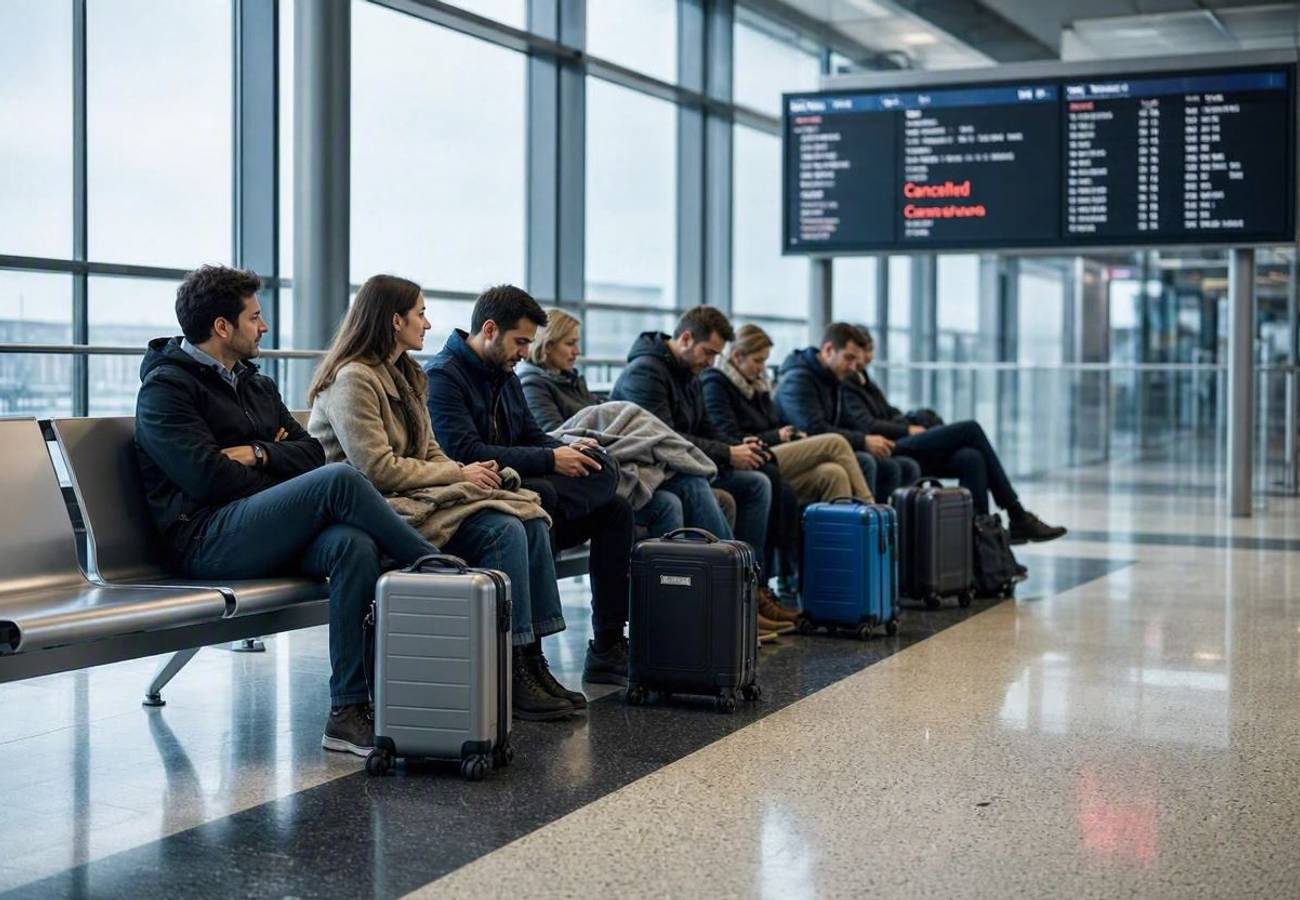
Image generated by AI
A one-millisecond software defect within the United Kingdom’s air traffic control infrastructure sparked a systemic collapse on September 8, 2026, resulting in more than 2,000 flight cancellations. This incident demonstrates the extreme fragility of modern aviation synchronization, where a timing error invisible to the human eye can paralyze an entire national airspace and trigger days of operational instability.
The Anatomy of a Millisecond Failure
The disruption originated within the National Airspace System managed by NATS, the UK's primary air navigation service provider. According to a preliminary report released on September 18, the crisis was not the result of human error or a cyberattack, but a specific "edge-case" software defect. The failure occurred during the processing of an aircraft code allocation request. Specifically, the system paused to prioritize a high-priority internal message; however, it failed to resume the original process correctly upon completion of that priority task.
This sequence created a narrow window of corruption—roughly one millisecond in duration—which tainted subsequent flight-data updates. Because air traffic controllers rely on absolute data integrity to maintain safe separation between aircraft, any corruption in the flight-data system triggers immediate operational safeguards. These safeguards manifest as flow restrictions, meaning the number of aircraft allowed into or out of UK airspace is drastically reduced to ensure safety.
For those tracking the technical fallout, the International Air Transport Association (IATA) often highlights how these systemic dependencies create "single points of failure" in regional hubs. In this instance, the brief technical lapse forced a manual override of automated systems, slashing capacity at a moment when the network was already operating at peak efficiency.
Operational Cascades and Data Breakdown
While the software glitch itself was momentary, the recovery period lasted for days. The disparity between the "system restored" notification and the actual resumption of flights is explained by the rigid synchronization of airline logistics.
| Impact Metric | Data Point | Operational Consequence |
|---|---|---|
| Total Cancellations | 2,000+ Flights | Massive loss of seat capacity and passenger displacement |
| Initial Event Date | September 8, 2026 | Triggered a multi-day recovery cycle |
| Reporting Date | September 18, 2026 | NATS preliminary report confirmed software defect |
| Failure Window | ~1 Millisecond | Data corruption during high-priority message handling |
The "cascading effect" mentioned in the NATS report refers to the logistical nightmare that follows a capacity freeze. When flights are canceled or diverted, aircraft and flight crews are displaced from their scheduled rotations. A pilot may reach their legal duty-time limit while waiting for a slot, or an aircraft may miss a mandatory maintenance window. Consequently, flights scheduled for the following day are canceled not because the software is still broken, but because the crew is in the wrong city or the plane is grounded for safety checks.
Expert Analysis: The Legal and Logistical Gap
For travelers booking routes through the UK, the direct consequence of this event is a stark lesson in the difference between "duty of care" and "financial compensation." This event falls squarely under the jurisdiction of the UK Civil Aviation Authority (CAA), and the legal interpretation of "extraordinary circumstances" is where most passengers lose their claims.
Under UK261 regulations, airlines are mandated to provide "care and assistance"—including meals, hotel stays, and communications—regardless of the cause of the delay. However, monetary compensation is typically denied if the disruption is deemed an "extraordinary circumstance" beyond the airline's control. Air traffic control (ATC) failures, such as this NATS glitch, generally fit this definition.
The pricing pressure created by this event is twofold. First, airlines absorb the massive cost of rebooking thousands of passengers without the ability to recoup those losses through insurance or government subsidies. Second, the necessity for "recovery flying"—where airlines fly empty planes to reposition them for the next day's schedule—increases fuel burn and operational costs, which are often passed down to the consumer through higher ticket prices in subsequent quarters.
The long-term implication is a shift toward infrastructure investment. NATS has already indicated plans to seek additional multi-year spending from regulators to modernize these legacy systems. For the nomad lawyer or frequent traveler, this signals that the "resilience" of UK airspace is currently insufficient for the volume of traffic it handles, making tightly timed connections at Heathrow or Gatwick a high-risk gamble during system updates.
Key Takeaways
- Systemic Fragility: A single millisecond of data corruption can cancel over 2,000 flights due to the zero-tolerance nature of aviation safety data.
- The Recovery Gap: "System restored" does not mean schedules are back to normal; crew legality and aircraft positioning can take days to resolve.
- Compensation Limits: While UK261 ensures hotels and meals (duty of care), ATC failures are usually "extraordinary circumstances," meaning cash compensation is unlikely.
- Documentation is Mandatory: Passengers should save screenshots of app notifications and all receipts for "reasonable necessities" to ensure reimbursement from airlines.
- Infrastructure Risk: The UK Civil Aviation Authority is conducting an independent review, suggesting a systemic need for technology upgrades in the National Airspace System.
FAQ: UK Airspace Disruption 2026
Am I entitled to cash compensation for the NATS glitch? Likely no. Because the failure occurred within the air traffic control system (NATS) and not the airline's own equipment, it is classified as an "extraordinary circumstance" under UK261, exempting airlines from paying fixed compensation.
What "duty of care" must the airline provide? Airlines must provide food, refreshments, two phone calls/emails, and hotel accommodation (including transport) if the delay necessitates an overnight stay, regardless of the cause of the disruption.
Why was my flight canceled the day after the system was fixed? This is a "knock-on effect." Your aircraft or crew was likely displaced by the initial glitch, meaning they were not physically present at the departure airport to operate your flight.
How should I document my expenses for reimbursement? Keep a digital trail. Save screenshots of the cancellation notice, keep all itemized receipts for food and hotels, and note the exact time the airline informed you of the delay.
In an era of millisecond precision, the aviation industry has discovered that its greatest strength—hyper-synchronization—is also its most dangerous vulnerability.
Related Travel Guides
Disclaimer
This article is for informational and educational purposes only. It does not constitute legal, financial, or professional advice. While we strive to provide accurate and up-to-date information, travel policies, regulations, and conditions change rapidly. Always verify information with official sources before making travel decisions. Nomad Lawyer makes no representations about the accuracy, reliability, completeness, or suitability of the information provided. Readers should consult qualified professionals for advice specific to their circumstances. The views expressed in this article are those of the author and do not necessarily reflect the views of Nomad Lawyer.
Naina Thakur
Contributor & Travel Specialist
Travel enthusiast and legal writer covering visa regulations, responsible tourism, and cultural journeys across global destinations.
Learn more about our team →