
Middle East Aviation Crisis 2026: 1,072 Delays and 120 Cancellations Hit Dubai, Riyadh, and Cairo Hubs
Widespread operational failures across Middle East aviation hubs caused 1,072 delays and 120 cancellations, leaving hundreds of passengers stranded at Dubai, Cairo, and Saudi Arabian airports.

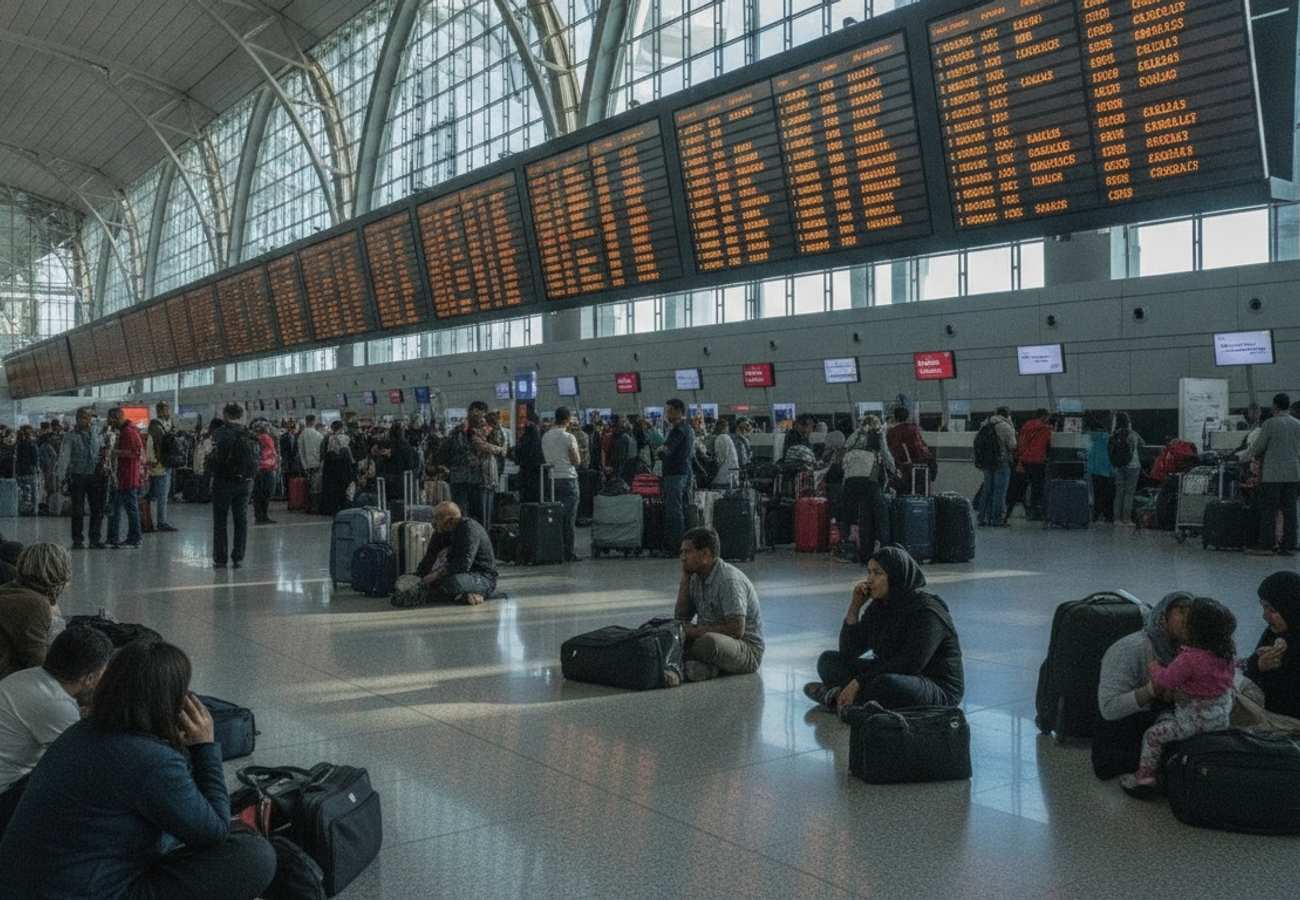
Image generated by AI
Hundreds of travelers are currently stranded across the Middle East as a systemic operational collapse triggered 1,072 flight delays and 120 cancellations across four nations.
The disruption has paralyzed key gateways in the United Arab Emirates, Saudi Arabia, Egypt, and Israel, creating a ripple effect across one of the world's most critical aviation corridors connecting Asia, Africa, and Europe.
Systemic Failures Across Regional Aviation Hubs
The scale of the current disruption highlights the fragility of the highly interconnected Middle East aviation network. Because these hubs serve as primary transit points for intercontinental travel, localized operational issues have quickly escalated into a regional crisis.
The impact is most severe at Dubai International Airport, which recorded the highest volume of delays in the region. However, the crisis extends beyond the UAE, with significant bottlenecks reported at Ben Gurion International Airport in Tel Aviv and Cairo International Airport.
In Saudi Arabia, the disruption presents a dual challenge: major international gateways are struggling with massive delays, while smaller regional airports are seeing a higher concentration of total flight cancellations.
Detailed Breakdown of Airport Disruptions
The operational data reveals a stark contrast between the types of disruptions hitting major hubs versus regional airstrips. While Dubai and Tel Aviv are battling schedule slippage, airports like Gizan and Najran have seen entire services wiped from the board.
Primary Hub Impact Data
| Airport | Delays | Cancellations |
|---|---|---|
| Dubai International (DXB) | 296 | 3 |
| Ben Gurion International (TLV) | 249 | 3 |
| Cairo International (CAI) | 184 | 1 |
| King Khalid International (RUH) | 108 | 34 |
| King Abdulaziz International (JED) | 103 | 19 |
| Sharjah International (SHJ) | 110 | 7 |
| Al Maktoum International (DWC) | 10 | 1 |
| Abha Regional | 12 | 20 |
| Gizan Regional | 0 | 20 |
| Najran Domestic | 0 | 12 |
Airline Performance and Operational Strain
The operational crisis has hit carriers with varying degrees of severity, with some experiencing nearly 60% disruption rates on their schedules.
- Saudia: The Saudi national carrier faced the heaviest cancellation burden, recording 52 cancelled flights and 29 delays.
- Air Arabia: This carrier saw a massive delay impact with 103 flights delayed, representing a 40% delay rate, largely centered around its Sharjah operations.
- Israir: The Israeli carrier reported 51 delays, resulting in a significant 59% delay rate across its network.
The concentration of cancellations at regional Saudi airports—specifically Gizan and Najran—suggests that domestic passengers are facing higher levels of uncertainty than those on primary international routes.
Passenger Mitigation Strategies
With airlines still struggling to restore normal schedules, travelers currently in transit or planning travel through the region should adopt the following protocols:
- Real-Time Verification: Do not rely on original itineraries. Confirm flight status via official mobile apps or airline portals before departing for the airport.
- Extended Buffer Times: Arrive significantly earlier than scheduled for hubs in Dubai, Tel Aviv, Cairo, Riyadh, and Jeddah to account for anticipated congestion at security and check-in.
- Direct Rebooking: Passengers with cancelled flights should contact airlines immediately to secure alternative routing or rebooking on later services.
- Essential Carry-on Management: Due to the risk of extended airport stays or missed connections, keep all critical medications, chargers, and travel documents in cabin baggage.
- Connection Tracking: Travelers with onward journeys must track their second and third legs, as a delay in the first segment often invalidates subsequent transfers.
Aviation authorities continue to work toward schedule restoration, but the interconnected nature of these hubs means stability may take several days to achieve.
Key Takeaways
- Total Impact: 1,072 delays and 120 cancellations recorded across the Middle East.
- Hardest Hit Hub: Dubai International Airport (296 delays).
- Critical Airline Failures: Israir (59% delay rate) and Air Arabia (40% delay rate).
- Regional Trend: Major hubs are experiencing delays, while regional Saudi airports are seeing total cancellations.
- Geographic Scope: Disruptions span the UAE, Saudi Arabia, Egypt, and Israel.
FAQ
Which airport has the most flight delays? Dubai International Airport recorded the highest number of delays with 296 instances.
Which airline has the highest percentage of delays? Israir reported the highest delay rate at 59%, with 51 flights affected.
Are domestic flights in Saudi Arabia affected? Yes, regional airports like Gizan and Najran have reported significant cancellations (20 and 12 respectively) despite having no reported delays.
Related Travel Guides
Disclaimer
This article is for informational and educational purposes only. It does not constitute legal, financial, or professional advice. While we strive to provide accurate and up-to-date information, travel policies, regulations, and conditions change rapidly. Always verify information with official sources before making travel decisions. Nomad Lawyer makes no representations about the accuracy, reliability, completeness, or suitability of the information provided. Readers should consult qualified professionals for advice specific to their circumstances. The views expressed in this article are those of the author and do not necessarily reflect the views of Nomad Lawyer.
Preeti Gunjan
Contributor & Community Manager
A passionate traveller and community builder. Preeti helps grow the Nomad Lawyer community, fostering engagement and bringing the reader experience to life.
Learn more about our team →