Qatar Airways Puts Global Air Connectivity in Focus as Arab Aviation Leaders Gather for 59th AACO AGM in Doha

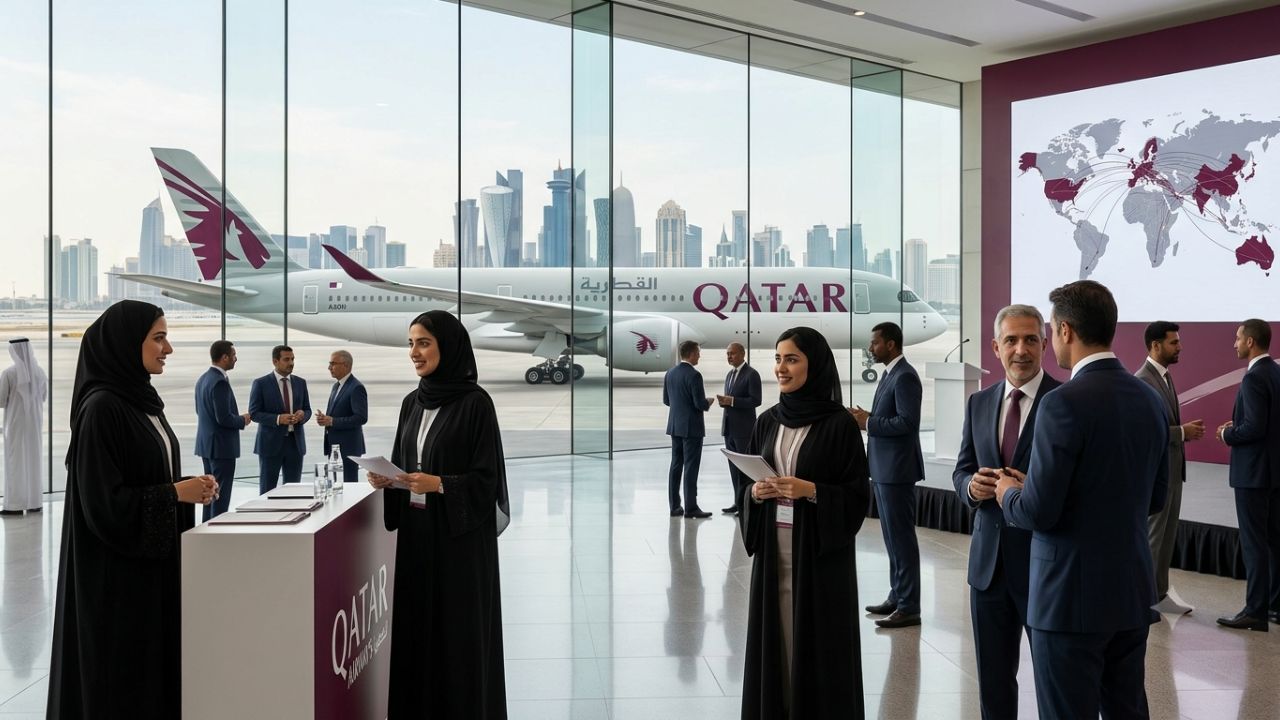
DOHA, Qatar — Global airline leaders, civil aviation authorities, and aerospace executives gathered at the Sheraton Grand Doha Resort and Convention Hotel from November 2 to 4, 2026, for the 59th Annual General Meeting of the Arab Air Carriers’ Organization (AACO), placing international air connectivity, operational resilience, and regional cooperation at the pinnacle of industry strategy. Held under the high patronage of Qatar’s Prime Minister and Minister of Foreign Affairs, Sheikh Mohammed bin Abdulrahman bin Jassim Al-Thani, the assembly brought together more than 200 chief executives, transport delegates, and international aviation stakeholders. With commercial airlines across the Middle East facing profound geopolitical airspace restrictions, chronic aircraft delivery delays from major airframers, and stringent environmental decarbonization mandates, the Doha summit provided an urgent platform to calibrate collective airline diplomacy, strengthen multi-carrier alliances, and protect vital intercontinental air bridges connecting the East and the West.
+----------------------------------------------------------------------------------------------------+ | KEY TAKEAWAYS: 59TH AACO ANNUAL GENERAL MEETING & QATAR AIRWAYS LEADERSHIP | +----------------------------------------------------------------------------------------------------+ | • High-Level Diplomatic Assembly: Convened under the patronage of Qatar's Prime Minister with | | more than 200 airline chief executives and global stakeholders addressing regional aviation. | | • Massive Network Footprint: AACO's 39 member airlines operate 4,604 daily flights serving 502 | | airports across 129 countries, supported by international partners including IAG and Turkish. | | • Geopolitical Airspace Resilience: Leaders addressed severe flight rerouting around Middle East | | conflict zones, fuel burn penalties, and slot congestion through unified airspace coordination. | | • Fleetwide Inflight Connectivity: Qatar Airways spotlighted its deployment of high-speed Starlink | | Wi-Fi across 170 widebody jets, logging 31+ million users and up to 373 daily connected flights. | | • Environmental Accountability: Strong emphasis on IATA Environmental Assessment (IEnvA) Stage 2, | | sustainable aviation fuel (SAF) procurement scale-up, and anti-wildlife trafficking pacts. | | • Supply Chain Headwinds: Arab carriers confronted delayed Boeing 777X and Airbus A350 deliveries | | alongside GTF engine inspection groundings, demanding accelerated manufacturer resolution. | +----------------------------------------------------------------------------------------------------+
====================================================================================================
                        AACO GLOBAL CONNECTIVITY & OPERATIONAL FOOTPRINT
====================================================================================================

      WESTERN HEMISPHERE                   ARAB AVIATION CORE                   EASTERN HEMISPHERE
    (The Americas & Europe)                (GCC & MENA Hubs)                   (Asia & Australasia)
               \                                   |                                   /
                \                                  |                                  /
                 +---------------------------------+---------------------------------+
                                                   |
                                     [ 39 MEMBER AIRLINES ]
                            Operating 4,604 Daily Scheduled Flights
                               Connecting 502 Airports in 129 Nations
                                                   |
                   +-------------------------------+-------------------------------+
                   |                               |                               |
          [ Mega-Hub Network ]            [ Regional Carriers ]          [ Partner Alliances ]
         • Hamad International            • Middle East Airlines         • International Airlines Group
         • Dubai International            • Royal Jordanian              • Turkish Airlines
         • King Abdulaziz Intl            • Saudia / flynas              • Pegasus Airlines
         • Abu Dhabi Zayed Intl           • Kuwait / Oman Air            • AJet / Fly Jinnah
                   |                               |                               |
                   +-------------------------------+-------------------------------+
                                                   |
                                  [ STRATEGIC INDUSTRY PRIORITIES ]
                  • Airspace Rerouting Economics & Corridor Safety Coordination
                  • Fleet Engine Maintenance Cycles & Airframer Delivery Backlogs
                  • Ultra-Broadband Satellite Connectivity (Starlink Wi-Fi Rollout)
                  • Decarbonization Pathways: SAF Procurement & IEnvA Stage 2 Rules
====================================================================================================
Diplomatic and Aviation Architecture: The 59th AACO Assembly in Doha
The convening of the 59th AACO Annual General Meeting in the Qatari capital underscored the indispensable role that commercial aviation plays in regional economic survival, international diplomacy, and global trade. Established in 1965 under the institutional framework of the League of Arab States, the Arab Air Carriers’ Organization has evolved from a nascent regional cooperation forum into one of the aviation world's most formidable commercial blocs. Opening the three-day proceedings, Qatar Airways Group Chief Executive Officer and AGM Chairman Hamad Al-Khater set an uncompromising tone, framing Arab airlines not merely as commercial passenger carriers, but as foundational geopolitical infrastructure connecting humanity across six continents.
Hamad Al-Khater emphasized that the historical strength of Arab civil aviation has always stemmed from its geographical position at the natural crossroads of world commerce. However, that unique geography also exposes regional airlines to acute systemic shocks whenever regional security ruptures. Over the past three years, the Middle East has weathered relentless geopolitical shocks, recurring airspace closures, and regional military tensions that have repeatedly shuttered vital air corridors over the Levant, the Red Sea, and portions of the Persian Gulf. In this volatile environment, uncoordinated airline responses lead to catastrophic operational inefficiencies, stranded passenger flows, and spiraling insurance costs.
AACO Secretary General Abdul Wahab Teffaha reiterated that the Doha assembly was explicitly designed as a pragmatic working engine rather than a ceremonial gathering. Presenting the annual State of the Industry report, Teffaha laid bare the dual reality confronting Arab aviation: extraordinary passenger demand paired with unprecedented structural friction. The presence of international partner carriers, including the International Airlines Group (parent of British Airways, Iberia, Aer Lingus, and Vueling), Turkish Airlines, Pegasus Airlines, AJet, and Pakistan’s Fly Jinnah, signaled that the strategic health of Arab aviation is deeply entwined with European, Central Asian, and South Asian transport networks.
The conference agenda, enriched by presentations from Arab Civil Aviation Organization (ACAO) Director General Khalid Cherkaoui and global economic analysts from Bloomberg, addressed the macroeconomic pressures weighing heavily on airline balance sheets. Despite record passenger yields on long-haul routes connecting Europe to Southeast Asia and Australia, carriers are grappling with volatile jet fuel pricing, currency devaluations in non-oil-producing Arab states, elevated airspace overflight fees, and rising labor costs. The Doha summit served as an operational war room where executives forged multilateral alignment on slot protections, cross-border maintenance cooperation, and harmonized air traffic management procedures.
Navigating Geopolitical Fractures: Airspace Closures and Rerouting Economics
The most pressing tactical challenge debated during the closed-door executive sessions centered on the complex labyrinth of airspace restrictions currently fragmenting the Middle East. For decades, the international operating model of Gulf mega-carriers relied on seamless, straight-line great-circle routing through skies that offered uninterrupted transit between major population centers in the West and booming economies in the East. Today, persistent regional conflicts and diplomatic instability have transformed vast swaths of regional airspace into restricted zones, forcing flight dispatchers into daily routing contortions.
When commercial airspace over conflict corridors faces sudden closure, long-haul passenger flights operating between Europe, the Gulf, and Asia are diverted onto narrow, congested detour routes over northern Egypt, central Saudi Arabia, and southern Turkey. These diversions add between 45 and 90 minutes of flying time to intercontinental sectors, creating a severe operational and financial drag. A Boeing 777-300ER or Airbus A350-1000 burning an additional six to eight metric tons of aviation fuel per diverted rotation incurs tens of thousands of dollars in incremental fuel expenditure, alongside elevated carbon taxation and crew duty-time overruns.
====================================================================================================
                        MIDDLE EAST AIRSPACE DISRUPTION & REROUTING DYNAMICS
====================================================================================================

      STANDARD HISTORIC ROUTING                         CURRENT RESTRICTED DETOUR ROUTING
   (Optimized Great-Circle Track)                       (Circumnavigating Conflict Corridors)

     [Western Europe / UK]                                [Western Europe / UK]
               |                                                    |
               | (Direct Airway Flow)                               v
               v                                      +--> [Southern European Waypoints]
      [Levant / Northern Skies]                       |             |
               |                                      |             v
               | (Direct Great-Circle Corridor)       |    [Northern Egyptian Airspace]
               v                                      |             |
      [Arabian Gulf Mega-Hubs]                        |             v
         (Doha / Dubai / Riyadh)                      |    [Central Saudi Arabian Route]
               |                                      |             |
               v                                      |             v
     [South / Southeast Asia]                         +--> [Arabian Gulf Mega-Hubs]
                                                                    |
   • Transit Time: Base Benchmark                                   v
   • Fuel Burn: Optimal Engine Profile                     [South / Southeast Asia]
   • Fleet Utilization: 16.5 Hrs/Day
   • Airspace Fees: Standard Overflight Rates         • Flight Time: +45 to +90 Mins Added
                                                      • Fuel Penalty: +6 to +8 Metric Tons/Flight
                                                      • Crew Duty Creep & Missed Bank Connections
                                                      • Intense Airway Bottlenecks over Red Sea
====================================================================================================
These extended flight profiles also trigger severe downstream disruptions within hub transfer waves. When an evening arrival from London, Frankfurt, or Paris arrives in Doha or Dubai 60 minutes behind schedule due to airspace circumnavigation, incoming passengers miss tightly scheduled connecting flights bound for Mumbai, Bangkok, or Sydney. To preserve transfer integrity, airlines are forced to hold departing outbound flights, causing delay cascades across their entire global networks and creating massive baggage mishandling spikes at transfer facilities.
During the summit, AACO leaders called for enhanced civil-military air traffic management coordination across member states. Abdul Wahab Teffaha advocated for dynamic airspace sharing, where military control authorities open flexible reserve corridors (conditional routes) during non-operational hours to relieve civilian choke points. By establishing unified real-time data feeds between national air traffic navigation service providers (ANSPs) across Qatar, Saudi Arabia, the UAE, Oman, and Jordan, Arab carriers aim to secure micro-optimizations in flight levels and speed management that can mitigate fuel burn penalties and keep transcontinental passenger connections intact.
The Scale of Arab Air Transport: AACO Network Metrics and Global Alliances
To grasp the geopolitical and economic weight of the Doha assembly, one must examine the immense structural scale of the Arab air transport market. Founded more than six decades ago by a handful of regional flag carriers, AACO now represents 39 member airlines spanning the Maghreb, the Levant, the Nile Basin, and the Arabian Peninsula. In 2025, member carriers collectively operated approximately 4,604 scheduled flights every day, serving 502 commercial airports across 129 countries. This colossal network makes the Arab airline collective one of the single largest consumers of commercial aircraft, aviation fuel, and airport infrastructure on Earth.
====================================================================================================
                       AACO COLLECTIVE OPERATIONAL METRICS (ANNUAL BENCHMARK)
====================================================================================================

  OPERATIONAL METRIC                     ANNUAL VOLUME / SCALE            GLOBAL EQUIVALENT
----------------------------------------------------------------------------------------------------
  Active Member Airlines                 39 Commercial Operators          Spans 22 League Member States
  Daily Scheduled Flights                4,604 Flights / Day              ~1 Flight Every 19 Seconds
  Global Airport Destinations            502 Commercial Hubs              Covers 129 Nations Worldwide
  Associated Partner Airlines            5 Global Carriers / Groups       IAG, Turkish, Pegasus, AJet, Fly Jinnah
  Passenger Traffic Share (Middle East)  >78% Scheduled Seat Kilometers   Dominant Transit Facilitator
  Widebody Long-Haul Fleet Share         ~32% of Total Active Fleet       Highest Global Widebody Ratio
  Direct & Indirect Economic Output      >$185 Billion Annually           Drives 9.2% of Regional Non-Oil GDP
====================================================================================================
The organization's membership reflects extraordinary structural diversity. At one end of the spectrum stand global mega-carriers such as Qatar Airways, Emirates, and Saudia, which operate massive fleets of twin-aisle widebody aircraft designed to channel millions of intercontinental transfer passengers through state-of-the-art hub airports. Alongside these giants operate high-growth low-cost carriers like flynas, Air Arabia, and flydubai, which have democratized regional air travel and stimulated point-to-point tourism across secondary cities. In parallel, historic flag carriers such as EgyptAir, Royal Air Maroc, Middle East Airlines, and Royal Jordanian provide vital national sovereign connectivity, linking diaspora populations and trade delegations to their home territories despite challenging local economic conditions.
The presence of five high-profile international partner airlines at the 59th AGM illustrates the growing trend of inter-regional alliance building. The strategic inclusion of International Airlines Group (IAG) is particularly noteworthy. Qatar Airways maintains a substantial 25.1 percent equity holding in IAG, and the two aviation giants operate an extensive joint business agreement encompassing code-shares, shared cargo space, and aligned frequent flyer loyalty currencies (Avios). By integrating IAG's transatlantic and European distribution with Qatar Airways’ extensive network across Africa, the Indian Subcontinent, and Australasia, the partnership commands a formidable market position. Similar strategic synergies exist with Turkish Airlines and Pegasus Airlines, whose vast networks bridging Europe and Central Asia complement AACO member operations across the Middle East.
Fleet Reliability and Supply Chain Bottlenecks: Engines, Deliveries, and Maintenance
Beneath the diplomatic communiqués and visionary declarations at the Doha summit lay intense frustration regarding the state of global aerospace manufacturing. Arab carriers, which hold hundreds of billions of dollars in outstanding aircraft orders, are facing severe delivery bottlenecks from the world's commercial duopoly, Boeing and Airbus. These delays are severely disrupting the fleet renewal plans and growth trajectories of carriers across the region.
Boeing’s ongoing manufacturing difficulties, regulatory scrutiny, and protracted certification delays for the Boeing 777X widebody jet formed a central focus of airline discussions. Qatar Airways, Emirates, and other Gulf carriers were originally scheduled to introduce the 777-9 into commercial service in 2020. With deliveries pushed back well into late 2026 and 2027, airlines have been forced to implement expensive life-extension programs for their aging Boeing 777-300ER and Airbus A330 fleets. These extended service lives require heavy maintenance overhauls, expensive interior retrofits, and increased spare-parts inventories, simultaneously inflating operational costs and increasing fuel burn relative to next-generation airframes.
Airbus has faced its own industrial bottlenecks, struggling to ramp up production of the A350 widebody family and the bestselling A321neo narrowbody line due to chronic shortages of structural fasteners, precision titanium components, and aircraft cabin seating mechanisms. In parallel, the commercial airline industry continues to suffer from widespread groundings tied to the Pratt & Whitney PW1100G geared turbofan (GTF) powdered-metal inspection program. Several regional carriers in the Middle East and North Africa have been forced to park significant percentages of their modern A320neo fleets awaiting unscheduled engine removals and ultrasonic inspections, leaving high-value assets stranded on airport aprons.
To combat these supply chain vulnerabilities, AACO delegates used the closed-door summit sessions to explore regional self-reliance. Discussions focused on pooling engine spare parts across member airlines, expanding localized Maintenance, Repair, and Overhaul (MRO) facilities, and sharing aircraft leasing resources. By coordinating heavy maintenance schedules between state-of-the-art facilities like Qatar Airways Maintenance in Doha, Saudia Aerospace Engineering Industries (SAEI) in Jeddah, and Sanad in Abu Dhabi, Arab carriers seek to insulate their flight schedules from distant aerospace supplier failures.
====================================================================================================
               AEROSPACE SUPPLY CHAIN BOTTLENECKS CONFRONTING ARAB CARRIERS
====================================================================================================

  MANUFACTURER / PROGRAM         PRIMARY INDUSTRY BOTTLENECK             IMPACT ON ARAB AIRLINES
----------------------------------------------------------------------------------------------------
  Boeing 777-9 / 777X            Certification Delays & Delivery Slips   Forces 777-300ER Life Extensions;
                                 Pushed from 2020 to Late 2026/2027      Multi-Million Cabin Retrofits Needed

  Airbus A350-900 / 1000         Supply Chain & Cabin Fitting Lag;       Restricts Long-Haul Capacity Growth;
                                 Shortages of Seats & Avionics Wiring    Delays Transpacific Route Launches

  Pratt & Whitney GTF Engines    Powdered-Metal Contamination;           Up to 15% of Regional A320neo Fleets
                                 Protracted Ultrasonic Inspection Cycle  Grounded Awaiting Replacement Cores

  CFM LEAP-1A / 1B Engines       Component Durability in Harsh Climates; High Sand Ingestion Drives Rapid
                                 High-Temperature Hot-Section Wear       Turbine Degradation & Frequent Overhauls
====================================================================================================
Qatar Airways and Hamad International Airport: The Global Mega-Hub Ecosystem
As host carrier for the 59th AGM, Qatar Airways utilized the summit to demonstrate how an integrated airline-airport ecosystem can drive national prestige, foreign direct investment, and global passenger loyalty. Under the leadership of Group CEO Hamad Al-Khater, the state-owned flag carrier has cemented its status as one of the world's elite intercontinental transport providers. Operating out of Hamad International Airport (HIA), Qatar Airways connects travelers to more than 170 destinations across six continents during the winter 2026/2027 operating season.
The operational architecture of Hamad International Airport is engineered to process massive passenger surges with microscopic precision. Ranked consistently among the world's premier airports by Skytrax, HIA combines cutting-edge biometrics, automated transfer baggage sorting systems, and expansive luxury lounges to handle tens of millions of transit travelers annually. The airport’s indoor tropical garden, "The Orchard"—a 6,000-square-meter botanical space crowned by a column-free glass canopy—exemplifies the shift in airport design from utilitarian transit hubs to lifestyle destinations that encourage early arrivals and extended transfer dwell times.
====================================================================================================
                     QATAR AIRWAYS OPERATIONAL METRICS & INDUSTRY HONORS
====================================================================================================

  OPERATIONAL DIMENSION                 CURRENT BENCHMARK / STATUS       INDUSTRY RECOGNITION
----------------------------------------------------------------------------------------------------
  Global Route Network                  170+ Destinations in Winter      Serves All 6 Inhabited Continents
  Operational Reliability               Platinum Performance Award       Cirium Global On-Time Benchmark (2025)
  Premium Passenger Experience          World's Best Business Class      Skytrax Award for Qsuite Architecture
  Inflight Broadband Connectivity       Fleetwide Starlink Ultra-WiFi    Skytrax World's Best Onboard Wi-Fi
  Environmental Stewardship             IEnvA Stage 2 Certified         Highest IATA Environmental Accreditation
  Biodiversity Protection               United for Wildlife Signatory    Zero-Tolerance Anti-Trafficking Shield
  Transfer Baggage Performance          99.8% On-Time Re-induction Rate  Automated High-Speed RFID Sortation
====================================================================================================
Operational discipline has proven central to Qatar Airways’ commercial success. In an era when post-pandemic aviation was plagued by widespread baggage loss and flight cancellations across European and North American hubs, Qatar Airways earned the Cirium Platinum Award for global operational performance in 2025. This accolade recognized the airline's industry-leading on-time flight departure performance, complex network flight-dispatch recovery mechanisms, and ultra-low mishandled baggage rates.
On the passenger comfort front, the airline’s signature business class product, the Qsuite, continues to capture international design accolades, including recurring Skytrax honors for World’s Best Business Class. Featuring double beds, customizable private quad suites with sliding privacy doors, and on-demand fine dining, the product has set the benchmark against which all global premium airline products are judged. By offering a true first-class experience at a business-class price point, Qatar Airways has captured a commanding share of high-yield corporate travelers and affluent leisure voyagers shuttling between European financial hubs, Gulf capitals, and Asia-Pacific commercial centers.
The Inflight Connectivity Leap: Fleetwide Starlink Deployment and Passenger Experience
One of the most consequential technological achievements highlighted by Qatar Airways during the Doha summit was the rapid, fleet-wide deployment of SpaceX’s Starlink satellite internet constellation across its widebody aircraft. While legacy inflight connectivity has historically suffered from sluggish throughput, high latency, dropouts over polar or oceanic routes, and punitive pricing models, Qatar Airways' deployment of low-Earth-orbit (LEO) satellite broadband represents a quantum leap in passenger experience.
The airline confirmed that it has equipped nearly 170 widebody aircraft—including its core fleets of Boeing 777-300ER, Boeing 787-9 Dreamliner, and Airbus A350 aircraft—with custom-engineered Starlink phased-array antenna systems. Unlike traditional geostationary (GEO) satellites orbiting 35,786 kilometers above the equator, Starlink’s mega-constellation operates in low-Earth orbit at altitudes between 550 and 600 kilometers. This architectural proximity reduces round-trip latency from more than 600 milliseconds down to less than 30 milliseconds, while boosting bandwidth to as much as 250 megabits per second per aircraft.
====================================================================================================
                INFLIGHT CONNECTIVITY ARCHITECTURE: LEGACY GEO VS STARLINK LEO
====================================================================================================

  SPECIFICATION                   LEGACY GEO SATELLITE SYSTEMS         QATAR AIRWAYS STARLINK (LEO)
----------------------------------------------------------------------------------------------------
  Orbital Altitude                ~35,786 Kilometers (Equatorial)      550 to 600 Kilometers (Constellation)
  Round-Trip Latency              600 - 900 Milliseconds               20 - 40 Milliseconds (Near Fiber-Speed)
  Available Bandwidth / Plane     5 - 20 Mbps Shared Fleetwide         Up to 250 Mbps Dedicated Throughput
  Streaming Capabilities          Severely Throttled / Blocked         Uncompressed 4K Video, Gaming, VPN
  Polar & Oceanic Coverage        Dead Zones Beyond 70° Latitude       Seamless Global Coverage (Inter-Satellite)
  Passenger Cost Model            Paid Tiered Data Passes ($10-$30)    100% Complimentary Gate-to-Gate
  Active Passenger Adoption       >31 Million Users to Date            Up to 373 Starlink Flights Daily
====================================================================================================
The scale of passenger adoption has shattered previous industry records. More than 31 million travelers have already logged onto the high-speed service aboard Qatar Airways flights, with the airline operating up to 373 Starlink-enabled departures every single day. Passengers enjoy seamless, complimentary, gate-to-gate broadband access capable of supporting bandwidth-intensive applications that were previously unthinkable at 38,000 feet, including uncompressed 4K video streaming, cloud-based gaming, multi-party Zoom video conferencing, and live corporate VPN work sessions.
This technological coup earned Qatar Airways the Skytrax award for World’s Best Onboard Wi-Fi and has reshaped passenger expectations across the entire Arab aviation landscape. Facing fierce customer demand, competing regional carriers are accelerating their own satellite connectivity programs. During the AACO summit, multiple airline executives acknowledged that seamless, complimentary broadband is no longer an optional luxury perk, but an indispensable baseline expectation for modern international travelers.
Sustainable Aviation Realities: Decarbonization Mandates, SAF, and IEnvA Certification
The future of Arab commercial aviation is irrevocably bound to its environmental trajectory. Throughout the working sessions of the 59th AGM, airline leaders wrestled with the daunting challenge of achieving net-zero carbon emissions by 2050 while sustaining double-digit fleet and passenger growth. With the European Union enforcing strict ReFuelEU Aviation blending mandates, the International Civil Aviation Organization’s (ICAO) CORSIA offset scheme entering mandatory phases, and corporate travel managers demanding verifiable Scope 3 emissions reductions, sustainability dominated conference deliberations.
Qatar Airways presented its comprehensive environmental framework as a benchmark for the region. The carrier operates under the highest level of the International Air Transport Association’s Environmental Assessment program (IEnvA Stage 2). This accreditation requires rigorous third-party auditing of an airline's entire operational footprint, encompassing flight operations, maintenance hangars, ground support vehicle electrification, lineside recycling, and catering waste diversion. In addition, the airline reaffirmed its commitment to the Buckingham Palace Declaration, maintaining a zero-tolerance policy against illegal wildlife trafficking by training thousands of flight crew and ground staff to intercept illicit animal smuggling through international airport checkpoints.
====================================================================================================
                     ARAB AVIATION DECARBONIZATION CHALLENGES & PATHWAYS
====================================================================================================

  DECARBONIZATION LEVER         CURRENT REGIONAL STATUS                 2030 STRATEGIC TARGET
----------------------------------------------------------------------------------------------------
  Sustainable Aviation Fuel     <0.2% of Total Fuel Uptake;             10% Regional SAF Blending
  (SAF) Commercial Volume       Limited Local Refining Infrastructure   Mandated by International Regulations

  Fleet Modernization           Average Fleet Age: ~6.8 Years;          100% Transition to New-Gen Powerplants
                                Heavy Deployment of A350/787/A321neo    (GEnx, Trent XWB, CFM LEAP)

  Airspace Efficiency           High Route Dispersion;                  Seamless Civil-Military Flow Control;
                                Rerouting Adds 4-8% Extra Carbon        Free-Route Airspace Implementation

  Ground Fleet Electrification  ~35% Electric Ramp Equipment            85% Zero-Emission Ground Fleets Across
                                at Major GCC Mega-Hubs                  Doha, Dubai, Jeddah, and Riyadh
====================================================================================================
However, the structural availability of Sustainable Aviation Fuel (SAF) remains the industry’s greatest hurdle. Despite being the world's epicenter of conventional petroleum production, the Middle East currently produces less than 0.2 percent of the world’s commercially certified SAF. Arab carriers face severe supply shortages when attempting to procure drop-in biofuels produced from used cooking oils, agricultural residues, or synthetic e-fuels.
AACO Secretary General Abdul Wahab Teffaha called upon Gulf sovereign wealth funds and national energy conglomerates—including QatarEnergy, Saudi Aramco, and ADNOC—to rapidly scale capital investments into domestic SAF refining infrastructure. With the Gulf region possessing abundant solar energy resources, massive capital reserves, and advanced petrochemical expertise, speakers argued that the Middle East is uniquely positioned to become the premier global production hub for synthetic e-kerosene and green hydrogen. Developing a domestic SAF refining industry is essential not only to insulate regional airlines from European penalty tariffs, but also to guarantee that Arab carriers remain competitive in a decarbonized global economy.
Technical Benchmark: Operational Profiles of Leading Arab Mega-Carriers
To illustrate the strategic dynamics shaping the Arab Air Carriers’ Organization, the following comparative benchmark examines the operational scale, fleet configurations, digital initiatives, and strategic focuses of four leading member carriers operating across the region.
| Operating Carrier | Primary Hub Airport | Active Fleet Profile | Network Scale | Digital & Product Highlight | Primary Strategic Challenge |
|---|---|---|---|---|---|
| Qatar Airways | Hamad International Airport (DOH) | 260+ Aircraft; A350-900/1000, B777, B787, A380 |
170+ Global Destinations across 6 Continents | Fleetwide Starlink LEO Broadband; Award-winning Qsuite | Airspace rerouting around regional conflict zones; delayed B777X deliveries |
| Emirates | Dubai International Airport (DXB) | 260+ Aircraft; A380-800, B777-300ER, A350-900 |
145+ Global Destinations worldwide | Premium Economy rollouts; Inmarsat GX & LEO trials | Transitioning hub operations to massive Al Maktoum International (DWC) |
| Saudia | King Abdulaziz Airport (JED) / Riyadh | 150+ Aircraft; B787-9/10, B777, A320, A321neo |
100+ Destinations; Religious & Domestic focus |
Digital guest journey apps; Saudi Vision 2030 tourism alignment | Managing market competition with incoming flag carrier Riyadh Air |
| Middle East Airlines | Beirut–Rafic Hariri Airport (BEY) | 22 Aircraft; A321neo, A330-200, A321XLR orders |
32 Regional and European routes | Local fleet resilience; Sovereign link preservation | Acute geopolitical threat; War-risk insurance spikes; Operating under fire |
This operational diversity highlights the resilience embedded within the AACO collective. While Gulf mega-carriers drive ultra-long-haul intercontinental transit, regional flag carriers like Middle East Airlines demonstrate extraordinary courage and resourcefulness, maintaining vital national lifelines under severe economic duress and direct geopolitical threats.
Strategic Implications for Global Travelers and Corporate Air Corridors
The executive resolutions adopted at the 59th AACO AGM in Doha will directly influence the cost, convenience, and comfort of international air travel over the coming years. For global travelers, corporate travel managers, and leisure explorers who traverse the skies between Europe, the Middle East, Asia, and the Americas, the summit established several key operational takeaways:
- Long-Haul Flight Times and Buffer Padding: Due to persistent geopolitical rerouting around Middle Eastern conflict zones, passengers should expect scheduled flight durations on Europe-Gulf-Asia corridors to remain lengthened by 45 to 90 minutes. Corporate planners must ensure connection windows at hub airports like Hamad International, Dubai, and Riyadh maintain minimum transfer cushions of at least 75 to 90 minutes to guard against missed flights.
- Accelerated Inflight Connectivity Expectations: With Qatar Airways setting the global standard through its complimentary, high-speed Starlink Wi-Fi across nearly 170 widebody jets, travelers will experience a rapid transformation in remote work capabilities. Expect competing international carriers to eliminate restrictive data caps and paid Wi-Fi models in a bid to retain high-yield business travelers.
- Fare Dynamics and Environmental Levies: While high demand continues to support healthy flight schedules, travelers will face upward pressure on long-haul airfares. Airlines are absorbing elevated insurance premiums, higher airspace diversion fuel costs, and rising compliance expenses tied to mandatory European and international SAF blending targets.
- Fleet Experience Variations: Because aircraft delivery delays will force airlines to keep older Boeing 777-300ER and Airbus A330 aircraft in service longer than originally planned, passengers may encounter variations in cabin interiors across different routes. Airlines are investing heavily in interior cabin refreshes to ensure legacy jets offer modern seating comfort until next-generation 777-9 and A350-1000 deliveries materialize.
- Seamless Multilateral Partnerships: The deepening alliances between AACO members and external partner groups like IAG (British Airways) and Turkish Airlines will expand code-share availability and frequent flyer reciprocity, enabling travelers to earn and redeem miles seamlessly across an unprecedented global network.
The 59th Annual General Meeting of the Arab Air Carriers’ Organization demonstrated that Arab civil aviation has achieved a level of operational maturity capable of withstanding acute geopolitical shocks. Guided by the visionary investments of host carrier Qatar Airways and the collective diplomacy of AACO's 39 member airlines, the region continues to prove that even amid unprecedented adversity, the global skies remain open, interconnected, and resilient.
Related Travel Guides
- UK Restores Hastings Railway Services After Nine-Day Grove Hill Tunnel Overhaul
- Amtrak Expands Thanksgiving Train Services Across the United States for Record 2026 Travel Surge
- Southern France Rail Disruption: Floods Impact Marseille and Regional Connections
- Five Magical Train Journeys Across the United Kingdom Celebrating 25 Years of Screen Heritage
This article is for informational purposes. Flight routes, passenger regulations, visa rules, and transit advisories are subject to change by airlines and aviation authorities. Readers are advised to verify schedules and travel documentation with relevant carriers and border agencies before departure.
Related Stories
Qatar Airways Launches Landmark Doha to Bogotá and Caracas Flights: Boeing 777-200LR Unlocks South American Corridors

Qatar Airways Ends Male Cabin Crew Beard Ban: Doha Grooming Standards & Travel Guide 2026