
Malta Travel Takes Global Stage as WTTC Summit 2026 Brings Tourism Leaders to Valletta
Valletta hosts the 2026 WTTC Global Summit from October 7–9 at the Mediterranean Conference Centre, convening 1,000 global travel leaders under the theme FUTU[RE]SET.

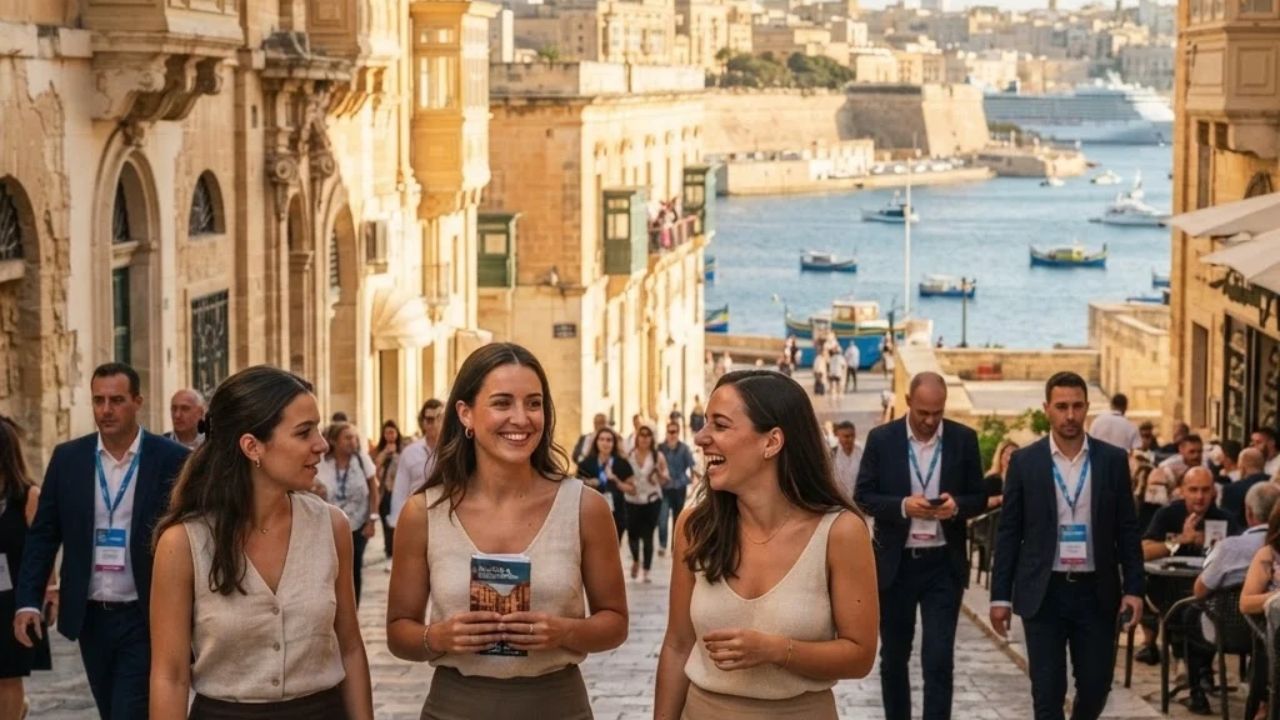
Image generated with AI
Occupying a fortified limestone promontory barely one kilometer long with fewer than 6,000 permanent residents, Valletta is preparing to host the highest concentration of global travel decision-makers inside a hospital built by knights in 1574. From 7 to 9 October 2026, the historic capital of Malta will welcome the prestigious World Travel & Tourism Council (WTTC) Global Summit to the Mediterranean Conference Centre. Convening more than 1,000 delegates representing over 100 countries—including roughly 200 travel and tourism chief executives, cabinet ministers, and institutional investors—the assembly positions this sun-bleached archipelago at the very epicenter of worldwide discussions regarding the future of international movement.
The "FUTU[RE]SET" Milestone at the Mediterranean Conference Centre
The arrival of the WTTC summit marks a definitive evolution in Malta’s travel identity. Long perceived primarily as a warm-weather seaside escape, the nation is actively cementing its status as an elite European center for high-level business events, heritage diplomacy, and sustainable destination governance. Organized under the theme “FUTU[RE]SET: Shaping the Future of Travel & Tourism”, the three-day convention addresses systemic global challenges, from the integration of artificial intelligence and digital traveler identification to aviation decarbonization and climate resilience across island economies.
The high-caliber speaker roster underscores the summit’s strategic importance:
- José María Aznar: The former Prime Minister of Spain brings extensive experience in macroeconomic policy and European destination competitiveness, leading discussions on navigating geopolitical shifts and fostering international collaboration.
- Nick Adams: The United States Tourism Minister headlines sessions exploring public-private investment frameworks, workforce expansion, and policy tools to streamline international visitor transit.
- Global Industry Executives: Approximately 200 chief executives from premier airlines, global hotel brands, cruise operators, and financial institutions will address long-term capital allocation and sustainable destination design.
By convening within the Sacra Infermeria—the historic Great Hall of the Knights of St. John, now the Mediterranean Conference Centre—Malta demonstrates how ancient municipal architecture can seamlessly support world-class technological infrastructure. Supported by nationwide development strategies curated alongside Visit Malta, the event showcases the country’s capacity to host complex diplomatic gatherings while steering international tourism toward a high-yield, resilient future.
What Makes Valletta and the Maltese Archipelago Different
Valletta is not merely a political backdrop; it is an architectural fortress of honey-colored globigerina limestone that stands as one of the densest historic concentrations in the world, inscribed on the register of the UNESCO World Heritage Centre. Commissioned by Grand Master Jean de Valette following the Great Siege of 1565, the city was conceived as a fortified sanctuary for noble crusaders, laid out on a planned grid that funnels coastal sea breezes through narrow canyon-like streets. Within its bastions stand St John’s Co-Cathedral, home to Caravaggio’s masterpieces, and Fort St Elmo, guarding the entrance to the deep waters of Grand Harbour.
Beyond the capital’s ramparts, the archipelago unfolds across distinct cultural pockets:
- Mdina, the "Silent City": Perched high on an inland plateau, this former Roman and medieval capital retains a hushed, contemplative atmosphere within its winding stone alleys and noble palazzo courtyards, offering panoramic views across the island's terraced fields to the sea.
- The Island of Gozo: Reached by ferry across the Gozo Channel, Malta's sister island presents a slower Mediterranean pace, defined by dramatic coastal bluffs, agricultural valleys, and baroque parish churches towering over quiet village squares.
- Coastal Sea Caverns and Diving Reefs: Along Malta's southern shoreline, sites like the Blue Grotto display crystalline sea caves carved by millennia of waves, drawing scuba divers to explore underwater shipwrecks, drop-offs, and vibrant Mediterranean marine life.
- Layered Culinary Traditions: Maltese gastronomy mirrors centuries of maritime crossroads, blending Sicilian, Provençal, and North African flavors in dishes such as slow-braised rabbit (fenkata), savory pastizzi pastries filled with fresh ricotta or mushy peas, and rustic ftira sourdough flatbreads baked in wood-fired village ovens.
Visitor Insider Tips
Experiencing Malta like a seasoned traveler requires understanding the local rhythm and mastering the island's unique transit geography.
- Avoiding Crowds and Timing Your Explorations: Valletta experiences heavy cruise ship foot traffic between 10:00 AM and 3:30 PM. For an authentic encounter, explore the capital between 7:30 AM and 9:30 AM, when locals gather in traditional corner pastizzerias, or after 6:00 PM, when limestone facades glow amber in the setting sun and outdoor wine bars spill out onto steep stone staircases along Saint Ursula Street. In Mdina, visit at dusk when day-trip buses depart, leaving the silent illuminated alleys to echoing footsteps.
- Maritime Transit Hacks: Avoid gridlocked coastal roads around Msida and Gzira by utilizing public harbor ferries. Fast catamaran ferries operate every 15 minutes between Sliema and Valletta’s Marsamxett harbor, as well as between the Three Cities (Vittoriosa/Birgu) and Lascaris Wharf below the Upper Barrakka Gardens. The panoramic outdoor lift connects the wharf directly to central Valletta in seconds. For Gozo, skip slow cargo ferries and take the passenger-only high-speed ferry departing directly from Valletta's Grand Harbour to Mgarr Port.
- Local Etiquette and Cultural Respect: While coastal resort wear is common near beach bays, modest attire covering shoulders and knees is mandatory when entering churches, including St John’s Co-Cathedral and village parish sanctuaries. Stiletto heels are impractical on Valletta’s polished limestone pavements and steep pedestrian stairways; sturdy leather walking shoes or rubber-soled flats are essential.
- Authentic Neighborhood Stays and Dining: Instead of generic high-rise hotels in St. Julian's, base yourself in a restored 17th-century townhouse in Valletta or across the harbor in Birgu (Vittoriosa). Dine where locals eat: seek out family-run village band clubs (każini) in Naxxar or Rabat for hearty plates of rabbit stew, fresh lampuki (dorado fish) during autumn migration, and warm imqaret date pastries paired with bitter-orange Kinnie soda.
Cultural and Environmental Context
Hosting the WTTC summit highlights Malta’s ongoing transition from mass seasonal tourism toward higher-value, sustainable visitation. As the most densely populated nation in the European Union, the Maltese archipelago faces acute environmental limits. With virtually no freshwater rivers, the country relies on reverse-osmosis desalination plants powered by electric grids, while municipal infrastructure must accommodate millions of seasonal tourists within a fragile geographic footprint.
The 2026 summit serves as a live testing ground for balancing visitor volume with heritage preservation. By targeting high-yield cultural travelers, academic symposiums, and year-round business delegates, Malta reduces seasonal summer pressure on coastal waters and fragile karst limestone formations.
Concurrently, tourism revenue increasingly supports urban conservation, funding the restoration of historic fortifications, protecting maritime bastions from salt erosion, and reviving traditional crafts like Gozitan lace making and limestone carving. Malta’s global showcase proves that small island nations can protect ancient heritage and community integrity while guiding the international travel sector toward responsible, enduring growth.
FAQ: Visiting Valletta 2026
When does the WTTC Global Summit take place in Valletta? The 2026 WTTC Global Summit will be hosted from 7 to 9 October 2026 at the historic Mediterranean Conference Centre in Valletta.
What is the best way to travel from Malta Airport to Valletta? Take the express TD2 or X4 public bus from the arrivals terminal directly to the Valletta bus terminus, or take an authorized white taxi or ride-hailing cab for a 15-minute journey.
Do visitors need a visa to enter Malta? Malta is an EU Schengen member. Travelers from the EU, UK, US, Canada, and Australia do not need a visa for tourist stays up to 90 days, though valid passports are required.
Can I visit Gozo as a day excursion from Valletta? Yes, high-speed passenger catamarans run daily from Grand Harbour in Valletta directly to Mgarr Port in Gozo, completing the crossing in approximately 45 minutes.
Valletta’s sun-drenched limestone ramparts stand as proof that enduring cultural heritage and forward-looking hospitality can build a resilient global future.
Related Travel Guides
Disclaimer
This article is for informational and educational purposes only. It does not constitute legal, financial, or professional advice. While we strive to provide accurate and up-to-date information, travel policies, regulations, and conditions change rapidly. Always verify information with official sources before making travel decisions. Nomad Lawyer makes no representations about the accuracy, reliability, completeness, or suitability of the information provided. Readers should consult qualified professionals for advice specific to their circumstances. The views expressed in this article are those of the author and do not necessarily reflect the views of Nomad Lawyer.
Preeti Gunjan
Contributor & Community Manager
A passionate traveller and community builder. Preeti helps grow the Nomad Lawyer community, fostering engagement and bringing the reader experience to life.
Learn more about our team →