
How Did This Million Euro Abbey Investment Rewrite The Future Of Luxury Travel In Umbria, Find Out Now
How Did This Million Euro Abbey Investment Rewrite The Future Of Luxury Travel In Umbria, Find Out Now

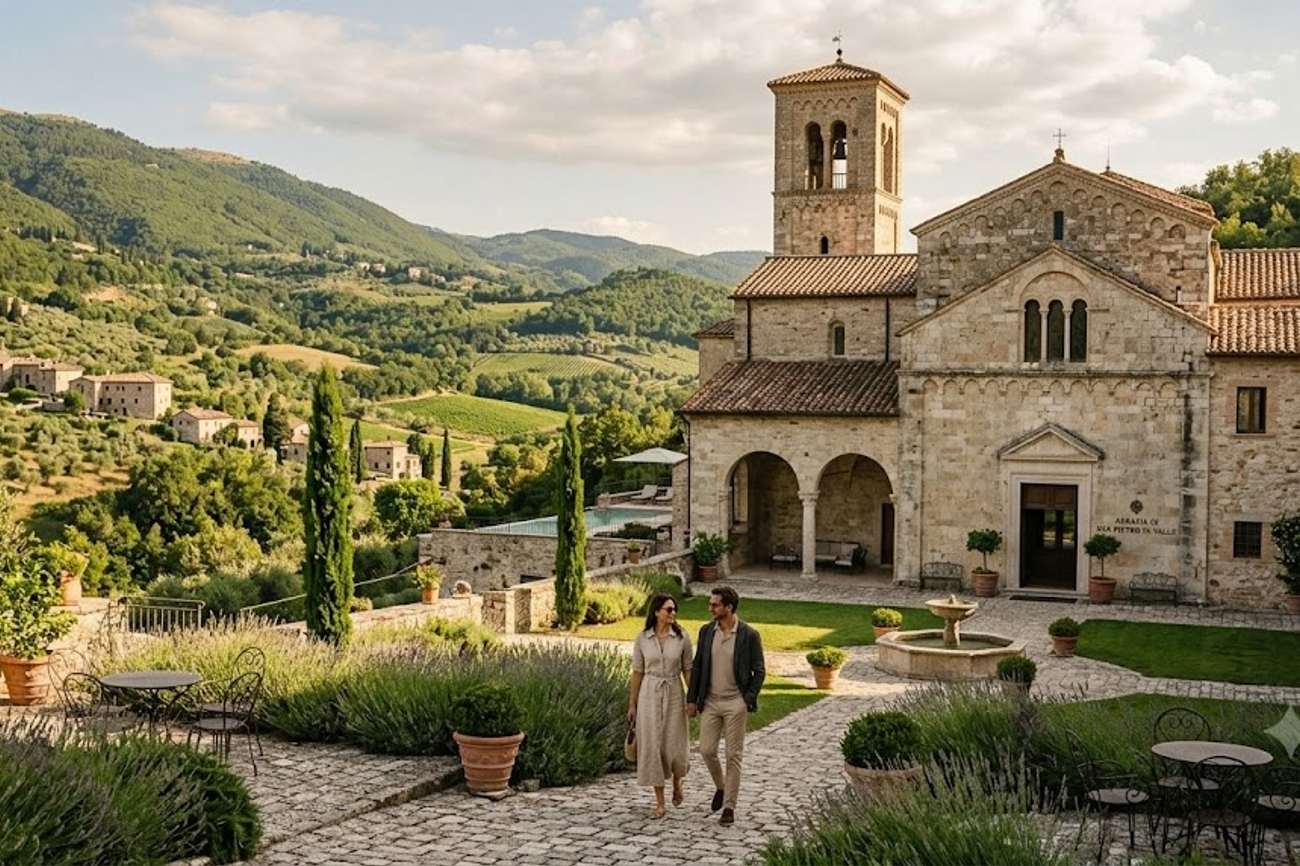
Image generated by AI
[Orvieto, September 14, 2026] — A massive €43 million investment is transforming La Badia, a historic Benedictine abbey in Umbria, into an ultra-exclusive luxury retreat. The project marks a strategic shift in Italian high-end hospitality, moving away from high-occupancy models toward hyper-personalized, low-density tourism.
The redevelopment focuses on a sprawling estate located just outside Orvieto, which includes a rare dodecagonal tower and a Romanesque church situated on nearly 30 hectares of forest and undeveloped land. Originally functioning as a standard four-star hotel, the property is being completely overhauled to serve as a sanctuary for elite global travelers seeking seclusion and historical authenticity.
The Catalyst for Restoration
The project is driven by a growing global trend where European religious landmarks are repurposed into exclusive retreats to prevent structural decay and avoid the pitfalls of mass commercialization. By injecting €43 million into the acquisition and restoration of the site—which dates back to between the 6th and 12th centuries—the developers are positioning the abbey as a custodian of medieval craftsmanship.
This investment is designed to protect the site's spiritual and architectural heritage while upgrading it to meet the demands of the modern luxury market. The project aims to divert affluent tourists away from overcrowded hubs like Rome or Florence, instead directing them toward the "slow travel" experiences offered by the Umbria region and surrounding central Italian villages.
Impacted Markets and Facilities
The transformation involves a significant reduction in guest capacity to prioritize privacy and individualized service. The following upgrades are currently underway:
- Accommodations: The room count is being limited to precisely 24 exclusive rooms.
- Wellness & Recreation: Installation of a modernized outdoor swimming pool, a professional tennis court, and a wellness spa with dedicated treatment cabins.
- Amenities: A high-end retail boutique and specialized gastronomic dining experiences.
- Landscaping: Comprehensive revitalization of the estate's gardens and surrounding 30 hectares of woodland.
What This Means for Travelers
For the high-net-worth traveler, this shift signifies a move toward "invisible luxury." Rather than staying in large-scale resorts, guests will experience a hyper-customized itinerary in a secluded environment. The reduction in room count means a higher staff-to-guest ratio and a focus on absolute privacy.
For the general tourist, this development signals a broader trend in Italian tourism. The focus on secondary destinations suggests that luxury infrastructure is expanding into rural areas, potentially easing the pressure on the Ministry of Tourism regulated sites in major cities. Travelers booking in the Umbria region can expect an increase in high-end, sustainable options that emphasize cultural immersion over traditional sightseeing.
Green Infrastructure and Sustainability
A critical component of the €43 million budget is a dedicated €5.2 million allocation for eco-friendly infrastructural upgrades. The goal is to integrate 21st-century green technology into a medieval structure without altering its visual identity.
The management team is implementing:
- Geothermal Heating: State-of-the-art systems to regulate temperature across the ancient stone complex.
- Solar Energy: Photovoltaic arrays installed discreetly on non-historic outbuildings to avoid spoiling the skyline.
- Emission Targets: These upgrades are projected to result in a 65% reduction in the property's total carbon emissions.
This approach serves as a blueprint for the European Union Aviation Safety Agency (EASA) and other regulatory bodies monitoring the environmental impact of tourism infrastructure, proving that heritage preservation and sustainable engineering can coexist.
Future Outlook and Economic Ripple Effects
Market analysts expect the opening of the revitalized La Badia to catalyze secondary economic growth across central Italy. By attracting a demographic of "mindful explorers," the project is expected to increase foot traffic and spending in nearby small villages, promoting a more equitable distribution of tourism revenue.
The project establishes a new "gold standard" for ethical tourism, where the commercial viability of a luxury hotel is tied directly to the preservation of a historical monument. As the global travel industry pivots toward sustainability, this model of preservation-led hospitality is likely to be replicated across other dormant religious and historical sites in Europe.
FAQ: La Badia Luxury Retreat 2026
How many rooms will the new La Badia hotel have? The estate is being converted into an intimate sanctuary featuring exactly 24 exclusive rooms, a deliberate reduction from its previous four-star capacity to ensure maximum guest privacy.
What are the sustainable features of the restoration? The project includes a €5.2 million investment in green tech, utilizing geothermal heating and hidden solar arrays to achieve a 65% reduction in carbon emissions.
Where is La Badia located? The property is situated just outside the city of Orvieto in the Umbria region of Italy, spanning nearly 30 hectares of woods and historical land.
What amenities will be available to guests? Guests will have access to a wellness spa, a modernized outdoor pool, a professional tennis court, a retail boutique, and high-end gastronomic dining.
The era of the mega-resort is fading; the age of the architectural sanctuary has arrived.
Tags: La Badia, Orvieto, Umbria Luxury Travel 2026, Benedictine Abbey Restoration, Italy Sustainable Tourism, Ultra-Exclusive Hospitality
Related Travel Guides
Disclaimer
This article is for informational and educational purposes only. It does not constitute legal, financial, or professional advice. While we strive to provide accurate and up-to-date information, travel policies, regulations, and conditions change rapidly. Always verify information with official sources before making travel decisions. Nomad Lawyer makes no representations about the accuracy, reliability, completeness, or suitability of the information provided. Readers should consult qualified professionals for advice specific to their circumstances. The views expressed in this article are those of the author and do not necessarily reflect the views of Nomad Lawyer.
Raushan Kumar
Founder & Lead Developer
Full-stack developer with 11+ years of experience and a passionate traveller. Raushan built Nomad Lawyer from the ground up with a vision to create the best travel and law experience on the web.
Learn more about our team →