
Seoul Outpaces Paris, Bangkok and More Global Cities Where Renting Could Cost Far Less Than Buying a Home
Seoul Outpaces Paris, Bangkok and More Global Cities Where Renting Could Cost Far Less Than Buying a Home

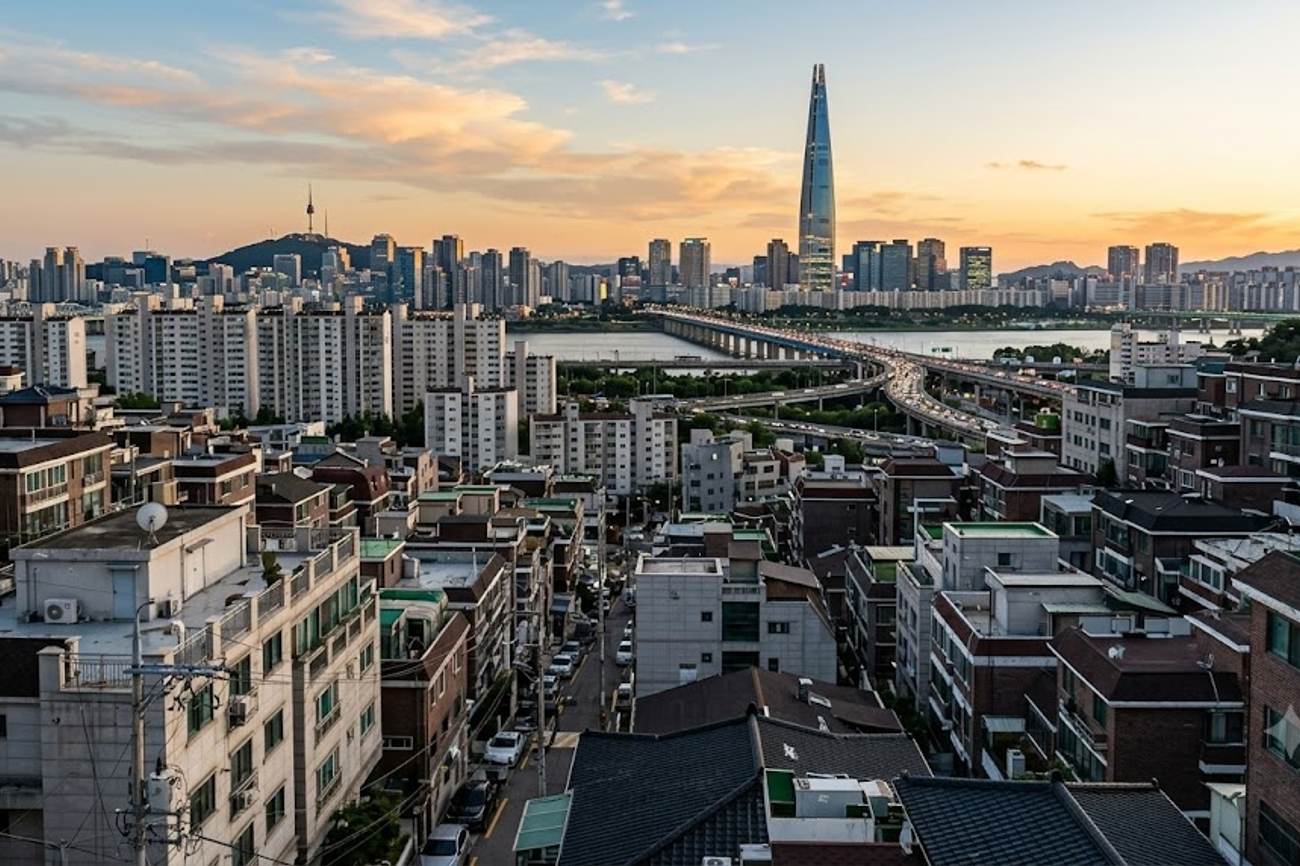
Image generated by AI
The gap between rental costs and property values in Seoul has widened to a point where it would take 357 years of monthly payments to equal the cost of a home purchase—a figure that dwarfs the 127-year ratio found in Bangkok. This divergence signals a fundamental shift in urban economics, where the "forever renting" model is transitioning from a necessity to a strategic financial choice for high-net-worth nomads and expatriates.
The Seoul Divergence in Numbers
The September 2026 housing data reveals a market in Seoul that is fundamentally decoupled from traditional ownership logic. With a median monthly rent of approximately $610, the cost of leasing is remarkably low when indexed against the asset value of the property. A standard 90-square-metre residence in Seoul is valued at roughly $2.6 million, creating a valuation gap that is the most extreme of any global city analyzed.
From a cash-flow perspective, the rental burden in Seoul is relatively light, consuming only 17.2% of the average net salary. This creates a unique environment where liquidity is preserved, even as property prices climb. The market depth is also significant, with approximately 14,200 rental opportunities identified in the dataset, suggesting that the supply of rental units is robust enough to support this trend of deferred ownership.
When compared to other global hubs, the Seoul model represents a radical departure from the "rent-to-buy" pipeline. While traditional real estate wisdom suggests that renting is "throwing money away," the data indicates that in Seoul, the capital required to enter the ownership market is so high that renting becomes the only mathematically viable path for the vast majority of residents, including the growing population of international digital professionals.
Comparative Urban Housing Benchmarks
The disconnect between monthly lease costs and asset prices is a global phenomenon, but it manifests differently across regions. In Southeast Asia, Bangkok presents a contrasting profile: while it offers the lowest absolute median monthly rent among the top ten cities at approximately $359, the economic burden on the local population is far higher. Rent in Bangkok consumes 56.7% of the average net salary, making it a high-pressure market despite the lower nominal cost.
In Europe, the data shows a more stabilized but still significant gap. Vienna and Paris both exhibit a trend where property values remain high, but rental markets are more aligned with local income levels. Paris, for instance, offers the highest rental availability of the group with approximately 17,600 opportunities, yet its median monthly rent of $1,189 represents 32.8% of the average net salary.
The following table breaks down the rent-to-purchase trajectory across the most divergent global markets:
| City | Median Monthly Rent | 90sqm Property Price | Rent-to-Purchase Period | % of Net Salary |
|---|---|---|---|---|
| Seoul | $610 | $2,600,000 | 357 Years | 17.2% |
| Bangkok | $359 | $547,000 | 127 Years | 56.7% |
| Vienna | $988 | $1,340,000 | 113 Years | 27.9% |
| Tokyo | $698 | $805,000 | 96 Years | 23.1% |
| Paris | $1,189 | $1,340,000 | 94 Years | 32.8% |
| Singapore | $2,187 | N/A | 80 Years | N/A |
| Helsinki | N/A | N/A | 80 Years | N/A |
| Stockholm | N/A | N/A | 79 Years | N/A |
| Munich | N/A | N/A | 77 Years | N/A |
This data suggests that while cities like Zurich—with the highest monthly rent at approximately $2,469 and property values near $2.5 million—are expensive across the board, the relative value of renting is highest in Seoul. This pattern is consistent with broader trends tracked by the World Tourism Organization (UNWTO), which monitors how urban affordability impacts the mobility of the global workforce.
Practical Traveler Advisory and Strategic Insights
For the nomad lawyer or the long-term expatriate, these figures transform the way destination planning should be approached. The data indicates that in cities like Seoul and Tokyo, the financial incentive to rent long-term is overwhelmingly positive compared to the capital expenditure required for purchase.
If you are planning a relocation or an extended stay in East Asia, the following data-driven strategies apply:
- Prioritize Rental Liquidity in Seoul: Because rent consumes only 17.2% of the average net salary and the purchase barrier is $2.6 million, there is no mathematical incentive to pursue property ownership for short-to-medium term stays (under 10 years). Focus on securing high-quality rentals within the 14,200 available opportunities.
- Budget for High Burden in Bangkok: While the $359 median rent seems attractive, the 56.7% salary-to-rent ratio indicates a market where local services and living costs may be skewed. Travelers should ensure their foreign-earned income is significantly higher than the local average to maintain a comfortable standard of living.
- Leverage Availability in Paris: With 17,600 rental opportunities, Paris offers the most flexibility for those seeking specific neighborhood profiles. However, with a 94-year rent-to-purchase ratio and a $1.34 million entry price for a 90-square-metre home, the "forever renting" model is equally applicable here.
For those tracking global real estate trends, Statista provides deeper insights into how these price-to-rent ratios correlate with GDP growth and foreign investment. The current data suggests that "rental hubs" are becoming the preferred base for the global elite who prefer to keep their capital in liquid assets rather than locked in overpriced urban real estate.
Forward Projection: The Rise of the Permanent Tenant
The trajectory of these markets suggests a permanent shift toward a "subscription-based" living model in Tier 1 global cities. When the time to reach purchase parity exceeds a century—as it does in Seoul, Bangkok, and Vienna—the psychological and financial drive toward homeownership collapses.
We expect to see a surge in "premium rental" developments. As the gap between $610 monthly rents and $2.6 million property values persists, developers will likely pivot away from selling units and instead focus on high-yield rental portfolios. This will likely increase the volume of rental opportunities beyond the current 14,200 in Seoul and 17,600 in Paris.
Furthermore, as seen in IATA's reports on global mobility, the increase in digital nomad visas will likely put upward pressure on these median rents. If more high-earning foreigners enter the Seoul rental market, the 17.2% salary-to-rent ratio will likely climb, potentially narrowing the 357-year gap, but not enough to make ownership viable for the average professional.
FAQ: Global Urban Housing Trends 2026
Is now a good time to buy property in Seoul? Based on the data, no. With a purchase price of $2.6 million for a 90sqm home and a median rent of only $610, the cost of ownership is mathematically inefficient compared to renting.
Which city is the most affordable for long-term renters? Bangkok has the lowest absolute cost with a median rent of $359, but it has the highest relative burden, consuming 56.7% of the average net salary.
Where is there the most rental availability for expatriates? Paris leads the analyzed group with approximately 17,600 rental opportunities, offering more options than Seoul's 14,200.
Why is the "rent-to-purchase" period so long in these cities? It is driven by a decoupling of property values from local wages. When assets are treated as global investments rather than housing, prices (like Seoul's $2.6 million) skyrocket while rents remain tied to local economic capacity.
The era of the homeowner is yielding to the era of the strategic renter in the world's most expensive zip codes.
Related Travel Guides
- North Carolina Joins Virginia, Maryland, Delaware and More US States Now Trembling with Late September Nor’easter Coastal Floodings and Rains
- Vietnam’s Côn Đảo Boosts Island Tourism With Cable Cars Eco Routes and Sustainable Development Strategy
- Tulsa Oktoberfest 2026 Offers A Bavarian Travel Escape With Beer Tents Music And Family Fun
Disclaimer
This article is for informational and educational purposes only. It does not constitute legal, financial, or professional advice. While we strive to provide accurate and up-to-date information, travel policies, regulations, and conditions change rapidly. Always verify information with official sources before making travel decisions. Nomad Lawyer makes no representations about the accuracy, reliability, completeness, or suitability of the information provided. Readers should consult qualified professionals for advice specific to their circumstances. The views expressed in this article are those of the author and do not necessarily reflect the views of Nomad Lawyer.
Naina Thakur
Contributor & Travel Specialist
Travel enthusiast and legal writer covering visa regulations, responsible tourism, and cultural journeys across global destinations.
Learn more about our team →