
Maldives Record Tourist Arrivals Mask Deepening Economic Pressures on Hospitality Workers
While beaches are packed this travel season, the Maldives faces severe tourism leakage, squeezed resort margins, and struggling local community businesses.
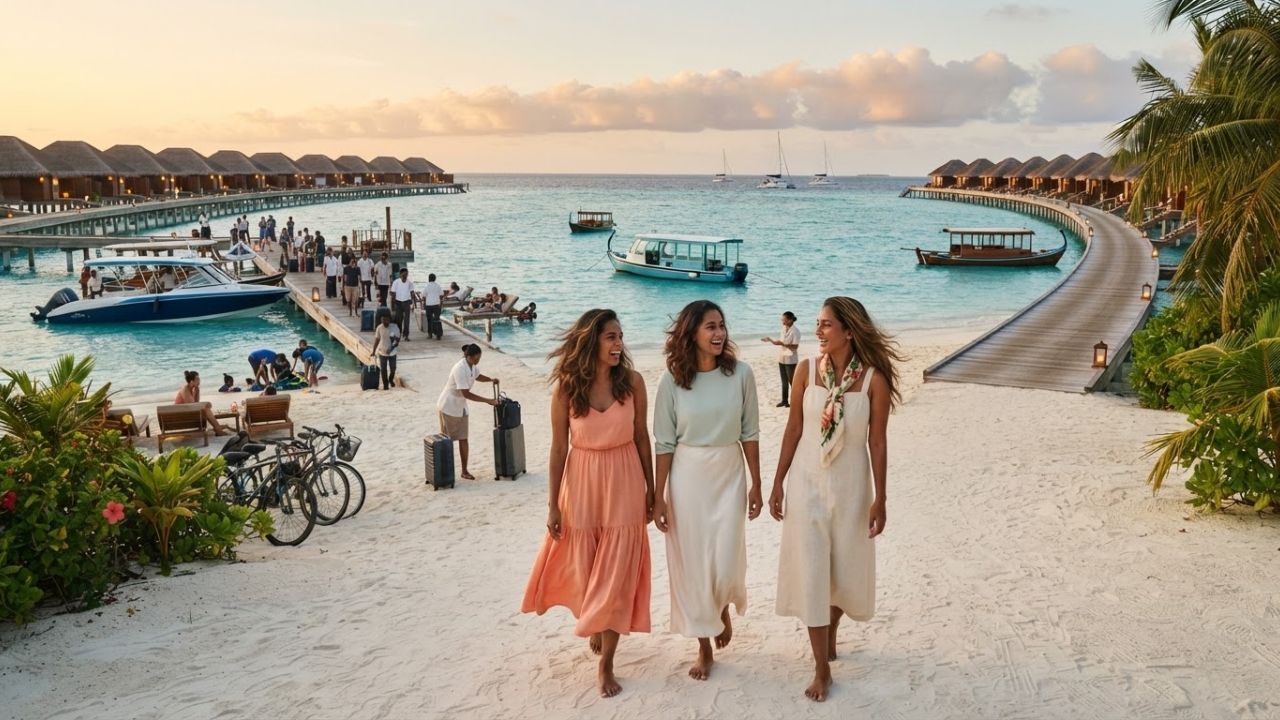
Image generated by AI
High visitor arrival rates at Maldivian entry points are masking a stark economic imbalance, as local hospitality workers face static wages while rising operational costs and severe international revenue leakage pressure resort margins.
Long Airport Lines Masking Squeezed Resort Profit Margins
Travelers arriving at Velana International Airport are met with long immigration queues and overbooked speedboats, suggesting a thriving resort economy. However, these high arrival counts mask deep economic strains within the island nation's hospitality sector. A shift in traveler behavior has altered the tourism mix, with visitors selecting shorter vacation windows and heavily discounted package deals. While resorts report high occupancy, their profit margins remain under severe pressure.
The commercial health of these properties is measured by Average Daily Rate (ADR) and Revenue Per Available Room (RevPAR). Resort operators are finding that welcoming larger crowds does not guarantee improved cash flow. Escalating supply chain overheads, rising import costs, and inflated energy tariffs have driven up basic operating expenses. Consequently, hotel margins are squeezed, preventing these businesses from translating record guest numbers into stable financial returns.
Furthermore, post-disruption consumers remain cautious, booking last-minute packages that offer minimal resort yields. This erratic booking environment makes it difficult for hoteliers to forecast staffing needs or manage food and beverage inventories. While beaches appear crowded, the underlying financial reality is one of rising costs and diminished spending per visitor. Many properties are forced to run costly diesel generators and desalination plants, which depend on increasingly expensive imported fuel, further driving up administrative and operational overheads during peak occupancy periods.
The Mechanics of Tourism Leakage in Small Island Economies
A primary structural challenge facing the Maldives is the high rate of international tourism leakage. Economic data from the Asian Development Bank (ADB) indicates that a significant percentage of tourist expenditure leaves the country. This leakage occurs because multinational resort chains and global booking intermediaries repatriate their profits overseas. Additionally, the luxury inventory required by high-end resorts—ranging from premium food products to construction materials—must be imported.
When tourist spending bypasses local island economies, destination communities fail to retain the benefits of the travel boom. Hospitality workers who service the overwater villas and manage guest logistics do not receive corresponding wage increases. Instead, they face an escalating cost of living without the financial stability that high arrival numbers should represent. Because many resorts operate as self-contained enclaves, tourists rarely spend money outside their private islands.
This economic divide has sparked active discussions among travelers seeking a more equitable approach to island tourism.
Reddit: "I spent over $10,000 on a luxury resort stay, but when I spoke with the staff, they mentioned their wages had stayed flat. Almost all my money is leaving the Maldives to go to foreign corporate owners." — r/solotravel
Reddit: "To support the people who live in the Maldives, stay at local guesthouses on inhabited islands. This ensures your money directly pays for local food, boat excursions, and cafes." — r/travel
Navigating Sustainable Travel Initiatives and Local Direct Spending
To address this economic divide, the Maldives Ministry of Tourism has updated its strategic policies to promote community-based tourism and local guesthouse developments. Inhabited islands such as Maafushi, Thoddoo, and Dhigurah have experienced a significant surge in guesthouse bednights. In mid-2026, local guesthouse overnight stays rose by 84 percent year-on-year, indicating a clear shift toward decentralized travel models.
Supporting these local businesses ensures that a larger portion of tourist expenditure remains within the domestic economy. Travelers can participate in sustainable practices by hiring local guides, dining at independent island cafes, and purchasing goods from community cooperatives. These initiatives help diversify the tourism value chain and reduce the country's reliance on imported resort supplies. By choosing locally-owned transit over resort-managed charters, guests keep funds in Maldivian hands.
Additionally, organizations like the Maldives Association of Tourism Industry (MATI) are working to establish equitable economic distribution frameworks. By linking regional agricultural co-ops and local fisheries directly with resort purchasing departments, the industry aims to replace imported goods with local alternatives. This integration helps retain wealth within the archipelago and builds systemic resilience against global supply chain disruptions.
Essential Travel Strategy: Modest Attire, Eco-Etiquette, and Culinary Immersion
Conscious travelers visiting the Maldives can maximize their local impact while enjoying a more authentic experience by following specific regional strategies:
- Optimal Visit Windows: Consider traveling during the shoulder seasons of May to October, or the transitional month of November. During these periods, room rates are lower, and the reduced visitor density allows for more meaningful interactions with local hosts.
- Cultural Etiquette: When visiting inhabited islands, travelers must respect local Islamic customs. This includes dressing modestly with shoulders and knees covered, refraining from bringing alcohol outside of private resort zones, and using designated "bikini beaches" for sunbathing.
- Culinary Specialties: Skip the international resort buffets and seek out local dishes at neighborhood cafes. Try Garudhiya, a traditional clear fish broth served with lime, rice, chili, and onions, or Mas Huni, a breakfast dish of shredded tuna, grated coconut, and chili eaten with fresh roshi flatbread.
- Direct Economy Support: Book excursions directly with local boat captains rather than through international booking agencies. This ensures that the profits from marine tours directly benefit the families living on inhabited islands.
Structural Reforms and the Outlook for Maldivian Hospitality
The long-term outlook for the Maldives depends on its ability to transition from volume-driven targets to high-yield, community-focused tourism. Relying on a small number of primary geographic source markets makes the island nation vulnerable to sudden economic shifts. Diversifying target visitor demographics helps stabilize bookings and ensures a steady flow of income for independent operators.
For the visitor, the real impact of these changes will be a more diverse range of travel choices. The growth of guesthouses allows travelers to experience the Maldives at a lower price point while directly supporting resident families. This shift fosters a healthier tourism ecosystem where both visitors and hospitality workers can thrive. It also encourages a deeper understanding of local culture beyond the traditional resort experience.
Ultimately, progress in the travel industry requires that the people who maintain these destinations feel secure in their jobs. Enabling local guesthouse owners to earn a sustainable livelihood without relying on government subsidies is key to preserving the cultural heritage of the islands. By choosing community-focused travel options, visitors play a direct role in securing the Maldives' economic future.
FAQ: Maldives Tourism Economy 2026
What is the primary cause of tourism leakage in the Maldives?
Tourism leakage is driven by foreign ownership of resorts, international booking platforms, and importing food, energy, and goods to sustain luxury operations.
How can travelers ensure their money supports the local Maldivian economy?
Travelers can support the local economy by staying at Maldivian-run guesthouses, booking excursions directly with local captains, and dining at neighborhood cafes.
What are the cultural rules for visiting inhabited islands in the Maldives?
When visiting inhabited islands, travelers must dress modestly, respect the ban on public alcohol consumption, and restrict swimwear to designated bikini beaches.
Related Travel Guides
Accessible Beach Infrastructure Transforms Wheelchair Travel in the US
Why Maldives Guesthouse and Community Tourism is Surging, According to Reddit
Disclaimer
This article is for informational and educational purposes only. It does not constitute legal, financial, or professional advice. While we strive to provide accurate and up-to-date information, travel policies, regulations, and conditions change rapidly. Always verify information with official sources before making travel decisions. Nomad Lawyer makes no representations about the accuracy, reliability, completeness, or suitability of the information provided. Readers should consult qualified professionals for advice specific to their circumstances. The views expressed in this article are those of the author and do not necessarily reflect the views of Nomad Lawyer.